Plan what to dropship each month with this 2026 seasonal product calendar. Explore product ideas, sourcing timelines, holiday order cutoffs, landed-margin checks, and China-direct versus overseas fulfillment strategies for sellers serving global markets.

A seasonal product calendar is useful only if it tells you when to source, list, and stop promising delivery—not simply what to sell. For cross-border sellers sourcing from China, the best 2026 dropshipping products combine timely demand with realistic landed costs, reliable suppliers, and a delivery window customers can trust.
As of September 2026, the immediate priority is Q4: Halloween, Black Friday, and Christmas. Use the 12-month calendar below to plan future campaigns, then apply the fulfillment framework to the next event in your own market. The monthly themes build on Doba’s seasonal product guide; the sourcing, margin, and shipping checks add a cross-border operating plan.
Table of Contents
Why Seasonal Selling Needs a Supply-Chain Plan
Seasonal demand can be substantial, but market-wide sales do not predict what an individual store will earn. Adobe reports $257.8 billion in U.S. online spending during November and December 2025, up 6.8% year over year. Its 2026 holiday forecast also points to earlier discounts and value-conscious shopping. Meanwhile, a July 2026 National Retail Federation survey found that 62% of back-to-school shoppers had already started shopping by early July. The practical lesson is to prepare before your buyer’s peak—not when the holiday begins.
Doba’s calendar offers a useful overview of what shoppers may want each month. It leaves an important operational question for cross-border sellers: Can this particular product reach this particular customer in time, at a worthwhile margin? A Halloween decoration may be a promising test in August but a poor choice for a guaranteed Halloween delivery in late October. Separate product demand from fulfillment feasibility before increasing your advertising budget.
2026 Seasonal Dropshipping Calendar by Month
The products below are ideas to validate, not verified bestsellers. The suggested preparation windows are planning assumptions, not shipping guarantees. These examples mainly follow U.S. consumer seasons; adjust for different climates, school calendars, and holidays in each destination market.
January–March: Resolutions, Gifts, and Spring
January — New routines and home organization. Test resistance bands, yoga accessories, refillable bottles, and compact organizers. Compare resolution-themed items with household products that sell beyond January. Sample suppliers in November or December of the previous year so listings are ready before New Year’s Day. Avoid making health claims that your product evidence cannot support.
February — Valentine’s Day and home comfort. Consider jewelry organizers, photo displays, candles, blankets, and giftable desk accessories. Build collections around recipients or price points rather than assuming every shopper wants the same traditional gift. As February 14 approaches, remove arrival guarantees that your actual carrier and fulfillment data no longer support.
March — Spring cleaning and garden preparation. Trial closet organizers, garden gloves, seed-starting accessories, and small outdoor lights. Segment by destination: customers in a warm region may be planning outdoor projects while buyers elsewhere still need winter products. Check the date of movable spring holidays each year instead of recycling the same promotional schedule. These monthly themes adapt the seasonal categories in Doba’s guide.
April–June: Home, Family, and Outdoors
April — Spring refresh. Feature practical cleaning tools, reusable household accessories, picnic gear, and garden supplies. Easter fell on April 5 in 2026, so a campaign intended for Easter delivery needed preparation before April. Describe a product’s materials and use clearly; do not rely on vague claims such as “eco-friendly” without evidence.
May — Mother’s Day and graduation. Curate giftable home accessories, travel organizers, and products suited to a first apartment. U.S. Mother’s Day fell on May 10 in 2026. If you present an item as a gift, request packaging photos or a sample first: a good product can still disappoint when the box arrives damaged or unsuitable for gifting.
June — Father’s Day and summer travel. Explore tool organizers, camping accessories, beach towels, and packing pouches. Before promoting electronics or oversized outdoor products, check shipment restrictions, packaging durability, and delivered cost. Do not export a U.S. summer campaign unchanged to destinations entering winter.
July–September: Travel, School, and Fall
July — Travel and transition. Consider packing cubes, waterproof storage pouches, and end-of-summer clearance. A popular-looking travel accessory is not automatically profitable; check competing offers, return reasons, package weight, and the price customers will actually pay. Begin testing autumn samples while there is still time to change suppliers.
August — Back to school. Organize backpacks, lunch accessories, desk storage, and dorm products into distinct K–12 and college collections. For U.S. customers, begin earlier than August: NRF’s July 2026 survey found 62% of back-to-school shoppers had already started. The survey also projected different spending patterns for K–12 and college households, reinforcing the case for separate assortments.
September — Fall and Halloween preparation. Introduce autumn home accents, cooler-weather accessories, and Halloween party supplies. In late September 2026, sellers can still test Halloween products, but delivery promises should depend on the specific SKU, destination, and shipping service. At the same time, inspect November gift samples and confirm supplier capacity before promotional demand rises.
October–December: Holidays and Delivery Deadlines
October — Halloween, then the next occasion. Continue selling Halloween décor only while arrival before October 31 remains credible. As that window closes, move attention toward Thanksgiving entertaining, winter home goods, and early gifts. Confirm that any advertised overseas stock is available for the exact SKU; a nearby warehouse is useful only when the item can actually ship from it.
November — Gift shopping and major promotions. Prepare gift bundles, home accessories, and practical everyday deals. In the U.S., Thanksgiving falls on November 26, Black Friday on November 27, and Cyber Monday on November 30 in 2026. Adobe recorded $44.2 billion in U.S. online spending during Cyber Week 2025, but that figure describes the wider market—not a revenue forecast for your store. Check prices, delivery ranges, and returns information before increasing campaign spend.
December — Gifts, then New Year needs. Lead with gifts only while your delivery estimates support them. Once holiday arrival becomes uncertain, shift toward non-date-sensitive home organization, party supplies where delivery permits, and January fitness accessories. Avoid a blanket “arrives by Christmas” banner across multiple countries or carriers. Publish destination-specific cutoffs and remove time-sensitive promises when a supplier or route falls behind.
When to Source, List, and Stop
Work backward from the date the customer needs the item—not merely the date you expect to dispatch it. This reverse calendar makes a holiday campaign easier to operate and easier for customers to understand.
1. Set the required arrival date. Allow time for gift wrapping, event preparation, or installation where relevant.
2. Confirm supplier and shipping inputs. Request current inventory or production lead time, processing time, and recent tracked delivery ranges for the destination.
3. Add a disruption buffer. Account for inspection, carrier handoff, customs, and seasonal congestion using your own shipment history where possible.
4. Set the customer-facing cutoff. Work backward from the required arrival date. If an order misses the cutoff, remove the arrival promise or offer confirmed alternative stock.
5. Start testing before the cutoff. As an initial planning assumption, test a major seasonal offer six to ten weeks ahead. Adjust that window using your market’s demand pattern and actual supplier lead times.
Suppose a gift needs to arrive by December 22 and recent end-to-end deliveries have taken 12–18 days. Taking an order exactly 18 days beforehand leaves no allowance for disruption. An earlier cutoff or a non-date-sensitive alternative is more defensible than treating an estimated transit time as a guarantee.
Be precise about shipping versus delivery. For U.S. online orders, the Federal Trade Commission says sellers must have a reasonable basis for the shipping time they advertise. If they cannot ship within the applicable time, rules on delay consent or refunds apply. A shipping-time rule does not, by itself, establish that a parcel will arrive before a holiday.
How to Choose Products That Remain Profitable
A low supplier price does not make a strong seasonal offer. Estimate contribution per order by subtracting product cost, domestic pickup, inspection or packaging, international shipping, duties and taxes borne by the seller, payment fees, expected returns, and customer-acquisition cost from the selling price.
Consider an illustrative example, not a market benchmark: a $39 sale has a $9 product cost, $8 freight, $3 duties and handling, $2 payment fees, $3 expected returns, and $8 acquisition cost. That leaves $6 before fixed overhead. If peak-season freight rises by $4, only $2 remains. A seller should then reprice, bundle, find a lighter alternative, or reconsider the campaign—not assume higher order volume will repair the margin.
Before approving a seasonal SKU, ask:
– Does it solve a clear, timely customer need?
– Can a supplier provide the specified product and acceptable quality consistently?
– Is the item sturdy and economical to pack and ship?
– Can you establish that it meets the destination’s applicable product and import requirements?
– Does the contribution still work if fulfillment becomes slower or more expensive?
Compliance is not a scoring bonus. A product with attractive demand and margin is still unsuitable if you cannot establish that it can be sold and imported appropriately.
For U.S.-bound orders, do not assume a low-value shipment is automatically duty-free. U.S. Customs and Border Protection states that duty-free de minimis treatment for covered imports valued at $800 or less was suspended from August 29, 2025, subject to exceptions. Check the current rules, product classification, and costs for your exact shipment; other destinations have different requirements.
Match Fulfillment Speed to Demand
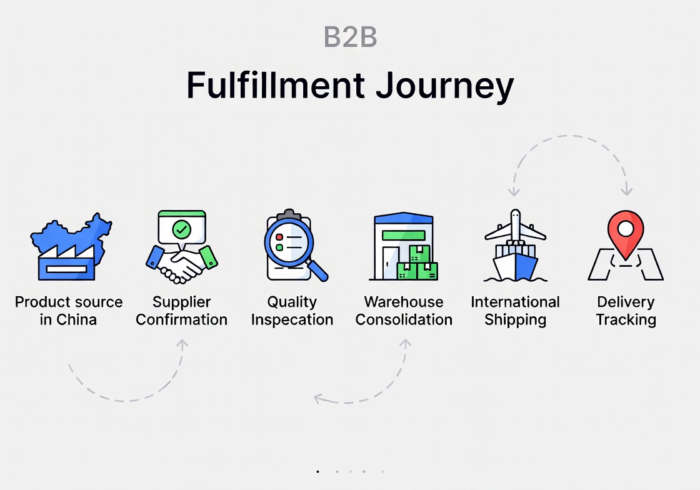
The useful choice is not “China versus local” in the abstract. It is which route meets the buyer’s deadline at an acceptable margin. LooperBuy describes China sourcing, dropshipping, warehouse consolidation, inspection options, and overseas stock on its website. Sellers should verify the exact SKU’s availability, service scope, costs, and delivery estimate before making a customer-facing promise.
| Fulfillment path | When to consider it | What to verify |
| China-direct fulfillment | Early tests and orders without an urgent arrival date | Product quality, processing time, tracked transit range, and landed cost |
| Confirmed overseas stock | Late-season demand or urgent replenishment | Exact SKU and quantity on hand, dispatch location, and added cost |
| Small validated batch | An item with demonstrated demand where faster dispatch matters | Sell-through risk, storage terms, and margin after holding costs |
Here is an illustrative Q4 workflow, not a reported customer case: test a compact home-gift organizer in September, inspect its packaging, and collect tracked delivery results. If orders convert and margins hold, compare the cost of confirmed overseas stock for the late-November window. If the product fails the quality or profitability test, move the campaign to a more dependable evergreen organizer rather than attempting a last-minute holiday rescue.
Run a short review each week during a seasonal campaign:
– Check demand signals for the target country and product. Google Trends allows comparisons across terms, locations, and periods; use its patterns as a directional input, not a sales forecast.
– Confirm supplier stock, product specifications, and packaging against the listing customers see.
– Recalculate delivered cost after changes in freight or import charges.
– Update cutoffs by destination and remove expired arrival claims.
– Track refunds, late-delivery complaints, and contribution by SKU and fulfillment route.
– Redirect budget from expired holiday items toward evergreen or next-season products.
A smaller catalog of reliable offers can be more useful than a large collection of products that may arrive too late. Ready to plan your next seasonal campaign? Explore, then request a quote and destination-specific fulfillment estimate for the products you want to test.
Frequently Asked Questions
1. When should I list holiday dropshipping products?
Begin testing roughly six to ten weeks before a major event as a planning assumption, not a universal rule. Move earlier when supplier preparation or buyer research takes longer. Keep the listing date separate from the final date on which you can responsibly promise holiday arrival.
2. What makes a good seasonal dropshipping product?
It should answer a timely customer need, travel well, meet destination requirements, and retain an acceptable contribution after variable costs. A compact, dependable organizer may be a better offer than a trendier item that is fragile or costly to ship.
3. Can I dropship from China for Christmas orders?
Yes, when the specific product, supplier, route, and order date support the arrival expectation you communicate. Compare confirmed overseas stock for urgent orders; do not assume that either route is fast enough without checking its current estimate.
4. How do I set a holiday order cutoff?
Work backward from the required arrival date using validated processing and transit times, then add a buffer for disruption. Publish cutoffs by destination and delivery service, and review them frequently as the holiday approaches.
5. Should I buy seasonal inventory in advance?
Only when product tests, expected demand, and landed-margin calculations justify the exposure. A small validated batch may improve dispatch speed while limiting the risk of unsold seasonal stock.
6. What should I do when a product can no longer arrive for the holiday?
Remove the holiday-arrival promise immediately. If appropriate, offer confirmed local stock, a different delivery expectation, or a non-date-sensitive product. Do not leave an expired cutoff buried beneath a promotional banner.
References
1. [Doba, “Seasonal Product Calendar: What to Sell and When”].
2. [Adobe, “Holiday Shopping Season Drove a Record $257.8 Billion Online”].
3. [Adobe, “2026 Holiday Shopping Trends, Statistics & Forecast”].
4. [National Retail Federation, “Majority of Back-to-School Shoppers Get a Head Start on the Season”].
5. [Time and Date, “Holidays and Observances in the United States in 2026”].
6. [U.S. Customs and Border Protection, “Suspending Duty-Free De Minimis Treatment for All Countries”].
7. [Federal Trade Commission, “Mail, Internet, or Telephone Order Merchandise Rule”].
8. [Google Trends Help, “Compare Trends Search Terms”].
9. [LooperBuy, “B2B China Sourcing Platform & Dropshipping Solutions”].