Learn how product sourcing companies check supplier capability, approve specifications, inspect finished lots, verify packaging, and control individual dropshipping orders before dispatch. Includes an actionable release workflow, risk-based QC questions, and guidance for China sourcing buyers.
A product can look perfect in a supplier’s listing and still arrive with the wrong dimensions, weak packaging, or a label that cannot be used in its destination market. That is why capable product sourcing companies handle quality control before shipping as a series of decisions—not a final glance at a box. For B2B sellers sourcing from China, especially those shipping directly to customers, the goal is to catch problems while goods can still be corrected, replaced, or held.
A useful quality-control process starts with an agreed product specification. It then checks supplier capability, verifies production and finished goods, and releases only orders with adequate evidence. The exact checks should reflect the product, destination, order size, and cost of failure. A low-risk accessory and a mains-powered device should not follow identical plans.
Table of Contents
What Pre-Shipment Quality Control Actually Covers
Quality control is often described as an inspection, but inspection is only one part of the job. A sourcing company may coordinate the checks, conduct some of them directly, or arrange an independent inspector or laboratory. Buyers should establish who performs each check rather than assuming every sourcing service includes the same work.
| Stage | Main question | Typical evidence |
| Supplier qualification | Can this supplier make the specified product consistently? | Capability records, sample results, relevant documents |
| Specification approval | Does everyone agree on what “acceptable” means? | Approved sample, drawings, defect criteria |
| Production monitoring | Are early units matching the approved standard? | In-process measurements, photographs, issue log |
| Final product inspection | Does the finished lot meet the agreed criteria? | Sampling record, test results, defect photos |
| Packing and release | Is the correct, compliant order ready to travel? | Label and quantity checks, packing photos, release decision |
The distinction between these stages matters. A passing finished-product inspection does not establish that a product satisfies every legal requirement. Equally, a supplier’s certification does not prove that a particular shipment contains the right SKU or quantity. ISO’s quality-management framework emphasizes controlled processes, performance evaluation, and improvement—not reliance on a single checkpoint.
How Sourcing Companies Build a Quality Plan
Define Measurable Product Requirements
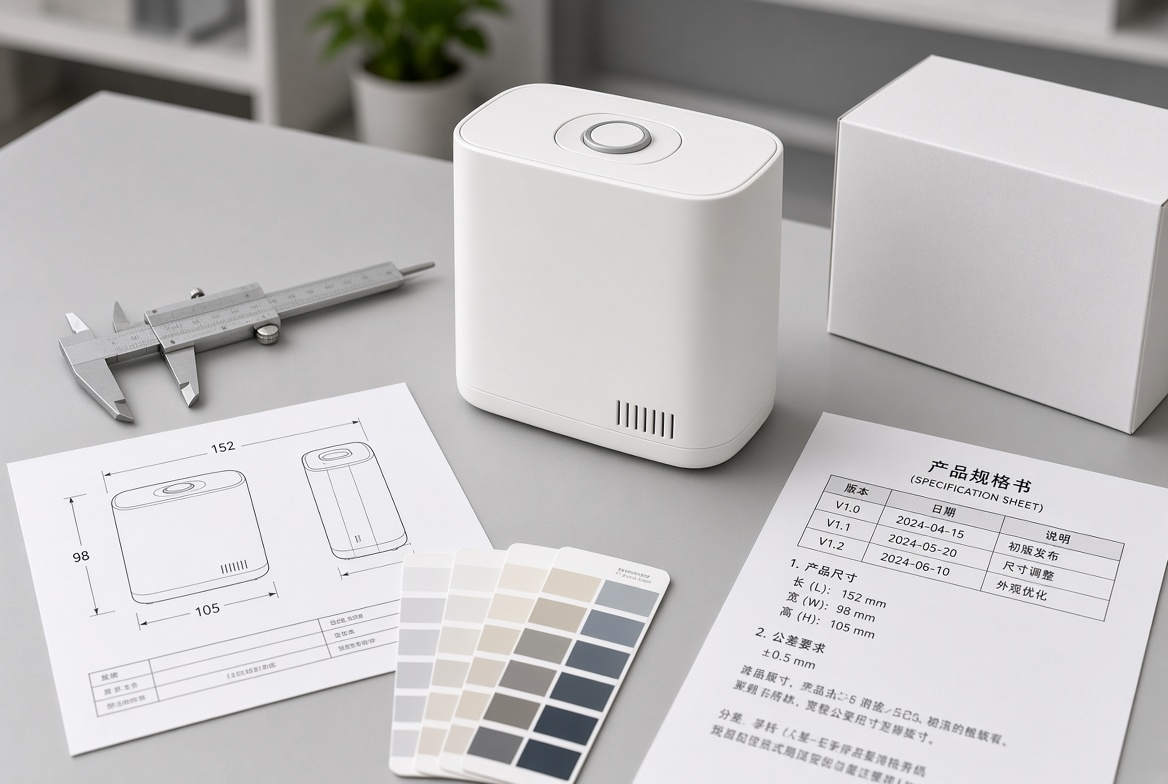
Before ordering, the buyer and sourcing team should turn a product listing into a checkable specification. “Premium finish” is subjective; “matte black coating with no exposed metal on visible surfaces” gives an inspector something to assess.
A practical specification includes:
– Product identity: SKU, model, approved sample, materials, and variants.
– Measurements: dimensions, weight, tolerances, and test method.
– Performance: functions to test and pass/fail criteria.
– Appearance: acceptable color variation and examples of cosmetic defects.
– Packaging: unit pack, carton strength, inserts, barcodes, and shipping marks.
– Destination requirements: applicable labels, documents, and product-specific rules.
An approved reference sample is useful only when its identity and revision are recorded. Otherwise, the buyer, supplier, and inspector may unknowingly compare production against different versions. If a material or component changes after approval, the sourcing team should obtain the buyer’s decision before treating the revised product as acceptable.
Assess the Supplier Before the Order Scales
A sourcing company should check whether the supplier can meet the order’s material, process, capacity, and documentation needs. For a new supplier, this may mean reviewing a sample, clarifying which operations happen at the factory, and checking whether specialist testing must be outsourced.
The key question is not merely, “Has this factory made something similar?” It is, “Can it repeat this specification at the required quantity?” A good first sample can come from careful hand assembly; routine production may use different workers, tools, or components. That is why supplier approval and order-level inspection serve different purposes.
Inspect Early Enough to Correct the Process
Where risk warrants it, teams inspect first articles or early production units before the full lot is completed. They compare measurements, assembly, finish, and function against the approved specification. If a defect appears across several early units, correcting the process now is usually more useful than discovering it after every carton is packed.
During production, the sourcing team may also review progress against milestones and record corrective actions. These checks are especially valuable for customized products, new tooling, tight tolerances, or suppliers with a history of inconsistency. More inspections are not automatically better; the useful question is which check will reveal a consequential problem while there is still time to fix it.
How Final Inspection Works Before Shipping
Select Samples and Classify Defects
For a finished batch, an inspector may use an acceptance-sampling plan rather than open every unit. ISO 2859-1:2026 describes sampling schemes indexed by an acceptance quality limit, or AQL, for lot-by-lot inspection by attributes. The plan links factors such as lot size and inspection level to sample size and acceptance criteria.
Defects should be classified in the purchase requirements *before* inspection:
– Critical: A safety or serious compliance failure; typically treated as unacceptable.
– Major: A fault that substantially impairs function, saleability, or intended use.
– Minor: A limited imperfection that does not materially affect function.
For example, an exposed electrical conductor could be critical; a switch that fails to operate could be major; a small permitted mark on a hidden surface could be minor. The classification depends on the product and agreed criteria. QIMA describes separate AQL settings for defect classes and notes that sampling results determine whether a lot meets the selected plan.
AQL is not a promise that a stated percentage of defective goods will be shipped. It is part of a statistical decision rule for sampled lots. Passing a sample inspection does not mean every uninspected unit is defect-free. Buyers should agree on the plan, defect definitions, and rejection action before production—not after seeing an unfavorable result.
Test Function, Appearance, and Identity
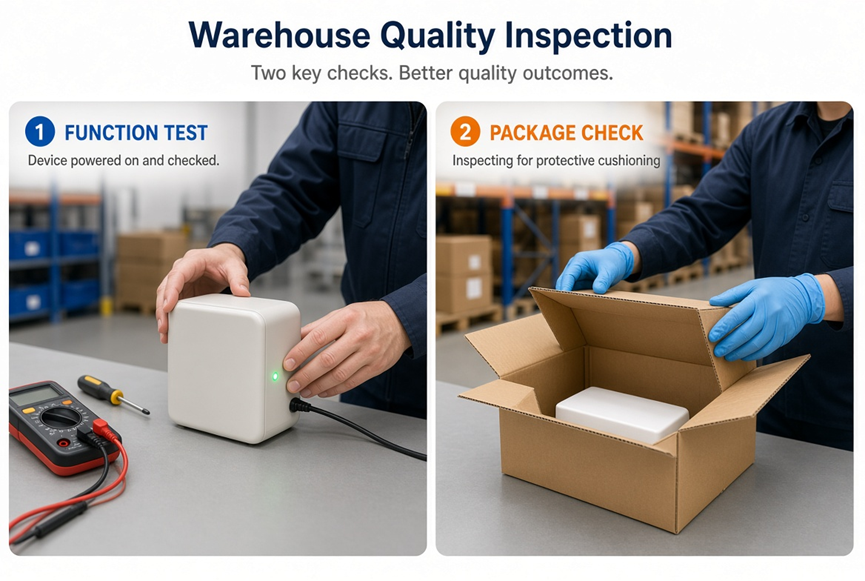
The final checklist should follow the product’s likely failure modes. An inspector might measure dimensions, operate controls, compare colors with the approved sample, check accessories, and verify that the product and carton carry the correct SKU. Selected tests should be recorded with results, not summarized as “looks good.”
For higher-risk goods, visual inspection may be insufficient. Product-specific laboratory testing, conformity documentation, or specialist assessment may be needed. An inspection company can help identify missing evidence, but the buyer should confirm the legal obligations of the destination market and who is responsible for meeting them.
In the United States, for example, Customs and Border Protection says foreign-origin articles generally require legible English country-of-origin marking unless an exception applies; some categories have additional labeling rules. In the EU, importers of covered products must verify applicable safety and conformity steps, including required documentation. These are examples, not a universal checklist for every shipment.
Check the Goods After Packing
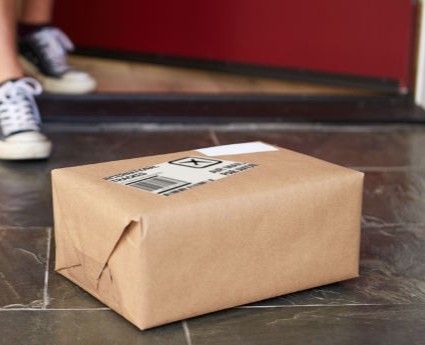
A product can pass a functional test and still be unsuitable to ship. Packing inspection checks whether units, accessories, instructions, and labels match the order; whether cartons contain the correct quantities; and whether closures and protective materials suit the delivery method.
For parcel fulfillment, protection deserves particular attention because individual packages pass through a different distribution environment from palletized freight. The International Safe Transit Association describes Procedure 3A as a test for individual packaged products of 150 lb (70 kg) or less moving through parcel delivery systems. It is a useful reference when designing a relevant package test, not a claim that every order has been ISTA-tested.
A Practical Shipment-Release Workflow
A reliable handoff separates an inspector’s findings from the decision to ship. The inspector documents what was observed. The designated buyer or authorized sourcing representative then decides whether to release, rework, replace, or reject the lot under the agreed terms.
1. Freeze the inspection criteria. Confirm the current specification, approved sample, defect categories, tests, lot definition, and sampling plan.
2. Identify the inspected goods. Record the supplier, order number, SKU, lot quantity, inspection date, and production or carton identifiers.
3. Collect evidence. Capture measured values, test outcomes, defect counts, clear photos, and the cartons or units sampled.
4. Resolve failures. Quarantine affected goods, identify the cause, agree on rework or replacement, and define what must be rechecked.
5. Authorize release. Ship only after the required checks and corrective actions are documented and the responsible party approves.
A concise release record can prevent an expensive ambiguity later: “Inspection passed” should identify the lot, the criteria used, and any open exceptions. If a supplier repairs a rejected batch, the original report does not by itself establish that the repaired goods pass. A targeted reinspection—or a new lot inspection, depending on the fault—is needed.
A buyer should also specify when title, transport risk, inspection responsibility, and claims procedures apply. ICC explains that Incoterms® 2020 allocate transport-related costs, risks, and obligations under the selected trade term. They do not replace a detailed product specification or a clearly agreed inspection-and-release procedure.
The Dropshipping Quality-Control Gap
Traditional bulk imports give a buyer another chance to inspect goods after arrival at its own warehouse. Direct-to-customer shipping may remove that checkpoint. For sellers using a China sourcing and fulfillment partner, inbound checks and order-level picking accuracy therefore matter alongside factory inspections.
Consider a hypothetical seller ordering 1,000 customized desk organizers while shipping customer orders individually. A factory-lot inspection might find that the finish and dimensions meet the specification. That result would not catch an individual parcel containing the wrong color variant, a missing insert, or an incorrect address label.
The seller would need two linked controls:
– Lot-level control: Approve the manufactured batch and its packaging against the agreed specification.
– Order-level control: Verify the picked SKU, variant, quantity, inserts, parcel protection, and shipping label before dispatch.
A sourcing platform should describe which of these checks it actually offers, whether they apply to every order, and which services cost extra. Looperbuy’s proposed value to B2B sellers is coordinating China sourcing and direct fulfillment without requiring the seller to hold all inventory themselves. Sellers evaluating that model should request a written, product-specific QC and fulfillment workflow rather than assume that “quality checked” covers both factory production and each outgoing parcel.
Three Questions That Reveal QC Weaknesses
Can You Trace a Complaint to Its Source?
For a damaged or incorrect order, the seller needs more than a refund decision. A useful record connects the customer order to the SKU, supplier, production lot or receiving batch, inspection findings, and packing evidence. Without that link, the team may fix one parcel while overlooking a defect affecting the remaining stock.
Who Can Stop a Shipment?
The right to hold goods should be explicit. If an inspector reports a major failure but the shipping team proceeds to meet a dispatch deadline, the inspection has little practical value. Define release authority, escalation contacts, and the treatment of unresolved defects before the order is placed.
Are You Measuring the Right Failures?
A sourcing company can report a high inspection pass rate while customers still receive incorrect variants. Track factory defects separately from picking errors, transit damage, and documentation problems. The categories point to different fixes: a supplier process change, a warehouse scan, stronger packaging, or a better label review.
Choose Controls That Match the Risk
The most effective pre-shipment process is risk-based and documented. A repeat order of a simple, stable product may need fewer interventions than a first order of a customized electrical item. Neither should rely on a vague assurance that someone “checked the goods.”
Before placing an order, give your sourcing partner the specification, destination, expected shipping method, and defects you cannot accept. Ask for the proposed inspection stages, evidence you will receive, and the exact rule for releasing failed or reworked goods. If you are considering Looperbuy for China sourcing and direct fulfillment, request a product-specific quality-control and parcel-verification plan before committing to shipment.
Frequently Asked Questions
1. Do product sourcing companies inspect every item before shipping?
Not necessarily. Many finished-lot inspections use a defined sample, while certain high-risk characteristics or individual fulfillment steps may call for 100% checks. Ask which checks cover the lot and which cover each outgoing order.
2. What is the difference between quality assurance and quality control?
In practical sourcing terms, quality assurance builds the processes intended to prevent failures, such as supplier qualification and approved specifications. Quality control checks outputs against those requirements, such as testing production units or inspecting finished goods. ISO 9001 addresses the broader management system that supports both.
3. When should a pre-shipment inspection happen?
Final inspection should occur when the goods are sufficiently complete to assess the actual shipment, before they are released. For new or complex products, an earlier production check can reveal problems while correction is still possible. Agree on both timing and the lot to be inspected in advance.
4. What happens if a shipment fails inspection?
The goods should be held under the agreed procedure. The supplier and buyer then determine whether to rework, replace, accept with a documented concession, or reject them. Reworked goods need an appropriate verification step before release; a past failure does not turn into a pass merely because a repair was promised.
5. Does an AQL pass guarantee defect-free goods?
No. Acceptance sampling examines selected units and applies an agreed decision rule to the lot. It manages inspection effort and risk; it does not certify that every uninspected product is perfect.
6. Does factory inspection cover dropshipping orders?
Not completely. Factory inspection assesses production quality, but direct-to-customer fulfillment introduces separate risks, including picking the wrong variant or packing a parcel incorrectly. Ask whether the provider offers order-level checks and what evidence those checks generate.
References
1. International Organization for Standardization, “[ISO 9001:2015 — Quality management systems — Requirements].”
2. International Organization for Standardization, “[ISO 2859-1:2026 — Sampling procedures for inspection by attributes].”
3. American National Standards Institute, “[ISO 2859-1:2026—Sampling for Inspection by AQL].”
4. QIMA, “[Acceptable Quality Limit (AQL)].”
5. U.S. Customs and Border Protection, “[Marking of Country of Origin on U.S. Imports].”
6. European Commission, “[Importers and distributors].”
7. International Safe Transit Association, “[Test Procedures].”
8. International Chamber of Commerce, “[Incoterms® 2020].”