Enterprise ecommerce success depends on more than a powerful storefront. Learn how B2B sellers can assess platform features, connect China sourcing and dropshipping, calculate delivered-order costs, and test fulfillment workflows before expanding into new products or markets.
An enterprise ecommerce solution should do more than keep a storefront online. For a B2B seller, it must connect customer-specific pricing, purchasing approvals, product data, payments, inventory visibility, and delivery. If you source goods from China or ship orders directly to customers, your choice also depends on what happens outside the commerce platform: supplier verification, quality checks, customs information, and fulfillment.
This guide explains how to evaluate enterprise ecommerce platforms alongside the sourcing and shipping operations that make an order possible. It is written for merchants, distributors, and growing B2B sellers that want to expand without assuming that every new product requires a warehouse full of stock.
Table of Contents
What Is an Enterprise Ecommerce Solution?
An enterprise ecommerce solution is the combination of software and operating processes used to manage complex digital selling. The software may include a storefront, product catalog, account management, checkout, and integrations with other business systems. The operating side determines whether the product can actually be purchased, inspected, dispatched, delivered, and supported.
Scalability, integration capabilities, permission controls, B2B workflows, and flexible architecture are all useful starting points. However, software features alone cannot tell a seller whether a supplier’s inventory is up to date, whether a shipment contains the correct items, or who is responsible for covering unexpected import fees.
For B2B sellers, a useful distinction is:
– Commerce platform: Manages the customer-facing buying experience and commercial rules.
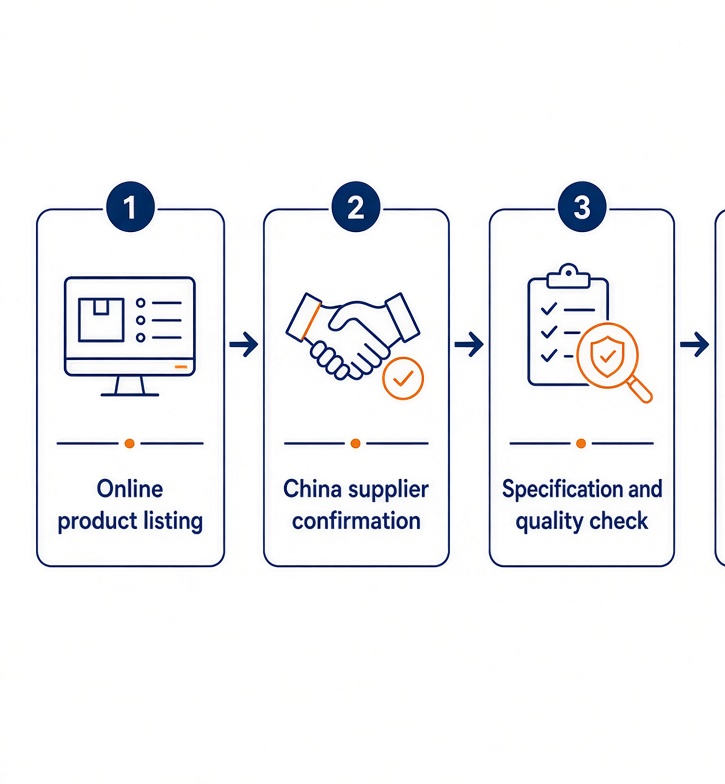
– Sourcing operation: Finds products, verifies suppliers, confirms specifications, and arranges purchasing.
– Fulfillment operation: Coordinates packing, dispatch, tracking, delivery exceptions, and returns.
– Financial control: Shows whether each order remains profitable after fees, freight, duties, and refunds.
The right solution makes these activities work together. It does not need to perform every task within one piece of software.
Why B2B Sellers Need More Than a Storefront
A consumer may buy one item at a posted price. A B2B buyer may expect negotiated prices, multiple users on one account, an approval chain, a formal quote, and repeat ordering. A distributor may also sell the same catalog in several regions with different currencies, product restrictions, and delivery terms.
The cost of a disconnected process becomes visible when an order changes. Imagine a customer purchasing 200 units shown as available. If the supplier can provide only 120, the seller needs a fast way to confirm alternatives, update the promised delivery date, seek buyer approval, and preserve a record of the decision.
Order exceptions are an architectural test. A polished storefront matters, but the harder question is whether your team can resolve a stock mismatch or failed inspection before it becomes a customer dispute.
B2B account structure, order approval, quoting, and credit-related controls are important features. For sellers sourcing from multiple suppliers, these features should be evaluated alongside stock confirmation and fulfillment exception handling—not in isolation.
Core Features to Evaluate Before Buying
Account Pricing and Approval Workflows
Check whether the platform supports company accounts with multiple buyers, role-based permissions, agreed prices, quote requests, and approval limits. Ask a vendor to demonstrate a real scenario: one employee builds a cart, a manager approves it, and the order is placed under the correct company terms.
Also test how changes are recorded. If a quoted item becomes unavailable, your team should be able to see the original quote, the revised offer, and the buyer’s approval.
Product Data and Inventory Visibility
A B2B catalog needs reliable specifications, units of measure, packaging information, images, and product identifiers. When products come from different suppliers, the same-looking item may have a different material, plug type, finish, or carton quantity.
Ask how the system handles supplier updates. Does it distinguish confirmed stock from an estimate? Can your team pause a listing while checking a specification? Can buyers see a realistic dispatch window rather than an unqualified “in stock” message?
Integrations and Data Ownership
A commerce platform may need to exchange data with accounting software, a customer relationship management system, a supplier or sourcing partner, and a shipping provider. Request documentation for the exact integrations you need, including the data fields exchanged and how errors are reported.
Before signing, confirm how to export customers, products, prices, and orders. Portability and vendor continuity are critical considerations in the procurement process; these issues are particularly important when a vendor relies on B2B customer data accumulated over many years.
Security and Access Controls
Give staff and partners only the access their work requires. A fulfillment partner may need delivery details but not your full customer pricing history. A buyer may need to submit orders but not approve spending above a set limit.
Ask vendors how they manage authentication, audit logs, security updates, incident notification, and third-party access. NIST’s supply-chain cybersecurity guidance recommends defining and communicating requirements for suppliers rather than treating third-party risk as someone else’s problem.
Which Platform Architecture Fits Your Business?
Architecture shapes how quickly you can change a storefront, connect a partner, or replace a tool. It does not, by itself, prove that a platform will be faster, cheaper, or safer. Those outcomes depend on implementation, support, and testing.
| Approach | Potential advantage | Main question to test |
| All-in-one platform | Fewer separate systems to coordinate at launch | Can it support your specific B2B pricing and fulfillment workflow? |
| SaaS platform with integrations | Provider-managed infrastructure and a defined operating model | Which changes require an app, custom work, or a higher-priced plan? |
| Modular or headless approach | Greater freedom to connect separate storefront and back-end components | Does your team have the capacity to maintain those connections? |
| Custom-built solution | Close fit to unusual processes | What will ongoing maintenance and future changes cost? |
Do not select an architecture because its label sounds modern. Request a demonstration using your own order journey. Include a customer-specific price, an unavailable product, a substitute item, partial shipment, and a return. The result will reveal more than a feature list.
Add China Sourcing to the Platform Decision
The original platform-focused article does not substantially address product sourcing. That is an important gap for a seller whose catalog depends on Chinese suppliers. A system can accept an order perfectly and still fail the customer if the purchased item differs from its listing.
Build a sourcing brief before expanding a product line. For each item, record:
– The exact specification, including dimensions, materials, variants, and packaging.
– The acceptable sample or inspection criteria.
– The supplier’s quoted price, validity period, and minimum order quantity, if any.
– The expected production or procurement lead time.
– Required documents, labeling, and destination-market requirements.
– Who decides what happens when an item fails inspection.
A sourcing partner can help coordinate these steps, but the seller should retain visibility into decisions and evidence. Ask what is checked, when the check occurs, and how findings are shared. Do not treat “quality checked” as a complete answer without agreed inspection criteria.
Calculate the Full Cost of Each Order
A low purchase price does not necessarily produce a healthy margin. Before listing a product, estimate what it costs to deliver one completed order—and what changes if the order is returned or shipped again.
Use this working model:
> Contribution per order = customer revenue − product cost − sourcing and inspection fees − packaging − shipping − payment and currency-conversion fees − expected duties and taxes borne by the seller − expected return and support costs.
This is a planning model, not an accounting standard. Adjust it to match your contract terms and who is legally responsible for each charge.
For example, suppose an order generates $120 in revenue. Product cost is $55, sourcing and inspection cost $6, packaging is $3, shipping is $18, payment-related costs are $4, and the seller sets aside $8 for expected returns and support. The estimated contribution is $26, before any seller-borne duties or taxes. If a replacement shipment costs $18, the margin on that order changes sharply.
Review costs under more than one scenario: normal delivery, delayed dispatch, failed inspection, partial shipment, and return. This turns “scalable fulfillment” from a broad promise into a measurable commercial question.
Map Cross-Border Responsibilities Before Shipping
A delivery quote is incomplete unless everyone understands who handles customs information, import clearance, and related charges. The World Customs Organization’s cross-border ecommerce materials emphasize accurate advance electronic data and provide supporting implementation resources. That makes product descriptions and shipment records operational inputs, not merely paperwork.
Where a B2B sale uses Incoterms® 2020, state the agreed rule and named place in the contract. For instance, the ICC explains that under DAP, the buyer handles and pays for import clearance; under DDP, that responsibility falls to the seller. DDP may be impractical where a foreign seller cannot complete the destination country’s import process. Neither label should be used casually as a synonym for “door-to-door shipping.”
For every shipping lane, document:
1. Who supplies product descriptions and other required shipment data?
2. Who arranges transport and provides tracking updates?
3. Who handles import clearance and pays applicable charges?
4. Who contacts the buyer when customs requests more information?
5. Who pays if the shipment is refused, returned, or delivered damaged?
Confirm the answers for each destination and product category. A fulfillment workflow that works for one market may need different documents or responsibilities in another.
Pilot the Workflow Before You Scale
A practical pilot can expose problems before they affect your entire catalog. Select a small set of products with different sourcing and shipping characteristics, then run them through the same process your customers will use.
Step 1: Define Success Measures
Choose measures before testing: supplier confirmation time, specification accuracy, inspection failure rate, dispatch time, tracking availability, delivered-order cost, and time to resolve exceptions. Record the starting assumptions so the results are meaningful.
Step 2: Test Normal and Exception Orders
Place a normal order, then deliberately test a stock mismatch, a changed specification, a partial shipment, and a return request. Check whether each event reaches the right person and whether the customer receives a clear update.
Step 3: Review Margin and Ownership
Compare the actual costs with your order model. Identify who made each decision and which handoffs relied on email or manual spreadsheets. Fix unclear ownership before adding more products or markets.
Step 4: Expand in Controlled Groups
Add products, suppliers, or destinations in stages. Keep the same measures so you can tell whether performance improves—or whether growth is simply hiding more exceptions. The goal is not to eliminate every manual step; it is to make important decisions visible, timely, and repeatable.
Questions to Ask Platform and Fulfillment Partners
A platform vendor and a sourcing or fulfillment partner solve different parts of the order journey. Evaluate both with evidence you can inspect.
– Can you demonstrate our negotiated-price and approval workflow?
– What happens when supplier stock disagrees with a live listing?
– Which data moves automatically between our systems, and which does not?
– How do you report inspection findings and resolve failed checks?
– What are the charges for purchasing, storage if used, packing, shipping, and returns?
– Who owns the customer relationship and can export the order history?
– How are delivery exceptions and security incidents escalated?
Request written answers, sample reports, and a pilot where feasible. Treat a promise of “seamless integration” or “reliable delivery” as a claim to test, not a substitute for a defined process.
Build Around the Complete Order Journey
The best enterprise ecommerce solution is the one that supports your buyers’ purchasing rules and gives your team control over the journey after checkout. For a China-sourced catalog, that means connecting platform selection to supplier confirmation, product checks, delivered-order economics, and clear shipping responsibilities.
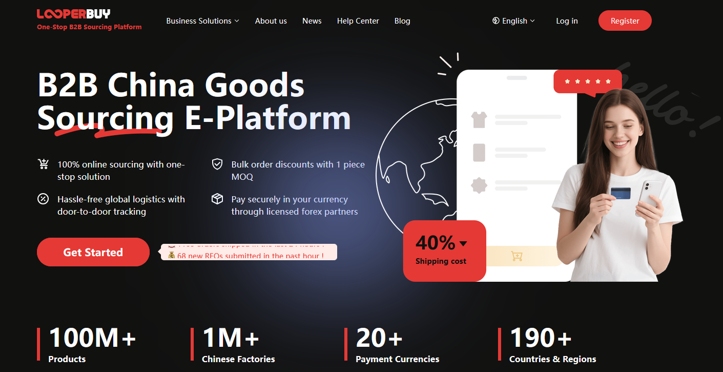
Looperbuy helps B2B sellers explore China product sourcing and dropshipping without making every new listing a bulk inventory commitment. Contact Looperbuy to discuss a pilot product list and destination markets, then request a written breakdown of sourcing, fulfillment, shipping, and exception-handling steps before you scale.
Frequently Asked Questions
1. What is the difference between a B2B ecommerce platform and a sourcing partner?
A B2B ecommerce platform manages digital selling functions such as catalogs, account pricing, approvals, and orders. A sourcing partner helps coordinate product purchasing and supplier-related work. They may exchange data, but one does not automatically replace the other.
2. Do enterprise ecommerce sellers need to hold inventory?
Not always. Some sellers purchase stock in advance; others arrange products after orders arrive or use a mixed model. The right approach depends on supplier lead times, demand, shipping expectations, and the cost of delays. Avoid promising immediate dispatch unless availability has been confirmed.
3. Is headless commerce necessary for a growing B2B business?
No. Headless architecture can offer flexibility, but it also creates integration and maintenance work. Choose it when a specific customer experience or operating requirement justifies that effort—not simply because the business expects to grow.
4. How can I assess a China sourcing and dropshipping provider?
Ask for a documented process covering supplier confirmation, specifications, inspection criteria, fees, dispatch, tracking, and exceptions. Run a limited pilot and compare the provider’s results with the terms and timelines agreed in advance.
5. Does DDP mean the buyer has no customs responsibilities?
Under DDP Incoterms® 2020, the seller is responsible for import clearance and related costs, while the buyer generally receives and unloads the goods at the agreed destination. Practical requirements still need checking: the ICC notes that a foreign seller may be unable to perform import clearance in some destinations.
6. What should I measure during an ecommerce fulfillment pilot?
Track confirmation time, specification accuracy, inspection failures, dispatch and delivery performance, exception-resolution time, and contribution per delivered order. Measure returns as well as successful shipments; both affect the decision to expand.
References
1. Nikolay Sidelnikov, [“Top 4 Enterprise eCommerce Platforms and Solutions Comparison”]
2. World Customs Organization, [“E-Commerce Package”]
3. World Customs Organization, [“Framework of Standards on Cross-Border E-Commerce”]
4. National Institute of Standards and Technology, [“Cybersecurity Framework 2.0: Quick-Start Guide for Cybersecurity Supply Chain Risk Management”]
5. Miguel Angel Bustamante, [“DAP & DDP Incoterms® 2020 Explained: Key Differences”]