
Learn how to avoid fake tracking numbers from dropshipping vendors. Discover carrier-level verification steps, warning signs, supplier audit methods, tracking exception workflows, and customer communication practices that help B2B sellers protect orders, revenue, and trust.
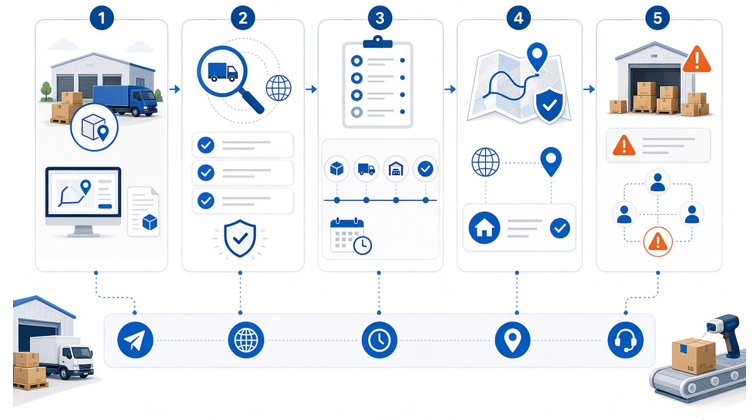
Fake tracking numbers from dropshipping vendors can damage more than one order. They can trigger chargebacks, customer complaints, marketplace disputes, and a lasting loss of trust in your store.
For global B2B sellers, a tracking number should be treated as fulfillment evidence, not simply a code pasted into an order dashboard. A real number must connect to the correct carrier, the correct parcel, and a shipment journey that makes commercial sense. At Looperbuy, we view reliable tracking as part of operational transparency: sellers need visibility from China sourcing and packing through international dispatch and final-mile delivery.
> Important distinction: “Label created” does not automatically mean “fake tracking.” USPS states that this status means a shipping label and tracking number exist, but the physical parcel has not yet been handed to USPS. The risk becomes serious when the status does not progress, the carrier cannot verify the number, or the shipment details conflict with the actual order.
Table of Contents
What Fake Tracking Looks Like
A fake tracking number is not always a completely random string of characters. In practice, it can take several forms:
– A number that does not exist in the carrier’s official system.
– A valid-looking label created without a parcel being dispatched.
– A recycled number previously used for another customer or destination.
– A number assigned to the wrong carrier, country, product, or delivery route.
– A tracking record showing “delivered” before the customer placed the order.
– A low-quality tracking page created to imitate a legitimate logistics provider.
The most difficult cases are misleading valid numbers. A supplier may provide a real tracking ID that returns carrier events, yet the shipment is going to a different address, contains a different item, or was generated for an old order. Looking only for “tracking found” is therefore not enough.
A reliable verification process checks four elements together:
| Verification point | What a credible shipment should show | Warning sign |
| Carrier identity | The named carrier recognizes the number | Supplier provides a carrier name but the official site returns no result |
| Order match | Destination country, postal region, and shipment timing align with the order | Tracking shows an unrelated country, city, or old delivery |
| Physical movement | Acceptance, pickup, or origin-facility event appears after dispatch | Status remains at label creation for an unexplained period |
| Route logic | Events follow a plausible China-to-destination sequence | Repeated scans, impossible locations, or delivery before export |
Verify Every Tracking Number
The best way to avoid fake tracking numbers from dropshipping vendors is to verify records at the carrier level before you mark orders as safely fulfilled. Do not rely only on a supplier’s spreadsheet, private dashboard, or screenshot.
1. Confirm the carrier directly
Ask the vendor for these details at the time the tracking number is issued:
– Carrier name.
– Shipping line or service level.
– Tracking number.
– Dispatch date and time zone.
– Origin country or warehouse.
– Expected delivery range.
– Final-mile carrier, where applicable.
Then enter the number into the official carrier website. For example, DHL says that a tracking ID uniquely identifies a shipment and that shipment events should generally appear within 24–48 hours after a merchant’s confirmation.
An aggregator can be useful for monitoring many carriers, especially cross-border lines. But carrier-native tracking should be your first escalation point when something looks wrong. A third-party platform may display delayed, incomplete, or incorrectly matched data.
2. Check the event timeline, not just the result
A tracking page that says “shipment information received” confirms only that shipment data has been transmitted. It does not prove that the parcel entered the carrier’s network.
For a new order, look for a progression such as:
1. Label created or shipment information received.
2. Carrier acceptance, pickup, or origin processing scan.
3. Export or line-haul handoff.
4. Destination-country arrival and customs processing, if applicable.
5. Final-mile handoff.
6. Delivery or an attempted-delivery event.
The timing varies by lane and service. Still, a vendor should be able to explain a missing first scan. If a shipment remains at “label created” with no carrier acceptance and no operational explanation, place it in an exception queue rather than reassuring the customer that it is already moving.
3. Match tracking to the destination
Many carrier pages do not reveal a full address for privacy reasons. That is normal. But you can still check whether the destination country, postal region, final-mile carrier, and delivery date are consistent with the order.
Ask a new vendor to provide redacted proof of dispatch when needed. A useful document normally includes the tracking ID, shipping date, service, parcel weight, and destination country. It should not expose the customer’s full name, telephone number, or street address.
If the vendor claims that a tracking number is “working” but cannot confirm the shipping route, parcel weight, or first carrier handoff, treat that as a material operational concern.
4. Recognize format only as a first filter
Tracking-number formats can help identify the claimed carrier, but format matching does not prove authenticity. DHL notes that DHL Express shipment numbers are typically 10 digits, while DHL eCommerce numbers can use a 16-digit format.
Likewise, many international postal items use the UPU S10 structure: two letters, nine digits, and two country-code letters. A familiar format can be fabricated, so use it to identify where to check—not as proof that a package exists.))
5. Audit a meaningful sample
Do not wait until a buyer complains. Review a sample of fulfilled orders every week, especially for new suppliers, new shipping lines, and high-volume products.
A practical sampling rule:
– Check every order from a new vendor for the first 30 days.
– Audit 10–20% of orders from established vendors each week.
– Review 100% of orders above your internal value threshold.
– Investigate every order with no physical movement after your defined scan window.
– Compare delivered tracking events against customer support tickets and refund requests.
This process often reveals problems that individual order checks miss, such as a vendor reusing one tracking number across several orders or selecting a shipping method that does not match the one sold to customers.
Build a Vendor-Control System
Fake tracking is usually not solved by one confrontation. It is prevented through a supplier operating standard that makes poor fulfillment visible early.
Set a written dispatch standard
Your supplier agreement or purchase-order terms should define what “shipped” means. Avoid vague language such as “tracking uploaded within 48 hours.” A label can be uploaded quickly without the parcel leaving the warehouse.
Instead, specify requirements such as:
– Tracking may be uploaded after the order is packed and assigned to a carrier service.
– The supplier must provide carrier acceptance or handoff evidence within an agreed window.
– The supplier must notify you before changing the carrier or shipping method.
– Each tracking ID may be linked to one order unless a documented consolidation arrangement applies.
– Vendors must correct carrier mismatches and missing scans within a stated response period.
– Repeated noncompliance can lead to payment holds, rerouting, or supplier removal.
A shipment promise needs evidence. This protects both the seller and the supplier by replacing subjective arguments with documented rules.
Use a tracking exception dashboard
Create a simple dashboard in your order-management system or spreadsheet. Each row should include order ID, supplier, product, tracking ID, carrier, first-event date, last-event date, destination country, promised delivery date, and exception reason.
Flag these conditions automatically where possible:
| Exception | Suggested action |
| Carrier returns “not found” after the vendor’s stated activation period | Request carrier confirmation and hold customer-facing shipment messaging |
| Label created but no acceptance event | Ask for proof of physical handoff and a revised timeline |
| Tracking destination does not align with the order | Freeze the record; request an explanation before using it |
| Delivered before the order date | Escalate immediately; investigate tracking reuse |
| Carrier or service changed without notice | Confirm whether delivery promise and cost remain valid |
| Repeated exceptions from one vendor | Audit the vendor’s full recent order sample and consider replacement |
A dashboard also makes vendor scorecards possible. Track acceptance-scan rate, average time to first physical scan, delivery-within-promise rate, tracking correction rate, and dispute rate. These metrics turn “this supplier feels unreliable” into an actionable decision.
Separate operational delay from deception
International delivery is complex. Weather, customs review, carrier capacity, incomplete shipping data, and missed scans can create genuine delays. Do not accuse a vendor of fraud based on one static event alone.
Instead, use an escalation ladder:
1. Ask for the carrier, service, dispatch date, and proof of handoff.
2. Verify the number on the carrier’s official system.
3. Request a written explanation for any mismatch or missing scan.
4. Set a short deadline for corrected evidence or reshipment.
5. Pause new fulfillment volume if the issue repeats.
6. Document the case before opening platform, payment, or contractual disputes.
This approach is firm without being careless. It preserves relationships with capable suppliers while preventing a pattern of unreliable tracking from reaching customers.
Protect Customers and Your Store
Customer communication matters because tracking is often the only proof a buyer sees after payment. Never tell a customer that an order is “in transit” merely because a label exists.
Use precise language. For example:
> “Your order has been prepared for dispatch. We will send an updated tracking notification after the carrier records its first handling scan.”
Once the first carrier acceptance event appears, your message can be stronger:
> “Your parcel has been accepted by the carrier and is now moving through the shipping network.”
This distinction reduces avoidable support tickets and prevents staff from making claims that the evidence does not support.
For sellers shipping to U.S. consumers, fulfillment promises also have compliance consequences. The U.S. Federal Trade Commission’s Mail, Internet, or Telephone Order Merchandise Rule requires sellers that cannot ship within the promised time to obtain consent for a delay or promptly refund the customer. The FTC further notes that, when no shipping date is provided, sellers generally have 30 days to ship.
The operational lesson is straightforward: do not build customer promises around unverified supplier updates. Build them around confirmed carrier events and realistic delivery windows.
Reliable cross-border fulfillment requires more than sourcing a product at a good price. It requires suppliers, warehouse teams, shipping partners, and sellers to share accurate order information at every handoff.
Choose a sourcing and fulfillment workflow that gives you clear order status, responsive exception handling, and shipment visibility from packing to delivery. Looperbuy can help B2B sellers source China-made products, coordinate fulfillment, and reduce the operational burden of inventory, warehousing, payments, and logistics management.
FAQs
1. Can a real tracking number still be fraudulent?
Yes. The number may belong to an old shipment, another customer, a different destination, or a parcel that was never actually handed to the carrier. Verify carrier recognition, event timing, destination consistency, and physical movement together.
2. How long should I wait for a tracking number to update?
It depends on the carrier and shipping service. DHL indicates that shipment events generally appear within 24–48 hours after merchant confirmation. If there is still no meaningful carrier event after your agreed scan window, request evidence of handoff rather than assuming the parcel is moving.
3. Does “shipping label created” mean the vendor scammed me?
Not necessarily. USPS explains that the label has been created but the parcel has not yet been given to USPS. It becomes a concern when the supplier cannot explain prolonged inactivity or provide proof of carrier handoff.
4. Should I use a multi-carrier tracking platform?
Yes, as a monitoring layer for international orders. However, verify suspicious records through the carrier’s own tracking page, because carrier-native data is the strongest available confirmation of a shipment record.
5. What should I ask a new dropshipping vendor before sending orders?
Ask for carrier options, processing times, first-scan expectations, shipping-line details, parcel-weight records, redacted proof-of-dispatch procedures, tracking-correction policy, and the escalation contact for delayed or mismatched shipments.
6. What is the fastest way to identify recycled tracking numbers?
Compare the tracking record with the order creation date, destination country or postal area, recent event timeline, and delivery date. A number showing delivery before the current order was placed should be investigated immediately.
References
1. United States Postal Service. “[Where Is My Package? Tracking Status Help].”
2. DHL. “[DHL eCommerce Tracking and Shipment Status FAQ].”
3. DHL. “[Track and Trace Your Express Shipment].”
4. U.S. Federal Trade Commission. “[Mail, Internet, or Telephone Order Merchandise Rule].”
5. U.S. Federal Trade Commission. “[What to Do If Your Online Order Never Arrives].”
6. Universal Postal Union S10 identifier background. “[S10 Standard Overview]).”