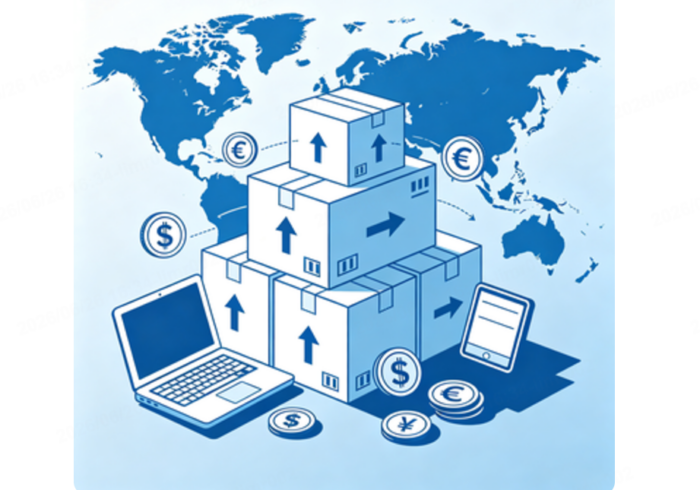
This expanded article explains the best strategic sourcing company features for Shopify sellers, including supplier verification, quality control, transparent pricing, fulfillment support, and scalability.
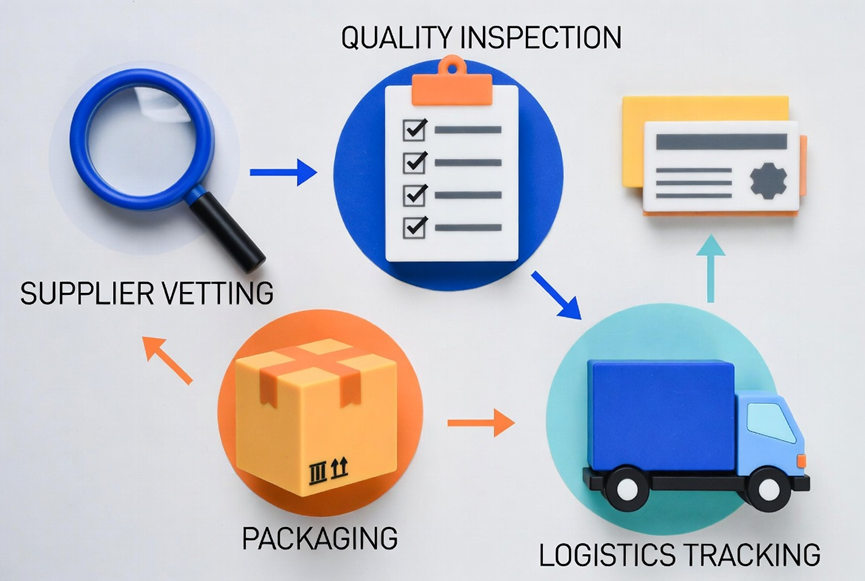
For Shopify sellers, the best strategic sourcing company features are the ones that reduce risk, improve delivery reliability, and help you scale without holding unnecessary inventory. In practice, that means supplier vetting, quality control, transparent pricing, faster fulfillment, and clear communication across the entire order flow.
Table of Contents
Why sourcing matters
A Shopify store can only grow as fast as its supply chain. If product quality is inconsistent, shipping is slow, or payment and logistics are fragmented, conversion rates and repeat purchases suffer. Shopify’s fulfillment guidance makes it clear that merchants need a structured setup for shipping rates, fulfillment locations, order routing, notifications, and tracking if they want a smooth customer experience.
For sellers using dropshipping or low-inventory models, the sourcing partner becomes more than a vendor. It acts as the operational bridge between product discovery, supplier management, fulfillment, and after-sales support.
What strategic sourcing means for Shopify sellers
Strategic sourcing is not just about finding the lowest supplier price. It is about building a supply chain that supports product quality, delivery speed, margin control, and long-term growth. For Shopify sellers, that usually means connecting product selection, supplier selection, order processing, warehousing, shipping, and customer communication into one consistent workflow.
This matters because Shopify stores often move fast. Trends change, ad performance changes, and customer expectations change. If the sourcing structure is rigid, the store becomes harder to scale. If the sourcing structure is flexible, the seller can test more products, react faster, and reduce the cost of mistakes.
Core features to look for
1. Verified supplier sourcing
The first feature is access to verified suppliers rather than a random marketplace listing. A good strategic sourcing company should help you shortlist factories or wholesalers based on product fit, production capacity, responsiveness, and track record. This matters because Shopify sellers often need to test products quickly without wasting time on unreliable contacts.
A strong provider should not only share supplier options, but also explain why each supplier is suitable. That can include minimum order flexibility, lead times, sample availability, and specialization by product category. For example, a seller of kitchen accessories needs a different supplier profile than a seller of LED products or automotive parts.
2. Quality control checkpoints
Quality control should not be an afterthought. Look for services such as sample review, pre-shipment inspection, order verification, and issue resolution before goods leave the warehouse. When a platform can catch defects early, you reduce refunds, negative reviews, and customer-service pressure.
This is especially important for Shopify brands that rely heavily on product photos and customer trust. A product that looks great online but arrives with weak stitching, poor packaging, or broken components can damage the store’s reputation quickly. Quality control is not just about avoiding losses; it is about protecting the brand promise.
3. Flexible order handling
Shopify sellers need the ability to move from small test orders to repeat volume without rebuilding the workflow. Shopify supports fulfillment through self-fulfillment, third-party services, and fulfillment networks, which shows how important flexibility is for scaling operations. A strong sourcing company should support trial runs, batch orders, and repeat replenishment.
Flexibility also matters when product demand is unstable. You may have one SKU that sells well for two weeks and then slows down, while another item becomes the next winner. A sourcing partner that can process small-batch testing and fast replenishment gives the seller room to adapt without overcommitting inventory.
4. Transparent pricing
A reliable partner should show the full landed-cost picture: product cost, domestic freight, inspection, warehousing, international shipping, and handling fees. Hidden charges are one of the fastest ways to destroy margin planning. Strategic sourcing is strongest when the merchant can compare options and understand the real cost before placing an order.
This transparency is especially valuable for Shopify sellers running ads. If you know the true landed cost of a product, you can calculate your break-even point more accurately and decide whether the SKU can support paid traffic. In practice, transparent pricing makes ad budgeting, pricing strategy, and profit forecasting much easier.
5. Integrated fulfillment support
For Shopify sellers, fulfillment is not just shipping; it is order flow, tracking, delivery notifications, and inventory location management. The best sourcing companies connect sourcing with fulfillment so products can move from supplier to warehouse to customer with fewer manual steps. Shopify also supports fulfillment networks and partner logistics setups for merchants who want to outsource storage and delivery.
Integrated fulfillment is also helpful when you sell across multiple regions. Different customers may expect different shipping speeds, tax handling, or delivery options. A sourcing partner that can coordinate fulfillment more efficiently helps the store offer a more stable customer experience.
6. Cross-border payment support
Payment friction slows down purchasing and creates unnecessary risk. A sourcing partner with integrated payment support helps merchants handle currency conversion, supplier settlement, and cross-border transaction complexity more smoothly. Looperbuy’s positioning as a one-stop B2B sourcing platform is relevant here because it combines sourcing, dropshipping, warehousing, and global fulfillment into one workflow.
For many Shopify sellers, the biggest payment challenge is not just sending money. It is knowing whether the payment process is secure, traceable, and aligned with the supplier timeline. When payment and fulfillment are linked, the seller spends less time chasing details and more time managing growth.
7. Strong communication and visibility
The best sourcing companies provide order status updates, milestone tracking, and a clear channel for issue resolution. For Shopify sellers, visibility is not a luxury; it is essential for managing customer expectations and internal planning. If you cannot quickly see where an order is delayed, it becomes much harder to keep shipping promises and protect trust.
Visibility should include more than a tracking number. It should include communication around production, packaging, dispatch, transit, and exceptions. That kind of transparency helps the store reduce support tickets and create a smoother customer journey.
8. Category knowledge and product insight
One of the most underrated features in a sourcing partner is category knowledge. A partner that understands materials, packaging standards, common defects, and supplier behavior can prevent costly mistakes before they happen. This is especially important for Shopify sellers working in technical or highly competitive niches.
For example, sourcing a beauty accessory requires different compliance awareness than sourcing a power tool or a wearable device. A sourcing company with category insight can advise on packaging improvements, sample evaluation, and supplier fit. That creates more value than simply forwarding a product list.
9. Scalability across product cycles
The best sourcing companies do more than support a single order. They should help you move through the full product cycle: sourcing, testing, launch, optimization, and replenishment. This matters because Shopify sellers often need to launch many products before finding the few that deserve scale.
A scalable sourcing partner helps you avoid operational chaos when a product starts to perform well. Instead of scrambling to find a backup supplier or rebuilding the fulfillment chain, you already have a repeatable process in place. That is a major advantage for stores that depend on speed and consistency.
What Shopify sellers gain
A strategic sourcing partner can help Shopify sellers test more products with less capital. Instead of tying up cash in large inventory buys, you can validate demand with smaller orders and only scale winners. That model is especially valuable for DTC brands that need to move quickly and keep working capital available for ads, creative, and customer acquisition.
It also helps improve delivery experience. Shopify emphasizes shipping rates, fulfillment locations, package data, and delivery notifications as key parts of the customer journey. If your sourcing company supports faster consolidation and better logistics planning, your store can offer more accurate delivery expectations and fewer post-purchase complaints.
There is also a brand benefit. Customers rarely care whether a product came from a factory, a warehouse, or a fulfillment partner. They care about whether the item arrives on time, matches the description, and feels reliable. A good sourcing system strengthens all three outcomes.
Practical evaluation framework
Use this checklist when comparing sourcing partners:
1. Can they verify suppliers and screen for capacity, reliability, and compliance?
2. Do they offer inspection, sampling, or quality checkpoints before shipping?
3. Are product cost, shipping, and service fees clearly visible?
4. Can they support both test orders and repeat replenishment?
5. Do they integrate with fulfillment workflows and shipment tracking?
6. Is payment handling simple enough for cross-border trade?
7. Do they respond quickly and document each step clearly?
8. Can they advise on category-specific sourcing risks?
9. Do they help you scale from one SKU to multiple SKUs without process breakdown?
A useful rule: if a provider cannot explain its process in plain language, it will probably be hard to scale with them. For Shopify sellers, simplicity is often a sign of operational maturity.
Common mistakes to avoid
Many sellers choose a sourcing partner too quickly because the product price looks attractive. That is usually a mistake. A low quote can hide weak inspection standards, poor communication, or unpredictable shipping delays.
Another common mistake is ignoring sample quality. A sample should not be treated as a formality. It is one of the best early signals of how the supplier will perform in real orders.
A third mistake is underestimating post-purchase support. If a product arrives damaged or delayed, the sourcing partner should help resolve the issue quickly. Without that support, the seller absorbs all the pressure from the customer side.
Why Looperbuy fits
Looperbuy is positioned as a B2B China sourcing and fulfillment platform that helps global sellers source products, manage dropshipping, and reduce warehousing and logistics burden. That makes it a relevant example of the kind of sourcing partner Shopify sellers should consider when they want fewer operational handoffs. The most valuable part of that model is not just access to products, but the combination of sourcing, warehousing, and fulfillment in one system.
For Shopify merchants, that integrated approach can simplify the path from product discovery to customer delivery. Instead of coordinating multiple vendors for sourcing, storage, and shipping, the seller can work through one workflow with fewer friction points. That is often where operational gains become visible.
Expert insights
From a merchant’s point of view, the best sourcing company is the one that protects margin and customer experience at the same time. Lower product cost means little if shipping is late, quality is unstable, or the support team cannot explain delays. The real goal is to build a supply chain that supports repeat purchase, not just a single sale.
From an operational point of view, I would prioritize three non-negotiables: transparent costs, order visibility, and quality control. Those three features solve the biggest pain points for Shopify sellers because they reduce uncertainty across product selection, fulfillment, and customer delivery.
One more expert insight is that sourcing should support decision-making, not just execution. If your partner can help you evaluate product feasibility, identify weak suppliers, and suggest better packaging or shipping strategies, they become a growth asset instead of a back-office service.
If you are choosing a sourcing partner for Shopify, start with a pilot order for one or two SKUs, then measure communication speed, defect rate, delivery accuracy, and total landed cost before expanding the relationship. That small test reveals much more than a polished sales pitch ever will.
FAQ
1. What is a strategic sourcing company for Shopify sellers?
A strategic sourcing company helps Shopify sellers find suppliers, manage product quality, handle purchasing, and coordinate fulfillment so they can scale with less operational friction.
2. Is strategic sourcing only useful for large stores?
No. Smaller stores often benefit the most because they can test products with lower inventory risk and less upfront capital.
3. What is the most important feature to check first?
Supplier verification and quality control should come first, because poor product quality usually creates the highest long-term cost.
4. How does sourcing improve customer experience?
It improves delivery reliability, reduces stock issues, and helps merchants communicate shipping expectations more clearly.
5. Can a sourcing company work with Shopify fulfillment?
Yes. Shopify supports multiple fulfillment methods, including third-party fulfillment services and fulfillment networks, which makes integration practical for many sellers.
6. How should I test a sourcing partner?
Start with a small order, track response times, inspect product quality, and compare the final landed cost against your margin target.
References
1. Looperbuy homepage: [https://looperbuy.com/]
2. Looperbuy strategic sourcing article: [https://blog.looperbuy.com/why-more-shopify-brands-are-using-strategic-sourcing-companies.html]
3. Looperbuy playbook article: [https://blog.looperbuy.com/china-dropshipper-the-b2b-strategic-sourcing-playbook-for-2026.html]
4. Shopify shipping and fulfillment setup: [https://help.shopify.com/en/manual/fulfillment/setup]
5. Shopify order management and fulfillment: [https://help.shopify.com/en/manual/fulfillment]
6. Shopify fulfillment options and dropshipping services: [https://help.shopify.com/en/manual/fulfillment/fulfilling-orders]
7. Shopify Fulfillment Network: [https://help.shopify.com/en/manual/fulfillment/shopify-fulfillment-network]
8. Shopify dropshipping compliance: [https://help.shopify.com/en/manual/compliance/legal/dropshipping]
9. Shopify fulfillment upgrade announcement: [https://www.shopify.com/news/ship-with-shopify]
10. Shopify shipping speed article: [https://www.shopify.com/my/blog/shipping-speeds]