B2B dropshipping gives global sellers a practical way to source products, reduce inventory pressure, and scale cross-border fulfillment with less operational risk. This guide explains how the model works, what buyers expect in 2026, how to choose suppliers, and how to build a more reliable sourcing operation.
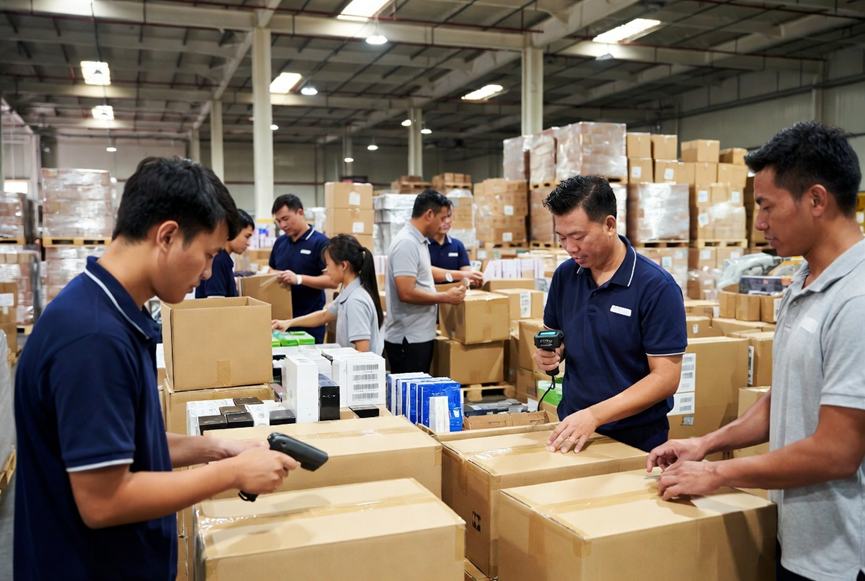
B2B dropshipping has evolved from a simple fulfillment model into a serious supply chain strategy for global sellers who want to grow without the burden of inventory, warehousing, or complex logistics. For merchants selling across borders, it offers a practical way to test demand, reduce capital pressure, and move faster in a market where delivery speed and visibility now shape buyer loyalty.
The model is especially relevant for brands sourcing Chinese goods for wholesale, resale, or marketplace fulfillment, because buyers today expect a smoother purchasing journey, clearer delivery timelines, and stronger operational reliability than they did only a few years ago.
Table of Contents
What B2B Dropshipping Means
B2B dropshipping is a fulfillment method where a business sells products without holding stock itself, while a supplier stores, packs, and ships the goods directly to the end buyer or to another business customer. In practice, the seller acts as the commercial layer, handling product presentation, pricing, customer communication, and payment flow.
This model is different from traditional wholesale because the seller does not need to buy large quantities upfront. It is also different from standard retail inventory management because fulfillment is delegated to a supplier network rather than controlled from a seller-owned warehouse.
In a B2B environment, the stakes are often higher than in typical consumer dropshipping. Orders may be larger, repeat purchases matter more, and buyers often need invoices, stable lead times, and predictable product quality. That means the business is not simply selling items; it is building a reliable procurement experience.
Why It Matters Now
The biggest reason B2B dropshipping matters in 2026 is that B2B buyers now behave much more like consumer shoppers. They want speed, transparency, real-time tracking, and simple self-service experiences, and many are willing to switch suppliers if the experience is poor.
That means the winning model is no longer just “find product, list product, ship product.” It is now “source reliably, communicate clearly, and fulfill predictably.” Businesses that can combine those three elements are much more likely to keep customers and scale sustainably.
Another reason this model is gaining importance is the pressure on global sellers to reduce fixed costs. Warehousing, import risk, and working capital requirements can make cross-border expansion difficult. Dropshipping lowers those barriers and gives sellers a lower-risk way to enter new markets.
How the Model Works
The B2B dropshipping flow is straightforward, but each step affects customer experience and margin. A seller lists products, receives an order, sends that order to a supplier, and the supplier ships directly to the buyer. The seller keeps the difference between the customer price and the supplier cost after fees and logistics.
A simple workflow looks like this:
1. The buyer places an order on your platform.
2. The order is routed to a verified supplier.
3. The supplier picks, packs, and ships the goods.
4. Tracking data is shared back to the buyer.
5. You manage post-sale service, invoicing, and issue resolution.
The model works best when catalog data, inventory availability, and shipping updates are synchronized in near real time. Without that, stockouts and delays quickly damage trust.
For B2B operators, another critical layer is order documentation. Many customers expect clear product specs, commercial terms, and proof of origin or compliance where needed. In other words, the process is not just about shipping a parcel; it is about delivering a complete purchasing experience.
Benefits for Global Sellers
For global sellers, the main advantage is capital efficiency. You can offer a wider range of products without locking money into inventory, storage, or unsold stock. This is especially valuable when you are testing a new market, a new product category, or a new customer segment.
It also supports faster expansion. Instead of negotiating warehouse space, stocking multiple SKUs, and managing freight complexity, sellers can focus on merchandising, pricing, and customer acquisition.
Another important benefit is flexibility. If one product underperforms, you can remove it quickly and replace it with another item, which makes the model useful for fast-moving categories and niche B2B demand.
There is also a strategic marketing advantage. A broad but carefully curated catalog allows you to speak to multiple buyer types without the cost of holding inventory yourself. That can be especially useful for platforms serving wholesalers, online retailers, Amazon sellers, Shopify merchants, and independent distributors.
Why Suppliers Benefit Too
Suppliers also gain from B2B dropshipping because they can expand distribution without building large sales teams or marketing funnels. They receive more orders from multiple channels, while the retailer handles customer acquisition and front-end sales.
This creates a broader market reach and reduces dependence on a single buyer or channel. In high-volume categories, that can help manufacturers and wholesalers smooth demand and reduce the risk of overproduction.
For Chinese manufacturers, the opportunity is especially strong when a platform can connect them to international buyers in a structured way, rather than forcing every partner to manage sourcing, payment, and shipping on their own. That is where a marketplace or sourcing platform becomes more valuable than ad hoc direct trade.
It can also help suppliers increase their global presence without investing heavily in overseas offices or sales networks. In many categories, the platform becomes the bridge between production capacity and fragmented demand.
Where Many Sellers Struggle
The model sounds simple, but the weak point is always execution. Sellers often overestimate profit and underestimate operational friction, especially when shipping times are long or supplier communication is slow.
Common problems include:
– Inaccurate inventory data.
– Slow response times from suppliers.
– Quality inconsistency between batches.
– Poor packaging or missing branding control.
– Refund disputes caused by delayed delivery.
These issues matter because buyer expectations have changed. Delivery visibility and dependable service are now core purchase factors, not optional extras.
Another common mistake is launching too many products too early. A large catalog looks impressive, but if the operational foundation is weak, it creates more service failures than revenue. In B2B, trust is cumulative, and one bad shipping experience can affect repeat orders much more than in a casual consumer store.
Choosing the Right Products
Product selection is one of the strongest predictors of success. Broad, generic items often compete on price alone, while niche B2B products can support stronger positioning and healthier margins.
A practical selection framework is:
1. Choose a category with clear commercial use.
2. Avoid products with constant price wars.
3. Prefer items that can be bundled or reordered.
4. Check whether shipping is lightweight, durable, and easy to return.
5. Make sure the product has enough margin to absorb fees and ads.
In B2B settings, repeat-purchase potential matters more than hype. A product that supports ongoing replacement, expansion, or replenishment usually performs better than a one-time novelty item.
You should also evaluate whether the product requires technical explanation. Items that need specifications, compatibility guidance, or application notes often convert better when you provide strong product content. That is an advantage for platforms that can pair sourcing with educational content.
Supplier Criteria That Matter
Supplier choice should be treated as a risk decision, not just a sourcing decision. A good supplier protects your brand; a weak supplier can damage it even when your storefront looks polished.
Use this checklist:
| Criterion | What to Look For |
| Shipping speed | Clear delivery windows and predictable transit times. |
| Inventory reliability | Real-time stock visibility and low cancellation rates. |
| Product quality | Samples that match specifications and photos. |
| Communication | Fast replies and clear escalation paths. |
| Returns handling | Simple refund or replacement process. |
| Integration | API, CSV, or platform-level sync for orders and tracking. |
A supplier that is slightly more expensive but consistent is often better than a cheaper option that creates hidden service costs later.
You should also test how the supplier handles exceptions. Ask what happens when an item is damaged, a shipment is delayed, or stock runs out unexpectedly. The answer to those questions usually tells you more than the product catalog itself.
A Practical Launch Plan
If you are launching B2B dropshipping, start with a narrow and testable setup. That lowers risk and gives you cleaner data on product performance and customer expectations.
Step 1: Define your niche
Choose a product category tied to a real business use case, such as packaging, industrial components, office supplies, or light manufacturing accessories. Avoid trying to sell everything at once.
Step 2: Vet suppliers
Request samples, test communication speed, and confirm shipping timelines before you list products. Do not rely on catalog claims alone.
Step 3: Build your storefront
Your product pages should answer the questions buyers are likely to ask: price breaks, lead times, minimum order rules, packaging options, and after-sales support. Clear content reduces friction and saves support time.
Step 4: Connect operations
Set up order routing, stock updates, and tracking notifications so the buying journey feels seamless. Automation is not optional once order volume starts to grow.
Step 5: Launch with limited SKUs
Start with a small catalog, observe conversion rates, and expand only after you know what buyers actually want. That keeps operations manageable and improves margins.
Step 6: Improve after the first orders
Review the first batch of orders carefully. Look at what was purchased, where delays occurred, what customers asked about, and which products generated the most follow-up questions. Those patterns are often more valuable than raw traffic data.
How Looperbuy Fits In
For global merchants, a platform like Looperbuy can reduce the hardest parts of cross-border sourcing by helping sellers access Chinese goods without taking on the full burden of inventory and logistics management. That is valuable when you want to serve international buyers but do not want to hold stock, rent warehouses, or manage complex fulfillment by yourself.
The strongest positioning is not “cheap sourcing.” It is reliable sourcing with operational simplicity. In today’s market, reliability is often more persuasive than a lower unit price.
A strong platform should help with product discovery, supplier connection, order processing, and international fulfillment in a way that saves time for both buyers and sellers. That is what turns a sourcing platform into a business growth tool rather than just a product directory.
Modern Buyer Expectations
B2B buyers now expect an experience that feels as smooth as B2C shopping. They want clear product data, predictable delivery, fast service, and a simple way to track orders or resolve problems.
That changes how you should design your content and storefront. Instead of writing only for procurement logic, write for confidence: explain transit time, order handling, quality control, and support steps in plain language.
A strong buying experience often creates more long-term value than a small discount. If buyers trust your process, they are more likely to reorder.
This is also why transparent communication matters at every stage. If a buyer knows when to expect dispatch, how long delivery will take, and whom to contact for help, the entire transaction feels safer and more professional.
Pricing and Margin Strategy
Pricing in B2B dropshipping is not just about marking up a product. It is about building enough room for service costs, payment fees, shipping variation, and occasional returns while still staying competitive.
A good pricing model should account for:
– Supplier cost.
– Packaging cost.
– Shipping cost.
– Platform or payment fees.
– Refund reserve.
– Customer acquisition cost.
– Target margin.
If you ignore even one of these items, your profit can disappear quickly. That is why low-price products are not always attractive, even when they generate traffic.
The best approach is often to set pricing bands rather than a single flat markup. Higher-value products can absorb more service cost, while lower-cost products may only work if they are bundled or sold in volume. That gives you more control over profitability.
Operations That Scale
Once the business starts receiving regular orders, operations become the real growth engine. The fastest way to lose customers is to let fulfillment quality fall behind sales growth.
Strong operations usually include:
– Real-time stock sync.
– Clear order status updates.
– Standardized supplier response times.
– Exception handling for delays or damage.
– A documented refund and replacement process.
You should also create internal workflows for common customer questions. If your team can respond quickly to shipping, tracking, and product-compatibility issues, buyers are more likely to trust the platform.
Another useful practice is to create a monthly supplier review. Measure late shipments, cancellation frequency, defect rates, and communication quality. Suppliers who repeatedly miss standards should be replaced before they affect your brand.
Operational Metrics To Track
Once the store is live, focus on a few numbers that tell you whether the model is healthy. These metrics show whether your sourcing and fulfillment setup is working or quietly eroding profit.
Track these:
– Order cancellation rate.
– On-time shipping rate.
– Average delivery time.
– Return and refund rate.
– Gross margin after fees.
– Repeat order rate.
If shipping time is improving but repeat orders are falling, the issue may be quality or communication rather than logistics alone. That is why operations should be measured as a system, not in isolation.
You should also watch customer service patterns. If the same questions keep appearing, your product pages may be missing key details. That is not just a content issue; it is an operational efficiency issue.
Content That Helps Buyers Decide
Strong product content can materially improve conversion in B2B dropshipping. Buyers often need more than a photo and a price; they need confidence that the product fits their use case and will arrive as expected.
Useful content elements include:
– A clear product overview.
– Key specifications.
– Material, size, or compatibility details.
– Lead time and shipping notes.
– Packaging and customization options.
– Quality control or inspection notes.
If you are targeting professional buyers, plain language usually works better than heavy marketing language. Buyers want clarity, not hype.
You can also use comparison tables to help buyers choose between similar products. That reduces decision friction and can increase average order value by making upsells easier to understand.
Risk Control Checklist
A reliable dropshipping business should be built with risk control in mind from day one. The aim is not to eliminate every issue, but to reduce the damage when problems happen.
Use this checklist:
1. Test every new supplier with small orders first.
2. Keep backup suppliers for high-volume items.
3. Confirm shipping timelines before publishing lead times.
4. Review product samples for consistency.
5. Create a clear refund policy.
6. Monitor delivery performance weekly.
This kind of system is especially important in cross-border trade, where delays can happen because of customs, transit congestion, or supplier-side errors.
The more transparent your process is, the easier it becomes to maintain trust even when problems occur. Buyers are usually more forgiving of a delay if they were informed early and given a realistic update.
A Better Way To Differentiate
The best B2B dropshipping businesses do not compete only on price. They compete on consistency, trust, and convenience. That means better product information, faster response times, cleaner logistics, and lower buying friction.
If you can make sourcing feel predictable, you create a real advantage. Buyers do not simply pay for a product; they pay for reduced risk.
A useful mindset is to think like a procurement partner, not only a seller. That shift changes how you choose products, how you write product pages, and how you handle after-sales support.
B2B dropshipping is still a strong model in 2026, but only for businesses that treat it as a disciplined operation rather than a shortcut. The winners will be the sellers who combine reliable sourcing, clear buyer communication, and efficient fulfillment into one smooth experience.
For global merchants looking to source from China without holding stock, the opportunity is significant. The key is to build around reliability first, then scale the catalog and channel mix once the supply chain is stable.
Explore a sourcing model that helps you reduce inventory pressure, simplify fulfillment, and serve global buyers with more confidence.
FAQ About B2B Dropshipping
1. What is B2B dropshipping in simple terms?
It is a sales model where you sell products without storing them yourself, and a supplier ships the order directly to the customer.
2. Is B2B dropshipping suitable for global sellers?
Yes. It is especially useful for sellers who want to test international demand without paying for inventory and warehousing upfront.
3. What is the biggest risk in B2B dropshipping?
The biggest risk is supplier inconsistency, especially slow shipping, poor quality control, or inaccurate stock data.
4. How do I choose a good supplier?
Check sample quality, shipping speed, communication, stock reliability, return handling, and whether the supplier can integrate with your order process.
5. Why do buyers care so much about shipping speed now?
Because B2B buyers increasingly expect the same convenience and visibility they see in consumer shopping, including tracking and predictable delivery windows.
6. Can B2B dropshipping support repeat business?
Yes, especially when you sell replenishable, consumable, or business-use products that naturally create reorders.
References
– Virto Commerce. “B2B Dropshipping: How to Make Business Easier.” [virtocommerce]
– FedEx Newsroom. “These B2B Business Trends Are Defining 2026.” [newsroom]
– Dropified. “The Complete Guide to Dropshipping in 2026.” [dropified]
– Doba. “2026 Dropshipping Trends: Surviving the Free Platform Era.” [doba]