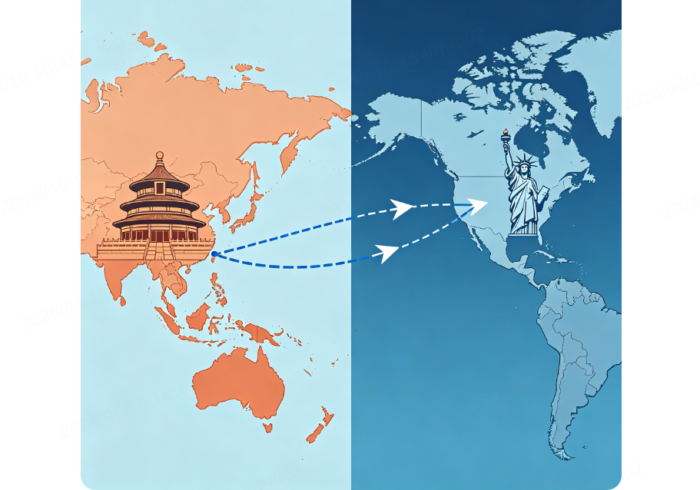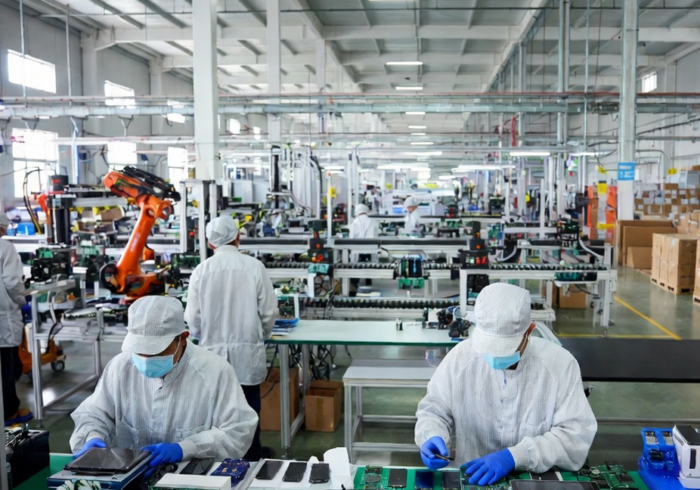
If you are a brand owner, wholesaler, or manufacturer searching for an industrial market research company to understand where global procurement is heading, the data from early 2026 tells a clear story: the old assumptions about sourcing are breaking down. Buyers are diversifying suppliers at record speed. Generative AI is reshaping how vendors get discovered. And Chinese manufacturers are no longer just competing on price—they are competing on quality in categories long dominated by Western premium brands.

I have spent the past several years watching procurement teams struggle to adapt to this new landscape. The winners are not the companies with the biggest budgets. They are the ones who understand the structural shifts happening right now.
Table of Contents
The Industrial Market Is Flattening—and China Is Moving Upmarket
A 2026 study of approximately 1,200 industrial companies found that the global industrial sector has stagnated, with no meaningful recovery anticipated before 2028 . The pressure is most intense at the premium end, where Chinese competitors have rapidly advanced into industrial robots, electrical equipment, and construction machinery.
The brand perception of Chinese products overseas may still lag, but the quality gap has narrowed dramatically. As one analysis put it, Chinese producers are leveraging input costs, material access, and manufacturing scale to erode the competitive edge of Western rivals .
For procurement leaders, this creates both opportunity and complexity. The opportunity is obvious: more high-quality Chinese suppliers than ever before. The complexity is equally obvious: finding, vetting, and managing those suppliers without a reliable partner is a full-time job.
Supply Chain Diversification Is No Longer Optional
The QIMA 2026 report delivered a striking finding: for North American buyers, the combined share of the top three supplier countries fell from 61% to 54% in a single year . European brands saw the top three suppliers drop from 77% to 70% over a longer period.
Here is what that means in practice. A textile buyer who once sourced 80% from China is now spreading orders across Vietnam, Thailand, and Cambodia. An electronics manufacturer is adding Malaysian and Mexican suppliers alongside their Chinese partners .
But diversification does not mean abandonment. China remains a critical sourcing partner for toys, electricals, and textiles. Many European brands actually increased inspection activity in China during Q4 2025 . The smart play is not to leave China—it is to build a multi-region supplier network where China plays a central, optimized role.
This is where a one-stop B2B sourcing platform becomes strategically valuable. Instead of managing dozens of fragmented supplier relationships across multiple countries, buyers can consolidate their China sourcing through a single partner that handles supplier vetting, quality control, logistics, and compliance.
B2B E-Commerce Is Where the Growth Is
The numbers are staggering. The global B2B e-commerce market was valued at approximately $33.7 trillion in 2026 and is forecast to reach nearly $48.1 trillion by 2030 . Asia-Pacific dominates with a share exceeding 79%, driven largely by China‘s $2.1 trillion export engine .
Marketplace purchasing now accounts for roughly 65% of B2B e-commerce activity, as multi-vendor comparison and transparent pricing have eclipsed traditional single-supplier contracts . Buyers want options. They want to compare. And increasingly, they want to transact on platforms that integrate supplier discovery, compliance verification, payment protection, and logistics into a single workflow.
[Image suggestion: A dashboard mockup showing multi-supplier comparison, landed cost calculator, and shipment tracking in one interface.]
How AI Is Changing Vendor Discovery—and What It Means for Sourcing Platforms
One of the most underappreciated shifts in B2B procurement is happening before a buyer ever contacts a supplier. According to 2025 research, 94% of B2B buyers now use AI at some point in their vendor research process . More than half of tech buyers rely on AI chatbots as a top source for vendor discovery, compared with just 28% in other industries .
Here is the uncomfortable truth for sourcing platforms: if your catalog, capabilities, and credibility are not structured in a way that AI systems can parse and cite, you are invisible to a growing share of buyers.
Practical takeaway for buyers: When evaluating an industrial market research company or sourcing platform, ask how their supplier data is structured. Can they surface verified suppliers for your specific category? Do they publish traceability and compliance information that AI tools can reference? A platform that treats its supplier network as a searchable, verifiable database is worth more than one that relies on personal relationships alone.
The Compliance Layer Buyers Cannot Ignore
Sourcing from China in 2026 is not just about price and quality. It is about regulatory exposure. In July 2026, the U.S. implemented tariffs of 10% and 12.5% on goods from 60 trading partners under Section 301, following determinations about forced labor law enforcement . Canada has proposed expanded forced labor import bans. The EU‘s Corporate Sustainability Due Diligence Directive is moving toward implementation .
For buyers, the practical implications are significant. Supply chain traceability is no longer a nice-to-have. Recruitment oversight at new supplier locations is essential. Cost pressures that squeeze supplier margins can inadvertently create forced labor risks .
A credible sourcing platform should help you navigate this. Look for partners who can document supply chain traceability, verify supplier compliance status, and provide audit-ready records for customs authorities.
What a One-Stop B2B Sourcing Platform Actually Delivers
This is where the value proposition becomes concrete. A platform like LooperBuy exists precisely because the gaps described above are real and costly for global buyers.
What buyers get:
- Access to the full breadth of Chinese manufacturing—from industrial equipment and electronics to textiles, home goods, and outdoor products . China’s B2B export categories span tools and equipment (27.6% share), textiles (17.2%), home products (13.2%), electronics (10.8%), and outdoor goods (8.9%) .
- Consolidated logistics and cost optimization. Instead of negotiating freight rates independently with every supplier, buyers get platform-level pricing and coordinated shipping.
- Supplier vetting and quality assurance. The platform filters out unreliable suppliers so buyers do not have to gamble on unverified factories.
- Compliance-ready documentation. As regulatory scrutiny intensifies across the US, EU, and Canada, having a partner who understands traceability requirements is a competitive advantage .
- A single point of contact for multi-category sourcing. One relationship, one purchase order workflow, multiple product lines.
[Image suggestion: A simple process flow diagram showing the four steps: Browse & Select, Verify Supplier, Place Order, Receive & Inspect.]
A Practical Framework for Evaluating Sourcing Partners
Not all platforms are equal. Based on the market shifts described above, here is a short checklist for buyers:
Does the platform specialize in B2B, or is it a consumer marketplace in disguise? B2B transactions require bulk pricing, customized specifications, and commercial terms that consumer platforms do not support.
Can it handle compliance documentation? Ask for sample traceability records. If the platform cannot produce them, you are absorbing the regulatory risk yourself.
How does it handle quality disputes? Look for escrow protection, inspection services, and clear remediation processes .
Is its supplier network verified? Platforms that audit manufacturing capability on-site provide materially lower risk than directories that allow self-listing .
The Bottom Line
The global sourcing landscape in 2026 rewards buyers who are structured, informed, and partnered with the right platforms. The era of relying on a handful of suppliers in a single country is fading. The era of AI-assisted, compliance-conscious, multi-region sourcing is here.
For brand owners, wholesalers, and manufacturers who want direct access to China‘s manufacturing base without the operational overhead, a specialized B2B sourcing platform is no longer a convenience—it is a strategic necessity.
Ready to simplify your China sourcing? Explore LooperBuy’s platform to compare verified suppliers, request quotes, and consolidate logistics across multiple product categories with a single partner.
FAQ
What is a one-stop B2B sourcing platform?
A one-stop B2B sourcing platform consolidates supplier discovery, price comparison, order placement, logistics coordination, and compliance verification into a single service. Instead of managing dozens of supplier relationships independently, buyers work through one partner that handles the operational complexity.
Why are global buyers diversifying away from single-country sourcing?
Trade tensions, tariff uncertainty, and regulatory pressure have made supply chain concentration risky . Buyers are spreading orders across multiple countries to build resilience, while still maintaining China as a core sourcing partner for many product categories.
How does AI affect B2B sourcing decisions?
Most B2B buyers now use AI tools during vendor research . AI systems summarize supplier capabilities, compare options, and surface potential risks. Platforms with structured, verifiable supplier data are more likely to appear in AI-generated recommendations.
What should I look for in an industrial market research company or sourcing platform?
Look for category depth, verified supplier networks, compliance documentation capabilities, transparent pricing, and logistics integration. Avoid platforms that rely on self-reported supplier data without verification.
Can small and mid-sized buyers access Chinese manufacturing directly?
Yes. Platforms like LooperBuy are designed specifically to give smaller buyers access to the same supplier networks that large enterprises use, without requiring an in-country sourcing team.
References
- AlixPartners, “The global press: Insights from AlixPartners‘ 2026 industrials study,” June 2026. https://www.alixpartners.com/insights/102n300/the-global-press-insights-from-alixpartners-2026-industrials-study/
- GII Research, “B2B E-commerce – Market Share Analysis, Industry Trends & Statistics, Growth Forecasts (2026 – 2031).” https://www.giiresearch.com/report/moi2100714-b2b-e-commerce-market-share-analysis-industry.html
- Statista, “B2B e-commerce: in-depth market analysis.” https://www.statista.com/study/44442/in-depth-report-b2b-e-commerce/
- Brafton, “How Buyers Use AI for Vendor Research, Shortlisting & Decision-Making,” May 2026. https://www.brafton.ca/blog/strategy/how-buyers-use-ai-for-vendor-research-shortlisting-decision-making-and-how-to-get-cited/
- Digital Commerce 360, “Generative AI begins to eclipse traditional search in B2B vendor discovery,” October 2025. https://www.digitalcommerce360.com/2025/10/15/generative-ai-traditional-search-b2b-vendor-discovery/
- Norton Rose Fulbright, “Forced labour tariffs and supply chain due diligence: Practical steps for companies,” August 2026. https://www.nortonrosefulbright.com/en-gb/knowledge/publications/6ea7c657
- The Financial Express / QIMA, “Rising uncertainty pushes global supply chains to diversify in 2026,” January 2026. https://today.thefinancialexpress.com.bd/trade-market/rising-uncertainty-pushes-global-supply-chains-to-diversify-in-2026-1769360344
- Ropes & Gray LLP, “A Busy Friday for Corporate Human Rights Compliance,” June 2026. https://www.ropesgray.com/en/insights/viewpoints/102n2qv
Article Summary (for meta description / social sharing)
Global buyers are diversifying suppliers, AI is reshaping vendor discovery, and China remains central to industrial sourcing. This guide explores how a one-stop B2B sourcing platform helps brands and wholesalers navigate compliance, logistics, and multi-category procurement in 2026.
Hot Tags
industrial market research company, B2B sourcing platform, China sourcing 2026, global procurement trends, B2B e-commerce market, supply chain diversification, vendor research AI, industrial sourcing platform, wholesale sourcing China, procurement outsourcing