Factory Direct Dropshipping vs Warehouse Fulfillment: explore which model is more flexible for global B2B sellers sourcing from China. Compare risk, speed, logistics, branding, and discover how Looperbuy enables an agile, hybrid fulfillment strategy.
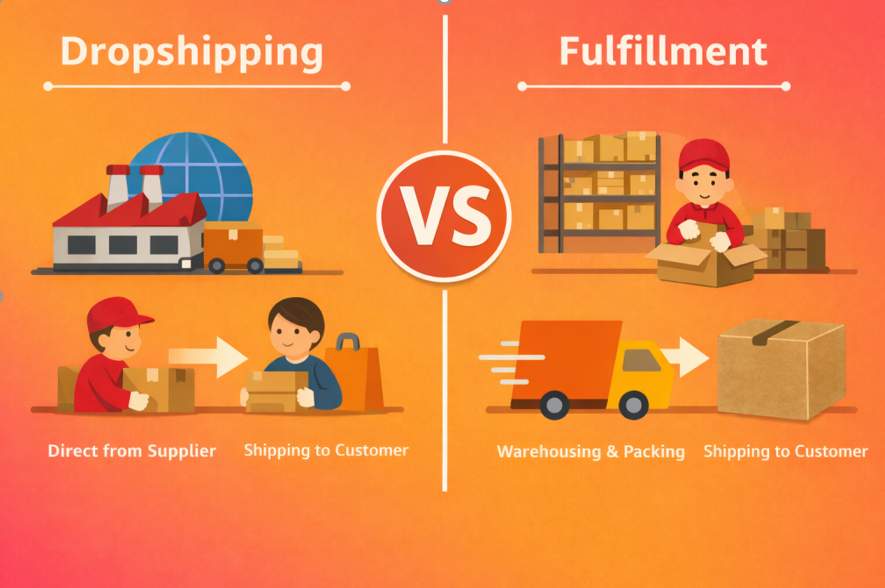
Table of Contents
What Do We Mean by “Factory Direct Dropshipping” and “Warehouse Fulfillment”?
Factory direct dropshipping: quick definition
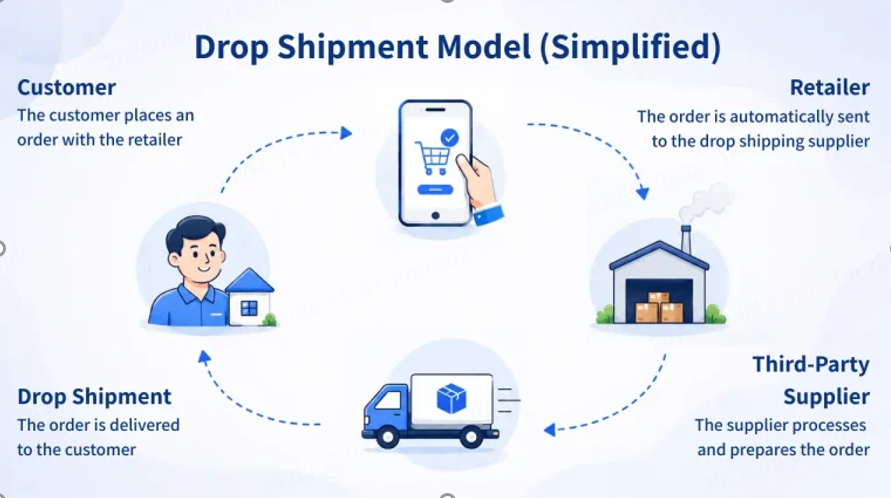
Factory direct dropshipping means you list products online, but your Chinese factory or sourcing partner ships orders directly to your buyers, under your brand or store name. You do not buy inventory upfront, rent a warehouse, or manage packing and shipping yourself. [pxp]
Key characteristics:
– No inventory commitment before sales. [looperbuy]
– Orders are pushed from your store or B2B platform to the supplier’s system.
– The supplier (or a platform like Looperbuy) handles picking, packing, export paperwork, and cross‑border shipping. [virtocommerce]
– You pay per order instead of locking cash into stock and facilities. [pxp]
Warehouse fulfillment: quick definition
Warehouse fulfillment means you own or pre‑purchase inventory and store it in a warehouse in your target market or a regional hub. When a B2B buyer places an order, your own team or a 3PL (third‑party logistics provider) picks, packs, and ships from that warehouse. [elogy]
Key characteristics:
– You commit to inventory in advance.
– You pay warehousing, handling, and local logistics fees regardless of sales volume. [elogy]
– You usually get faster local delivery and more control over packaging and value‑added services (bundling, labeling, kitting). [elogy]
Why Flexibility Matters for Global B2B Sellers in 2026
The global dropshipping market is forecast to grow from roughly USD 343 billion in 2026 to over USD 1.8 trillion in the coming decade, driven by merchants seeking lighter operations and faster product experimentation. At the same time, cross‑border B2B e‑commerce is projected to keep expanding through 2033, reaching around USD 18.6 trillion as more brands sell globally instead of only domestically. [shopify]
From my experience working with B2B merchants and manufacturers, “flexibility” usually means:
– How fast you can launch or remove SKUs.
– How easily you can enter or exit new markets.
– How much capital you must lock into stock and infrastructure.
– How resilient your operations are when demand spikes, shifts, or drops.
The right model is not “one‑size‑fits‑all”; it depends on your product maturity, order patterns, and risk tolerance. However, factory direct dropshipping often wins the flexibility battle in the testing and early‑scale phases, especially when sourcing from China for global buyers. [looperbuy]
Head‑to‑Head Comparison: Flexibility Dimensions
High‑level comparison table
Flexibility Perspective 1: Capital, Risk, and Profit
How each model handles cash and risk
As a content strategist working with B2B sellers, I often see that capital flexibility is the real bottleneck, especially when entering new product categories sourced from China.
Factory direct dropshipping:
– You can launch with near‑zero inventory investment, which makes it easier to test dozens of SKUs and keep only the winners. [pxp]
– Dropshipping merchants typically generate around 50% more profit than retailers relying purely on onsite inventory, largely because they avoid overstock and dead stock. [getcarro]
– Suppliers themselves earn roughly 18% more selling to dropshippers than running their own stores, which incentivizes factories to support dropshipping programs. [getcarro]
Warehouse fulfillment:
– You must predict demand and purchase inventory upfront, which is risky in volatile categories or new markets. [elogy]
– If B2B buyers change demand or a product fails to gain traction, you sit on unsold stock and still pay storage and handling fees. [elogy]
– Profit margins can be strong once volume is stable, but the path to that stability is capital‑intensive.
From a pure financial flexibility standpoint, factory direct dropshipping is usually more forgiving, especially for small and mid‑size B2B sellers or brands entering a new region. [looperbuy]
Flexibility Perspective 2: Speed of Testing and Iteration
Trying new products and categories
Factory direct dropshipping shines when you want to test:
– New product categories from different Chinese factories.
– Different price points or bundles for the same buyer segment.
– Seasonal or trend‑driven SKUs with uncertain longevity.
Because you do not have to pre‑buy cases or pallets, you can rotate your catalog quickly based on real order data, not just market guesswork. [virtocommerce]
Warehouse fulfillment is more rigid:
– Adding a SKU means negotiating MOQs, arranging inbound shipping, and allocating shelf space.
– If a test fails, clearing stock can take months and discounting erodes margins. [elogy]
– You may hesitate to test aggressively, which slows learning and market fit.
For B2B merchants who need fast product iteration, especially on a platform like Looperbuy that connects directly to Chinese suppliers, factory direct dropshipping is the more flexible learning engine. [virtocommerce]
Flexibility Perspective 3: Global Expansion and Logistics
Cross‑border complexity vs local presence
Global retailers that expand into more countries generally see higher profits over time, but they also face more logistical complexity and costs. The fulfillment model you choose changes how easily you can expand. [broad.msu]
Factory direct dropshipping:
– Your Chinese supplier or platform handles export workflows, customs documentation, and international shipping options. [shopify]
– You can serve buyers in multiple regions via the same upstream fulfillment network, instead of duplicating warehouses country by country. [shopify]
– Platforms like Looperbuy specialize in helping overseas sellers avoid warehousing, bulk purchasing, and complex logistics management, making cross‑border expansion more plug‑and‑play. [looperbuy]
Warehouse fulfillment:
– To improve delivery times and tax regimes, you typically need regional hubs, which means negotiating with 3PLs or setting up your own warehouses region by region. [elogy]
– The model can deliver excellent local service, but it is slower and more expensive to roll out globally.
If your priority is entering new countries quickly with low fixed costs, factory direct dropshipping offers markedly better flexibility. [shopify]
Flexibility Perspective 4: Service Levels, Branding, and Control
Where warehouse fulfillment is more flexible
Flexibility is not only about speed and capital; it is also about how flexibly you can shape the buyer experience.
Warehouse fulfillment gives you:
– More control over packaging and branding: custom cartons, inserts, co‑packed bundles, and localized documentation. [elogy]
– The ability to implement very specific SLAs: next‑day delivery, strict cut‑off times, and specialized handling (fragile, temperature‑sensitive, compliance labels). [elogy]
– Easier returns processing and after‑sales support, especially for domestic buyers. [elogy]
Factory direct dropshipping can also offer branding options, but the level of customization depends heavily on the supplier or sourcing platform. Some factories can handle branded packaging and inserts; many focus on standard, high‑throughput packing. [virtocommerce]
From a UX perspective, warehouse fulfillment can be more flexible in designing premium, tightly controlled buyer experiences, once volumes justify the infrastructure. That said, for many B2B buyers, cost and availability still outweigh ultra‑premium packaging. [elogy]
Expert Insights: When to Choose Each Model
Based on current data and working with B2B clients, a pragmatic pattern emerges:
1. Use factory direct dropshipping to explore and validate.
2. Shift selected SKUs to warehouse fulfillment once demand is stable and predictable.
A data‑backed approach could look like this:
– Start with factory direct dropshipping from Chinese suppliers to validate demand in 3–5 markets. [pxp]
– Track order velocity, return rates, and service feedback for 90–180 days.
– For SKUs with consistent volume and strong margins, consider hybridizing: keep dropshipping active for long‑tail regions but move high‑volume countries to local warehouse stock for faster service. [elogy]
This hybrid model lets you retain dropshipping’s catalog flexibility while capturing warehouse fulfillment’s service and branding advantages on proven winners. [pxp]
Practical Scenario: Global B2B Seller Using Looperbuy
Imagine you run a mid‑size B2B e‑commerce operation selling tools and small equipment to wholesalers in Europe and North America.
– Phase 1: You connect your store to Looperbuy and start factory direct dropshipping from vetted Chinese suppliers, avoiding upfront stock risk. [looperbuy]
– You test 150 SKUs across three product lines, quickly removing underperformers and doubling down on top performers.
– Phase 2: After six months, 20 SKUs consistently generate large orders in one region. You maintain dropshipping for smaller regions but move those 20 SKUs into a regional warehouse or 3PL close to major customers. [elogy]
– Result: You keep maximum catalog flexibility while delivering faster service where it matters most, without initially over‑investing in warehouses.
This kind of blended strategy is often where B2B sellers get the best of both worlds.
Step‑by‑Step: How to Decide Which Model Is Better for You
1. Clarify your current stage
– Early stage / new market test
– Scaling stage in a few key countries
– Mature stage with stable, repeat B2B contracts
2. Score your priorities (1–5 scale)
For each factor, rate how critical it is:
– Low upfront capital
– Speed of SKU testing
– Delivery speed and predictability
– Branding and packaging control
– Simplified logistics and compliance
– Ability to handle large, repeat orders
If capital, SKU testing speed, and simplified logistics get the highest scores, you are likely better off leading with factory direct dropshipping. If delivery speed, branding control, and repeat contract orders dominate, warehouse fulfillment or a hybrid model may be stronger. [virtocommerce]
3. Map SKUs to fulfillment models
Instead of one decision for your entire catalog:
– Assign volatile, trend‑driven, low‑volume SKUs to factory direct dropshipping.
– Assign stable, high‑volume SKUs with tight SLA requirements to warehouse fulfillment.
This SKU‑level mapping gives you operational flexibility across both models.
How Looperbuy Can Increase Your Flexibility
Looperbuy is designed as an online B2B sourcing and dropshipping platform focused on Chinese products, helping global merchants cut inventory, warehousing, and logistics management costs. In practice, that means you can: [looperbuy]
– Consolidate sourcing from multiple Chinese factories into one platform.
– Use factory direct dropshipping to fulfill B2B orders directly from China without stocking inventory upfront. [looperbuy]
– Rely on Looperbuy’s logistics and fulfillment network to handle cross‑border shipping and reduce your operational workload. [looperbuy]
For B2B sellers balancing risk and growth, this significantly improves operational flexibility, especially in the early and growth stages of market expansion.
> Ready to test factory direct dropshipping without locking cash into inventory? Explore how Looperbuy can connect you to vetted Chinese suppliers and flexible fulfillment options today.
FAQs
1. Is factory direct dropshipping reliable enough for B2B buyers?
Yes, provided you work with vetted factories or specialized sourcing platforms that manage quality control, export compliance, and logistics at scale. Many B2B buyers care most about consistent lead times and communication, which you can deliver via strong supplier SLAs. [virtocommerce]
2. When does warehouse fulfillment become more cost‑effective than dropshipping?
Warehouse fulfillment becomes attractive when a SKU’s demand is stable, volumes are high, and local delivery speed is a competitive advantage. At that point, bulk purchasing and local storage can reduce per‑unit logistics costs despite higher fixed overheads. [elogy]
3. Can I use both factory direct dropshipping and warehouse fulfillment at the same time?
Yes, many successful B2B merchants run a hybrid model: they dropship for new or low‑volume SKUs and store proven winners in local warehouses for faster delivery. This mix optimizes flexibility and service quality. [pxp]
4. How does cross‑border shipping impact delivery times for factory direct dropshipping?
Cross‑border shipments from China can take longer than local fulfillment and are more exposed to carrier and customs variability. However, using optimized shipping lanes and pre‑cleared solutions can significantly reduce delays for many routes. [shopify]
5. Is dropshipping still growing, or is it a passing trend?
Dropshipping continues to grow, with the global market expected to expand at over 20% CAGR toward 2034, reaching several trillion dollars in value. This growth is driven by merchants seeking asset‑light, flexible models that support global e‑commerce. [gminsights]
References
1. Carro – “80+ Ecommerce & Dropshipping Statistics for 2026.” [getcarro]
2. PXP – “Why Drop Shipping Could Be Your Best Business Move Yet.” [pxp]
3. Michigan State University – “How retailers can boost performance while expanding globally.” [broad.msu]
4. Shopify – “2026年如何完胜B2B跨境电商 (How to Win B2B Cross‑Border Ecommerce in 2026).” [shopify]
5. Global Market Insights – “Dropshipping Market Share, Analysis & Forecast, 2026‑2035.” [gminsights]
6. Fortune Business Insights – “Drop Shipping Market Share, Size, Trends, Forecast, 2034.” [fortunebusinessinsights]
7. Looperbuy – “Dropshipping – LooperBuy Resources.” [looperbuy]
8. DHL – “跨境电商营销新篇章:十大策略打造消费者信任基石.” [dhl]
9. Elogy – “E‑commerce fulfillment 2026: Types, costs & trends.” [elogy]
10. Virto Commerce – “B2B Dropshipping: How to Make Business Easier.” [virtocommerce]