This article reviews the best places to sell products online for B2B sellers, from global marketplaces to branded stores and sourcing platforms. It explains where different products sell best, what buyers expect in 2026, and how Looperbuy helps merchants source from China and fulfill globally with less operational burden.
Finding the best places to sell products online is no longer just about traffic. For B2B sellers, the right channel is the one that brings qualified buyers, supports repeat orders, and fits the way you source, price, fulfill, and scale.
For brands, wholesalers, and exporters selling globally, the smartest strategy is usually a mix of marketplaces, B2B commerce platforms, and your own store. That combination gives you reach, control, and room to grow without relying on a single sales channel.
Table of Contents
Why online selling channels matter
The online selling landscape has changed a lot since many classic marketplace guides were first published. Buyers now expect faster discovery, clearer pricing, easier reordering, and better fulfillment visibility across every channel.
In B2B, this matters even more because transactions are larger, buying cycles are longer, and operational mistakes are more expensive. A platform that looks attractive on traffic alone may still fail if it cannot support account-based pricing, quotations, inventory sync, or cross-border logistics.
Marketplaces vs selling platforms
An online marketplace connects many sellers to many buyers in one place, while a selling platform helps you build your own branded storefront or buying experience. The best choice depends on whether you want immediate demand or greater control over the customer journey.
Marketplaces can help you start faster, but they also bring more competition and less control over branding. Selling platforms usually require more setup, yet they give you stronger ownership of customer data, pricing logic, and repeat purchase flows.
Best places to sell online
1. Amazon
Amazon remains one of the biggest online selling channels in the world and can work well for high-demand products with broad appeal. It is often best for sellers who want rapid visibility and can handle fee pressure, intense competition, and stricter operational expectations.
2. eBay
eBay is useful for auction-style selling, niche inventory, refurbished goods, and products with variable pricing. It is still a major global marketplace, but success usually depends on strong listing optimization and competitive margins.
3. AliExpress
AliExpress is a strong option for cross-border selling and low-price product categories, especially for sellers connected to Chinese manufacturing. It can be effective for export-focused businesses that want international reach and flexible order sizes.
4. Walmart Marketplace
Walmart Marketplace is attractive for sellers who want access to a large retail audience and a more structured marketplace environment. It is often better suited to established sellers with reliable fulfillment and product quality controls.
5. Rakuten
Rakuten is especially relevant for sellers targeting Japan or buyers who already trust its ecosystem. It is often appealing for brands that want access to a mature commerce environment with loyalty and partner services around it.
6. Etsy
Etsy is best for handmade, personalized, creative, and design-led products. It is not ideal for broad industrial or commodity B2B supply, but it remains a valuable channel for artisan or small-batch sellers.
7. Faire
Faire is one of the most relevant wholesale marketplaces for independent brands and retail buyers. It works particularly well when you want to reach boutique retailers and small stores that place repeat wholesale orders.
8. Thomasnet
Thomasnet is a serious option for industrial B2B suppliers looking for verified visibility. It is especially useful for manufacturers, distributors, and sourcing teams that care about supplier trust, certifications, and production capability.
9. IndiaMART
IndiaMART is widely used for supplier discovery and lead generation in global sourcing. It is often strongest for businesses that want to connect with buyers looking for industrial goods, machinery, components, and trade leads.
10. Made-in-China
Made-in-China is highly relevant for exporters and Chinese manufacturers targeting international buyers. It is especially useful for businesses that want a marketplace built around sourcing, trade assurance, and supplier discovery.
11. DHgate
DHgate is often used for low-MOQ wholesale products and cross-border trade. It can be a practical channel for sellers that need smaller order quantities, broad product coverage, and global buyer access.
12. HKTDC
HKTDC supports sourcing, trade promotion, and buyer-supplier discovery with a strong international trade orientation. It can be helpful for exporters that want a more trade-focused environment than a consumer-led marketplace.
13. Kompass
Kompass is valuable for B2B lead generation, company discovery, and international sales outreach. It is less of a transaction-first marketplace and more of a business directory and prospecting platform.
14. Europages
Europages is useful for businesses targeting European buyers and supplier searches. It can help with visibility in regional trade, especially when localized discovery matters.
15. Your own B2B store
Building your own store gives you the highest level of control over branding, buyer experience, margins, and repeat sales. For long-term growth, it is often the best place to sell when you want predictable operations and direct customer relationships.
16. Looperbuy
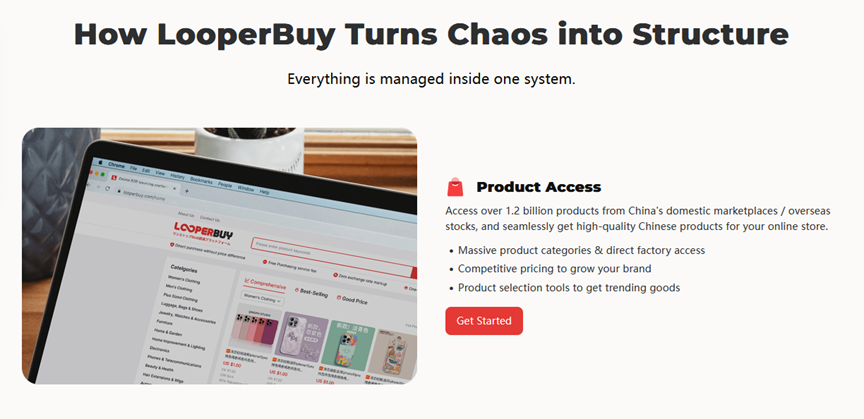
Looperbuy is a strong fit for sellers who want to source from China and sell globally without carrying the full burden of inventory, warehousing, or logistics management. For B2B merchants, that can mean lower risk, faster testing of products, and easier expansion into new markets.
What B2B sellers should prioritize
B2B sellers should not choose a channel only because it is popular. The right platform should match your pricing model, fulfillment structure, buyer type, and growth goals.
Before committing, check whether the channel supports these essentials:
– Wholesale pricing or volume discounts.
– RFQ or quoting workflows.
– Bulk ordering and reorder support.
– Inventory and logistics visibility.
– Cross-border payment options.
– Buyer account management.
These capabilities matter because B2B buyers want speed, clarity, and consistency across repeat transactions.
How to choose the right channel
A practical way to choose is to match the channel to your business model. For example, a fast-moving consumer-like product may perform best on a large marketplace, while a technical or industrial product often does better on a B2B platform or branded storefront.
Use the table below as a quick decision guide.
| Channel type | Best for | Main strength | Main limitation |
| Amazon / eBay | Broad product reach | High traffic | Strong competition and fees |
| Thomasnet / Kompass | Industrial B2B lead generation | Buyer trust and visibility | Less transaction-focused |
| Faire / HKTDC | Wholesale and trade buyers | Qualified buyer intent | Narrower audience |
| Your own store | Brand control and repeat sales | Ownership of customer data | Requires marketing and operations |
| Looperbuy | China sourcing and global fulfillment | Lower inventory burden | Needs strong product and supplier strategy |
New opportunities in 2026
One of the biggest shifts in 2026 is how buyers discover products. AI-assisted shopping and search are influencing more purchasing journeys, which means product data quality, structured catalogs, and clear content are more important than ever.
Another major trend is that B2B commerce is becoming more digital-first. Recent market reports point to continued expansion in global B2B ecommerce, with the market measured in the tens of trillions of dollars and still growing fast.
That means sellers should think beyond “where can I list my products?” and ask “where can I build a repeatable sales engine?”
Practical selling steps
If you want better results, follow a structured launch process:
1. Define your buyer. Know whether you are selling to retailers, distributors, importers, or end buyers.
2. Choose one primary channel. Start with the platform that best matches your product and fulfillment model.
3. Build strong listings. Use clear titles, specifications, images, MOQ details, and shipping terms.
4. Set pricing logic. Prepare tiered pricing, discounts, and margin thresholds.
5. Track performance. Measure inquiries, conversion rate, repeat orders, and fulfillment issues.
6. Expand gradually. Add new channels only after your first channel is stable.
This approach reduces wasted effort and makes growth easier to manage.
Start sourcing and fulfilling without holding inventory.
Discover how Looperbuy helps global B2B sellers source from China, simplify logistics, and scale with less operational risk.
FAQ
1. What is the best place to sell products online for B2B sellers?
The best place depends on your product type and sales model. Industrial sellers often do well on Thomasnet or similar B2B directories, while wholesale brands may prefer Faire or their own store.
2. Is a marketplace better than my own store?
A marketplace is better for fast exposure, while your own store is better for control, repeat sales, and branding. Many businesses use both.
3. What makes a platform good for B2B selling?
The most important features are volume pricing, quoting, account management, bulk ordering, and reliable fulfillment.
4. Which platforms are best for export-focused Chinese sellers?
Made-in-China, AliExpress, and broader global marketplaces can work well, depending on whether you want lead generation, wholesale reach, or direct international sales.
5. How can Looperbuy help B2B sellers?
Looperbuy helps sellers source from China and fulfill orders globally without carrying the full operational burden of inventory, warehousing, and logistics management.
6. Should I sell on multiple platforms at once?
Yes, but only after your first channel is stable. Multi-channel selling works best when pricing, inventory, and customer service are already under control.
References
1. Virto Commerce Blog, “16 Best Places to Sell Your Products Online” — [virtocommerce]
2. Shopify Enterprise Blog, “Best B2B Ecommerce Platforms for 2026: Top 15 Enterprise Solutions Compared” — [virtocommerce]
3. Guideflow Blog, “8 best B2B ecommerce platforms for 2026” — [guideflow]
4. B2B Headlines, “Top 10 Best B2B Marketplaces in 2026” — [b2bheadlines]
5. Mordor Intelligence, “B2B E-commerce Market Size, Share & 2031 Growth” — [mordorintelligence]
6. Grand View Research report snippet via search result on B2B ecommerce market growth [grandviewresearch]
7. Shopify AI commerce growth discussion and reporting snippets [digg]