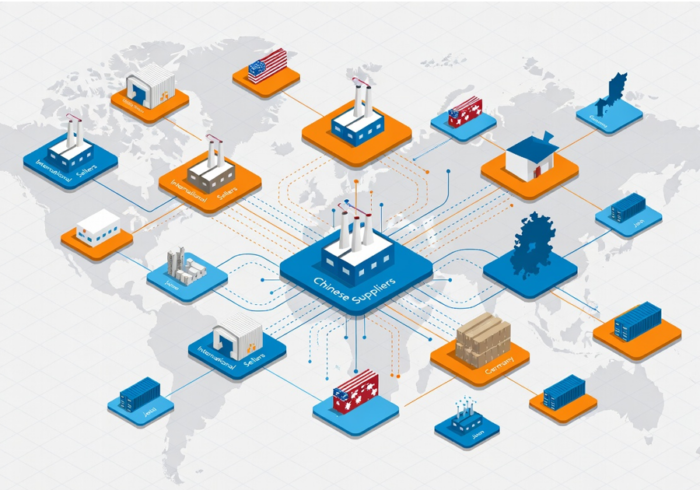
The global white label manufacturing market is poised to reach $95.8 billion by 2026, growing at a compound annual growth rate of 7.8% from 2021 to 2026. As a procurement professional who has spent over a decade navigating cross-border supply chains, I have watched this model evolve from a niche strategy into a mainstream powerhouse. Yet with this explosive growth comes a critical question: How can global brands, wholesalers, and manufacturers efficiently source white label products from China without getting lost in translation, quality control nightmares, or logistical chaos?
The answer lies in the rise of One-Stop B2B Sourcing Platforms — digital ecosystems that consolidate supplier discovery, payment, quality assurance, and logistics into a single streamlined workflow. In this article, I will share my perspective on why white label sourcing is dominating 2026, the common pitfalls that trip up even experienced buyers, and how platforms like LooperBuy are fundamentally changing the game for international procurement.
Table of Contents
Why White Label Sourcing Is the Smartest Move for Brands in 2026
Let us be honest about what white label really means. A white label product is a generic, ready-made item produced by a manufacturer that businesses can rebrand and sell under their own name. Unlike private label — which often involves custom formulations, unique packaging, and exclusive tooling — white label products allow you to leverage an existing product and focus your resources on branding, marketing, and customer experience.
The advantages are compelling:
- Rapid market entry: You can launch new products in weeks, not months. In fast-moving industries like consumer electronics or lifestyle goods, speed-to-market is often the difference between a bestseller and a write-off.
- Low capital investment: You avoid the heavy burdens of R&D, tooling, and production facilities. Consider that Samsung spent $24 billion on R&D in 2024. Most small and medium businesses simply do not have that kind of capital. White label removes that barrier entirely.
- Scalable product expansion: As your brand grows, you can quickly add new white label items to meet evolving customer demands without the constraints of in-house production.
- Cost-effective operations: By outsourcing manufacturing and logistics, you free up resources to reinvest into marketing, customer service, and product development.
According to NielsenIQ data from 2025, private-label products were already 16% cheaper than branded equivalents, yet generated gross margins 8% to 15% above national brands. That is a margin advantage no serious business can afford to ignore.
The Hidden Challenges of White Label Sourcing from China
Here is where I see too many brands stumble. The white label model is simple in concept but brutal in execution — especially when sourcing from China.
Challenge 1: Supplier Verification
Finding a reliable manufacturer is the single most consequential sourcing decision you will make in 2026. Yet the landscape is crowded with factories of varying quality, and language barriers make due diligence exponentially harder.
Challenge 2: Quality Control
When you are not manufacturing the product yourself, you are placing enormous trust in your supplier. Without on-the-ground verification, product quality can vary wildly between batches.
Challenge 3: Price Transparency
Platform data from 2026 reveals that on the same injection molding job, competing Chinese factory prices vary by 30.8%. That means you could be overpaying by nearly a third for the exact same product, simply because you lack visibility into the market.
Challenge 4: Logistics and Payment
International shipping, customs clearance, currency conversion, and payment security create a maze of friction that can erode your margins and delay your time-to-market.
The Platform Revolution: How One-Stop B2B Sourcing Solves These Problems
This is where the industry has evolved dramatically. In 2026, the traditional approach of flying to China, wandering trade shows, and negotiating with factory owners through interpreters is rapidly being replaced by digital B2B sourcing platforms that offer end-to-end solutions.
What makes a One-Stop B2B Sourcing Platform different?
- Verified supplier networks: Platforms like LooperBuy connect you directly with vetted manufacturers, eliminating the guesswork of supplier discovery.
- Integrated payment solutions: Through partnerships with global payment networks, platforms enable overseas merchants to pay suppliers in their local currency, removing a major barrier to cross-border trade.
- Streamlined logistics: Integrated freight networks support air, LCL, FCL, and express shipments with real-time rates, guaranteed space, and last-mile delivery.
- Quality assurance: Many platforms now offer inspection services before supplier payment, ensuring you only pay for products that meet your specifications.
- English-language interface: The language barrier — one of the oldest frustrations in China sourcing — is effectively eliminated.
Recent industry data shows that digital B2B sourcing platforms can boost buyer efficiency by as much as 35% through AI-powered supplier matching and automated workflows. The 2026 Digital Supply Chain Globalization Report highlights how these platforms effectively bridge time zones, languages, and cultural differences, systematically reducing cross-border communication and decision-making costs.
Introducing LooperBuy — A New Standard in One-Stop White Label Sourcing
LooperBuy is a global B2B sourcing platform established in 2024, designed specifically to help international businesses source high-quality, cost-effective Chinese products. What sets LooperBuy apart is its direct integration with 1688.com — China’s largest B2B wholesale marketplace — combined with a global payment infrastructure powered by LianLian International.
Here is how LooperBuy delivers value to global brand owners, wholesalers, and manufacturers:
- Direct access to China’s manufacturing ecosystem: LooperBuy connects you directly to 1688.com‘s vast network of suppliers, giving you access to factory-direct pricing without intermediary markups.
- Global procurement made simple: Whether you are an Amazon seller, a TikTok Shop seller, a retail chain buyer, or a local store owner, LooperBuy serves diverse business scenarios. The platform dramatically lowers the entry barrier and operational costs of global supply chain services.
- Integrated cross-border payments: Through its partnership with LianLian International, LooperBuy enables overseas merchants to pay suppliers in foreign currencies directly from their LianLian account balances — a feature that solves one of the most persistent pain points in cross-border procurement.
- End-to-end logistics support: From order placement to delivery, LooperBuy’s integrated logistics solutions are designed to be fast, affordable, and hassle-free.
A Practical 4-Step Framework for White Label Sourcing Success
From my experience working with dozens of global brands, here is the framework I recommend for sourcing white label products efficiently in 2026.
Step 1: Define Your Product and Market Niche
Before you search for a factory, know exactly what you are looking for. Identify gaps in the market where your brand can bring a unique value proposition. Even if the product is generic, your brand identity and packaging will be your differentiators.
Step 2: Leverage a Verified Sourcing Platform
Skip the risky cold calls to unknown factories. Use a platform like LooperBuy that provides vetted supplier lists and transparent quoting processes. Platform data shows that the median time to receive a verified quote from a Chinese factory is just 2.2 hours — a speed that was unimaginable a decade ago.
Step 3: Order Samples and Verify Quality
Never commit to a large order without testing the product firsthand. Order samples, inspect them rigorously, and if possible, use the platform’s quality control services to verify production runs before payment.
Step 4: Optimize Logistics and Scale
Once you have validated your product and supplier, leverage the platform’s logistics network to choose the most cost-effective shipping method. Whether you opt for sea freight, air cargo, or express delivery, a reliable logistics partner is essential for maintaining healthy inventory levels and happy customers.
Why 2026 Is the Tipping Point for Digital B2B Sourcing
Several converging trends make 2026 a pivotal year for white label sourcing.
Surge in buyer activity: New data from Made-in-China.com shows a 25% surge in buyer activity — including purchase inquiries, chats, and confirmed transactions — on the first day of its annual procurement event, reflecting growing demand among businesses looking to import from China more efficiently.
Accelerating digital adoption: More than half of Chinese supply chain executives plan to increase their number of suppliers and diversify sourcing in 2026 as companies strengthen resilience and accelerate investment in digital technologies.
Platform maturity: The first batch of key international supply chain platforms has been officially recognized by Chinese industry associations, signaling that digital B2B sourcing has reached a level of maturity and reliability that was previously reserved for traditional trade channels.
Global demand for value: Consumers worldwide are increasingly seeking value without sacrificing quality. Private-label products could account for 20% of FMCG sales among China’s top 100 chain retailers in 2026, up from less than 10% in 2025.
Conclusion
The white label model is no longer just a shortcut for startups — it is a strategic imperative for brands of all sizes. But success in white label sourcing requires more than just finding a cheap factory. It demands a partner who can manage the entire procurement lifecycle: supplier verification, quality control, payment security, and global logistics.
Platforms like LooperBuy are leading this transformation by providing a One-Stop B2B Sourcing Platform that gives global brands direct access to China’s manufacturing powerhouse. Whether you are a seasoned importer or a brand taking your first step into international sourcing, the tools are now available to compete on a global scale.
Ready to source white label products from China with confidence? Explore LooperBuy’s network of verified manufacturers today and discover how one-stop B2B sourcing can transform your supply chain.
References:
- Marketing Scoop. “Unleash Your Brand’s Potential: The Power of White Label Products.” https://www.marketingscoop.com/ecommerce/unleash-your-brands-potential-the-power-of-white-label-products/
- Global Info Research. “Global Private Label Service Supply, Demand and Key Producers, 2026-2032.” https://www.marketresearch.com/GlobalInfoResearch-v4117/Global-Private-Label-Service-Supply-44735796/
- Inflow Inventory. “White Label Products: Benefits, Challenges, and How to Succeed.” https://www.inflowinventory.com/blog/white-label-products/
- Haizol. “Haizol China Injection Molding Industry Report 2026.” https://www.globenewswire.com/de/news-release/2026/05/20/3298793/0/en/Haizol-China-Injection-Molding-Industry-Report-2026.html
- Made-in-China.com. “Global Buyers Boost China Sourcing by 25% During ‘Amazing April’.” https://www.prnewswire.com/news-releases/global-buyers-boost-china-sourcing-by-25-during-made-in-chinacoms-amazing-april-signaling-2026-procurement-trends-302738273.html
- Ship4wd. “Ship4wd Launches New Sourcing Solution.” https://www.worldports.org/ship4wd-launches-new-sourcing-solution/
- S&P Global. “Sector Review: Why China’s Retailers Are Leaning Into Private Labels For Growth.” https://www.spglobal.com/
FAQ:
Q1: What is the difference between white label and private label?
A1: White label products are generic, ready-made items sold to multiple businesses who rebrand them. Private label products typically involve more extensive customization, including unique formulations, materials, or exclusive packaging designed specifically for one retailer.
Q2: How do I find reliable white label suppliers in China?
A2: Use a verified One-Stop B2B Sourcing Platform like LooperBuy that provides vetted supplier networks. Always order samples before committing to large orders and use platform quality control services when available.
Q3: Why should I source white label products from China in 2026?
A3: China remains the world’s dominant manufacturing hub, accounting for approximately 28% of goods manufactured globally. Chinese suppliers offer competitive pricing, diverse product categories, and extensive supply chains that can serve businesses of all sizes.
Q4: How much can I expect to pay for injection molding tooling in China?
A4: According to 2026 platform data, single-cavity prototype molds for standard thermoplastic geometries run approximately $1,000 to $3,000. Multi-cavity production molds with 4 to 8 cavities run approximately $5,000 to $15,000 or more.
Q5: How quickly can I get a quote from a Chinese factory?
A5: Platform data from 2026 shows that 93.8% of injection molding RFQs receive a verified factory quote within 24 hours, with a median response time of just 2.2 hours.
Brief description: This article explores how global brands, wholesalers, and manufacturers can leverage white label sourcing from China in 2026 through One-Stop B2B platforms like LooperBuy. It covers market trends, common sourcing challenges, practical step-by-step frameworks, and the technological advantages of integrated platforms that combine supplier verification, payment solutions, and logistics into a single workflow.
Hot tags:
white label sourcing, B2B sourcing platform, China sourcing guide 2026, private label manufacturers China, One-Stop procurement services, global B2B procurement, white label products sourcing, LooperBuy platform, sourcing from China, B2B ecommerce platform