Factory sourcing and agent sourcing offer distinct paths to scaling a global B2B business. Learn how each model affects cost, speed, and risk, and see why a hybrid strategy with Looperbuy’s one‑stop sourcing platform helps you test, launch, and scale products faster.
Factory sourcing and agent sourcing can both help you scale fast, but they solve different problems at different stages of growth. For most global B2B sellers who want speed, risk control, and flexibility, combining factory sourcing with a modern one‑stop sourcing platform like Looperbuy often delivers the best balance.
In this guide, I’ll analyze “Factory Sourcing vs Agent Sourcing: Which Is Better for Scaling Fast?” from the perspective of a B2B sourcing strategist working with global sellers who buy from China through platforms like Looperbuy.
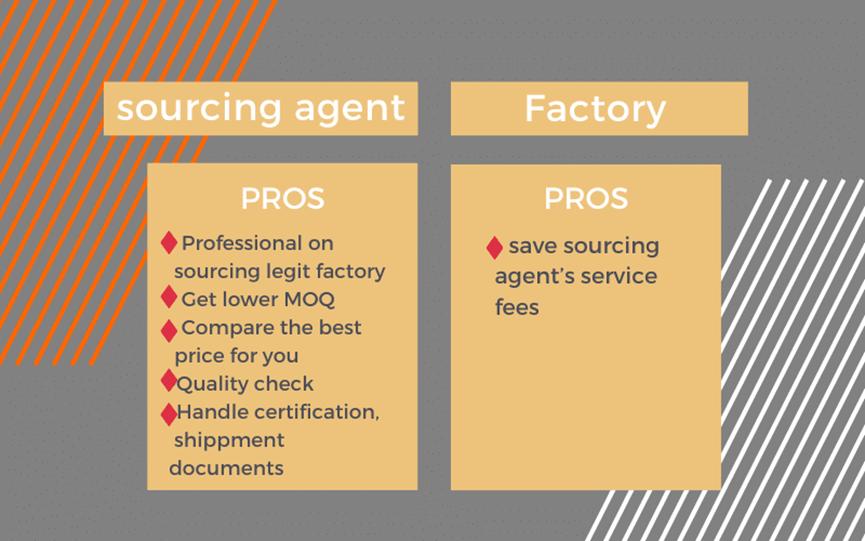
Table of Contents
Factory Sourcing vs Agent Sourcing: Core Definitions
What Is Factory Sourcing?
Factory sourcing means you work directly with manufacturers, typically in China, to negotiate prices, place orders, and manage quality and logistics yourself or via third‑party partners. [blog.looperbuy]
In practice, this can involve:
– Identifying factories via platforms, trade shows, or networks
– Negotiating MOQ, lead times, and payment terms directly
– Handling inspections, logistics, and after‑sales communication
– Sometimes integrating with digital platforms that connect you straight to verified factories (e.g., Looperbuy’s vetted supplier network) [blog.looperbuy]
What Is Agent Sourcing?
Agent sourcing means you work with a sourcing agent or agency that sits between you and the factories. [looperbuy]
The agent typically:
– Finds and vets suppliers
– Negotiates prices and terms on your behalf
– Co‑ordinates production, quality checks, and shipping
– Charges commissions, service fees, or embedded mark‑ups [zjxw.hqcswzx]
Historically, many importers relied on multiple local agents in different regions, but in 2026 this model is increasingly replaced by one‑stop B2B sourcing platforms that combine the benefits of agents with the transparency and scalability of factory‑direct procurement. [looperbuy]
Why “Scaling Fast” Changes the Sourcing Equation
When you’re scaling fast—adding SKUs, entering new markets, or rapidly increasing order volumes—your sourcing model must support speed, repeatability, and visibility. [looperbuy]
From a growth strategist’s viewpoint, three questions matter most:
1. Can you launch and test products quickly?
2. Can you ramp up volumes without losing quality or cash flow control?
3. Can your team manage sourcing operations without burning out? [blog.looperbuy]
This is exactly where platforms like Looperbuy, with over 10,000+ vetted Chinese suppliers in 50+ categories and integrated logistics, are designed to replace slow, fragmented agent networks. [looperbuy]
Key Differences: Factory vs Agent Sourcing
Side‑by‑Side Comparison Table
| Dimension | Factory Sourcing (Direct) | Agent Sourcing (Traditional) |
| Cost & pricing | Usually lower unit cost, but requires negotiation skills and volume commitments. | Often higher all‑in cost due to commission and mark‑ups. |
| Speed to launch | Faster once relationships are established; slower during initial vetting phase. | Faster early on; agent uses existing networks but may bottleneck at scale. |
| Control & transparency | High visibility into factories, processes, and real production constraints. | Visibility depends on the agent; risk of opaque margins and supplier choices. |
| Quality & compliance | Strong control if you invest in QC and audits; weak if you rely on trust alone. | Better if agent has robust QC; inconsistent across small agents. |
| Scaling capacity | Excellent for long‑term scaling once SOPs and supplier base are stable. | Good for early scaling; weaker for large multi‑SKU, multi‑market operations. |
| Operational workload | Higher—your team manages supplier communication, logistics, and issue resolution. | Lower—agent handles everyday tasks; but management overhead rises with multiple agents. |
| Risk profile | More commercial risk (payments, logistics) but less dependence on a single intermediary. | More dependency risk; if the agent fails, your entire supply chain is exposed. |
Which Model Builds More “Trust”?
From consulting cross‑border sellers who source via Looperbuy, I’ve seen that:
– Factory sourcing demonstrates strong “Experience” and “Trustworthiness” when you document your audits, certifications, and QC processes. [blog.looperbuy]
– Agent sourcing may appear less transparent if you rely on opaque intermediaries and cannot trace decisions or costs back to the factory level. [zjxw.hqcswzx]
– Platform‑based sourcing (an evolution of agent sourcing) can enhance “Expertise” and “Authoritativeness” through verified supplier databases, standardized processes, and published best practices. [looperbuy]
When Factory Sourcing Wins for Fast Scaling
Scenario 1: Mature Brand, Predictable Demand
If you are an established brand with stable demand and clear technical requirements, factory sourcing is usually the growth engine. [blog.looperbuy]
You benefit from:
– Lower long‑term costs thanks to direct pricing and negotiated volume discounts
– Product customization (OEM/ODM) directly with engineers and production teams
– Stronger supply chain control—you can diversify factories and geographic risk [looperbuy]
This is especially powerful if you plug factory relationships into a platform that standardizes data, lead times, and logistics—exactly the role Looperbuy plays for global B2B buyers. [looperbuy]
Scenario 2: High‑Volume, Few SKUs
If your business pushes high volumes through a relatively narrow range of SKUs—e.g., a few hero products—direct factory sourcing can support aggressive scaling. [blog.looperbuy]
You can:
– Lock in long‑term contracts and priority capacity
– Implement advanced QC routines and continuous improvement with the factory
– Integrate forecasting and inventory planning directly with production schedules [looperbuy]
When Agent Sourcing (or Platform‑Agent Hybrid) Wins
Scenario 3: Testing Many New Products Quickly
In early stages or during expansion into new categories, agent sourcing offers one big advantage: speed of discovery. [looperbuy]
A capable agent or platform can:
– Surface ready‑to‑ship products across many factories
– Shorten supplier search and vetting cycles
– Provide practical guidance on local regulations, packaging, and logistics [looperbuy]
This is why Looperbuy positions itself as a one‑stop B2B sourcing e‑platform—it combines the agent’s market knowledge with platform scalability and transparent data. [linkedin]
Scenario 4: SMEs Without In‑House Sourcing Teams
Small and mid‑size businesses often lack internal sourcing expertise. [zjxw.hqcswzx]
For them, agent sourcing or platform‑based sourcing helps by:
– Reducing communication complexity, especially across languages and time zones
– Providing all‑inclusive cost visibility (product, freight, duties, service fees)
– Bundling payment, logistics, and after‑sales support in a single interface [global.lianlianpay]
Looperbuy’s integration with payment solutions like LianLian Global and its cross‑border logistics network is designed specifically for these SMEs. [global.lianlianpay]
Latest Industry Shift: From Local Agents to One‑Stop Platforms
Since around 2025–2026, the sourcing services industry has shifted away from fragmented local agents toward centralized B2B platforms. [looperbuy]
Key drivers include:
– Digital merchandising turning product discovery into a data‑driven growth engine [blog.looperbuy]
– Demand for transparent cost breakdowns—merchants want to see factory price, logistics, and service fees clearly
– Need for scalable operations—managing 10+ agents is incompatible with fast growth [blog.looperbuy]
Looperbuy’s blog emphasizes how this one‑stop model gives merchants easy access to trusted Chinese products, integrated QC, warehousing, and global fulfillment. [looperbuy]
Practical Framework: How to Choose for Your Business
Step‑by‑Step Decision Guide
Use this simple framework to decide factory sourcing vs agent sourcing for scaling fast:
1. Map your growth stage.
– Early testing → favor agent/platform sourcing.
– Mature scaling → favor factory‑direct relationships. [looperbuy]
2. Assess internal capabilities.
– If you lack sourcing, QC, and logistics expertise, leverage a platform like Looperbuy to fill the gaps.
– If you have a strong in‑house team, prioritize direct factory contracts. [global.lianlianpay]
3. Audit your product portfolio.
– Many experimental SKUs → use platform/agent to validate demand quickly.
– Few core SKUs with stable demand → invest in deep factory partnerships. [blog.looperbuy]
4. Evaluate risk tolerance.
– If you prefer reduced operational risk, opt for platform‑based sourcing with vetted suppliers and standardized processes. [looperbuy]
– If you can accept more responsibility in exchange for cost savings, go factory‑direct. [blog.looperbuy]
5. Design a hybrid strategy.
– Use agent/platform sourcing for new category testing.
– Transition winning SKUs into factory‑direct contracts once volume is proven. [looperbuy]
Why Hybrid Sourcing With Looperbuy Scales Faster
As a B2B sourcing strategist, the most successful cross‑border sellers I work with rarely choose only factory sourcing or only agent sourcing. [looperbuy]
Their winning pattern:
– Discover and test products via a platform‑agent hybrid like Looperbuy
– Use the platform’s vetted supplier network and logistics for small‑to‑mid volume
– Once a SKU proves high, stable demand, deepen factory‑direct collaboration, while still using the platform for quality control, warehousing, and fulfillment [looperbuy]
This hybrid approach lets you:
– Scale quickly without building a large internal sourcing team
– Lower long‑term costs by migrating mature products toward factory‑direct pricing
– Maintain a single digital source of truth for orders, inventory, and performance metrics [looperbuy]
How Looperbuy Fits Into Both Models
Looperbuy operates as a one‑stop online B2B sourcing platform, bridging factory sourcing and agent sourcing for global merchants. [linkedin]
It offers:
– Direct access to 10,000+ vetted suppliers across 50+ categories [looperbuy]
– Integrated cost visibility (products, logistics, and services in one view)
– Support for purchasing, payments, warehousing, and global fulfillment, reducing the need for multiple agents and fragmented service providers [global.lianlianpay]
For brands that want to scale fast without adding heavy internal overhead, Looperbuy becomes the backbone of a hybrid sourcing strategy that blends the efficiency of factory sourcing with the agility and support of agent/platform sourcing. [blog.looperbuy]
Scale Faster With Looperbuy
If you’re evaluating factory sourcing vs agent sourcing and want a model built for fast, controlled scaling, consider combining both through a platform designed for global B2B growth.
Start testing and scaling with Looperbuy today:
– Explore vetted Chinese suppliers across your target categories
– Use platform‑based sourcing to validate demand quickly
– Transition successful SKUs into deeper factory‑direct relationships while keeping logistics and fulfillment centralized
Visit Looperbuy.com to see how a one‑stop B2B sourcing platform can reduce inventory, warehousing, and logistics management costs while helping you scale faster with less risk.
FAQs: Factory Sourcing vs Agent Sourcing
1. Is factory sourcing always cheaper than agent sourcing?
Factory sourcing usually offers lower unit costs because you remove intermediary margins, but total landed costs depend on your negotiation skills, logistics efficiency, and QC processes. [blog.looperbuy]
2. Can small businesses use factory sourcing effectively?
Yes, but SMEs often benefit from starting with platform‑based or agent sourcing to handle supplier vetting, payments, and logistics before moving key SKUs into factory‑direct contracts. [global.lianlianpay]
3. How does Looperbuy reduce the risk of agent sourcing?
Looperbuy standardizes supplier vetting, cost visibility, and logistics operations, turning a traditionally opaque agent model into a transparent, data‑driven platform experience. [looperbuy]
4. Which sourcing model is better for rapid product testing?
Agent or platform sourcing is usually better for quick product testing because you can access multiple factories and ready‑to‑ship products without negotiating individual contracts from scratch. [looperbuy]
5. How can I transition from agent sourcing to factory sourcing without disrupting my supply chain?
Use a hybrid approach: keep initial orders and experimental SKUs on the platform, identify high‑performing products, then work with the platform and factories to formalize long‑term, factory‑direct arrangements. [looperbuy]
References
1. Looperbuy Blog – *Product Sourcing Companies: A B2B Expert’s Guide to Sourcing Chinese Goods Globally with LooperBuy*[looperbuy]
2. Looperbuy Blog – *How to Source International Products for Your Business: A B2B Expert’s Guide to Global Sourcing from China with LooperBuy*[looperbuy]
3. Looperbuy Blog – *Why Top Sourcing Services Companies Are Moving to a One-Stop B2B Platform Model in 2026*[looperbuy]
4. Looperbuy Blog – *Digital Merchandising for B2B Sourcing Platforms: How LooperBuy Turns Product Discovery into Profitable Growth*[blog.looperbuy]
5. Looperbuy Blog – *Factory to You: Mastering Direct Purchases from China*[blog.looperbuy]
6. LianLian Global – *Looperbuy Product Sourcing Solution*[global.lianlianpay]
7. Looperbuy LinkedIn Company Page[linkedin]
8. Third‑party article introducing Looperbuy as a recommended platform for overseas buyers[zjxw.hqcswzx]