Choosing between a supplier and a manufacturer in China can transform your B2B business. Learn the real differences, when to use each, and how platforms like Looperbuy enable low‑inventory, global dropshipping while keeping quality, lead times, and costs under control.
When you are building a global B2B business, choosing between a supplier and a manufacturer in China is no longer a simple theory question—it directly affects your cash flow, delivery reliability, and customer experience. As someone who has spent years helping international sellers source from China and run lean, inventory‑light operations, I’ve seen both sides of this decision play out in real life.
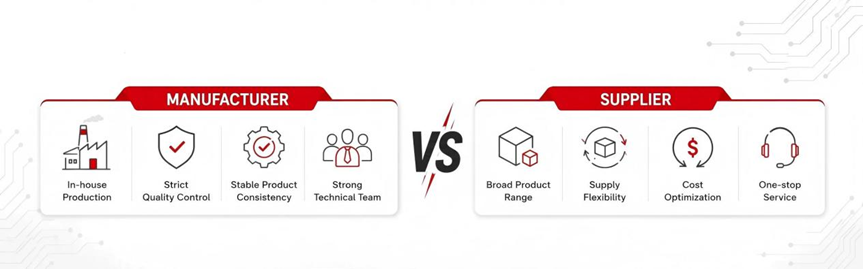
Table of Contents
What Is a Supplier in Modern B2B Sourcing?
In global trade today, a supplier is the partner that sources, aggregates, and delivers products or components from one or more manufacturers to your business. They sit closer to the market and logistics rather than the factory floor. [shipbob]
– Suppliers may be trading companies, distributors, or service‑oriented sourcing firms.
– They often handle packaging, labeling, consolidation, export documentation, and shipping. [wonnda]
– Strong suppliers specialize in multi‑factory coordination and small to medium order volumes. [accio]
From the perspective of a global B2B seller, a supplier is usually your first operational “bridge” into China’s manufacturing ecosystem, especially when you don’t have the bandwidth to vet factories, negotiate contracts, or manage shipments yourself. [shipbob]
What Is a Manufacturer and When Do You Need One?
A manufacturer is the entity that designs, engineers, and produces goods from raw materials or components in its own facility.
Typical manufacturer characteristics:
– Owns and runs production lines, equipment, and technical teams. [nenwell]
– Focuses on volume production, quality control, and process optimization. [wonnda]
– Often offers OEM/ODM capabilities—custom tooling, private labeling, and product development. [accio]
If you are scaling a product line with stable demand, clear specifications, and a long‑term brand roadmap, a strong manufacturer gives you deeper cost control and more technical customization, but usually expects higher MOQs and longer lead times. [accio]
Key Differences: Supplier vs Manufacturer for Global B2B Sellers
Below is a practical view of how suppliers and manufacturers differ when you’re sourcing from China for global B2B operations.
Core Differences Table
| Dimension | Supplier | Manufacturer |
| Main role | Sources and distributes goods from one or multiple factories. | Produces goods directly from raw materials or components. |
| Control over production | Low to medium – relies on partner factories. | High – owns and controls production lines. |
| Typical MOQ | Lower, more flexible, better for testing new SKUs. | Higher, optimized for scale and stable demand. |
| Customization depth | Light customization (packaging, labeling, bundles). | Deep customization (materials, design, tooling). |
| Speed to launch | Faster for catalog products and small batches. | Slower initially, faster later for repeat runs. |
| Service scope | Sourcing, consolidation, logistics coordination, documentation. | Engineering, process design, quality control, production planning. |
| Risk profile | Lower CapEx; more exposed to supply disruptions and factory changes. | Higher CapEx; more exposed to demand volatility and utilization risk. |
For most early‑stage or fast‑testing global sellers, starting with a supplier and moving gradually toward manufacturer relationships for proven winners is a pragmatic path. [ewizcommerce]
How This Choice Impacts Your Business Model
From my experience working with cross‑border B2B sellers, the supplier vs manufacturer choice regularly shows up in three critical areas: capital, complexity, and customer promise. [businesswire]
1. Capital and Cash Flow
– Suppliers usually allow smaller orders and mixed SKUs, which reduces inventory risk.
– Manufacturers typically offer better per‑unit cost, but expect commitments to larger runs, tying up more cash in stock. [difference]
If your business depends on rapid product testing, seasonal trends, or niche B2B segments, capital flexibility through suppliers can matter more than pure per‑unit savings. [img.supplychainconnect]
2. Operational Complexity
– Working directly with a manufacturer means managing forecasts, production slots, inspections, and inbound logistics yourself. [nenwell]
– Working with a supplier lets you delegate part of that complexity, but you must manage supplier performance and transparency. [img.supplychainconnect]
In practice, many mid‑size B2B sellers choose a hybrid approach: key strategic SKUs from core manufacturers; long‑tail or experimental SKUs via suppliers. [ewizcommerce]
3. Customer Promise and Lead Times
Your promise to customers—delivery speed, product quality, configuration options—depends on how tight your supply chain is.
– Manufacturers can lock in process standards, useful when you need certified products or strict technical specifications. [nenwell]
– Suppliers can shorten lead times by holding stock or coordinating multi‑factory sourcing and faster dispatch. [shipbob]
For high‑frequency B2B orders, the ability to ship reliably with minimal backorders is often more valuable than pushing every cent of cost down. [img.supplychainconnect]
Why China Suppliers Matter for Global Dropshipping and B2B Fulfilment
China remains one of the most important sourcing hubs for global B2B trade, with deep factory networks, strong component ecosystems, and mature logistics routes. Yet most international sellers do not have the resources to build and manage dozens of direct factory relationships. [accio]
This is where specialized China‑based suppliers and platforms come in:
– They aggregate verified manufacturers, reducing vetting time and risk. [wonnda]
– They bundle sourcing, quality checks, and international fulfilment into one service.
– They make small‑batch, multi‑SKU ordering and dropshipping operationally feasible for global B2B sellers. [bigcommerce]
A platform like Looperbuy, for example, focuses on helping sellers avoid tying cash into inventory, warehouse leases, and complex logistics, by acting as a procurement and fulfilment backbone between Chinese factories and global buyers. [bigcommerce]
A Practical Framework: When to Choose a Supplier vs a Manufacturer
Based on real projects in electronics, tools, packaging, and industrial components, the choice can be simplified into three scenarios. [nenwell]
Scenario 1: Testing New B2B Product Lines
You are validating demand, pricing, and positioning.
– Best fit: Supplier
– Why:
– Lower MOQs and flexible assortments
– Faster onboarding and shorter lead times
– Ability to pivot SKUs without writing off large stocks [shipbob]
In this stage, speed to market and cash preservation outweigh small differences in ex‑factory cost. [img.supplychainconnect]
Scenario 2: Scaling Proven SKUs
You have predictable orders and strong repeat buyers.
– Best fit: Manufacturer (often supported by a supplier or platform)
– Why:
– Direct control over specs, quality, and long‑term pricing
– Better alignment on capacity planning and technical improvements
– More suitable for brand building and certification roadmaps [wonnda]
Many sellers keep a supplier interface for day‑to‑day ordering and logistics, while their manufacturer partnership focuses on long‑term engineering and capacity. [accio]
Scenario 3: Operating Asset‑Light B2B Models (Dropshipping / Just‑in‑Time)
You prioritize low inventory, fast delivery, and broad SKU coverage, often across multiple categories or geographies. [bigcommerce]
– Best fit: Supplier or integrated procurement platform
– Why:
– Consolidated multi‑factory sourcing and stocking
– Centralized fulfilment, returns handling, and documentation
– Easier expansion into new categories without new factory contracts
Here, a platform like Looperbuy enables you to focus on sales, channels, and customer relationships while they orchestrate end‑to‑end China procurement and global fulfilment. [bigcommerce]
Latest Trends Affecting B2B Procurement Decisions (2025–2026)
Recent industry data highlights how procurement is changing—and why many teams lean on specialized suppliers and platforms instead of building everything themselves. [bigcommerce]
– Supply chain disruptions and delays remain a top concern, with roughly one‑third of procurement professionals citing them as major risks. [img.supplychainconnect]
– Budgets for procurement and digital tools are increasing, but many organizations still struggle to treat procurement as a strategic function. [bigcommerce]
– There is strong emphasis on responsible purchasing and certified suppliers, driven by compliance, ESG, and customer expectations. [img.supplychainconnect]
For global sellers, this means:
– You need partners who can adapt quickly when one factory is disrupted.
– You benefit from platforms that screen and verify suppliers and manufacturers up front. [wonnda]
– You gain resilience by using asset‑light, digitally integrated procurement and fulfilment models. [bigcommerce]
How Platforms Like Looperbuy Reduce Procurement Friction
From a user‑experience and operations perspective, a modern B2B procurement platform built around China sourcing can simplify what used to take months of travel, audits, and manual coordination.
Typical value levers include:
– Curated supplier and manufacturer network: Only partners that meet defined quality, documentation, and capacity criteria. [wonnda]
– Order‑to‑door orchestration: One interface to request quotations, place orders, track shipments, and manage exceptions.
– Dropshipping and inventory‑light models: Products can ship directly from China to buyers, reducing your need to maintain warehousing or hire logistics teams. [bigcommerce]
As a global seller, this lets you keep your organization lean while still leveraging the depth of the Chinese manufacturing base, including both suppliers and manufacturers. [accio]
Practical Steps to Choose the Right China Partner
From a practitioner’s perspective, here is a simple, repeatable process you can use when deciding whether to work through a supplier or go direct to a manufacturer.
Step 1: Clarify Your Product and Demand Profile
– Is demand volatile or seasonal, or stable and contracted?
– Are specifications simple and widely available, or highly customized?
Volatile demand and simple specs usually favor suppliers; stable demand and complex specs lean toward manufacturers. [difference]
Step 2: Map Your Risk Appetite and Capital Limits
– How much inventory are you prepared to hold?
– How sensitive are you to lead‑time variations or factory changes?
If your priority is preserving cash and staying flexible, a supplier‑centric or platform‑centric model is often safer in the early stages. [businesswire]
Step 3: Validate Partner Capabilities, Not Just Price
– Factory audits or video walkthroughs for manufacturers. [nenwell]
– Documentation checks, certifications, and past performance records for suppliers. [wonnda]
Platforms that pre‑verify partners save you time here and reduce the risk of onboarding unreliable sources. [wonnda]
Step 4: Start Small, Then Deepen Strategic Partnerships
– Begin with pilot orders, limited SKUs, and tight feedback loops.
– Once performance is proven, transition key SKUs to deeper manufacturer collaboration if needed.
This staged approach gives you data‑driven confidence before locking into long‑term supply agreements. [ewizcommerce]
Build a Lean, Resilient Supply Chain with the Right China Partner
If your global B2B business relies on fast experimentation, controlled risk, and reliable delivery, the real question is not “supplier or manufacturer” but “which combination of partners and platforms will keep us agile while we grow?”
By leveraging China‑based suppliers, trusted manufacturers, and an integrated procurement and dropshipping platform like Looperbuy, you can test products quickly, scale winners confidently, and keep your operations asset‑light.
Consider reviewing your current sourcing setup and identifying at least one product line that could benefit from a more flexible, platform‑driven China procurement model.
Frequently Asked Questions
1. Can one company be both a supplier and a manufacturer?
Yes. Many factory‑owned trading companies both produce goods and act as suppliers, offering manufacturing for core lines and sourcing complementary products from partner factories. [nenwell]
2. Do I always get lower prices when I work directly with a manufacturer?
Not always. While manufacturers can control production costs, suppliers sometimes negotiate aggregated volume discounts across multiple buyers, making pricing competitive—especially for small orders. [difference]
3. When should I move from a supplier to a direct manufacturer relationship?
Typically when you have stable, repeat demand, need deeper customization or certifications, and are ready to commit to higher MOQs and longer planning cycles. [accio]
4. How can I reduce risk when sourcing from China?
Use verified platforms, third‑party inspections, clear contracts, and diversified supplier bases where possible, and build contingency plans for logistics disruptions. [accio]
5. What type of partner is better for dropshipping and inventory‑light models?
A specialized supplier or procurement platform that integrates sourcing, fulfilment, and international logistics is usually more suitable than a single manufacturer. [shipbob]
References
1. Global Sources. “Supplier vs. Manufacturer: What’s the Difference?”[wonnda]
2. ShipBob. “Supplier and Manufacturer Guide: What to Look for, What You’ll Get.”[shipbob]
3. Difference.wiki. “Supplier vs. Manufacturer: What’s the Difference?”[difference]
4. Amazon Business via SupplyChainConnect. “5 Top B2B Procurement Challenges and Trends for 2025.”[img.supplychainconnect]
5. BigCommerce. “Optimizing B2B Procurement for the Future.”[bigcommerce]
6. Accio. “Supplier vs Manufacturer: Key Differences for Electronics Sourcing.”[accio]
7. Nenwell. “What Is the Difference Between Manufacturers and Suppliers?” [nenwell]