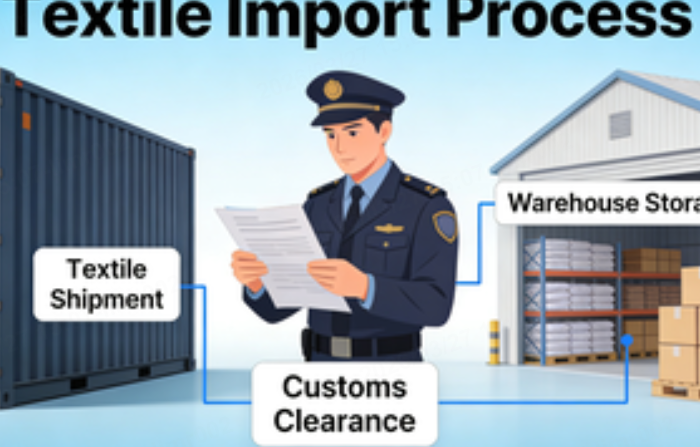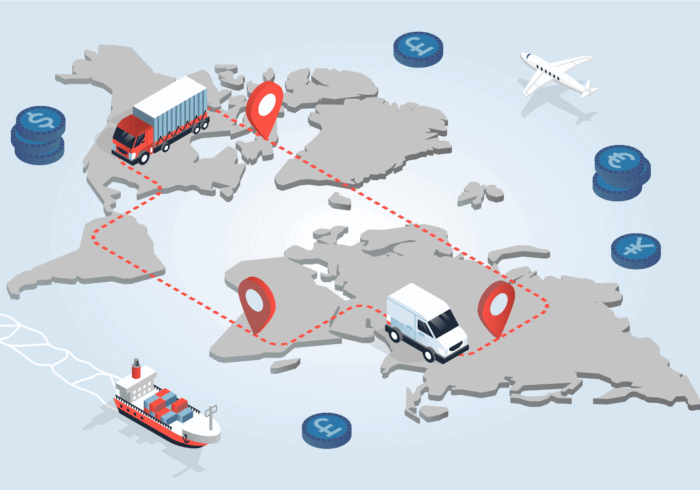
Hidden dropshipping fees can quietly erode your margins. Explore packaging charges, shipping surcharges, payment costs, customs obligations, and returns. Use a practical cost checklist and worked example to compare providers and plan more predictable China sourcing and fulfillment with Looperbuy.
Hidden dropshipping fees can turn a promising product into an unprofitable order. A supplier advertises an attractive price, a shipping estimate looks manageable, and the numbers seem to work—until packaging, payment charges, delivery surcharges, and returns start eating into your margin.
My starting point for evaluating dropshipping companies is simple: compare the total cost per successfully delivered order, not just the product price.
The headline reflects a common frustration, but it should not be treated as a statistical claim about most providers. Many charges are legitimate and publicly documented. The problem is that sellers may not see them together before committing.
For global B2B sellers sourcing from China, that distinction matters. Looperbuy’s procurement and dropshipping model is designed to reduce inventory, warehousing, payment, and logistics-management burdens. Understanding the complete cost structure helps you evaluate whether that model fits your business.
Table of Contents
Why Hidden Dropshipping Fees Are Easy to Miss
A dropshipping order involves several separate transactions: purchasing merchandise, preparing a parcel, accepting customer payment, moving goods internationally, and resolving delivery problems.
Different businesses control different parts of that process. A product supplier cannot necessarily guarantee your payment processor’s fees or every destination-country charge.
DHL, for example, explains international shipping costs as a combination of the base rate, surcharges, and duties and taxes. A quote showing only the first component is not a complete landed-cost estimate.
I would separate unexpected costs into three categories:
– Disclosed but overlooked charges, such as published carrier surcharges.
– Conditional charges, triggered by packaging, destination, or exceptions.
– Unclear charges, appearing without an agreed calculation or explanation.
The goal is not to eliminate every fee. It is to make each fee predictable, attributable, and commercially manageable.
Nine Hidden Fees Dropshipping Companies May Leave Out of the Headline Price
1. Platform Subscriptions and Per-Order Service Charges
When comparing providers, check whether access and fulfillment are priced separately.
Your checklist should cover subscriptions, order-processing charges, product-import limits, additional storefronts, and premium support. Do not assume every provider charges these fees; ask which apply to your account.
A monthly subscription also changes its effective cost with volume. Allocate it across realistic orders, not your most optimistic sales forecast.
Ask: “Which recurring and transaction-based charges are excluded from the product and shipping quote?”
2. Picking, Packing, and Custom Packaging
“Fulfillment included” needs a precise definition.
Request separate prices for standard packing, additional items, branded inserts, custom boxes, protective materials, and labeling. Confirm whether preparation is charged per order, item, parcel, or labor task.
For B2B sellers, packaging requirements deserve particular attention. A customer may request barcode labels, bundle assembly, or different packing instructions for different destinations.
Before offering those services, make sure your own selling price covers them.
3. Dimensional Weight and Shipping Recalculations
Lightweight products are not always inexpensive to ship.
DHL states that shipping charges can be based on actual weight or volumetric weight, whichever is greater. Volumetric weight measures how much space a package occupies.
One DHL rate guide uses this calculation:
Volumetric weight in kg=length × width × height in cm÷5,000
That divisor is service-specific, not a universal rule. Confirm the formula and rounding method for your shipping service.
Request packed dimensions rather than product dimensions. A compact item inside an unnecessarily large protective box can produce a very different shipping bill.
4. Fuel, Remote-Area, and Handling Surcharges
A shipping price can change without any change in the product itself.
Carrier charges may include fuel adjustments, remote-area delivery, and special handling. DHL’s published surcharge policy also explains that fuel-related charges can fluctuate.
For each target market, ask:
– Does the quote include applicable fuel surcharges?
– Can postcode-based charges apply?
– What packaging or weight triggers special handling?
– Can the rate change between quotation and dispatch?
A low headline shipping rate is useful only when you understand its exclusions.
5. Customs Duties, Import Taxes, and Clearance Costs
Government charges are not the same as supplier fees.
DHL explains that duty rates depend on factors including the product’s Harmonized System classification. Customs valuation rules and the destination also affect the calculation.
Clarify who pays duties and taxes, who handles clearance, and whether administrative charges are included.
For EU sales, distinguish consumer transactions from genuine business purchases. The European Commission describes IOSS as a simplified VAT mechanism for qualifying distance sales of imported goods in consignments not exceeding €150; it is not a blanket solution for all B2B imports.
Avoid building your margin around an assumed tax exemption. Verify current destination rules before launch.
6. Payment Processing and Currency Conversion
Payment costs belong in your margin calculation even when the procurement platform does not charge them.
Map both payment flows:
1. The customer pays your business.
2. Your business pays the sourcing or fulfillment provider.
For each flow, check processing charges, currency conversion, settlement currency, and bank-transfer costs.
Refunds introduce another complication. Stripe states that the processing, Connect, and currency-conversion fees from the original transaction are not returned when the payment is refunded. Terms vary by payment method and pricing arrangement.
A refunded sale can therefore leave a real expense behind.
7. Storage and Inventory Commitments
Dropshipping does not automatically mean zero inventory exposure.
Check whether custom packaging, reserved stock, product bundles, or minimum purchase quantities create inventory commitments in your particular agreement.
Ask who owns those materials, how long they can remain in storage, and what happens when a product stops selling.
For inventory-light sellers, the important distinction is between stock purchased for confirmed orders and stock purchased in anticipation of demand.
8. Returns, Replacements, and Failed Deliveries
A return is an operational process, not just a refund button.
Your agreement should explain who pays for return transport, inspection, repacking, replacement shipping, and disposal where applicable.
Separate responsibility for:
– Defective merchandise.
– Incorrect items.
– Buyer remorse.
– Incorrect delivery addresses.
– Lost parcels.
– Refused shipments.
Payment disputes deserve their own review. Stripe’s pricing page lists dispute-related charges, illustrating why the disputed sale amount may not be your only exposure.
Do not promise your customers a return policy that your fulfillment arrangement cannot economically support.
9. Samples, Inspection, and Product Compliance
Before selling a product, establish which checks are included and which require separate payment.
Request quotations for samples, inspection scope, documentation review, testing where necessary, and any destination-specific labeling work.
Do not confuse a warehouse’s visual inspection with verification of regulatory compliance. Equally, do not assume that a document automatically applies to every product variant.
These are planning questions rather than accusations against suppliers. The value comes from identifying responsibilities before money changes hands.
A Hidden Dropshipping Fees Checklist for Comparing Quotes
Use the same comparison template for every provider.
| Cost category | What to verify | Best comparison basis |
| Product | Specification, variant, quantity, validity | Same SKU and order quantity |
| Fulfillment | Picking, packing, extra items | Same order configuration |
| Packaging | Materials, branding, setup | Same finished parcel |
| Shipping | Weight, dimensions, surcharges | Same destination and service |
| Import charges | Duties, taxes, clearance responsibility | Same declared transaction |
| Payments | Processing, conversion, settlement | Same payment route |
| Exceptions | Returns, losses, replacements | Same responsibility assumptions |
Also separate one-time setup expenses from recurring order costs.
A provider with a higher product price may still offer better economics when preparation and shipping are more predictable. Conversely, an inexpensive service may suit simple products but become less competitive for complex bundles.
Worked Example: How a $12 Margin Falls to $7.70
The following is an illustrative scenario, not a Looperbuy quotation or an industry average.
A seller charges $30 for an order, excluding customer taxes. The initial estimate includes a $10 product and $8 shipping.
| Cost item | Initial estimate | Expanded estimate |
| Product | $10.00 | $10.00 |
| Shipping | $8.00 | $8.00 |
| Picking and packing | $0.00 | $0.60 |
| Packaging materials | $0.00 | $0.40 |
| Carrier surcharge | $0.00 | $1.00 |
| Payment costs | $0.00 | $1.20 |
| Expected exception cost | $0.00 | $0.80 |
| Allocated platform cost | $0.00 | $0.30 |
| Total modeled cost | $18.00 | $22.30 |
| Contribution per order | $12.00 | $7.70 |
The apparent 40% contribution margin falls to approximately 25.7%.
Across 500 orders, that $4.30 difference represents $2,150.
These are contribution figures, not net profit. Advertising, salaries, overhead, and business taxes remain outside the example.
Build an Expected Exception Cost Instead of Guessing
One useful improvement is to model exceptions explicitly.
Use this formula:
Expected exception cost per order=∑(event probability × incremental event cost)
For example, if 4% of orders require an additional $12 replacement expense, the expected replacement cost is $0.48 per order.
Add other relevant events using your own operating data. Start with clearly labeled assumptions when historical data is unavailable, then update the model as orders accumulate.
Avoid double-counting: if two estimates describe the same incident, combining them may exaggerate the reserve.
This approach turns an occasional operational surprise into a measurable pricing input.
A Five-Step Dropshipping Cost Audit Before You Scale
Step 1: Standardize Your Quote Request
Send every provider the same SKU, quantity, destination, packing requirements, and delivery expectations.
Require a clear distinction between estimated and guaranteed charges.
Step 2: Test Different Order Types
Include a single-item parcel, a multi-item order, and an order with unusual packaging.
If remote destinations are important to your business, include representative postcodes rather than relying solely on major-city quotes.
Step 3: Match the Quote to the Invoice
For pilot orders, compare every quoted charge with the final invoice.
Log the difference and its cause: changed dimensions, additional services, rate adjustments, or unexplained additions.
Step 4: Review Exceptions Before They Occur
Agree on evidence requirements, claim deadlines, replacement authorization, and the division of costs.
Written procedures are more useful than a general promise to “handle problems.”
Step 5: Confirm Change-Control Rules
Ask how pricing changes are communicated and whether you can approve material increases before dispatch.
Keep a dated rate sheet and retain the quote assumptions.
How Looperbuy Fits an Inventory-Light Procurement Strategy
Looperbuy positions its service around China sourcing and dropshipping for global B2B sellers, with the aim of reducing inventory, warehousing, payment, and logistics-management burdens.
The strongest way to evaluate that proposition is through a product-specific cost review.
Ask for a breakdown covering your product requirements, destination markets, packaging, shipping assumptions, and exception responsibilities. Treat any fee inclusion as confirmed only when it appears in your quotation or agreement.
Ready to evaluate your China sourcing costs? Send Looperbuy your product requirements, expected monthly order volume, destination countries, and packaging needs. Request an itemized procurement and fulfillment quotation before committing to a larger rollout.
Frequently Asked Questions About Hidden Dropshipping Fees
1. Are all additional dropshipping charges unfair?
No. Packaging, handling, and transport services can justify additional charges. The key questions are whether the charge was disclosed, whether its trigger was clear, and whether it matches the agreed service.
2. What is the most important number when comparing dropshipping companies?
Compare contribution per successfully delivered order. Use the same product, destination, packaging, and exception assumptions for every provider. Product price alone cannot reveal the complete economics.
3. Can I eliminate warehouse costs through dropshipping?
You may reduce your need to operate a warehouse, but confirm any storage commitments for reserved stock or custom packaging. Check ownership, storage periods, and disposal terms before purchasing materials in advance.
4. Why can the shipping invoice exceed the estimate?
Possible explanations include dimensional-weight adjustments, carrier surcharges, or services excluded from the original estimate. Request the packed measurements, chargeable weight, shipping service, and itemized explanation.
5. Should import taxes be included in my selling price?
That depends on your transaction structure and tax responsibilities. Separate taxes collected for authorities from revenue, and identify any nonrecoverable charges your business must absorb. Verify the arrangement for each destination.
6. How can I reduce unexpected fulfillment costs?
Standardize quote requests, confirm packed dimensions, run pilot orders, and reconcile quotations against invoices. Negotiate predictable packaging and exception procedures rather than focusing exclusively on a lower product price.
Referencs
1. DHL Express. -How to Calculate International Shipping with DHL Express.[dhl]
2. DHL Express. -Service & Rate Guide 2026: United Kingdom.[mydhl.express]
3. DHL Express. -Surcharges — United States of America.[dhl]
4. DHL Express. -A Guide to Customs Duties and Taxes.[dhl]
5. European Commission, Directorate-General for Taxation and Customs Union.[vat-one-stop-shop.ec.europa]
6. Stripe Support. -Understanding Fees for Refunded Payments.[support.stripe] 7. Stripe. -Pricing & Fees.[stripe]