Compare dropshipping wholesalers vs manufacturers from a B2B pricing perspective. Learn when each model wins, how hidden logistics and QC costs affect margins, and how Looperbuy helps global sellers secure manufacturer‑level prices with dropshipping flexibility when sourcing from China.
Dropshipping wholesalers can offer more flexible terms, but manufacturers usually deliver better long‑term pricing and control when you have volume and a clear product strategy. For global sellers sourcing from China, using a sourcing partner like Looperbuy lets you capture manufacturer‑level prices while keeping dropshipping‑style flexibility. [blog.looperbuy]
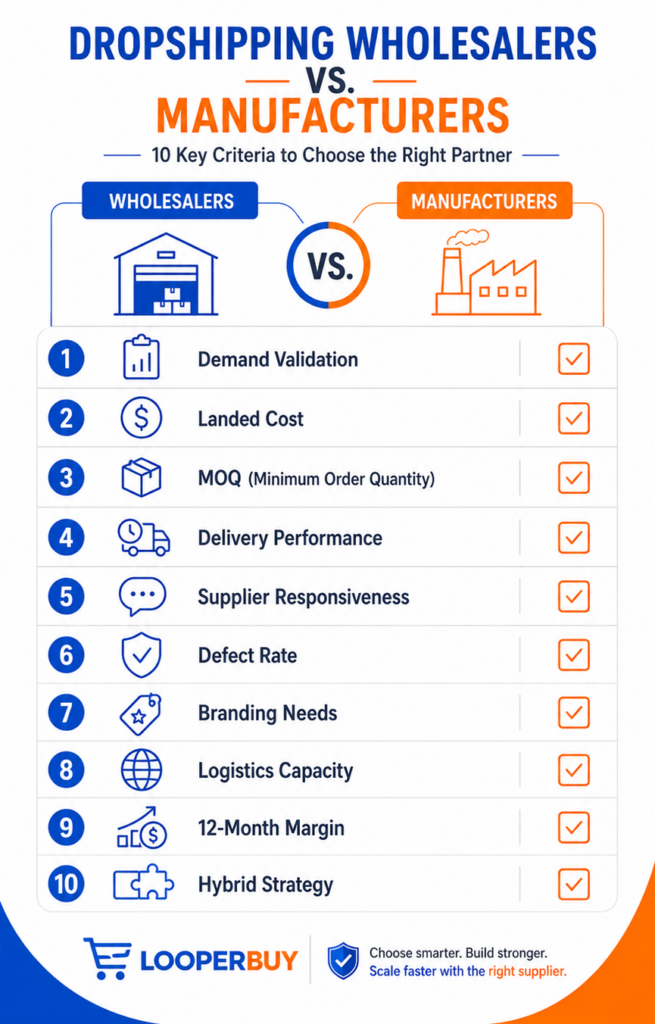
Table of Contents
Why Pricing Strategy Matters More Than Ever
If you run a B2B e‑commerce business, every 1–3% improvement in landed cost can be the difference between scaling and shutting down a product line. When you compare dropshipping wholesalers vs manufacturers, pricing is not just about the unit cost; it is about total cost across sourcing, logistics, defects, and cash flow. [xero]
In this guide, I will break down the pricing reality from the lens of a B2B operator working with Chinese suppliers and show how a platform like Looperbuy can help you blend both models. The goal is to give you a practical, expert‑level framework you can apply to your next sourcing decision, not just generic pros and cons. [sino-shipping]
Dropshipping Wholesalers vs Manufacturers – Core Pricing Logic
How Dropshipping Wholesalers Make Their Money
Dropshipping wholesalers typically buy in bulk from manufacturers, then add a markup to cover inventory risk, warehousing, and fulfillment. This means their price per unit is higher, but you avoid pre‑paying for stock. [ryder]
For B2B sellers, the main pricing advantages are:
– No upfront inventory, so you preserve cash.
– You can test more SKUs quickly.
– You can enter markets without setting up your own warehouse. [ichiba]
However, the tradeoff is that your gross margin often sits in the 10–30% range for standard dropshipping, especially in competitive niches. [shipglobal]
How Manufacturers Price – And Why It Is Lower
Manufacturers focus on volume and capacity utilization, not on acting as a retail or fulfillment business. When you buy directly, you remove at least one layer of markup and can negotiate better pricing based on: [ryder]
– Order quantity and frequency.
– Product customization level.
– Payment terms and lead time flexibility. [alibaba]
This is why wholesale purchasing from manufacturers typically offers more favorable price per unit, especially once you pass certain MOQs. But you take on more risk: you must handle inventory planning, logistics, and quality control yourself or via a partner. [alibaba]
Pricing Comparison – When Does Each Model Win?
Key Pricing Dimensions to Compare
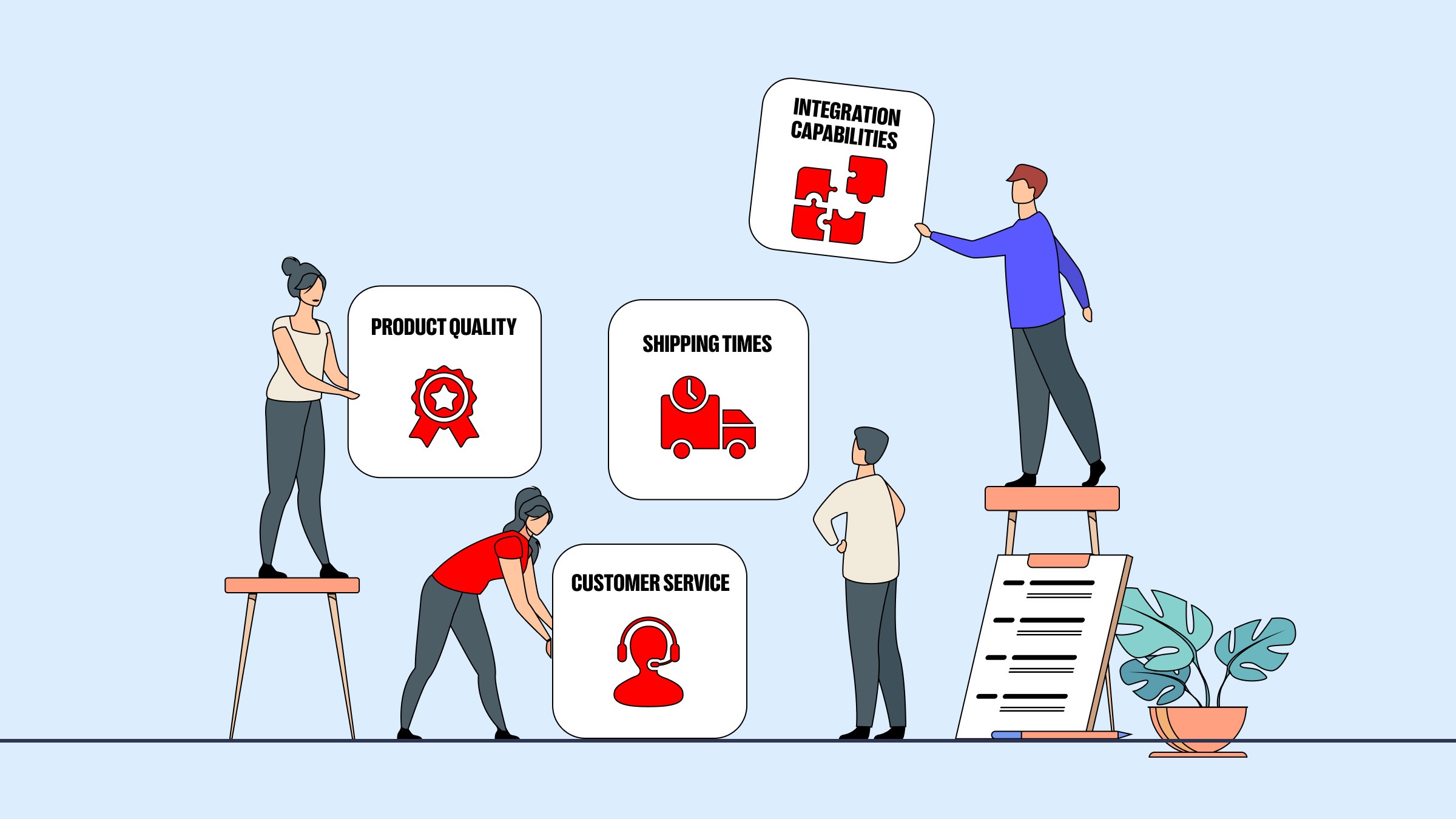
When deciding between dropshipping wholesalers and manufacturers, do not just compare “price per unit.” Consider at least the following dimensions: [xero]
– Unit cost
– Shipping and fulfillment
– Defect and return rate
– Cash flow and payment terms
– Scalability and volume discounts [sino-shipping]
Side‑by‑Side Pricing View
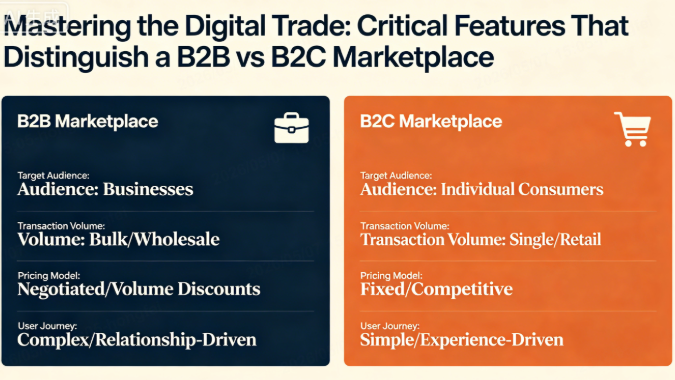
Below is a simplified view of how pricing typically compares, assuming you source from China and sell globally.
Real‑World Scenarios – Which Option Offers Better Pricing?
Scenario 1 – Testing New B2B Product Lines
If you are testing whether a new product will sell in Latin America, the EU, or the US, paying a slightly higher unit cost to a wholesaler often wins in real terms. You avoid committing to large MOQs and can pivot quickly if demand is weak. [shipglobal]
In this early stage, the “pricing winner” is usually:
– Dropshipping wholesalers for risk reduction.
– A sourcing agent or platform that lets you ship without committing to massive inventory. [ichiba]
Platforms like Looperbuy support exactly this mode by enabling small test orders with direct sourcing on Chinese platforms like 1688, without you needing a local company. [looperbuy]
Scenario 2 – Scaling a Proven SKU
Once you have a proven SKU with stable monthly demand, staying with a dropshipping wholesaler becomes expensive. At this point, direct manufacturer pricing generally beats wholesaler pricing because you can: [ryder]
– Negotiate price breaks for recurring orders.
– Consolidate shipments to lower per‑unit freight.
– Optimize packaging and dimensions to reduce shipping costs. [sino-shipping]
This is where working with manufacturers, often via a sourcing partner to manage Chinese suppliers and logistics, delivers better long‑term pricing and margin. [blog.looperbuy]
Scenario 3 – Complex, Multi‑SKU Catalogs
If your catalog is wide (hundreds of SKUs) and you sell to multiple markets, the best pricing usually comes from a hybrid setup. You might: [alibaba]
– Use dropshipping wholesalers for long‑tail, low‑volume SKUs.
– Go direct to manufacturers for your top 20% products that drive 80% of revenue. [shipglobal]
A platform like Looperbuy can help unify procurement from multiple manufacturers, reduce hidden fees, and give you direct‑sourcing prices while still handling logistics and after‑sales. [looperbuy]
Hidden Pricing Factors Many B2B Sellers Ignore
Logistics and “Last 5%” Costs
Your true landed cost includes more than factory gate price. You must account for: [ichiba]
– International freight (air, sea, or express).
– Customs, duties, and taxes.
– Warehousing, pick‑pack, and last‑mile delivery.
– Return handling and replacements. [alibaba]
High‑performance partners often track on‑time delivery rates of ≥94% and maintain fast response times (≤5 hours) to keep your logistics efficient. Looperbuy, for example, works with established international carriers and supports direct delivery to local destinations, which reduces your per‑order overhead and unexpected costs. [blog.looperbuy]
Quality Control, Defects, and Returns
Defects can silently destroy your margins. A 3–5% defect rate may: [ichiba]
– Trigger refunds and reshipments you did not price in.
– Increase support workload.
– Drive negative reviews and lower future conversion. [sino-shipping]
Best‑practice sourcing involves:
– Requesting samples before committing to volume. [sino-shipping]
– Using pre‑shipment inspection and photo verification. [alibaba]
– Tracking defect rates by SKU and supplier to refine your catalog. [alibaba]
Looperbuy’s after‑sales support and quality assurance processes are designed to help global merchants manage these issues when sourcing from Chinese platforms. [looperbuy]
Leveraging Looperbuy to Get Manufacturer Pricing With Dropshipping Flexibility
How Looperbuy Fits Between Wholesalers and Manufacturers
Looperbuy positions itself as a B2B sourcing and fulfillment platform that connects global merchants with high‑quality Chinese product sources such as 1688.com at competitive prices. Instead of buying from a typical wholesaler, you effectively tap into manufacturer‑level or domestic‑wholesale prices inside China, while Looperbuy: [blog.looperbuy]
– Handles supplier communication and procurement.
– Consolidates and ships orders to your destination country.
– Supports multi‑currency payments so you do not need a Chinese entity. [looperbuy]
This structure lets you enjoy better pricing than standard dropshipping wholesalers, without taking on the full operational complexity of managing multiple Chinese manufacturers alone. [blog.looperbuy]
Practical Steps to Improve Pricing With Looperbuy
A simple, practical workflow to optimize your pricing could look like this:
1. Start with small test orders
Use Looperbuy to source from Chinese platforms, test multiple SKUs, and validate demand without huge MOQs. [looperbuy]
2. Identify winning SKUs
Track sales, returns, and feedback to see which SKUs deserve deeper investment. [ichiba]
3. Negotiate better terms via the platform
Once volume grows, work with Looperbuy to request better pricing and more favorable logistics solutions from upstream suppliers. [blog.looperbuy]
4. Optimize logistics and packaging
Use multimodal shipping and consolidated shipments to reduce per‑unit logistics cost, and adjust packaging to pass dimensional weight thresholds efficiently. [alibaba]
5. Layer in private label or customization
For top products, move from generic manufacturer supply to custom packaging or private label to justify higher selling prices and defend your margins. [looperbuy]
Expert Checklist – How to Decide Between Dropshipping Wholesalers and Manufacturers
10‑Point Decision Checklist
Use this decision checklist before committing to a model for your next product:
1. Validate market demand with small‑batch or dropshipping orders. [xero]
2. Calculate true landed cost, including shipping, duties, and returns. [ichiba]
3. Estimate potential monthly volume if the product succeeds. [shipglobal]
4. Check MOQ and lead times from manufacturers. [ryder]
5. Evaluate supplier performance: on‑time delivery ≥94%, response ≤5 hours, and reorder rate >40% where possible. [alibaba]
6. Review sample quality and packaging from shortlisted suppliers. [sino-shipping]
7. Decide whether you need brand control or can live with generic products. [looperbuy]
8. Assess your internal capacity to manage logistics vs using a partner platform. [looperbuy]
9. Model the margin difference between wholesaler and manufacturer over 6–12 months. [ryder]
10. Choose a hybrid approach when your catalog and volumes justify it. [ichiba]
So, Which Offers Better Pricing?
From a pure unit‑cost perspective, manufacturers almost always win, especially once you have consistent volume and can meet their MOQs. However, if you are in the testing or early validation stage, the risk‑adjusted “pricing winner” is often dropshipping wholesalers, because you avoid tying up cash in stock and reduce the cost of bad bets. [xero]
The most resilient B2B sellers do not treat this as an either‑or choice. Instead, they use wholesalers or dropshipping‑style models for exploration and then shift proven SKUs toward manufacturer pricing supported by a sourcing and logistics partner such as Looperbuy to get the best of both worlds. [blog.looperbuy]
Turn Your Next Product Into a Pricing Advantage
If you are planning your next product launch or want to rescue margins on an existing line, consider mapping your catalog into “test” and “scale” SKUs, then use Looperbuy to negotiate manufacturer‑level pricing on the products that already prove themselves. By combining smart model selection with a specialist China sourcing partner, you turn pricing from a cost problem into a competitive advantage. [looperbuy]
FAQs
Q1: Is it realistic for a small B2B seller to buy directly from manufacturers in China?
Yes, but you must be ready to handle MOQs, communication barriers, and logistics or work with a platform that bridges those gaps, such as Looperbuy. [blog.looperbuy]
Q2: How can I know if a dropshipping wholesaler is overcharging me?
Compare their prices with similar products from Chinese platforms, factor in logistics, and check whether their service includes added value like better packaging or faster shipping. [xero]
Q3: At what order volume should I switch from wholesaler to manufacturer?
There is no fixed number, but once monthly demand is predictable and you can comfortably meet manufacturer MOQs, shifting to direct sourcing usually improves margin. [shipglobal]
Q4: How does Looperbuy actually reduce my procurement costs?
Looperbuy sources from Chinese platforms like 1688 at competitive domestic prices, simplifies payment in foreign currencies, and integrates with international logistics providers, removing layers of intermediaries. [zjxw.hqcswzx]
Q5: What metrics should I track to evaluate supplier performance over time?
Monitor on‑time delivery rate, response time, reorder rate, defect rate, and the frequency of disputes or refunds to decide which suppliers deserve more volume. [ichiba]
References
1. Xero – “Dropshipping suppliers: how to find, vet and compare” [xero]
2. Sino Shipping – “Profitable Dropshipping with Chinese Products: 2026 Guide” [sino-shipping]
3. Looperbuy Blog – “Mercado Libre and LooperBuy Hold Strategic Talks to Inject New Momentum into Latin American E-Commerce”[blog.looperbuy]
4. Looperbuy – “国外企业线上采购中国货源,推荐Looperbuy平台,便捷直采直送” [zjxw.hqcswzx]
5. Ryder – “Dropshipping vs. wholesale: Which method should you be choosing?”[ryder]
6. Alibaba – “Strategic Dropshipping Partners in China: Evaluate B2B Suppliers …” [alibaba]
7. Looperbuy Blog – “The Complete Alibaba Playbook: From Supplier Vetting to Future-Proof Global Sourcing”[looperbuy]
8. Looperbuy Blog – “Private Label Dropshipping vs Standard Dropshipping” [looperbuy]
9. ShipGlobal – “Wholesale vs Drop Shipping vs Manufacturing: Which Is Better” [shipglobal]
10. Ichiba – “Dropshipping from China: How to Source, Ship, and Scale Profitably”[ichiba]