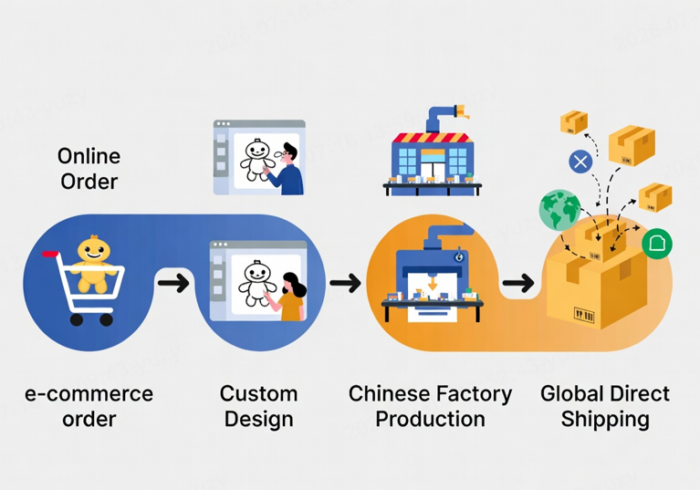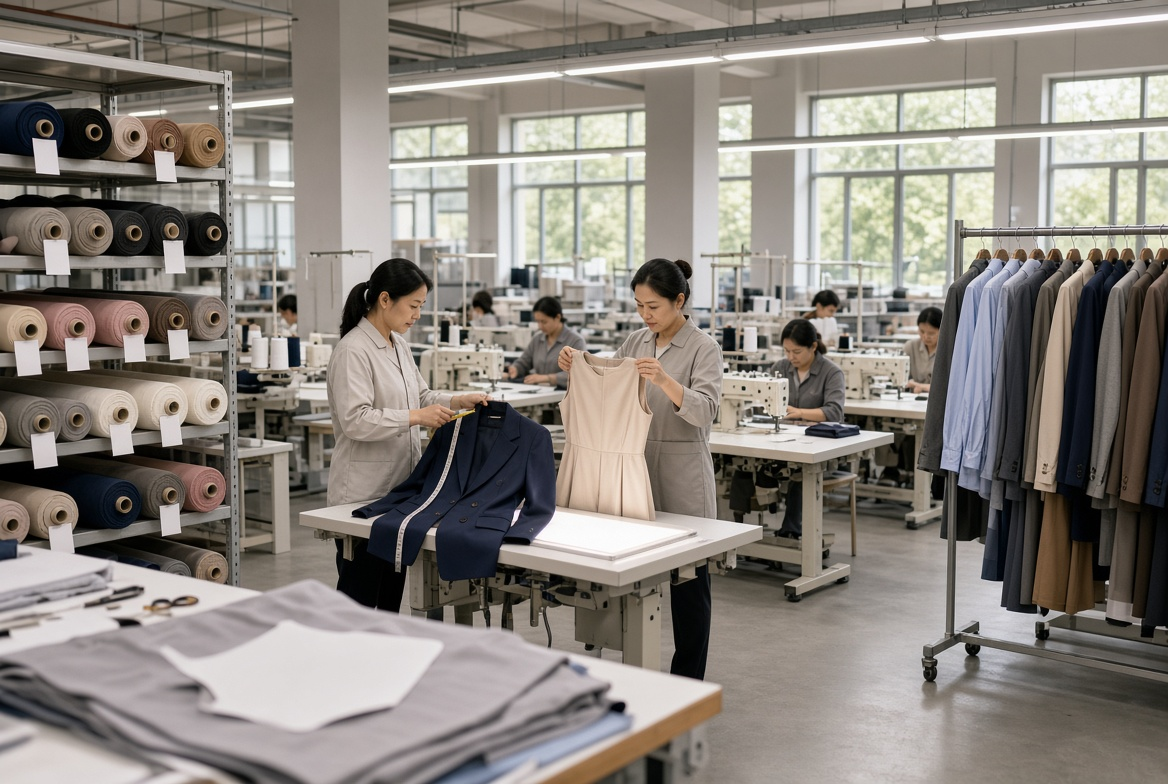
China remains a leading destination for clothing sourcing, offering specialized manufacturers for fashion apparel, activewear, underwear, children’s wear, functional clothing, textiles, and accessories. This guide explains how to evaluate Chinese clothing manufacturers, verify factories, manage samples and inspections, select sourcing regions, and use Looperbuy to reduce inventory, fulfillment, and logistics complexity.
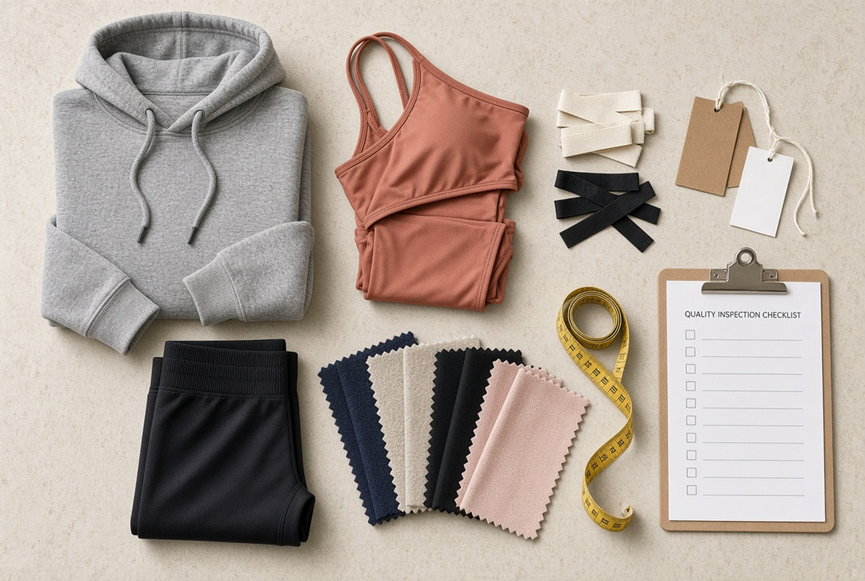
China remains one of the world’s most capable apparel sourcing destinations for brands, wholesalers, online retailers, and private-label sellers. The best clothing manufacturers in China combine deep textile supply chains, flexible OEM/ODM services, specialized production clusters, and export experience—but finding the right one requires more than comparing the lowest quote.
For a growing apparel business, the goal is not simply to locate a factory. It is to build a reliable sourcing system: validate the supplier, control product quality, manage samples and packaging, consolidate inventory where needed, and ship efficiently to your sales channels or customers. This guide explains how to evaluate clothing manufacturers in China, where key production hubs are located, and how Looperbuy can help reduce inventory, warehousing, payment, and fulfillment complexity.
Table of Contents
Why China Still Matters for Clothing Sourcing
China’s apparel industry is no longer defined only by low-cost mass production. Today, it supports a wide range of buyers—from small e-commerce stores testing a 100-piece private-label order to established brands purchasing large seasonal collections.
The practical strength of China lies in the density of its supply chain. In many sourcing regions, a buyer can access fabric mills, dyeing facilities, trim suppliers, embroidery workshops, printing services, pattern makers, packaging producers, inspection providers, and freight infrastructure within the same broader manufacturing ecosystem.
That concentration can reduce development time, simplify communication, and make customization more achievable.
China’s textile and apparel exports reached approximately US$293.77 billion in 2025, according to reported General Administration of Customs data. While total exports declined year over year, China continued to demonstrate major manufacturing capacity across textiles, garments, and accessories.
For international sellers, this matters because competitive sourcing is not only about product price. It is also about:
– Access to diverse fabrics, trims, and garment components
– The ability to develop OEM or ODM collections
– Faster replenishment for proven products
– Large-scale production capacity for established SKUs
– Export-focused factories familiar with global buyer expectations
– Opportunities to consolidate products and ship them more efficiently
However, these benefits only materialize when buyers select suppliers based on product fit, process capability, compliance, communication, and quality discipline—not on price alone.
What Makes a Good Chinese Clothing Manufacturer?
A good manufacturer should be evaluated as an operational partner, not as a listing on a B2B marketplace. The supplier must be capable of producing your specific category, quality level, size range, fabric specification, and order volume consistently.
Start With Product Specialization
A factory that performs well in one category may not be a good match for another. For example, a supplier specializing in lingerie or swimwear may have different machinery, pattern-making expertise, and testing requirements than a factory focused on technical outdoor jackets.
Before requesting a quote, define the product category as precisely as possible:
– Women’s fashion dresses, skirts, blouses, and knit tops
– Activewear, yoga wear, leggings, and sports bras
– Underwear, bras, lingerie, and shapewear
– Babywear, children’s apparel, and school uniforms
– Swimwear and beachwear
– Workwear, safety clothing, and uniforms
– Outdoor jackets, heated garments, fishing wear, and motorcycle apparel
– Home textiles, towels, robes, slippers, and bedding-related products
A factory with direct experience in your product category can usually identify potential production risks earlier—for example, fabric shrinkage, seam stretching, color migration, zipper performance, print cracking, or inaccurate grading between sizes.
Check the Supplier’s Production Model
Not every Chinese clothing supplier owns its own factory. Some are direct manufacturers; others are trading companies that coordinate production through partner factories. Neither model is automatically better.
The key question is whether the supplier can provide clear accountability.
| Supplier Type | Typical Strengths | Potential Risks | Best For |
| Direct factory | More control over production, equipment, and internal quality processes | May have narrower product specialization or higher MOQ | Buyers with repeatable orders and clear specifications |
| Trading company | Can access multiple factories and product categories | Less transparency if production is outsourced without disclosure | Multi-category sourcing or buyers needing broader supplier access |
| Sourcing agent | Can support supplier selection, negotiation, inspections, and consolidation | Quality depends on the agent’s process and incentives | New buyers or sellers managing several suppliers |
| Fulfillment partner | Supports warehousing, order processing, consolidation, and delivery | Does not replace supplier verification | E-commerce sellers reducing operational workload |
Ask directly:
1. Do you own the factory?
2. Which production steps are completed in-house?
3. Which steps are subcontracted?
4. Can you provide factory photos, production-line videos, and business documentation?
5. Who is responsible if a quality issue is found before shipment?
Transparency is usually more valuable than a supplier’s claim to be “the best factory.”
Leading Clothing Manufacturers in China
The following companies are examples of suppliers and manufacturers featured in the original Global Sources industry overview. Their capabilities should be independently verified before placing an order, because factory capacity, certifications, export markets, and product lines can change over time.
> Important buyer note: Treat this list as a starting point for supplier research—not a guarantee of suitability, product quality, compliance, or current production availability.
1. Shanghai Jspeed Garment Co., Ltd.
Shanghai Jspeed Garment focuses on a broad apparel range that includes underwear, lingerie, bras, swimwear, beachwear, shirts, pants, dresses, skirts, blouses, and jackets. The company is associated with a factory in Fujian and overseas order handling in Shanghai.
The supplier highlights experience with international markets and references certifications and audit frameworks including OEKO-TEX, Disney FAMA, BSCI, and Sedex. It also states that it has an in-house design function and quality-control personnel.
This type of supplier may be worth considering for buyers seeking:
– Intimate apparel and underwear
– Swimwear and beachwear
– Fashion basics
– Large-volume or repeat-order programs
– OEM/ODM support
2. Fuzhou H&F Garment Co., Ltd.
Fuzhou H&F Garment specializes in knitted and woven garments, with a stated focus on customized orders. Its profile references certifications such as Sedex, ISO 9001, BSCI, and GRS.
This may make the company relevant for buyers looking for:
– Outerwear
– Customized knitwear or woven apparel
– Export-oriented production
– Suppliers with stated social-compliance or recycled-material credentials
Buyers should still request the exact certificate scope, expiration date, and factory entity name. A certification displayed in a supplier profile may apply to a specific product, facility, or time period rather than every item in the catalog.
3. Number One Industrial Co., Ltd.
Located near Xiamen, Number One Industrial presents itself as an apparel manufacturer offering underwear, bras, swimwear, kids’ clothing, T-shirts, and related categories. The company states that it has experience serving international markets and has undergone brand or social-compliance audits.
This supplier could be a relevant prospect for:
– Children’s apparel
– Basic knitwear
– Underwear and swimwear
– Licensed-product buyers requiring structured documentation
– Retailers seeking a broader clothing assortment
4. Wuxi Ivy Textile Co., Ltd.
Wuxi Ivy Textile is more specialized in functional textile products than conventional fashion apparel. Its stated product line includes microfiber towels, beach towels, cooling towels, yoga towels, sports towels, golf towels, and bandanas.
For sellers building a fitness, travel, wellness, beach, or outdoor catalog, a textile specialist like this can complement a clothing supplier.
Potential sourcing applications include:
– Branded gym towels
– Promotional sports towels
– Cooling accessories
– Yoga and wellness collections
– Outdoor and travel bundles
5. Shanghai Jspeed Group Ltd.
Shanghai Jspeed Group is presented as an export-oriented supplier of indoor and outdoor consumer products rather than a clothing-only manufacturer. Its portfolio reportedly includes towels, blankets, pillows, water bottles, slippers, and bags, with OEM and ODM options.
This type of supplier can be useful when a seller wants to build a coordinated lifestyle collection around apparel. For example, a homewear brand could source robes, slippers, towels, and packaging through a more consolidated supplier network.
6. Shanghai Easun Group
Shanghai Easun has a broad textile and hospitality-related product range, including hoodies, T-shirts, sleepwear, blankets, bathrobes, towels, hotel supplies, airline supplies, bedding, and safety shoes. Its profile describes multiple production facilities and export operations.
This supplier profile may be relevant to:
– Hotel and hospitality buyers
– Airlines and travel businesses
– Corporate uniform procurement
– Home textile retailers
– Workwear and institutional purchasing programs
7. Wuxi Huacan Garment Accessories Co., Ltd.
Garment sourcing does not end with the garment itself. Wuxi Huacan specializes in garment accessories, including woven labels, tags, webbing, leather labels, and heat-transfer printing. Its profile references OEKO-TEX, Sedex, and ISO 9001 standards.
For private-label sellers, accessory suppliers are essential for creating a cohesive brand experience:
– Custom neck labels
– Hangtags
– Size labels
– Care labels
– Heat-transfer logos
– Branded packaging components
A strong garment-accessory partner can make a basic wholesale product look more differentiated and retail-ready.
8. Guangzhou Carly Ccino Fast Fashion Co., Ltd.
Guangzhou Carly Ccino Fast Fashion, also referred to in the source as Happy Promise, focuses on women’s fashion garments such as dresses, blouses, fashion tops, shorts, skirts, and pants. The supplier profile highlights OEM/ODM services and stated lead times of 7–15 days.
Fashion sellers should carefully confirm whether lead-time estimates begin after:
– Design approval
– Fabric approval
– Sample approval
– Deposit payment
– Production material booking
A “7–15 day delivery time” may refer to production under specific conditions and does not necessarily include sampling, quality inspection, export handling, or international shipping.
9. Polywell Textile & Garments Co., Ltd.
Polywell Textile & Garments is described as a manufacturer and trader specializing in activewear, underwear, swimwear, babywear, and children’s clothing. Its profile references a large production site, multiple production lines, and certifications including OEKO-TEX Standard 100 and BSCI.
This may be a useful sourcing candidate for brands focused on:
– Infant and children’s apparel
– Activewear
– Swimwear
– Underwear
– Higher-volume retail programs
For children’s products, request testing documentation that matches your destination market. Requirements differ by country and may cover labeling, drawstrings, flammability, chemicals, small parts, and other safety considerations.
10. BOWINS Garment
BOWINS Garment, referenced in the original article under Jinhua Uniform Garment, specializes in functional clothing such as hunting garments, heated clothing, fishing apparel, motorcycle wear, and outdoor clothing. The company highlights OEM/ODM capability, dedicated departments, and experience in export markets.
Technical apparel requires deeper due diligence than a standard cotton T-shirt. Buyers should confirm:
– Waterproof or breathable fabric specifications
– Seam-sealing methods
– Battery and electrical safety for heated garments
– Abrasion resistance
– Reflective-material performance
– Zipper, snap, and hardware durability
– Care-label requirements
– Field-testing or wash-test procedures
Where Are China’s Major Clothing Manufacturing Hubs?
The best region depends on your product category, material needs, budget, delivery schedule, and preferred production model.
| Region | Common Strengths | Suitable Product Types |
| Guangzhou, Guangdong | Fashion speed, women’s apparel, trend-driven production, wholesale markets | Dresses, tops, skirts, fast-fashion styles |
| Dongguan, Guangdong | Knitwear, casualwear, sportswear, export manufacturing | T-shirts, hoodies, activewear, casual apparel |
| Quanzhou and Xiamen, Fujian | Sportswear, swimwear, underwear, outdoor-related products | Activewear, swimwear, performance garments |
| Ningbo, Zhejiang | Knitwear, shirts, outerwear, large-scale apparel supply | Menswear, knitwear, woven garments |
| Hangzhou, Zhejiang | Women’s fashion, silk-related products, design-led apparel | Dresses, blouses, premium fashion |
| Suzhou and Wuxi, Jiangsu | Textiles, silk, accessories, home textiles | Silk garments, towels, labels, bedding |
| Qingdao, Shandong | Knitwear, workwear, outerwear, export production | Jackets, uniforms, sportswear |
| Shanghai | Trading, design coordination, high-end sourcing, logistics access | Multi-category sourcing and export coordination |
A buyer should not choose a supplier solely because it is located in a famous garment hub. Instead, shortlist factories based on category expertise, then compare capabilities, quality controls, and actual samples.
How to Vet a Clothing Manufacturer Before Paying
The highest-risk moment in sourcing is not when you receive a quotation. It is when you place a deposit without verifying whether the supplier can actually reproduce your required product.
A structured validation process can reduce expensive mistakes.
1. Prepare a Detailed Tech Pack
A professional tech pack should include:
– Front, back, and side garment sketches
– Measurements and size grading
– Fabric composition and weight
– Pantone or color references
– Stitching details
– Print, embroidery, or embellishment placement
– Label and packaging requirements
– Quality requirements
– Target quantity
– Required delivery date
– Destination market
Without clear specifications, factories will make assumptions. Those assumptions may be commercially reasonable for the supplier but unacceptable for your brand.
2. Verify the Legal Business Entity
Request the supplier’s Chinese business license and compare the legal company name with:
– The quotation
– The pro forma invoice
– The bank account beneficiary
– The factory address
– Certification documents
A mismatch does not automatically mean fraud, but it must be explained before payment.
3. Ask for Product-Specific Evidence
Do not rely on a generic factory video. Request evidence related to your category:
– Similar product photos
– Recent production-line images
– Sample-room videos
– Fabric swatches
– Test reports
– Packing photos
– Quality-inspection records
– Export documentation examples with sensitive information removed
4. Order a Pre-Production Sample
The sample is your first operational test. Review it for:
– Fabric hand feel and composition
– Measurement accuracy
– Fit and drape
– Color consistency
– Stitch density and seam durability
– Print or embroidery quality
– Label accuracy
– Packaging presentation
– Wash performance
Do not move to bulk production until the sample has been formally approved in writing.
5. Set an Inspection Standard
Specify an acceptable quality limit, often called AQL, before production begins. An AQL plan classifies defects as critical, major, or minor and defines what level of defects may be accepted in an inspected lot.
For clothing, common inspection points include:
– Incorrect size or measurement
– Open seams
– Loose threads
– Fabric stains
– Uneven hems
– Missing labels
– Color variation
– Incorrect logo placement
– Broken zippers or buttons
– Packaging mistakes
A good supplier will not object to written quality requirements. Clear standards protect both sides.
How Looperbuy Can Simplify Apparel Sourcing and Fulfillment
Finding a manufacturer is only one part of the buyer journey. Many global sellers struggle after the order is produced because they must coordinate payments, samples, supplier communications, inventory storage, inspection, consolidation, and cross-border delivery.
Looperbuy helps B2B sellers source Chinese products and arrange dropshipping or fulfillment services without carrying unnecessary inventory or managing every logistics detail independently.
For apparel sellers, a more flexible operating model can be especially valuable when testing designs, entering a new market, or managing a broad catalog.
A Practical Workflow for B2B Apparel Sellers
1. Identify products and suppliers based on your target market, price point, and product specifications.
2. Request samples before committing to bulk production or a major replenishment order.
3. Confirm product details including materials, sizing, labels, packaging, MOQ, lead time, and inspection standards.
4. Use centralized sourcing coordination to reduce fragmented supplier communication and payment handling.
5. Consolidate inventory from one or more suppliers when appropriate, rather than shipping each supplier order separately.
6. Inspect products before dispatch to identify major quality or packing issues before items reach your customer or sales channel.
7. Ship to your destination or customer base through a fulfillment model that aligns with your delivery promise and inventory strategy.
For example, a Shopify seller launching a new activewear collection may begin with limited quantities of leggings, sports bras, gym bags, and branded towels. Instead of importing large quantities of every SKU to a local warehouse, the seller can validate demand, consolidate products, and use a more flexible fulfillment approach as sales data develops.
This does not eliminate all sourcing risk. But it can reduce the financial pressure of over-ordering unproven products and maintaining inventory that does not sell.
Common Mistakes When Sourcing Clothing From China
Choosing the Lowest Price
A low quote may exclude important elements such as better fabric, printing quality, custom packaging, quality inspection, export packaging, or shipping. Always compare quotations line by line.
Skipping the Sample Stage
A product photo is not a sample. Fabric quality, fit, stitching, color, and finishing must be physically reviewed before bulk production.
Assuming Every Certification Applies
Ask for a current certificate, confirm the factory name, review the scope, and determine whether it applies to the relevant facility or product. OEKO-TEX Standard 100 is a textile product-safety certification focused on testing for harmful substances; it should not be interpreted as proof of every environmental, labor, or product-performance claim.
Ignoring MOQ and Reorder Terms
A supplier may accept a low initial MOQ but require a larger quantity for repeat production, custom colors, branded labels, or certain fabric choices. Clarify these terms upfront.
Paying Without a Quality Plan
Agree on product specifications, sample approval, inspection standards, packaging requirements, and the process for handling defects before making a production payment.
Establish a reliable supply chain
China offers an unusually broad range of clothing manufacturers, fabric suppliers, accessory producers, and export services. For B2B sellers, the opportunity is not simply to find inexpensive apparel. It is to create a dependable supply chain that supports product quality, brand differentiation, customer satisfaction, and scalable fulfillment.
The right factory should match your product category, order size, quality expectations, and long-term business model. Start with a focused product brief, request samples, verify supplier claims, establish inspection standards, and avoid committing too much capital before demand is proven.
Ready to source apparel, accessories, or private-label products from China? Use Looperbuy to streamline product sourcing, supplier coordination, inventory consolidation, and dropshipping support—so you can focus more of your resources on growing your sales channels and serving customers.
FAQs
1. What is the minimum order quantity for clothing manufacturers in China?
Minimum order quantities vary widely. Some factories may accept small trial orders, while others require hundreds or thousands of units per style or color. MOQ can increase when you request custom fabric, special colors, embroidery, private labels, or unique packaging. Always ask for MOQ by style, color, size, and fabric option.
2. Can I start a clothing brand with a Chinese manufacturer?
Yes. Many manufacturers provide OEM or ODM services that can support private-label brands. However, you should prepare a clear tech pack, order samples, check quality carefully, and begin with manageable quantities. A small test order is usually safer than committing to a large seasonal inventory before validating customer demand.
3. What is the difference between OEM and ODM clothing?
OEM clothing is produced according to your design, technical specifications, labels, and branding. ODM clothing is based on the supplier’s existing designs, which you may customize with your logo, colors, packaging, or limited changes. OEM usually offers more differentiation but can require more development time and higher MOQs.
4. How can I check whether a Chinese clothing factory is legitimate?
Request the Chinese business license, verify the legal entity name, ask for factory photos and videos, review product-specific evidence, order samples, and arrange a factory audit or third-party inspection if the order value justifies it. Make sure the company name on the bank account matches the documented supplier relationship.
5. Which Chinese city is best for sourcing women’s fashion clothing?
Guangzhou is widely known for women’s fashion, fast-moving styles, and access to large garment wholesale markets. Hangzhou is also important for women’s apparel and more design-led fashion. The best location depends on your product style, quality level, order quantity, and required lead time.
6. Should I use a sourcing agent or buy directly from a factory?
Direct factory sourcing can provide greater control when you have clear requirements and sufficient order volume. A sourcing agent or service partner can be useful if you are new to China sourcing, require multiple product categories, need supplier verification, or want help with inspection and shipment consolidation.
7. How long does clothing production take in China?
Timing depends on product complexity, fabric availability, order size, factory capacity, sampling cycles, and the production season. Simple repeat orders may move quickly, while custom designs requiring new fabrics, prints, fit approval, or certifications can take substantially longer. Confirm timelines separately for sampling, bulk production, inspection, and shipping.
References
1. [Global Sources — Top 10 Clothing Manufacturers in China]
2. [Fibre2Fashion — China’s Textile and Apparel Exports Down 2.42% in 2025]
3. [Texleader — China’s Textile and Apparel Exports Demonstrate Resilience]
4. [Fil Control — Economic Operation of China’s Apparel Industry in January–September 2025]
5. [New Buying Agent — Auditing China Clothing Factories: Quality Checks Guide]
6. [Club Martin — STANDARD 100 by OEKO-TEX Textile Glossary]
-700x490.png)