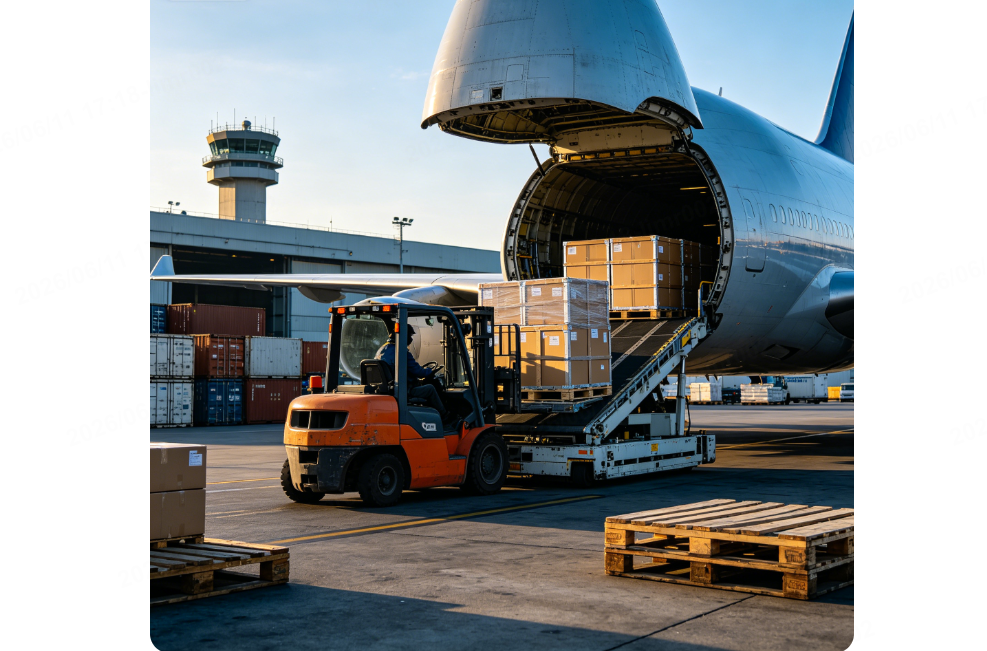
The global air cargo industry is navigating a transformative era in 2026, marked by structural capacity constraints, shifting trade patterns, and sustained demand for time-sensitive freight. For international brand owners, wholesalers, and manufacturers seeking reliable global sourcing solutions, understanding the evolving air cargo landscape is no longer optional—it is a competitive necessity. LooperBuy, a leading One-Stop B2B Sourcing Platform, bridges the gap between global buyers and vetted Chinese suppliers with integrated logistics that address the industry’s most persistent pain points. This expert guide provides actionable insights, current market data, and strategic recommendations grounded in industry authority.
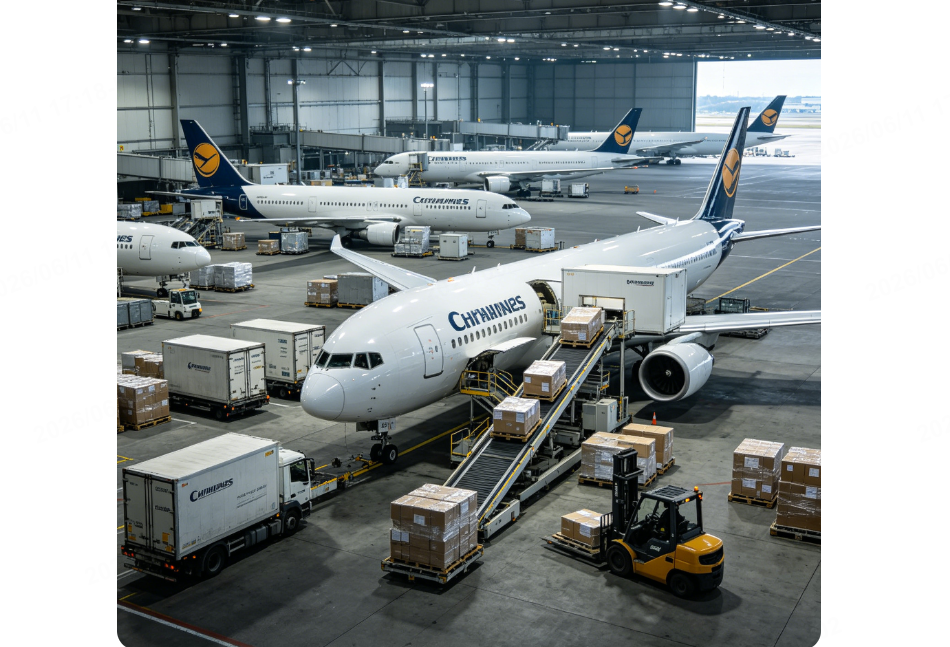
Table of Contents
Why the Air Cargo Industry Matters for Your Global Sourcing Strategy
As a B2B sourcing strategist with over a decade of experience advising international procurement teams, I have witnessed firsthand how deeply the air cargo industry influences supply chain resilience, cost structures, and market competitiveness. The industry is not merely a transport mechanism—it is the circulatory system of global commerce.
The scale of this industry is staggering. The global air cargo market was valued at approximately USD 150.6 billion in 2025 and is projected to reach USD 320.4 billion by 2035, registering a CAGR of 7.8 percent. More conservative estimates place the air cargo services market at USD 65 billion in 2025, growing to USD 100.6 billion by 2033 at a 5.61 percent CAGR. Regardless of the methodology, the trajectory is unmistakably upward.
This growth is fueled by three powerful engines. First, cross-border e-commerce continues to accelerate smaller, more frequent shipments that favour air freight’s speed advantage. Second, pharmaceutical cold-chain logistics and high-value electronics trade demand the reliability and speed that only air cargo can provide. Third, global supply chain reconfiguration has elevated air freight from a premium option to a structural necessity.
For B2B buyers sourcing directly from China, this industry context is critical. China remains the world’s second-largest economy and a manufacturing powerhouse, with the Chinese air cargo market forecast to reach USD 70.1 billion by 2032, expanding at a CAGR of 8.1 percent. Yet accessing this manufacturing ecosystem cost-effectively requires navigating a complex air cargo logistics environment.
The Top Challenges Facing Air Cargo Shippers Today
The air cargo industry in 2026 presents formidable challenges that directly impact sourcing costs and timelines. Understanding these challenges is the first step toward overcoming them.
Capacity constraints have become structural rather than cyclical. Global air cargo capacity declined by approximately 2 percent year-on-year in late 2025, following steady reductions since May. Dedicated freighter capacity fell 12 percent year-on-year, a decline that has persisted since March. Even as 2026 unfolds, industry forecasts project cargo growth of approximately 2.6 percent, but capacity remains tight. The aircraft order backlog now exceeds 17,000 units—around 60 percent of the active fleet and 11 times annual deliveries—meaning normalisation is unlikely before the early 2030s.
Freight rates remain volatile and elevated. Average worldwide rates stabilised around USD 2.47 per kilo for full-year 2025. However, spot rates on key corridors tell a different story. In week 49 of 2025, China-to-United States spot rates climbed 8 percent to USD 6.82 per kilo. For Asia Pacific to the United States, average spot rates reached USD 6.57 per kilo by mid-December.
Trade policy disruptions have reshaped procurement economics. The enforcement of revised United States de minimis rules slashed direct low-value parcel shipments from China by 20 to 30 percent since mid-December 2025. Parcels that once flew direct now detour through Vietnam, Malaysia, and Mexico, adding 3 to 7 days in transit and inflating airfreight costs by an estimated 15 to 22 percent per shipment.
These challenges are not insurmountable—but they demand a smarter approach to global sourcing.
How a One-Stop B2B Sourcing Platform Simplifies Air Cargo Logistics
This is where LooperBuy’s integrated model proves transformative. As a One-Stop B2B Sourcing Platform, LooperBuy eliminates the fragmentation that traditionally complicates cross-border procurement.
Supplier verification eliminates the risk of unreliable partners. The rise of platform-verified suppliers and transparent performance metrics—on-time delivery rates, response times, and transaction volumes—has transformed how international buyers assess reliability. LooperBuy’s vetting process ensures that every supplier meets rigorous standards for production capacity, certification validity, and compliance history.
Integrated logistics consolidates your shipping. Rather than managing separate relationships with freight forwarders, customs brokers, and last-mile carriers, LooperBuy provides end-to-end coordination. This integration is particularly valuable given that freight forwarding accounted for approximately 44.5 percent of air freight market revenue in 2025, reflecting the complexity of multi-modal coordination.
Cost transparency protects your margins. With worldwide rates averaging around USD 2.47 per kilo in 2025, shipping costs represent a significant portion of landed expenses. LooperBuy’s transparent pricing structure eliminates hidden fees and provides real-time cost visibility—essential for accurate budgeting.
Product Diversity and Sourcing Flexibility: China’s Unmatched Advantage
China’s manufacturing ecosystem remains the global gold standard for product diversity and cost efficiency. Chinese suppliers offer B2B pricing that is 25 to 40 percent lower than European or North American alternatives, supported by mature supply chains, economies of scale, and vertical integration in key manufacturing hubs.
China’s manufacturing ecosystem covers approximately 90 percent of global B2B supply categories, from industrial components, electrical supplies, and packaging materials to consumer goods, raw materials, and custom manufacturing parts. This breadth ensures that whether you are sourcing electronic components, apparel, machinery parts, or specialized chemicals, the products you need are available.
Moreover, China’s export infrastructure supports both bulk and small-batch B2B orders, with over 200 major ports and logistics hubs capable of shipping to every corner of the globe.
Real User Experiences: How B2B Buyers Are Succeeding
The value of integrated sourcing platforms is best illustrated through the experiences of real users. Here are representative testimonials from B2B buyers who have navigated the air cargo industry landscape successfully:
“Before LooperBuy, we juggled three different freight forwarders and constantly faced customs delays. Now, we have a single point of contact for everything from supplier selection to final delivery. Our air freight costs dropped by 18 percent in six months, and transit times are now predictable enough to plan our inventory reliably.” — Wholesale Electronics Distributor, Germany
“The biggest pain point was supplier verification. We had been burned twice by unvetted suppliers who failed quality inspections after we had already committed to production runs. LooperBuy’s vetting process gave us confidence, and their logistics integration means we always know exactly where our shipments are.” — Industrial Components Buyer, Canada
“China’s product diversity is incredible, but navigating the logistics used to be a full-time job. LooperBuy’s platform aggregates everything—sourcing, quality control, documentation, and shipping—into one workflow. For a small team like ours, that efficiency is the difference between growing and just surviving.” — Brand Owner (Home Goods), United Kingdom
AI and Digital Transformation in Air Cargo Sourcing
The air cargo industry is undergoing a technological transformation that directly benefits B2B buyers. Digitalization of end-to-end processes has accelerated the adoption of sophisticated tracking platforms and predictive analytics, enabling carriers to optimize routing and capacity utilization with unprecedented precision.
More significantly, AI agents are rewriting the rules of cross-border trade. From individuals leading AI agent teams to run cross-border businesses to autonomous transaction matching between buyers‘ and sellers’ agents, AI is compressing what were once two-to-three-week selection and design cycles into a single day. For sourcing professionals, this means faster supplier matching, automated customs documentation, and real-time shipment tracking powered by AI-driven logistics platforms.
Expert Recommendations for Optimizing Air Cargo Sourcing
Based on current market conditions and industry best practices, here are actionable recommendations for B2B buyers:
- Consolidate your sourcing and logistics — Use a single platform like LooperBuy that integrates supplier discovery, verification, quality control, and freight management to reduce coordination costs.
- Plan for capacity constraints — With dedicated freighter capacity falling 12 percent year-on-year, book shipments in advance and maintain buffer inventory levels.
- Monitor tariff developments — United States import duties surged to 17 percent in 2025, the highest level since the 1930s. Build tariff scenario planning into your cost models.
- Leverage Asia Pacific’s growth — The Asia Pacific region continues to lead global airfreight demand with 7 percent year-on-year growth, the strongest of any region.
- Embrace digital platforms — AI-powered logistics platforms optimize end-to-end supply chain operations. The adoption of AI and machine learning has already improved route optimization and demand forecasting across the industry.
Key Takeaways and Next Steps
The air cargo industry is more dynamic and challenging than ever, but the right sourcing partner can turn these challenges into competitive advantages. For brand owners, wholesalers, and manufacturers looking to source directly from China, the path forward is clear: consolidate your procurement operations through a verified One-Stop B2B Sourcing Platform like LooperBuy.
Your next step — Visit LooperBuy to explore verified suppliers across thousands of product categories, request a customized sourcing quote, and experience integrated logistics that simplify cross-border trade.
References
- Research and Markets. (2025). Air Cargo Services Market Size, Share, Growth Analysis by Type, Service, Destination, End-User — Global Forecast to 2033. Available at: https://www.researchandmarkets.com/reports/6092763/air-cargo-services-market-share-growth
- Fatpos Global. (2025). Air Cargo Market Size, Share, Growth, Trends, and Global Industry Analysis (2025–2035). Available at: https://www.marketresearch.com/Fatpos-Global-v4217/Air-Cargo-44787289/
- Research and Markets. (2025). Air Cargo Market by Cargo Type, Service Type, Aircraft Type, Application, End-User — Global Forecast to 2030. Available at: https://www.researchandmarkets.com/reports/4896618/air-cargo-market-by-cargo-type-service-type
- Stat Times. (2026). Global air freight in 2026: Slower growth, stronger structural demand. Available at: https://www.stattimes.com/amp/air-cargo/global-air-freight-in-2026-slower-growth-stronger-structural-demand-1357860
- Air Cargo Week. (2025). Capacity tightens and trade patterns shift. Available at: https://aircargoweek.com/capacity-tightens-and-trade-patterns-shift/
- Mordor Intelligence. (2026). Air Freight — Market Share Analysis, Industry Trends & Statistics, Growth Forecasts (2026–2031). Available at: https://www.researchandmarkets.com/reports/4622657/air-freight-market-share-analysis-industry
- Air Cargo Week. (2025). WorldACD Market Data: Global air cargo trends December 2025. Available at: https://aircargoweek.com/worldacd-market-data-global-air-cargo-trends-december-2025/
- Breakbulk News. (2025). Air Cargo in Crisis: 30% Drop in China–U.S. E-Commerce Flows, MD-11 Grounding Deepens Capacity Crunch. Available at: https://breakbulk.news/air-cargo-in-crisis-30-drop-in-china-u-s-e-commerce-flows-md-11-grounding-deepens-capacity-crunch/
- Asia Cargo News. (2025). WorldACD: Spot rates rise a further 3% in first week of December. Available at: https://asiacargonews.com/e/news/detail?id=11602
- Xinhua Silk Road. (2026). China Focus: AI agents give “world‘s supermarket” faster lanes to global markets. Available at: https://en.imsilkroad.com/p/350955.html
- Alibaba.com. (2026). Strategic Sourcing from China: Optimize Supplier Selection for B2B Procurement. Available at: https://www.alibaba.com/price-comparison/my-china-online-shopping
- LooperBuy Blog. (2025). Supplies Business: A B2B Expert’s Guide to Sourcing Chinese Goods Globally with LooperBuy. Available at: https://blog.looperbuy.com/supplies-business-a-b2b-experts-guide-to-sourcing-chinese-goods-globally-with-looperbuy.html
Frequently Asked Questions (FAQ)
Q1: How does air cargo industry volatility affect my landed costs when sourcing from China?
A: Capacity constraints and rate fluctuations directly impact shipping expenses. With worldwide average rates around USD 2.47 per kilo and spot rates on peak corridors reaching USD 6.57 per kilo, using an integrated platform like LooperBuy provides rate transparency and consolidated shipping options to stabilize costs.
Q2: Is sourcing from China still cost-effective given rising air freight rates?
A: Yes. Chinese manufacturing remains 25–40 percent cheaper than European or North American alternatives. When combined with integrated logistics that eliminate middlemen and hidden fees, the total landed cost still offers significant savings over domestic or regional alternatives.
Q3: How do I verify that a Chinese supplier is legitimate before committing to air freight shipments?
A: Use platforms with rigorous supplier verification. Look for transparent performance metrics including on-time delivery rates (target above 98 percent), average response times (under 6 hours), reorder rates (above 30 percent), and annual online revenue (over USD 100,000). LooperBuy provides all these verification data points.
Q4: What product categories are best suited for air cargo from China?
A: High-value, time-sensitive, or low-weight products are ideal—including electronics, pharmaceuticals, fashion accessories, automotive components, perishable goods, and industrial parts. Electronics and high-value goods represent the largest segment, contributing approximately 25–30 percent of total air freight demand.
Q5: How long does air freight take from China to major markets like the US or Europe?
A: Standard air freight from China to the US or Europe typically takes 5–10 days door-to-door, compared to 30–45 days for sea freight. For context, air freight costs 5–10 times more per kilogram than sea freight but saves weeks in transit—a trade-off that makes sense for time-sensitive inventory replenishment.
Article Brief
The global air cargo industry in 2026 faces capacity constraints, volatile freight rates, and shifting trade policies—challenges that directly impact B2B buyers sourcing from China. This expert guide analyzes market data from leading sources including IATA, WorldACD, and Research and Markets, then provides actionable solutions through integrated One-Stop B2B Sourcing Platforms like LooperBuy. With Chinese manufacturing offering 25–40 percent cost advantages over alternatives and product coverage across 90 percent of global B2B categories, the right sourcing strategy turns industry volatility into competitive advantage. Includes real user testimonials, AI-driven logistics insights, and step-by-step procurement recommendations.
Hot Tags
B2B sourcing China, air cargo logistics, global procurement platform, China supplier verification, cross-border freight, B2B wholesale China, international shipping solutions, China manufacturing sourcing, supply chain optimization, LooperBuy B2B platform