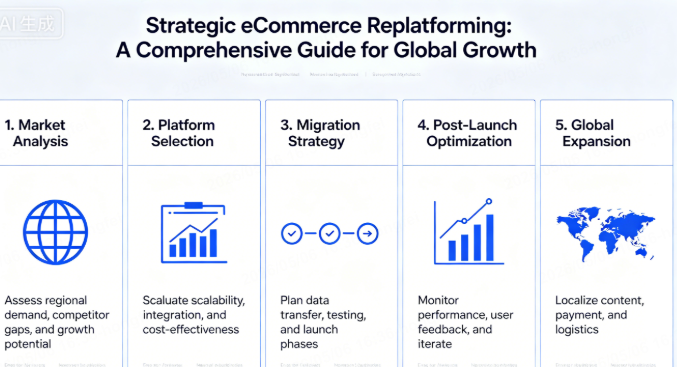
In today’s hyper-competitive digital landscape, relying on stagnant technology is a liability. For businesses operating globally—especially those managing complex supply chains like LooperBuy—the decision to undergo ecommerce replatforming is no longer just a technical upgrade; it is a fundamental business imperative.
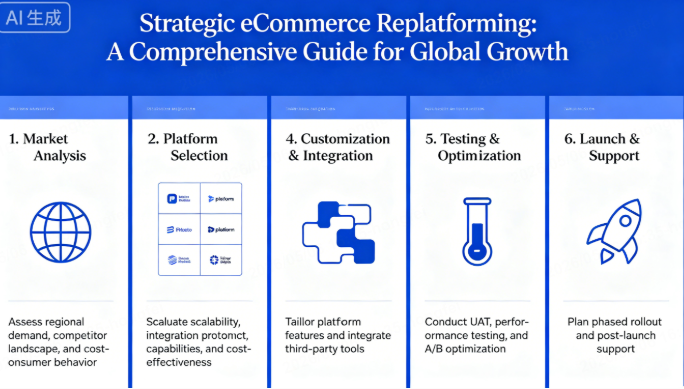
As global ecommerce sales are projected to surpass $8 trillion by 2027 1, the ability to adapt to new channels, integrate seamless logistics, and offer personalized experiences is what separates market leaders from those left behind. This guide explores the strategic nuances of replatforming, designed for enterprise leaders and wholesalers aiming to scale efficiently.
Table of Contents
Understanding eCommerce Replatforming
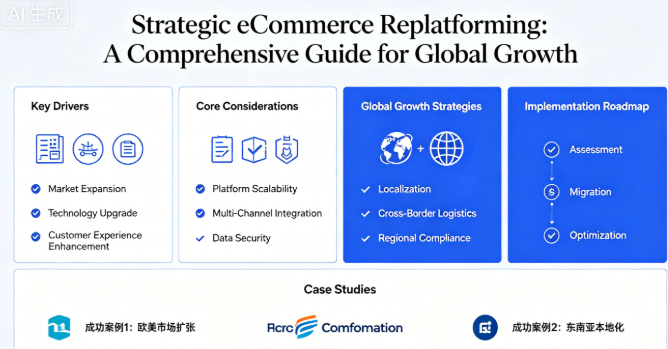
Ecommerce replatforming is the strategic process of migrating an online business from a legacy platform to a modern, robust architecture. Unlike a simple migration—which merely transfers data—replatforming involves a fundamental shift in your technology stack to improve scalability, flexibility, and operational performance 2.
Distinguishing Key Transformation Strategies
It is vital to distinguish replatforming from other technical initiatives to ensure your team is aligned:
- Re-platforming: Shifting to a new system while preserving core business processes to unlock modern capabilities.
- Migration: A standard transfer of data and settings without major structural changes.
- Refactoring: Rewriting existing code to improve maintainability within the current platform.
- Rehosting: Moving the system to a new environment (e.g., on-premise to cloud) without altering architecture.
Why Global B2B Platforms Must Consider Replatforming
For platforms like LooperBuy that connect global buyers to Chinese manufacturers, the limitations of traditional systems are often the biggest bottleneck to growth.
| Driver | Challenge with Legacy Systems | Benefit of Modern Replatforming |
|---|---|---|
| Performance | Slow loading and poor UX 3 | Rapid page speed and mobile optimization |
| Scalability | Rigid, monolithic structures | Composable, API-driven architecture |
| Costs | High maintenance of “broken” systems 4 | Lower TCO and cloud-native efficiency |
| Security | Vulnerability to cyber threats 5 | Enterprise-grade compliance and monitoring |
Expert Insights: Unique Challenges & Mitigations
Replatforming is an ambitious undertaking. Industry data suggests that 64% of data migrations overrun their forecasted budget 6. To succeed, you must adopt a proactive strategy.
1. Avoiding the “Innovation Pause”
Many companies freeze new feature development during migration, losing precious market share.
- The Strategy: Adopt an Agile MVP (Minimum Viable Product) approach. Launch essential functionalities within 3–6 months, then incrementally roll out advanced features to ensure continuous growth 2.
2. Protecting SEO Equity
A common failure point is the loss of organic search traffic due to broken redirects or improperly mapped URLs.
- The Strategy: Involve SEO experts from day one. Conduct a comprehensive pre-migration audit and ensure all 301 redirects are meticulously implemented to retain search authority 7.
3. Managing Internal Adoption
Technology is only as effective as the team using it. Resistance to change is a leading cause of project failure.
- The Strategy: Invest in Change Management. Start training employees before the launch, provide clear documentation, and create incentives that link successful system adoption to performance goals 8.
Visualizing the Transformation
Suggested: [Insert a high-quality infographic here illustrating the “Monolith vs. Composable Commerce” architecture comparison to showcase how modular systems allow for faster scaling.]
Selecting the Right Approach: Why Composable Matters
Modern B2B platforms, especially those handling global logistics, benefit most from Composable Commerce. By utilizing API-driven, headless architectures, companies like LooperBuy can:
- Integrate seamlessly with global logistics providers and ERP systems.
- Personalize pricing and catalogs for different regions instantly.
- Scale independently—you can upgrade your checkout system without touching the product catalog module.
Expert Checklist for Success
- [ ] Define KPIs: Are you optimizing for site speed, conversion rates, or reduced TCO?
- [ ] Audit Data: Cleanse your database before migration to prevent “garbage in, garbage out.”
- [ ] Evaluate TCO: Go beyond licensing; factor in maintenance, training, and integrations 2.
- [ ] Test Rigorously: Use A/B testing and soft launches to identify friction points before the full go-live.
Conclusion
Ecommerce replatforming is the cornerstone of future-proofing your business. While the process demands careful planning and expert execution, the rewards—increased agility, lower costs, and superior customer experiences—are essential for staying competitive in the global B2B market.
Ready to accelerate your global sourcing platform? Start your journey by auditing your current tech limitations today. [Contact our experts for a personalized assessment] and ensure your platform is built for tomorrow’s scale.
References
- [1] Statista: Worldwide Retail eCommerce Sales Projections
- [2] Virto Commerce: eCommerce Replatforming Guide
- [3] Think with Google: Mobile Page Speed Impact
- [4] Digital Commerce 360: B2B eCommerce Experience Report
- [5] Solveda: Fortifying eCommerce Against Digital Threats
- [6] Curiosity Software: Data Migration Project Research
- [7] Sitebulb: Importance of SEO in Website Migrations
- [8] CIO: Reasons Why Digital Transformations Fail
FAQ
Q1: How do I know it’s time to replatform?
A1: If your platform limits growth, suffers from frequent downtime, has high maintenance costs, or cannot support modern integrations (like headless or AI), it is time to consider replatforming.
Q2: How long does a replatforming project take?
A2: It varies by complexity, but using an agile approach with an MVP launch, you can expect an initial core deployment within 3 to 6 months.
Q3: Will replatforming hurt my SEO?
A3: It can, but only if poorly executed. Proper implementation of 301 redirects, preserving meta-data, and structured data audits will protect and often improve your SEO.
Q4: What is the most important factor in a successful migration?
A4: Comprehensive planning and change management. Technical success is useless if your team is not trained or if your internal business processes aren’t aligned with the new platform.
Q5: Is it better to build or buy?
A5: For most B2B enterprises, buying a flexible, modular (composable) platform is faster and more cost-effective than building from scratch, allowing you to focus on your core business.
Summary: This article serves as a strategic roadmap for B2B global sourcing platforms considering ecommerce replatforming. It covers the essential definitions, the business case for migrating to modular/headless architectures, critical risks like SEO loss and budget overruns, and actionable expert advice to ensure a seamless digital transition. The guide emphasizes moving toward composable commerce to unlock long-term scalability and competitive advantage in the global market.
Hot tags: B2B eCommerce platform, ecommerce replatforming, digital transformation, B2B wholesale marketplace, composable commerce, global sourcing platform, enterprise ecommerce solutions, supply chain optimization, headless commerce, B2B digital strategy.