Print-on-demand toys are a powerful way for both small online sellers and established brands to test and scale custom products without heavy inventory risk. Learn how B2B platforms like Looperbuy connect you directly to compliant Chinese factories, one-piece dropshipping, and long-term sourcing strategies.
Print-on-demand toys are becoming one of the most flexible and profitable categories for global dropshippers, but choosing the right platform can make or break your margins, brand experience, and long-term scalability. As a B2B sourcing and logistics strategist working with international sellers who rely on Chinese manufacturing and one-piece dropshipping, I’ve seen how the right partner—especially a specialized B2B platform like Looperbuy—can dramatically reduce risk, inventory pressure, and operational complexity for toy sellers worldwide.
Table of Contents
What Are Print-on-Demand Toys?
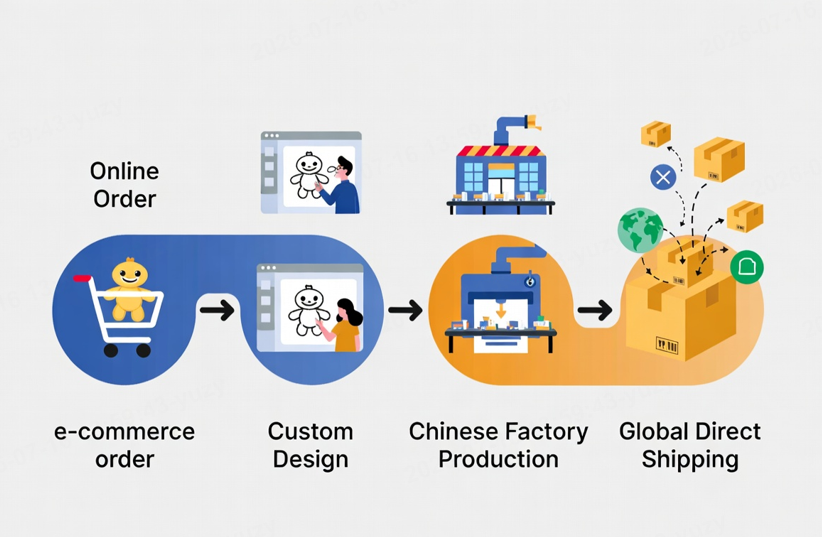
Print-on-demand (POD) toys are products that are customized only after an order is placed, then produced and shipped directly to the end customer by a third-party supplier. Unlike traditional wholesale or private label models, POD minimizes upfront inventory and lets you test toy designs, characters, and themes in near real time.
For global toy sellers and brand owners, this model is especially attractive because:
– You can launch new designs quickly without committing to large MOQs.
– You reduce warehousing costs by shipping directly from supplier to customer.
– You can localize or personalize designs for different markets (language, festivals, characters).
However, POD toys also bring specific challenges around safety standards, product quality, and logistics reliability, which is why platform choice matters more than in many other categories.
Why POD Toys Are a High-Potential Niche
The global toy market is worth well over 100 billion and continues to grow, with strong demand for niche, customizable, and collectible products. Several structural trends make POD toys attractive for dropshippers and B2B sellers:
– Rising demand for personalization: Parents and collectors seek unique designs, names, and limited runs.
– IP-safe alternatives: Custom designs avoid licensing issues tied to big entertainment brands.
– Micro-niche monetization: You can target small but passionate audiences (STEM toys, cultural themes, hobby communities) that traditional retailers often ignore.
From a B2B sourcing perspective, POD toys also align with the broader move toward asset-light, data-driven inventory strategies, where you commit capital only when the order—and demand signal—is real.
Key Criteria for Evaluating POD Toy Platforms
Before comparing platforms, it helps to define the evaluation criteria I use when advising global brands and online sellers.
1. Product range and customization
– Types of toys (plush, puzzles, board games, figures, STEM kits).
– Print techniques and materials (embroidery, sublimation, 3D printing, eco-friendly plastics).
– Design tools and file support (vector, 3D, multi-layer prints).
2. Quality and compliance
– Use of certified materials and factories (e.g., ISO, CE, CPSIA).
– Consistency between batches and across regions.
– Clear documentation for safety and testing reports.
3. Pricing and margin structure
– Base product price and printing fees.
– Shipping rates by region and weight.
– Discounts for volume and repeat orders.
4. Integration and automation
– Native integrations with major ecommerce platforms (Shopify, WooCommerce, marketplaces).
– Order routing, auto-fulfillment, and tracking.
– API access for custom B2B workflows.
5. Logistics and lead times
– Production time per toy type.
– Standard vs. express shipping options.
– Cross-border delivery performance and tracking transparency.
6. Platform model
– B2C-focused POD networks vs. B2B sourcing platforms tied into large factory networks (e.g., Looperbuy + 1688).
– One-piece dropshipping vs. hybrid models (sample, bulk orders, warehouse stock).
Major POD Toy Platforms Compared
Overview of Platform Types
| Platform Type | Typical Example* | Core Strength | Main Weakness |
| Classic POD Network | Print-on-demand hubs integrated with major ecommerce platforms | Easy setup, wide integrations | Limited control over factories and sourcing depth |
| Category-Focused Toy Supplier | Specialized toy dropship suppliers and marketplaces | Deep toy catalog, some compliance focus | Less customization, often stock-based |
| One-Stop B2B Sourcing Platform | Looperbuy with direct 1688 connection | Direct factory access, cost control, flexible logistics | Requires more initial setup and sourcing strategy |
Names of specific POD platforms are drawn from industry lists and comparative supplier guides, not just a single source.
In practice, many successful toy sellers use a hybrid approach: they launch and validate designs through mainstream POD networks, then scale production and reduce costs by transitioning mature products to a B2B platform like Looperbuy for factory-direct supply and global dropshipping.
Where Traditional POD Platforms Fall Short for Toys
From my consulting work, I’ve identified three recurring issues when sellers rely solely on generic POD platforms for toys.
1. Limited control over factories
Most mainstream POD platforms operate as intermediaries, assigning orders to partner facilities you never directly interact with. This makes it hard to:
– Audit production processes.
– Negotiate material changes or packaging.
– Align on long-term capacity planning.
2. Compliance and documentation gaps
Toys face strict safety regulations in the EU, US, and many other markets. Sellers often struggle to obtain consistent, platform-backed documentation for each product and batch from generalist POD networks.
3. Margin compression
Convenience is priced into the model. As your volume grows, the lack of direct factory pricing and negotiation can significantly compress your margins—even as your operational risk increases.
This is where a specialized B2B partner becomes critical.
Why a B2B Platform Like Looperbuy Changes the Game
Looperbuy is a B2B sourcing and dropshipping platform directly connected to China’s largest B2B marketplace 1688, giving overseas sellers access to thousands of high-quality factories at near-factory prices. Unlike typical POD-only platforms, it focuses on end-to-end procurement, one-piece dropshipping, and long-term supplier collaboration.
Key advantages for POD toy sellers:
– Direct access to 10,000+ certified factories, with no traditional middlemen margin.
– One-piece dropshipping and “traceless shipping,” meaning the supplier’s identity stays hidden to protect your brand.
– Integrated logistics with multi-currency payment support and global shipping options tailored for B2B buyers.
– Built-in processes for supplier evaluation, production monitoring, and third-party inspection (SGS/BV).
For many of my clients, the most important shift is psychological: they move from being “users of a tool” to owners of a sourcing strategy, with Looperbuy as the infrastructure that connects them to real factories and real data.
Practical Workflow: From Design Idea to POD Toy with Looperbuy
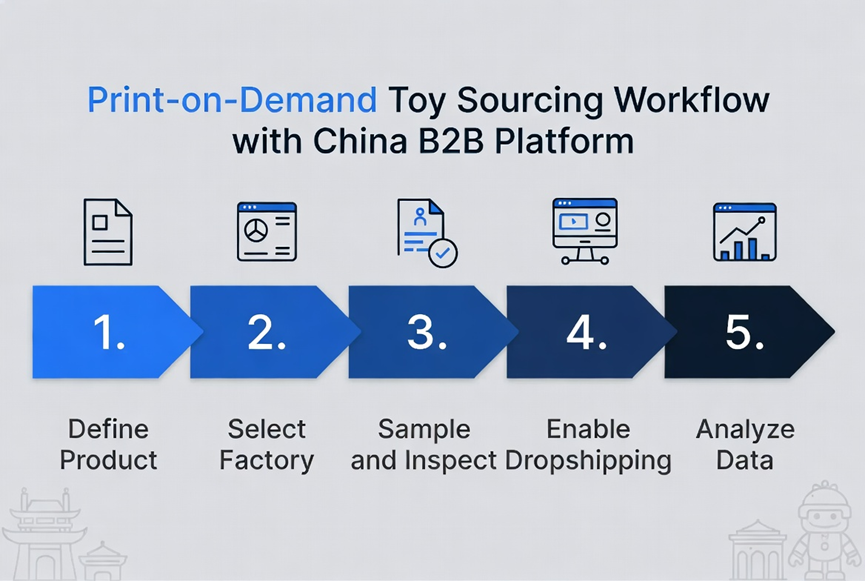
Based on recent projects with global toy sellers, this is the high-level process I recommend when using Looperbuy for POD toys.
Step 1: Define B2B Positioning and Product Scope
Before you open any platform, clarify:
1. Target customer (age group, region, budget).
2. Product type and materials (e.g., plush toys with embroidered names, educational puzzles with custom graphics).
3. Expected monthly volume and launch timeline.
Looperbuy’s guidance emphasizes combining business positioning with product specification to avoid blind sourcing and to accurately anchor your procurement plan. [looperbuy]
Step 2: Identify and Shortlist Suitable Factories
Using Looperbuy’s 1688-connected search and curation:
– Filter factories with relevant certifications (ISO, CE, CPSIA).
– Review long-term B2B records, trade history, and order performance. [looperbuy]
– Request product samples and verify customization capabilities.
At this stage, I encourage clients to narrow to 3–5 suppliers per toy type, then rank them on quality, responsiveness, and cost-effectiveness.
Step 3: Validate Samples and Compliance
For toys, sample validation is non-negotiable:
– Check material quality, printing or embroidery precision, and packaging.
– Confirm availability of testing reports and certificates for target markets (e.g., EN71, ASTM).
– Where necessary, engage third-party inspection agencies such as SGS or BV to validate specs.
This is where Looperbuy’s framework for quality assurance and third-party inspection becomes a critical safeguard.
Step 4: Configure Listings and Enable One-Piece Dropshipping
Once you’ve selected a factory:
– Align on SKU logic, color/size combinations, and customization options.
– Set pricing based on a full landed-cost analysis (product + printing + logistics + service fees).
– Use Looperbuy’s dropshipping features to enable order-by-order fulfillment, with supplier information hidden in shipments.
This model allows you to run POD toys with similar flexibility to conventional POD networks, but with deeper control over sourcing and cost structure.
Step 5: Scale with Data and Continuous Improvement
As you gather order data:
– Use Looperbuy analytics and your storefront data to track best-sellers and seasonality.
– Negotiate better pricing or improved materials for top SKUs.
– Consider hybrid models: combining one-piece dropshipping for long-tail designs with small batch production for high-volume best-sellers.
Case Insight: How a Global Toy Brand Reduced Risk and Cost
One of the most illustrative cases from my consulting work involved a mid-size European toy brand that wanted to expand into personalized plush toys without overcommitting capital.
– Initially, they tested designs via a popular POD network and validated demand in multiple EU markets.
– As volume grew, base costs and limited control became major constraints.
– By migrating their top designs to factories sourced through Looperbuy, they:
– Reduced per-unit landed cost by double-digit percentages.
– Shortened lead times by working directly with factories on production scheduling.
– Tightened compliance and documentation through standardized inspection and reporting. [looperbuy]
The key lesson: POD and B2B sourcing are not mutually exclusive—you can use POD to discover winners, then leverage platforms like Looperbuy to scale them profitably and sustainably.
How Looperbuy Supports B2B Buyers Beyond Toys
While this article focuses on POD toys, the underlying capabilities of Looperbuy extend across categories:
– Direct sourcing from 1688 at factory-level pricing, bypassing traditional agents.
– Modern B2B procurement workflows that centralize sourcing, logistics, and payment.
– Deep support for corporate purchasing, from RFQ processes to supplier performance tracking.
For B2B toy sellers especially, the combination of one-stop sourcing, flexible logistics, and integrated quality control creates a foundation not just for a single product line, but for a long-term, scalable global business.
Action Checklist for Starting POD Toys with Looperbuy
For those ready to take action, a clear checklist can help reduce resistance during the startup phase:
1. Clarify your target audience and product niche (e.g., educational toys, plush, collectibles).
2. Register on Looperbuy and explore toy-related suppliers connected to 1688.
3. Shortlist factories with relevant certifications and strong B2B track records.
4. Order samples and validate both product quality and compliance documentation.
5. Configure SKUs, pricing, and logistics options for one-piece dropshipping.
6. Launch small-scale campaigns to validate demand, then iterate based on data.
7. Build long-term relationships with top-performing suppliers and optimize cost and quality over time.
Frequently Asked Questions
1. Are print-on-demand toys safe for children in major markets?
They can be, but safety depends on the factory, materials, and certification process you implement. Platforms like Looperbuy help you prioritize suppliers with ISO, CE, and other relevant certifications and encourage third-party inspections for high-risk categories.
2. How does POD for toys differ from POD for apparel or home décor?
Toys typically face stricter safety regulations, more complex component testing, and more frequent inspections than apparel or simple home goods. This makes direct coordination with compliant factories and structured quality control especially important.
3. Can I combine POD and bulk purchasing for the same toy?
Yes. Many sellers start with one-piece POD to test designs, then shift top performers into small batch or bulk production to improve margins, while still using POD workflows for long-tail or seasonal designs.
4. Why use Looperbuy instead of just sticking with a generic POD platform?
Generic POD platforms are optimized for convenience, not necessarily for deep cost control, compliance, or long-term supplier relationships. Looperbuy connects you directly to Chinese factories, supports one-piece dropshipping, and gives you more control over pricing, quality, and logistics strategy.
5. How can I reduce logistics risk when shipping POD toys globally?
By working with a B2B platform that integrates logistics partners, you can standardize shipping options, track performance by route, and switch carriers when necessary, all while keeping supplier details hidden from your customers.
References
1. Doba. “Print on Demand Toys Compared: Best Platforms and Services for Dropshipping.”[doba]
2. Sourcelow. “15+ Best Dropshipping Suppliers of Toys & Games (2024).”[sourcelow]
3. Looperbuy Blog. “B2B Marketplaces in 2026: How Global Buyers Win with Specialized China Sourcing Platforms like Looperbuy.” [blog.looperbuy]
4. CJdropshipping. “Toys Dropshipping: Best Niches, Suppliers & Listing Tips for 2026.”[cjdropshipping]
5. Looperbuy. “Online B2B sourcing platform, China purchase, Chinese suppliers.”[looperbuy]
6. Looperbuy Blog. “Corporate Purchasing 2026: A B2B Expert’s Strategy for Sourcing from China with Looperbuy.”[looperbuy]
7. Looperbuy Blog. “The Strategic Advantage of Using a Modern B2B Procurement Platform.”[looperbuy]
8. Looperbuy Blog. “How Modern B2B Ecommerce Empowers Manufacturers – And Why Global Sellers Are Turning to Platforms Like Looperbuy.”[looperbuy]
9. Looperbuy Blog. “Modern B2B Buying Process in the Digital Era: How Platforms Like Looperbuy Simplify Global Sourcing from China.”[looperbuy]
10. Zik Analytics. “10 Best Toy Products to Dropship in 2026 (High-Profit & Trending).”[zikanalytics]
11. Ichiba. “How to Vet Toy Suppliers for Dropshipping.”[ichiba]