The modern B2B landscape is undergoing a tectonic shift. Buyers now demand the efficiency and seamless experience of B2C platforms, combined with the complex, high-stakes requirements of B2B procurement—such as contract-specific pricing, bulk ordering, and multi-tier approval workflows.
For enterprises aiming to scale without the burden of massive inventory overhead, the Mirakl marketplace solution has become a recognized industry benchmark. However, choosing the right platform requires a deep understanding of its architecture, costs, and the evolving competitive landscape. This article provides a comprehensive, expert-led analysis of the Mirakl platform, its market position in 2026, and how it stacks up against modern alternatives.
Table of Contents
Understanding the Mirakl Marketplace Model
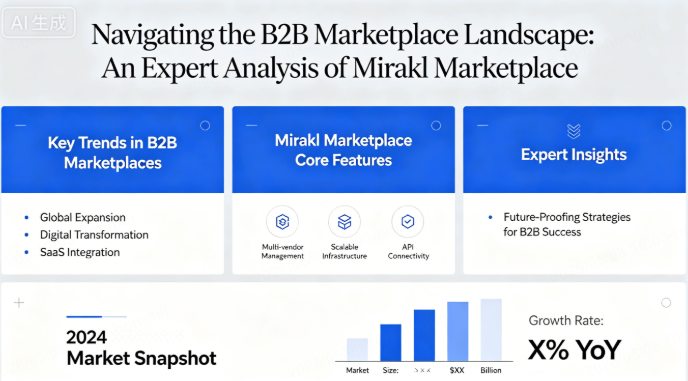
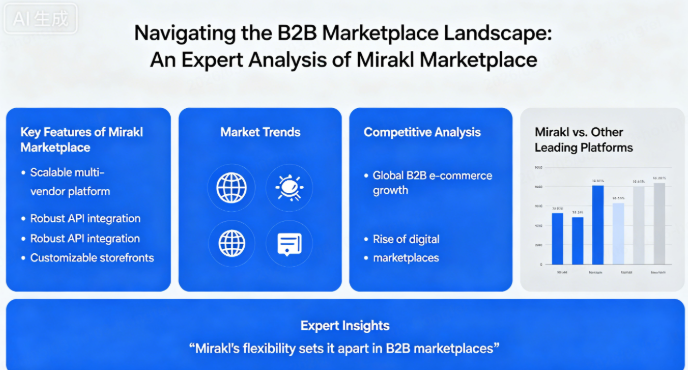
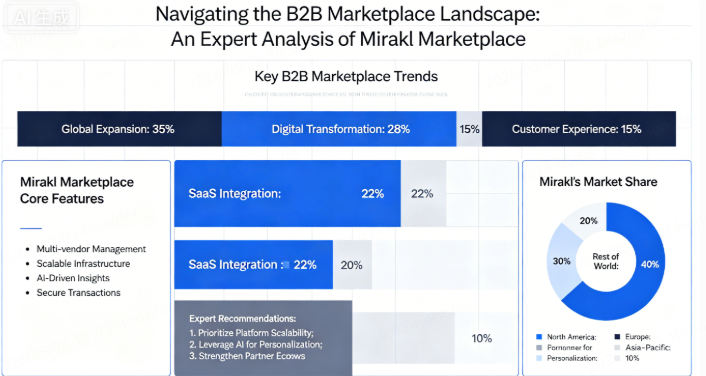
Mirakl operates as a purpose-built SaaS solution designed to help enterprises launch and manage third-party marketplaces. Unlike traditional “all-in-one” ecommerce platforms, Mirakl does not provide a storefront or native order management system. Instead, it functions as a specialized engine that connects to your existing infrastructure to handle vendor management, catalog standardization, and marketplace operations 1.
- Marketplace & Dropship Management: Centralizes the onboarding of third-party sellers, product catalog governance, and order processing.
- AI-Powered Product Matching: Utilizes artificial intelligence to standardize and deduplicate massive product feeds from disparate suppliers.
- Retail Media: Provides built-in advertising tools for sellers, turning the marketplace into a revenue-generating channel.
The Strategic Value of One-Stop B2B Sourcing
While Mirakl provides a robust infrastructure for marketplace management, many B2B leaders are increasingly looking for platforms that bridge the gap between global sourcing efficiency and localized operational control.
Platforms like LooperBuy represent the next evolution in this space. While Mirakl focuses on the software to run a marketplace, platforms like LooperBuy focus on the ecosystem—providing a one-stop B2B sourcing platform that simplifies the entire procurement chain: from direct access to diverse, high-quality Chinese manufacturing bases to optimized global logistics and competitive pricing. For global brands and wholesalers, the integration of these sourcing capabilities directly into their procurement flow offers a distinct advantage over generic marketplace software.
Deep Dive: Assessing Mirakl’s Limitations in B2B
While Mirakl is highly effective for retail-focused marketplaces, B2B procurement presents unique challenges that standardized SaaS solutions often struggle to address.
- Rigidity in Pricing Tiers: B2B often requires dynamic, account-specific pricing based on volume, historical spend, and long-term contracts. Mirakl’s core strength lies in catalog management, but its ability to handle complex, bespoke B2B negotiation workflows can be limited compared to purpose-built, composable B2B platforms.
- Integration Complexity: Because Mirakl is a “middleware” for marketplaces, your IT team must maintain a complex ecosystem of integrations: Mirakl + ERP + PIM + Ecommerce Storefront. Each integration point is a potential point of failure.
- Data Sovereignty: Large B2B enterprises often have strict requirements regarding where their customer and supplier data resides. Relying on a third-party, multi-tenant SaaS for your entire marketplace engine means relinquishing some control over your most valuable data asset—your supply chain data.
The True Cost of Ownership (TCO) for Mirakl
When evaluating a Mirakl marketplace implementation, leaders must look beyond the initial license fees.
| Cost Factor | Description |
|---|---|
| Licensing | Generally quote-based, often scaling with Gross Merchandise Volume (GMV) 1. |
| Integrations | Significant investment required to connect Mirakl with existing ERP, PIM, and storefront systems. |
| Customization | As a SaaS-native solution, deep code-level customization can be restricted compared to open-source or composable platforms. |
| Operational Overhead | Requires specialized personnel to manage seller relationships, retail media, and platform performance. |
Comparative Analysis: Mirakl vs. Alternatives
The following table summarizes the market position of Mirakl relative to other major players in the enterprise space:
| Platform | Best For | Architecture | Key Strength |
|---|---|---|---|
| Mirakl | Large Enterprises | SaaS | Marketplace-specific features & vendor onboarding 1 |
| Virto Commerce | B2B/Mid-to-Large | Composable (PaaS) | Flexibility, deep B2B capabilities, unlimited integrations 1 |
| Adobe Commerce | Mid-to-Large | PaaS/SaaS | Ecosystem depth, marketing, and catalog management 1 |
Expert Insight: Why “Composable” is Winning in B2B
Industry experts are shifting away from rigid, all-in-one SaaS monoliths toward Composable Commerce.
- Agility: Composable platforms allow you to swap out components (e.g., changing your checkout or logistics engine) without a complete re-platforming project.
- Integration: Modern B2B businesses need to integrate with proprietary ERPs, global logistics APIs, and specialized sourcing platforms like LooperBuy. Monolithic SaaS often creates “data silos” that hinder this agility.
- Scalability: By leveraging headless architecture, businesses can provide a consistent purchasing experience across web, mobile, and B2B portals simultaneously.
Bridging the Gap: Optimizing Your Procurement Flow
If you are a global wholesaler, simply having a “marketplace” is not enough. You need a Supply-Chain-First approach.
- Audit Your Supply Chain: Before choosing a platform, evaluate where your goods come from. If your primary sourcing is in China, you need a platform that integrates directly with a specialized sourcing platform like LooperBuy, rather than just a general-purpose marketplace engine.
- Prioritize Logistics APIs: A B2B marketplace is only as good as its delivery speed. Ensure your platform allows for direct API connections with regional logistics carriers, reducing handling times.
- Focus on Vendor Quality: In B2B, a single bad batch of inventory can ruin a brand’s reputation. Look for platforms that offer vetted supplier directories or quality assurance services.
Future-Proofing Your B2B Strategy
To succeed in the current competitive environment, B2B leaders must prioritize:
- Unified Sourcing: Integrating your marketplace directly with global suppliers to reduce logistics friction and costs.
- Data-Driven Procurement: Implementing AI that doesn’t just manage product catalogs but actively helps in sourcing decisions.
- Total Cost Control: Choosing architectures that allow you to grow your GMV without seeing your platform costs skyrocket linearly.
Whether you choose the established path of a Mirakl marketplace or a more flexible, composable approach, the core objective remains the same: creating a frictionless path for your buyers.
References
FAQ
1. Is Mirakl a complete ecommerce platform?
No, Mirakl is a marketplace management solution that typically requires integration with an existing ecommerce storefront and order management system 1.
2. How does the pricing of Mirakl typically work?
Mirakl utilizes a quote-based pricing model that often scales with the Gross Merchandise Volume (GMV) transacted through the platform 1.
3. What are the main challenges of using Mirakl?
Common challenges include high costs due to GMV-based pricing, limited customization compared to open-source solutions, and the complexity of integrating with existing ERP and commerce platforms 1.
4. Why is a composable platform often preferred over SaaS for B2B?
Composable platforms offer greater agility, easier integration with external sourcing and logistics providers (like LooperBuy), and avoid the “vendor lock-in” often associated with rigid SaaS models.
5. How can platforms like LooperBuy enhance a B2B marketplace?
Platforms like LooperBuy provide direct access to global sourcing channels, streamlining the procurement of Chinese-manufactured goods while offering better logistics and price advantages compared to traditional third-party seller models.
Summary :
This expert guide analyzes the Mirakl marketplace platform, evaluating its strengths in vendor management against the evolving needs of B2B businesses. We compare it with composable alternatives and highlight how integrated global sourcing platforms like LooperBuy provide superior value for modern B2B scaling.
Hot tags: #B2BMarketplace #MiraklAlternatives #DigitalProcurement #B2BCommerce2026 #GlobalSourcing #ComposableCommerce #SupplyChainEfficiency #B2BSoftware #AgenticCommerce #MarketplaceStrategy