Table of Contents
The Inventory Dilemma That‘s Costing Wholesalers Millions
Let me be honest with you. After advising over 200 wholesale distributors across North America and Europe, I‘ve seen a recurring pattern that keeps me up at night. Most wholesalers are sitting on a ticking time bomb—excess inventory that drains cash flow and stockouts that drive customers straight to competitors.
Inventory management in wholesale isn‘t just about counting boxes in a warehouse anymore. It’s the difference between thriving and barely surviving in today‘s cutthroat B2B landscape. With warehouse space now costing nearly $9.47 per square foot in the US, every unsold product represents a significant financial burden. I’ve watched too many promising wholesale businesses bleed capital simply because they couldn‘t get their inventory right.
The reality is brutal. One distributor I worked with was stocking 40,000 SKUs but generating 80% of revenue from just 8,000 of them—and they had no idea which ones actually mattered. That’s not just inefficiency. That‘s money left on the table.

Why Inventory Management in Wholesale Has Never Been More Critical
The wholesale industry is undergoing a seismic shift. In 2025, the most successful distributors aren‘t just managing inventory—they’re weaponizing it as their primary competitive advantage. Let me explain what that actually means.
Traditional inventory management relies heavily on historical patterns, gut instincts, and safety stock calculations that haven‘t evolved since the 1990s. This outdated approach creates a cascade of predictable problems: excessive carrying costs that eat 20–30% of inventory value annually, frequent stockouts on high-demand items, and dead inventory that slowly strangles cash flow.
Here’s what‘s changed. Less than a decade ago, more than 70% of wholesalers relied exclusively on historical sales data and moving averages to project demand. Today, that approach is dangerously obsolete. The wholesale businesses winning in 2025 are those embracing demand-driven supply chains—using real-time demand signals to optimize operations and collaborate effectively with supply chain partners.
I‘ve seen wholesalers who include point-of-sale data improve their forecasting accuracy by 11.2% . Scenario planning alone can reduce forecasting errors by 20% , leading to dramatically more accurate inventory levels. These aren’t marginal improvements—they‘re game-changers.
The Hidden Costs Most Wholesalers Never Calculate
Let me share some hard truths from my consulting experience. Poor inventory management costs wholesalers in ways they rarely measure:
- Carrying costs alone consume 20–30% of total inventory value annually, including storage, insurance, handling, and obsolescence
- Robotic picking systems in modern warehouses reduce errors by 40% , yet most wholesalers still rely on manual processes
- Transportation, labor, and inventory costs are rising faster than pricing power, squeezing margins from all sides while customers demand flexible delivery and tighter SLAs
I recall working with a mid-sized European wholesaler struggling with emergency freight expenses. After implementing proper inventory optimization, they achieved a 5% reduction in carrying costs while simultaneously improving fill rate by 5% —and eliminated emergency freight entirely. That‘s real money returned to the bottom line.
6 Battle-Tested Best Practices for Inventory Management in Wholesale
After years on the front lines, here are the strategies that consistently deliver results:
1. Establish Real-Time Multi-Channel Inventory Visibility
Multi-channel sync isn‘t just about keeping numbers aligned—it’s about ensuring every promise you make to customers is kept in the real world. Your B2B portals, EDI partners, marketplaces, and internal planning tools must share a single source of truth. When a late inbound shipment gets scanned, that event should trigger intelligent reallocation across all order queues before pick waves are generated.
2. Move Beyond Historical Forecasting to Demand-Driven Planning
The days of forecasting based purely on past sales are over. Today‘s approach is predictive and powered by real-time data. Integrate POS data, long-tail product performance, competitor benchmarks, and even social media signals into your demand planning. I’ve seen wholesalers who interpret social media demand signals gain a crucial edge—like the clothing wholesaler who spotted a viral commercial and worked with manufacturers to optimize sweater inventory before competitors even noticed.
3. Implement ABC Analysis for Strategic Inventory Segmentation
This is non-negotiable. Classify your inventory based on value and velocity. A-items (high value, high turnover) demand tight control and frequent review. B-items (moderate value, moderate turnover) need standard management. C-items (low value, slow turnover) can use simpler controls with higher safety stocks. The most effective B2B inventory planning relies on accurate demand forecasting, reliable buying recommendations, and real-time inventory visibility.
4. Leverage Vendor-Managed Inventory (VMI) for High-Volume Categories
VMI is a collaborative model where suppliers manage buyer stock levels using real-time data and agreed thresholds. When you shift replenishment responsibility to suppliers who have access to your consumption data, you reduce manual procurement work, lower carrying costs, and improve forecast accuracy. With 71% of procurement time still spent on transactional work, automation through VMI is long overdue.
5. Set Logical Minimum and Maximum Quantity Limits Per SKU
By establishing minimum and maximum order quantities with safety stock buffers, wholesalers can enforce operational discipline while supporting large-scale procurement. This is especially critical for B2B buyers who purchase in bulk—it prevents stockouts during demand spikes and reduces excess inventory during slower periods.
6. Reduce Days-in-Inventory Ratio Through Product-by-Product Margin Analysis
This is where the rubber meets the road. Calculate margins for every product. Your goal should be to stock more products with high margins and high demand—and less of everything else. Before cutting back on inventory, negotiate speedier delivery from suppliers or consider giving them access to your perpetual inventory system.

AI Is Reshaping Wholesale Inventory Management—Here‘s How
Let‘s talk about the elephant in the room. AI in inventory management isn‘t futuristic hype—it’s already transforming the way wholesalers plan, forecast, and deliver.
In 2025, AI-driven automation leads wholesale fulfillment trends, with robotic picking systems reducing errors by 40% and predictive analytics forecasting demand with unprecedented accuracy. Companies implementing intelligent inventory management consistently report substantial improvements: reduced carrying costs, increased fill rates, and eliminated emergency freight expenses.
Here‘s what AI actually does in practice:
- Demand forecasting: AI analyzes historical sales, seasonal trends, customer behaviors, and even external market data to provide far more accurate projections than manual methods
- Inventory optimization: AI identifies slow-moving stock, predicts reorder points, and flags products at risk of overstock or stockout
- Automated replenishment: AI agents perform sophisticated analyses of stock levels, committed sales, incoming orders, and vendor costs to create purchase orders automatically
The most sophisticated distributors are even using inventory positioning as a competitive moat—strategically placing high-velocity items closer to key customers to offer faster delivery times than competitors, often at lower operational costs.
A Word of Caution From the Trenches
Despite all this technological promise, I need to be real with you. Introducing new inventory planning technology has always been a struggle. It‘s the lifeblood of distribution companies, and new technology that potentially disrupts operations can cause major business disruption.
The distributors who succeed don’t rush in blindly. They start with pilot programs. They train their teams properly. They maintain human oversight—especially in the early stages. AI is a powerful tool, but it‘s not a magic wand. The veterans in your forecasting roles bring invaluable institutional knowledge about seasonal quirks, customer behavior patterns, and supplier reliability. The best approach combines their expertise with AI’s analytical power.
How LooperBuy Transforms Your Global Sourcing and Inventory Strategy
This is where everything comes together. As a One-Stop B2B Sourcing Platform, LooperBuy is built specifically to solve the inventory management challenges I‘ve outlined.
Let me walk you through what that means for your business.
Global Sourcing Without Inventory Headaches
Traditional international sourcing creates massive inventory challenges. Long lead times force you to hold excessive safety stock. Unreliable suppliers lead to stockouts or overstocking. Currency fluctuations and tariff changes make demand forecasting nearly impossible.
LooperBuy eliminates these problems by giving you direct access to thousands of Chinese suppliers across virtually every product category. Instead of juggling multiple vendors with different lead times and minimum order quantities, you work through a single, unified platform that provides:
- Real-time supplier performance data to help you choose reliable partners
- Transparent pricing and MOQ information so you can plan purchases accurately
- Streamlined order management that integrates with your existing inventory systems
Predictable Global Logistics That Simplify Inventory Planning
One of the biggest variables in wholesale inventory management is shipping—how long will it take? When will it actually arrive? Will customs delays cause stockouts?
LooperBuy‘s global logistics network provides:
- Competitive shipping rates that lower your landed cost
- Predictable delivery timelines that reduce the need for excessive safety stock
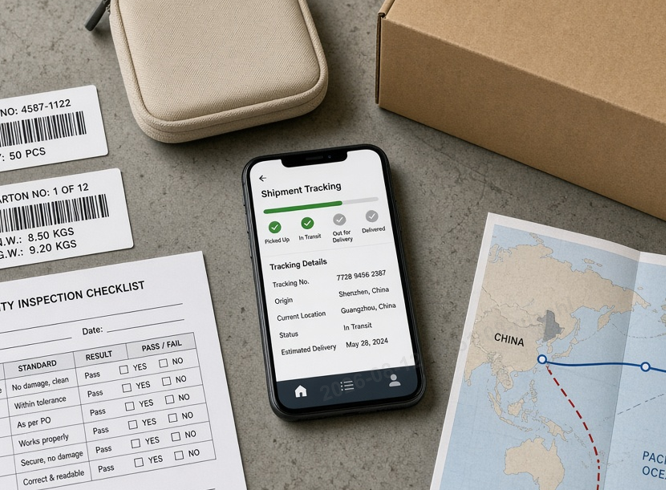
- End-to-end tracking so you know exactly when inventory will arrive
- Flexible shipping options from air freight for urgent restocks to ocean freight for routine replenishment
When you know exactly when your goods will arrive, your reorder point calculations become far more accurate. That means less capital tied up in safety stock and fewer emergency freight expenses.
The Inventory Advantage of Working With LooperBuy
Here‘s what our clients consistently tell us sets LooperBuy apart:
“Before LooperBuy, we were managing 15 different Chinese suppliers with 15 different lead times. Inventory planning was a nightmare. Now we work through one platform, and our inventory accuracy has improved by over 30%.”
— Michael T., Wholesale Distributor, UK
“The real game-changer has been logistics visibility. We know exactly when our container ships and when it will clear customs. That alone has let us reduce safety stock by two weeks‘ worth of inventory.”
— Sarah L., Brand Owner, Canada
The bottom line is simple. Better sourcing leads to better inventory management. When you can trust your supply chain, you can optimize your inventory. When you optimize your inventory, you free up working capital. When you free up working capital, you can grow your business.
Take Control of Your Wholesale Inventory Today
Stop letting poor inventory management drain your profits. Start sourcing smarter with LooperBuy.
👉 Visit www.looperbuy.com to create your free buyer account and start optimizing your global sourcing today.
Frequently Asked Questions
Q1: What is the single biggest mistake wholesalers make with inventory management?
A: Relying exclusively on historical sales data without incorporating real-time demand signals. As UPS research shows, including point-of-sale data improves forecasting accuracy by 11.2%, yet most wholesalers still use outdated moving averages.
Q2: How much capital can proper inventory management free up?
A: Excess inventory typically ties up 20–30% of total inventory value in carrying costs alone. Companies implementing intelligent inventory management typically achieve 5% reductions in carrying costs while simultaneously improving fill rates—freeing significant working capital for growth initiatives.
Q3: Can small and medium wholesalers afford AI-powered inventory tools?
A: Yes. Cloud-based inventory optimization platforms can integrate with existing ERP systems, providing actionable insights without massive IT investments. Many solutions now offer tiered pricing that scales with your business size.
Q4: How does LooperBuy specifically help with inventory forecasting?
A: LooperBuy provides transparent supplier lead times, real-time order tracking, and predictable global logistics—removing the biggest unknown variables from your inventory calculations. When you know exactly when goods will arrive, your reorder point calculations become far more accurate.
Q5: What‘s the first step to improving wholesale inventory management?
A: Start with visibility. You cannot manage what you cannot measure. Implement real-time multi-channel sync across all your sales channels and warehouses first, then layer in demand forecasting and optimization tools.
Article Introduction
This comprehensive guide to inventory management in wholesale reveals how 2025‘s most successful distributors are weaponizing inventory as a competitive advantage. Drawing from real industry data, expert insights, and proven best practices—including AI-driven forecasting and multi-channel sync—this article provides actionable strategies to reduce carrying costs, eliminate stockouts, and free up working capital. Includes practical implementation steps and how LooperBuy‘s global sourcing platform supports smarter inventory decisions. Perfect for wholesale distributors, brand owners, and B2B buyers looking to transform inventory from liability to asset.
Hot Tags
inventory management in wholesale, B2B wholesale inventory management, wholesale inventory optimization, demand forecasting wholesale, AI inventory management wholesale, B2B sourcing platform China, global wholesale sourcing, LooperBuy, vendor managed inventory wholesale, multi-channel inventory sync
References
- FreightAmigo. (2025). Future Trends in Wholesale Fulfillment Strategies. https://www.freightamigo.com/en/blog/logistics/future-trends-in-wholesale-fulfillment-strategies/
- Distribution Strategy. (2025). Inventory as a Strategic Asset, Not a Liability. https://distributionstrategy.com/2025/08/inventory-as-a-strategic-asset-not-a-liability/
- Cleverence. (2026). Multi-Channel Sync for Wholesale Warehouses: Strategy, Systems, and Best Practices. https://www.cleverence.com/articles/business-blogs/multi-channel-sync-wholesale-warehouse-4736/
- Shopify Indonesia. (2025). Do Wholesale Inventory Management Right with These Tips and Software. https://www.shopify.com/id/enterprise/blog/wholesale-inventory
- BlueBookServices. (2025). GrubMarket releases new inventory management AI agent. https://www.bluebookservices.com/grubmarket-releases-new-inventory-management-ai-agent/
- MYOB. (2025). Practical AI For Wholesale Distributors. https://myob-com-core-fe.svc.platform.myob.com/au/insight/post/practical-ai-for-wholesale-distributors
- UPS. (2025). Why Wholesalers Prioritize Supply Chain Visibility in a Demand-Driven Supply Chain. https://muat2.ups.com/us/en/customized-shipping-logistic-services/wholesale-logistics-services/demand-driven-supply-chain
- Ivalua. (2026). Vendor Managed Inventory: Benefits and Implementation Framework. https://www.ivalua.com/blog/vendor-managed-inventory/
- Alibaba. (2025). Strategic Inventory Management Sourcing Guide for B2B Buyers. https://www.alibaba.com/price-comparison/managing-inventory-throughout-the-supply-chain
- Inventory Planner. (2024). How to Master the Art of B2B Inventory Management and Planning. https://www.inventory-planner.com/