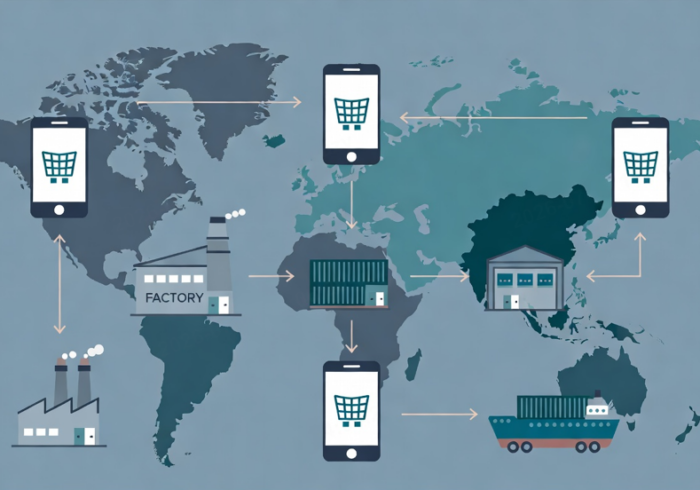
As a B2B sourcing and supply chain strategist with over 15 years of experience advising international brand owners, wholesalers, and manufacturers, I’ve witnessed firsthand how order processing bottlenecks can cripple a business. The global B2B ecommerce market is projected to reach $62.2 trillion by 2030, yet many companies are still losing millions to outdated, manual order workflows.
The hard truth: Manual order processing costs €25–€100 per order, with customer service representatives spending 20–40% of their week on manual data entry. Even worse, 33% of B2B online orders contained errors in 2025, and 68% of buyers reported being discouraged from online ordering due to errors they had experienced.
If you’re sourcing from China or managing cross-border procurement, these inefficiencies multiply exponentially. The question isn’t whether you need to streamline your B2B order processing — it’s how quickly you can implement the right solution.
Table of Contents
Why Manual B2B Order Processing Is Costing You More Than You Think
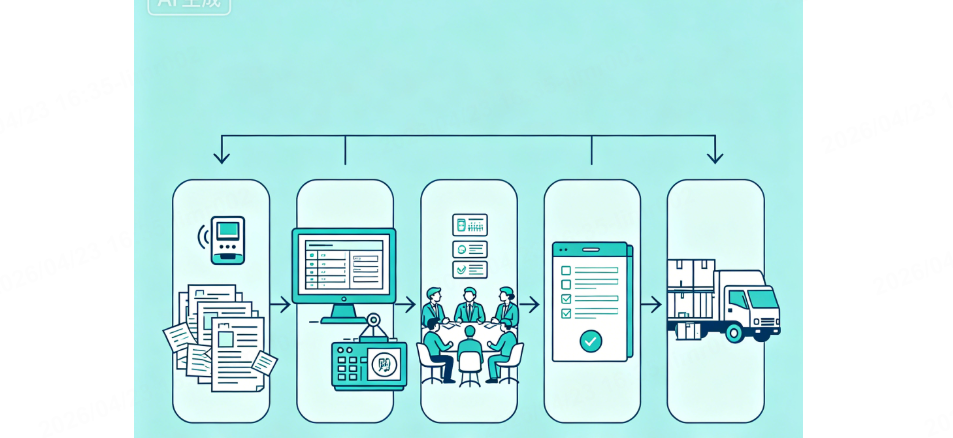
Most B2B organizations underestimate the true cost of manual order processing. A standard manual workflow — receiving a PDF purchase order by email, manually re-keying line items into an ERP, validating pricing, and sending an order acknowledgment — takes 15 to 30 minutes per order. At scale, this compounds quickly. For an operations team of ten, that’s effectively two to four full-time employees doing nothing but data re-entry.
Beyond labor costs, the downstream impact of errors is devastating. A single miskeyed invoice on a high-value order can cost tens of thousands in reconciliation time.
The good news? Modern AI-driven order management systems reduce processing times from days to hours, achieving 99.5% order-to-catalog match accuracy and cutting per-order costs by $5 to $15.
The 5 Biggest B2B Order Processing Pain Points in Cross-Border Sourcing
Based on my work with hundreds of B2B buyers, here are the most common order processing bottlenecks — and how to solve them.
1. Unvetted Suppliers and Quality Inconsistencies
The Problem: Sourcing from unregulated channels leads to low-quality products, missed order deadlines, and compliance risks that erode client trust.
The Fix: Partner with platforms that implement rigorous supplier vetting. LooperBuy, for instance, uses an 8-step vetting process for every Chinese manufacturer on its platform, verifying manufacturing capacity, ISO/CE certification, and quality control protocols.
“Looperbuy helps overseas merchants purchase at factory prices, completely eliminating middleman markups.” — Verified platform user
2. Hidden Logistics and Sourcing Costs
The Problem: Traditional sourcing channels include multiple middlemen, each adding markups that inflate costs by 25–40% compared to direct sourcing.
The Fix: Demand transparency. Integrated cost calculators that factor in product costs, freight, customs duties, and final-mile delivery eliminate surprises.
3. Fragmented Product Access
The Problem: Many B2B platforms offer narrow product ranges, forcing buyers to source from multiple vendors — creating fragmented procurement and logistical headaches.
The Fix: One-stop platforms that host thousands of suppliers across dozens of categories. LooperBuy offers 10,000+ vetted Chinese suppliers across 50+ B2B supply categories, from industrial components to consumer goods.
4. Slow, Unreliable Logistics
The Problem: Cross-border shipping is plagued by port congestion, delayed customs clearance, and inefficient load optimization.
The Fix: Global logistics networks with consolidated shipping options. The best platforms reduce transit times by 15–20% and provide 24/7 real-time shipment tracking.
“I’ve purchased many times, very stable. Combined shipping is very worry-free — no need to fill out various forms myself, and the shipping fees have no extra service charges.” — LooperBuy customer
5. Lack of End-to-End Procurement Visibility
The Problem: Traditional sourcing leaves buyers in the dark about order status, production timelines, and shipment tracking.
The Fix: End-to-end visibility with real-time production updates, pre-shipment quality inspections, and live logistics tracking.
7 Actionable Steps to Streamline Your B2B Order Processing
After analyzing hundreds of successful B2B operations, here’s my proven framework for order processing optimization:
- Digitize Your Purchase Order Management – Replace email and PDF with a centralized digital system. Smart automation cuts order processing from days to hours through AI-powered bulk processing.
- Integrate AI-Driven Automation – Gartner estimates that up to 40% of enterprise applications will include AI agents by 2026. AI-powered orchestration handles routine ERP tasks like posting orders, updating accounts, and managing approvals without slowing commerce operations.
- Standardize Order Flows and Automate Where Possible – Create synergy between orders, inventory, and purchasing. Use warehouse scanners to reduce picking errors.
- Implement Real-Time Inventory Synchronization – Outdated inventory data leads to stockouts and lost sales. Cloud-based platforms provide cross-channel inventory visibility.
- Consolidate Sourcing to a Single Platform – Reduce fragmented procurement by using a one-stop B2B sourcing platform that handles everything from product discovery to delivery.
- Establish Clear Communication Protocols – Over 40% of companies struggle with HS codes, and paperwork errors remain the top cause of shipping delays. Standardized documentation eliminates confusion.
- Track Performance Metrics Religiously – Monitor on-time delivery rates (aim for ≥97%), reorder rates (≥30% indicates reliability), and order processing time.
Expert Insight: Why 2026 Is the Year of B2B Order Automation
The B2B landscape is undergoing a seismic shift. According to recent research, over 60% of foreign trade companies now view intelligent procurement as the key breakthrough point for achieving globalization capabilities, far exceeding intelligent production and R&D.
We’re moving from “chatting” AI to “doing” AI. While 2024 and 2025 focused on conversational AI, 2026 is about agentic AI — where artificial intelligence doesn’t just suggest a product but autonomously handles order creation, validation, routing, and ERP updates.
“Intelligent automation will enable B2B teams to efficiently handle routine ERP tasks, such as posting orders, updating accounts and managing approvals, without slowing down commerce operations.” — commercetools, 2026 B2B Digital Commerce Report
How LooperBuy Transforms B2B Order Processing for Global Buyers
LooperBuy, founded in 2024, is a One-Stop B2B Sourcing Platform that connects global brand owners, wholesalers, and manufacturers directly to China’s largest B2B marketplace, 1688.com. Here’s how it streamlines the entire order processing journey:
| Pain Point | LooperBuy Solution | Impact |
|---|---|---|
| High sourcing costs | Direct 1688 access at factory prices, no middleman markups | 25–40% cost reduction |
| Registration barriers | No Chinese ID or 1688 account needed | Instant platform access |
| Payment obstacles | Multi-currency support (USD, EUR, GBP) via LianLian Global | Seamless cross-border payment |
| Logistics complexity | Global carrier network with real-time tracking | 15–20% faster transit |
| Fragmented procurement | 10,000+ suppliers, 50+ categories | Single-platform sourcing |
“LooperBuy helps overseas merchants dramatically lower the entry barriers and operating costs of global supply chain services, enhancing market competitiveness.” — LianLian Global partnership announcement
Calculating Your ROI: The Business Case for Order Processing Optimization
Let’s talk numbers. Companies with well-integrated automation see cost reductions of approximately 10–15%, with order processing improving from days to just hours.
Consider a mid-sized B2B wholesaler processing 500 orders per week:
- Manual processing: 500 orders × 20 minutes = 167 hours weekly
- Automated processing: 500 orders × 2 minutes = 17 hours weekly
- Time saved: 150 hours per week → nearly 4 full-time employees redeployed to higher-value work
According to Forrester research, intelligent order management platforms deliver 167% ROI over three years, with payback in under six months.
“Automation is now table stakes for every B2B company.” — Gartner
Ready to Transform Your Order Processing?
The gap between manual and automated order processing isn’t incremental improvement — it’s a different operational model. In 2026, 90% of B2B transactions will be influenced by AI agents.
Don’t let outdated order workflows hold your business back.
👉 Visit LooperBuy today to discover how one platform can streamline your entire B2B sourcing and order processing journey — from product discovery to final delivery.
References
- Emporix. “B2B Order Processing Automation: How AI Cuts Handling Time by 87%.” March 2026. https://www.emporix.com/blog/b2b-order-processing-automation-ai
- Salsify. “2026 B2B Ecommerce Trends: Intelligence, Trust, and Buying.” March 2026. https://www.salsify.com/blog/2026-b2b-ecommerce-trends
- OroCommerce. “Digitizing Global B2B Commerce.” June 2025. https://oroinc.com/b2b-ecommerce/blog/digitizing-global-b2b-commerce-operations
- Netguru. “The Future of Order Management Systems.” January 2026. https://www.netguru.com/blog/future-order-management-systems
- Workd. “Automating Order Entry in Distribution.” 2026. https://www.workd.com
- LooperBuy Blog. “Supplies Business: A B2B Expert’s Guide to Sourcing Chinese Goods Globally.” https://blog.looperbuy.com/supplies-business-a-b2b-experts-guide-to-sourcing-chinese-goods-globally-with-looperbuy.html
- 数商云. “全链路智能化:跨境B2B平台AI解决方案覆盖贸易全流程.” March 2026. https://www.shushangyun.com/article-31840.html
- LianLian Global. “连连国际牵手LooperBuy.” https://global.lianlianpay.com
- 一道杠社区. “国外企业线上采购中国货源,会遇到哪些问题?推荐Looperbuy平台.” 2025. https://yidaogang.com
- Sapio Research. “B2B Buyer Report 2025.” via Emporix.
- Gartner. “AI Agents in Enterprise Applications.” 2026.
Frequently Asked Questions (FAQ)
Q1: How long does it take to implement automated B2B order processing?
A: With modern cloud-based platforms, implementation typically takes 2–4 weeks for basic automation. Full integration with existing ERP systems may take 1–3 months depending on complexity. Most businesses see positive ROI within 6 months.
Q2: What’s the minimum order volume needed to justify order processing automation?
A: If you process more than 50 orders per week, automation will pay for itself within the first year. Even smaller businesses benefit from reduced error rates and improved customer satisfaction.
Q3: Can LooperBuy handle orders from multiple Chinese suppliers in one shipment?
A: Yes. LooperBuy offers consolidated shipping — combining products from multiple vendors into one shipment, reducing freight costs and simplifying customs clearance.
Q4: What payment methods are supported for cross-border B2B orders?
A: LooperBuy supports multi-currency payments including USD, EUR, and GBP via LianLian Global’s secure payment network. No Chinese bank account or RMB conversion required.
Q5: How do I verify supplier quality before placing a B2B order?
A: LooperBuy’s 8-step vetting process pre-screens all suppliers for manufacturing capacity, certifications, and quality control. For added assurance, pre-shipment inspections are available.
Article Summary (300 characters): Struggling with manual B2B order processing? This expert guide reveals how to streamline cross-border procurement using AI automation and one-stop platforms like LooperBuy. Backed by 2026 data, discover 7 actionable steps to cut costs, reduce errors, and scale your global sourcing — with real user reviews and ROI calculations.
Hot tags: B2B order processing automation, streamline procurement workflows, cross-border sourcing solutions, China B2B sourcing platform, global supply chain optimization, purchase order management best practices, B2B ecommerce trends 2026, LooperBuy sourcing platform, international wholesale procurement, AI-driven B2B commerce