Table of Contents
Introduction to Drop Shipping Pricing Strategies
In the competitive world of e-commerce, establishing an effective pricing strategy is crucial for the success of a drop shipping business. Pricing not only affects profit margins but also influences customer perception, sales volume, and overall market positioning. This article delves into various pricing strategies that drop shippers can adopt to maximize their profitability while remaining competitive in the market.
Understanding Drop Shipping
Drop shipping is a retail fulfillment method where the seller does not keep the products in stock. Instead, when a store sells a product, it purchases the item from a third party and has it shipped directly to the customer. This model allows entrepreneurs to start a business with minimal upfront investment, but it also requires careful consideration of pricing strategies to ensure profitability.
The Importance of Pricing in Drop Shipping
Impact on Profit Margins
Pricing directly affects profit margins, which are essential for the sustainability of any business. In drop shipping, where profit margins can be thin, setting the right price is critical. A well-thought-out pricing strategy can help maximize profits while still attracting customers.
Customer Perception
The price of a product can significantly influence customer perception. Higher prices may suggest higher quality, while lower prices can attract budget-conscious consumers. Understanding how pricing affects consumer behavior is vital for crafting an effective pricing strategy.
Competitive Advantage
In a crowded market, having a competitive pricing strategy can set a business apart from its competitors. By analyzing competitors’ pricing and market trends, drop shippers can position themselves effectively to capture market share.
Key Pricing Strategies for Drop Shipping
Cost-Plus Pricing
Cost-plus pricing is one of the simplest pricing strategies. It involves calculating the total cost of acquiring a product (including shipping, handling, and any other associated costs) and then adding a markup percentage to determine the selling price.
Advantages of Cost-Plus Pricing
- Simplicity: This method is straightforward and easy to implement, making it ideal for new drop shippers.
- Guaranteed Profit: By adding a consistent markup, sellers can ensure a profit margin on each sale.
Disadvantages of Cost-Plus Pricing
- Ignores Market Demand: This strategy does not consider what customers are willing to pay, which can lead to overpricing or underpricing.
- Limited Flexibility: Changes in supplier costs can affect pricing, making it less adaptable to market conditions.
Competitive Pricing
Competitive pricing involves setting prices based on what competitors are charging for similar products. This strategy requires thorough market research to understand the pricing landscape.
Advantages of Competitive Pricing
- Market Alignment: By aligning prices with competitors, sellers can remain competitive and attract price-sensitive customers.
- Increased Sales Volume: Competitive pricing can lead to higher sales volumes, especially in saturated markets.
Disadvantages of Competitive Pricing
- Price Wars: This strategy can lead to price wars, where competitors continuously undercut each other, eroding profit margins.
- Neglecting Value: Focusing solely on competitors’ prices may lead sellers to overlook the unique value their products offer.
Value-Based Pricing
Value-based pricing focuses on the perceived value of a product to the customer rather than the cost of production. This strategy requires a deep understanding of customer needs and preferences.
Advantages of Value-Based Pricing
- Maximized Profit Margins: By pricing based on perceived value, sellers can often charge higher prices and achieve better profit margins.
- Customer Loyalty: Customers who perceive high value in a product are more likely to become repeat buyers.
Disadvantages of Value-Based Pricing
- Complexity: Determining perceived value can be challenging and may require extensive market research.
- Risk of Overpricing: If the perceived value is misjudged, sellers risk setting prices too high, leading to decreased sales.
Dynamic Pricing
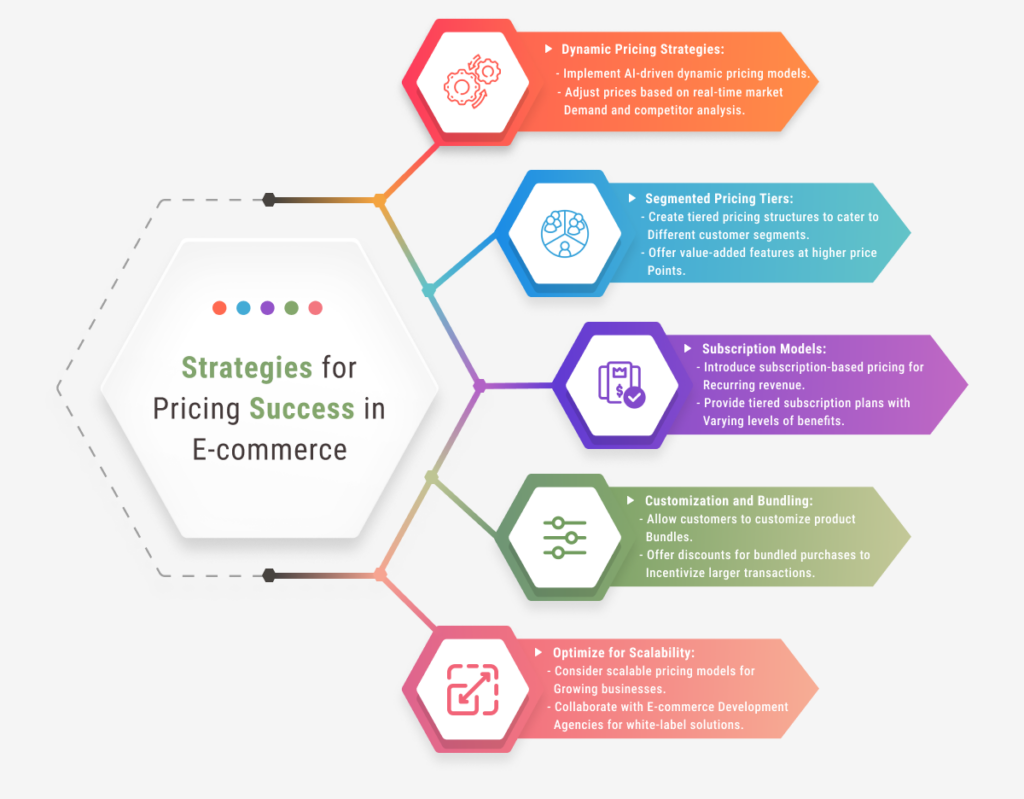
Dynamic pricing involves adjusting prices in real-time based on market demand, competition, and other factors. This strategy is commonly used in industries like travel and hospitality but is increasingly being adopted in e-commerce.
Advantages of Dynamic Pricing
- Maximized Revenue: By adjusting prices based on demand, sellers can capitalize on peak buying times and maximize revenue.
- Flexibility: This strategy allows sellers to respond quickly to market changes and competitor actions.
Disadvantages of Dynamic Pricing
- Customer Confusion: Frequent price changes can confuse customers and lead to distrust.
- Technical Challenges: Implementing dynamic pricing requires sophisticated technology and data analysis capabilities.
Psychological Pricing
Psychological pricing leverages consumer psychology to influence purchasing decisions. This strategy often involves setting prices just below a round number (e.g., $19.99 instead of $20.00) to make products appear more affordable.
Advantages of Psychological Pricing
- Increased Sales: This strategy can lead to higher sales volumes by appealing to consumers’ perceptions of value.
- Simplicity: It is easy to implement and can be applied across various product categories.
Disadvantages of Psychological Pricing
- Limited Impact: In some markets, consumers may be less influenced by psychological pricing tactics.
- Potential for Backlash: If customers perceive pricing as manipulative, it can damage brand reputation.
Implementing a Pricing Strategy
Conducting Market Research
Before implementing a pricing strategy, drop shippers should conduct thorough market research to understand their target audience, competitors, and market trends. This research will inform pricing decisions and help identify the most effective strategy.
Testing and Adjusting Prices
Once a pricing strategy is in place, it is essential to monitor its effectiveness and make adjustments as needed. This may involve testing different price points, analyzing sales data, and gathering customer feedback.
Leveraging Technology
Utilizing pricing software and analytics tools can help drop shippers optimize their pricing strategies. These tools can provide insights into market trends, competitor pricing, and customer behavior, enabling data-driven decision-making.
Conclusion
Mastering pricing strategies is essential for the success of any drop shipping business. By understanding the various pricing methods available and their advantages and disadvantages, entrepreneurs can make informed decisions that maximize profitability and enhance customer satisfaction. Whether opting for cost-plus pricing, competitive pricing, value-based pricing, dynamic pricing, or psychological pricing, the key is to remain adaptable and responsive to market conditions.
To enhance your drop shipping success, explore a wide range of products and competitive pricing options at https://looperbuy.com/.
Related Questions & Answers
· What is the best pricing strategy for a new drop shipping business? The best pricing strategy often depends on the target market and product type, but value-based pricing can be effective for new businesses looking to establish a brand.
· How can I determine the right price for my drop shipping products? Conducting market research, analyzing competitors, and understanding customer perceptions of value can help determine the right price.
· What are the risks of using competitive pricing? The main risks include potential price wars with competitors and neglecting the unique value your products may offer.
· How does dynamic pricing work in drop shipping? Dynamic pricing adjusts prices in real-time based on market demand, competition, and other factors, allowing sellers to maximize revenue.
· Can psychological pricing really increase sales? Yes, psychological pricing can influence consumer behavior by making prices appear more attractive, leading to increased sales.
Hot Tags: Drop Shipping Pricing Strategy; Cost-Plus Pricing; Competitive Pricing; Value-Based Pricing; Dynamic Pricing; Psychological Pricing; Market Research; Pricing Optimization; E-commerce Strategies