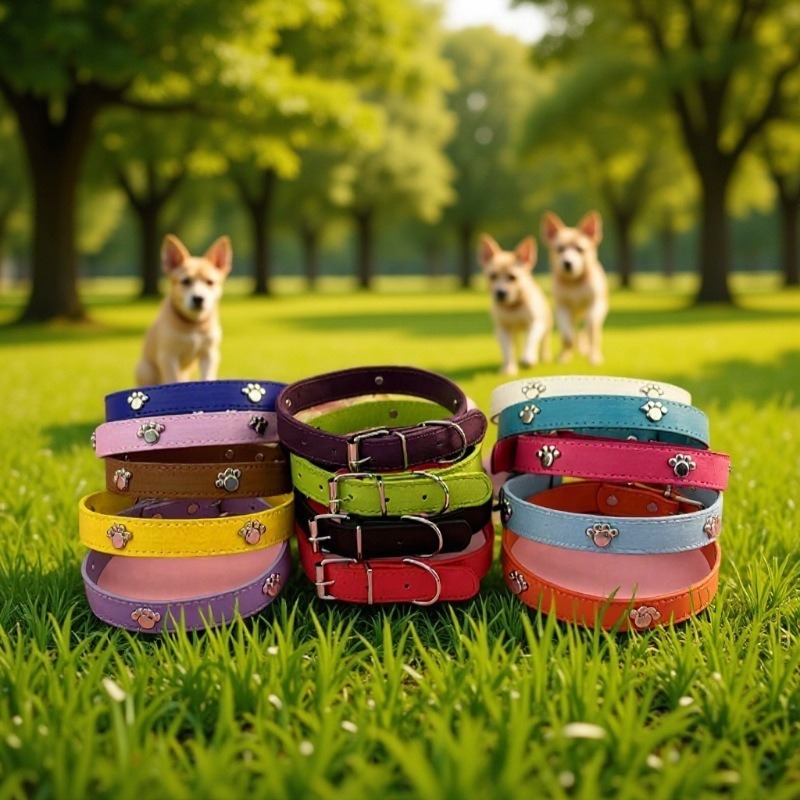
The relationship between humans and their animal companions has spanned millennia, evolving from functional partnerships into deep emotional bonds. Throughout this shared history, the tools we use to care for and identify our pets have undergone their own transformation. Among these, the leather pet collar stands as a symbol of both heritage and practicality. Far from being a mere accessory, a high-quality collar represents a commitment to a pet’s comfort, safety, and long-term well-being. While modern synthetic materials have flooded the market with vibrant colors and low price points, the enduring appeal of leather remains rooted in its unique biological properties and the specialized craftsmanship required to shape it.
Table of Contents
The Historical Evolution of Pet Identification and Restraint
The use of collars can be traced back to the ancient civilizations of Egypt, Greece, and Rome. In ancient Egypt, dogs were revered and often wore elaborate collars made of leather, sometimes adorned with precious metals and stones, signifying their high status within the household. These early examples of the leather pet collar were designed not just for control but as a form of jewelry that celebrated the animal’s role in the family. As societies became more agrarian, the function of the collar shifted toward protection. During the Middle Ages, livestock guardians and hunting dogs often wore heavy leather collars reinforced with iron spikes to protect their throats from predators like wolves.
By the Renaissance and the Victorian era, the collar began to serve as a marker of ownership and legal compliance. Intricately carved leather bands featured brass plates engraved with the owner’s name and address, a practice that mirrors our modern identification tags. This historical transition from primitive restraint to decorative symbol highlights why leather has remained the material of choice for centuries. It possesses a rare combination of flexibility and tensile strength that few other natural materials can match, allowing it to move with the animal while remaining secure under pressure.
Understanding the Different Grades of Leather Quality
When selecting a leather pet collar, the most critical factor to consider is the grade of the leather used. Not all leather is created equal, and the longevity of the product depends heavily on which layer of the animal hide is utilized. Full-grain leather is widely regarded as the pinnacle of quality. This grade consists of the outermost layer of the hide, including the natural grain and all its inherent strength. Because the fibers are tightly interwoven at the surface, full-grain leather is incredibly durable and resistant to moisture. It is also the only grade that develops a rich patina over time, a process where the leather absorbs oils and sunlight to create a unique, darkened finish.
Top-grain leather is the second-highest grade and is often used in high-end fashion accessories. To create top-grain leather, the very top layer of the hide is sanded down to remove imperfections or scars. While this results in a more uniform and perfect appearance, it slightly reduces the overall strength of the fibers. However, top-grain leather is often more pliable than full-grain from the first day of use, making it a popular choice for smaller pets or those with sensitive skin. Genuine leather, despite its name, is actually a lower grade of material. It is typically made from the layers of the hide that remain after the top is split off for higher-grade products. While it is still technically leather, it lacks the structural integrity of grain leather and often requires artificial coatings to maintain its appearance.
Why Leather Prevails Over Synthetic Alternatives
The primary competition for leather in the modern pet market is nylon and other synthetic polymers. Nylon collars are praised for their affordability and the ease with which they can be manufactured in endless patterns. However, when comparing the long-term performance and the health of the pet, leather often emerges as the superior choice. One of the most significant advantages of a leather pet collar is its breathability. Unlike plastic-based materials that can trap heat and moisture against the pet’s skin, leather is a porous, natural material. This airflow is essential for preventing skin irritations, hot spots, and the bacterial growth that often occurs under damp synthetic collars.
Furthermore, leather is naturally hypoallergenic. Many dogs and cats suffer from collar rub or allergic reactions to the dyes and chemicals used in mass-produced nylon webbing. High-quality leather, particularly when vegetable-tanned, uses natural tannins derived from tree bark and plants, minimizing the risk of adverse skin reactions. In terms of durability, leather excels in its resistance to the snap force. While nylon can fray and weaken over time due to UV exposure or constant friction, a well-maintained leather collar actually becomes stronger and more flexible as it breaks in. It conforms to the shape of the pet’s neck, providing a custom fit that prevents the chafing common with rigid synthetic straps.
The Art of Craftsmanship and Tanning Processes
The transformation of a raw hide into a finished leather pet collar is a labor-intensive process that combines chemistry and artistry. The most desirable collars for pet owners who prioritize sustainability are those made through vegetable tanning. This ancient method involves soaking the hides in pits filled with natural tannins for several weeks or even months. The result is a thick, durable leather with a distinct woody scent. This process is much more environmentally friendly than chrome tanning, which uses heavy metals and chemicals to speed up production. Vegetable-tanned leather is not only safer for the pet’s skin but is also biodegradable at the end of its lifespan.
Beyond the tanning, the construction of the collar determines its safety. Hand-stitched leather collars often utilize a saddle stitch, where two needles pass through the same hole in opposite directions. This technique ensures that even if one thread is severed by a pet’s scratching or a rough play session, the rest of the seam will remain intact. In contrast, machine-stitched collars use a lockstitch that can easily unravel if a single loop is broken. The hardware used—buckles, D-rings, and rivets—should ideally be made of solid brass or stainless steel. These metals do not rust and can withstand the significant pulling force of a large dog without snapping or bending, ensuring the pet remains safely leashed during walks.
Sizing and Safety: Ensuring a Proper Fit
No matter how high the quality of the material, a leather pet collar is only effective if it fits correctly. A collar that is too loose can easily slip over the animal’s head, especially for breeds with narrow heads like Greyhounds. Conversely, a collar that is too tight can cause respiratory issues, restrict movement, and damage the sensitive skin around the throat. To find the perfect size, owners should measure the circumference of the pet’s neck at the point where the collar would naturally sit, typically about two-thirds of the way down from the head.
The industry standard for a safe fit is known as the two-finger rule. Once the collar is buckled, you should be able to slide your index and middle fingers snugly between the leather and the pet’s neck. This ensures there is enough room for the animal to swallow and breathe comfortably while remaining secure. For growing puppies or kittens, it is vital to check the fit weekly. Leather is sturdy, but it does not stretch significantly on its own; therefore, regular adjustments are necessary to accommodate a pet’s growth. For cats and small dogs that spend time outdoors unsupervised, breakaway leather collars are available, which feature a safety buckle designed to release if the collar becomes snagged on a branch or fence.
The Sensory Experience and Aesthetic Value
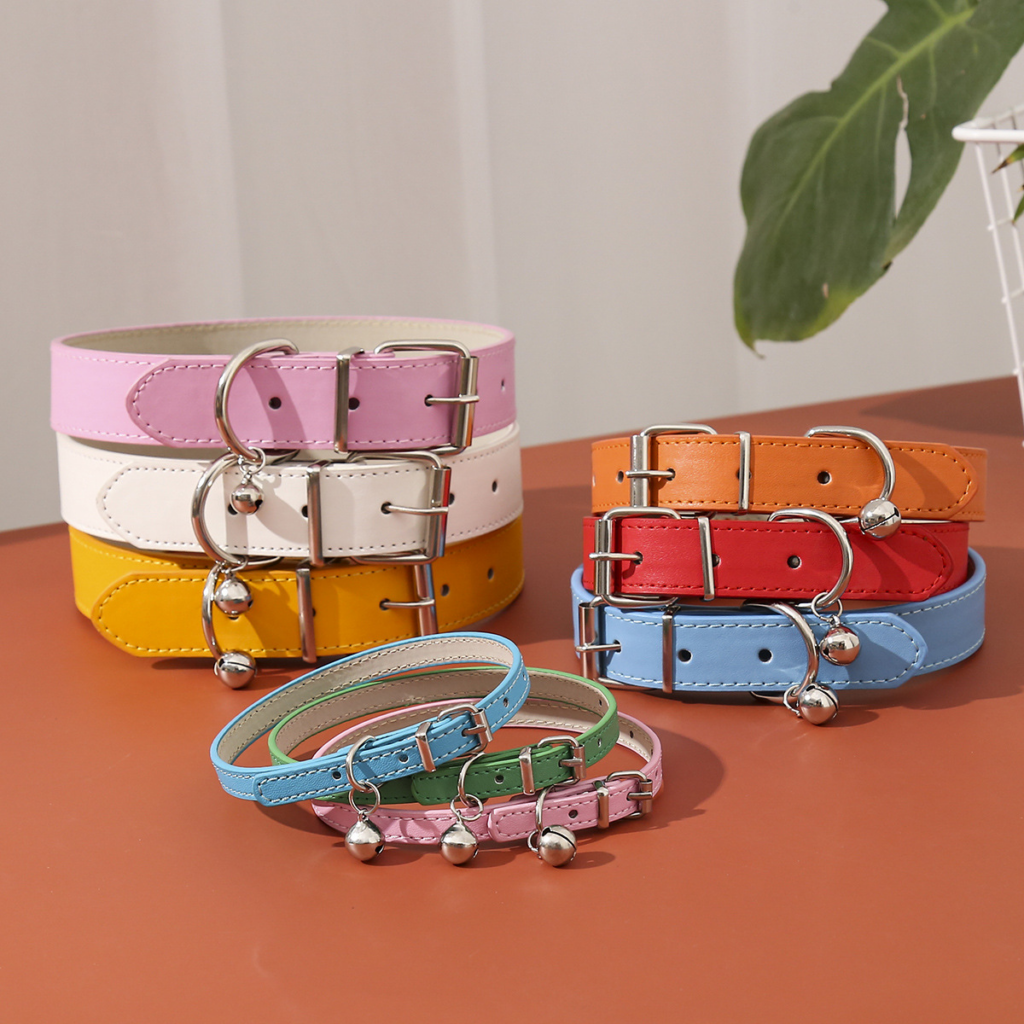
Beyond the physical benefits, there is a distinct sensory experience associated with leather. The smell of high-quality vegetable-tanned leather is often associated with luxury and durability. Unlike synthetic materials that can develop an unpleasant odor over time as they trap bacteria and skin oils, leather tends to hold its natural scent or simply absorb the familiar scent of the home. This can be comforting to pets who rely heavily on their sense of smell. From an aesthetic perspective, leather possesses a timeless elegance that complements any breed or coat color. Whether it is a rugged, distressed brown leather for a working farm dog or a sleek, padded black leather for a sophisticated city pet, the material exudes a sense of quality and intentionality.
The way leather ages is another unique characteristic that synthetic materials cannot replicate. As the collar is worn, it undergoes a transformation known as breaking in. The leather softens and molds to the specific contours of the pet’s neck, creating a truly customized fit. This process is accompanied by a darkening of the color and a subtle sheen as the material reacts to the environment and the natural oils from the pet’s fur. This aging process does not signal the end of the collar’s life but rather its prime. A ten-year-old leather collar often looks and feels better than a brand-new one, carrying with it the history and memories of countless walks and adventures shared between the pet and the owner.
Addressing Modern Challenges in Pet Gear
In the contemporary world, pet owners are faced with an overwhelming array of choices. Cheap, mass-produced accessories are readily available at the click of a button, often leading to a throwaway culture where items are replaced every few months. This cycle is not only economically inefficient but also environmentally damaging. By choosing a leather pet collar, a consumer is making a conscious decision to step away from this cycle. The longevity of leather means fewer products are manufactured, shipped, and eventually discarded. It is a return to a philosophy of buying less but buying better.
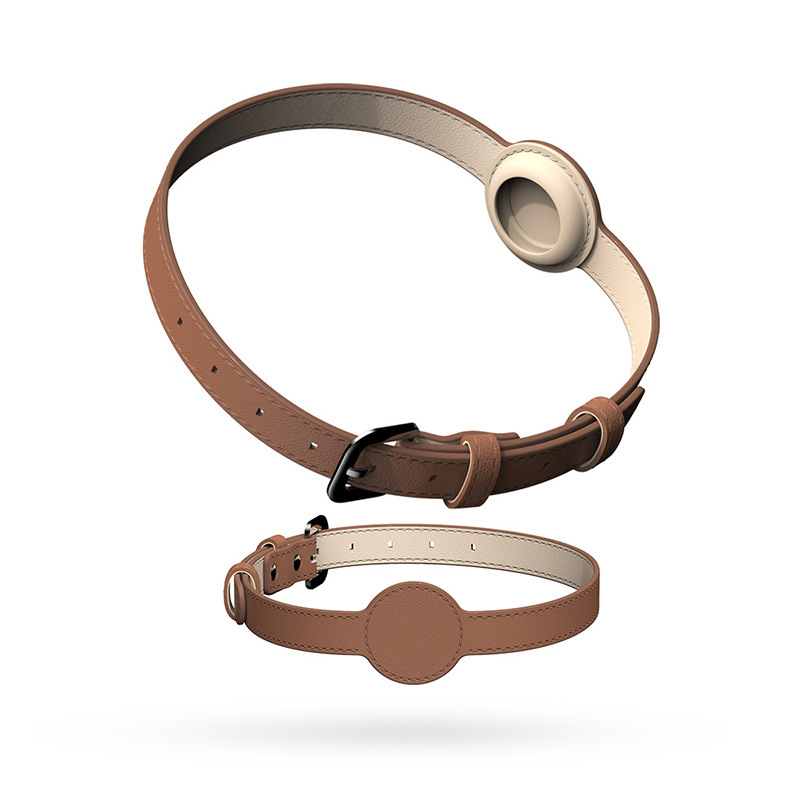
Moreover, the versatility of leather allows it to adapt to modern technological needs. Many contemporary leather collars are designed with integrated pockets or mounts for GPS tracking devices and activity monitors. This allows owners to combine the traditional benefits of leather with the safety and data-driven insights of modern technology. The sturdy nature of leather provides a secure base for these devices, ensuring they do not bounce around or fall off during vigorous activity. This fusion of old-world material and new-world technology represents the current peak of pet care innovation.
Maintenance and Longevity of the Leather
One of the reasons many pet owners hesitate to purchase leather is the perceived difficulty of maintenance. However, caring for a leather pet collar is straightforward and, when done correctly, can extend the life of the product to a decade or more. The most important rule is to avoid soaking the leather in water. While leather can handle a light rain or a quick splash, prolonged immersion causes the natural oils to leach out, leading to cracking and brittleness once it dries. If the collar does get wet, it should be allowed to air dry slowly at room temperature, away from direct heat sources like radiators or hair dryers.
Cleaning should be done periodically with a soft, damp cloth to remove surface dirt and salt from the pet’s skin. For deeper cleaning, specialized saddle soap can be applied with a sponge. This not only lifts grime from the pores but also adds a small amount of conditioning oil. To keep the leather supple, a high-quality leather conditioner should be applied every few months. This prevents the leather from drying out and maintains its water-resistant properties. By treating the leather as a living material, owners ensure that the collar remains as comfortable for the pet in its tenth year as it was in its first.
Choosing the Right Style for Different Breeds
The diversity of domestic pets means that a one-size-fits-all approach rarely works for collars. Large, powerful breeds like Mastiffs or Bulldogs require wider leather bands that distribute pressure across a larger surface area of the neck, protecting their trachea during walks. These collars are often double-ply, meaning two layers of leather are stitched together for maximum strength. For smaller, more delicate breeds like Chihuahuas or Italian Greyhounds, a lightweight, rolled leather collar is often the best choice. Rolled leather is specifically designed to prevent matting and breakage of long fur, as the rounded shape glides smoothly against the coat rather than rubbing against it.
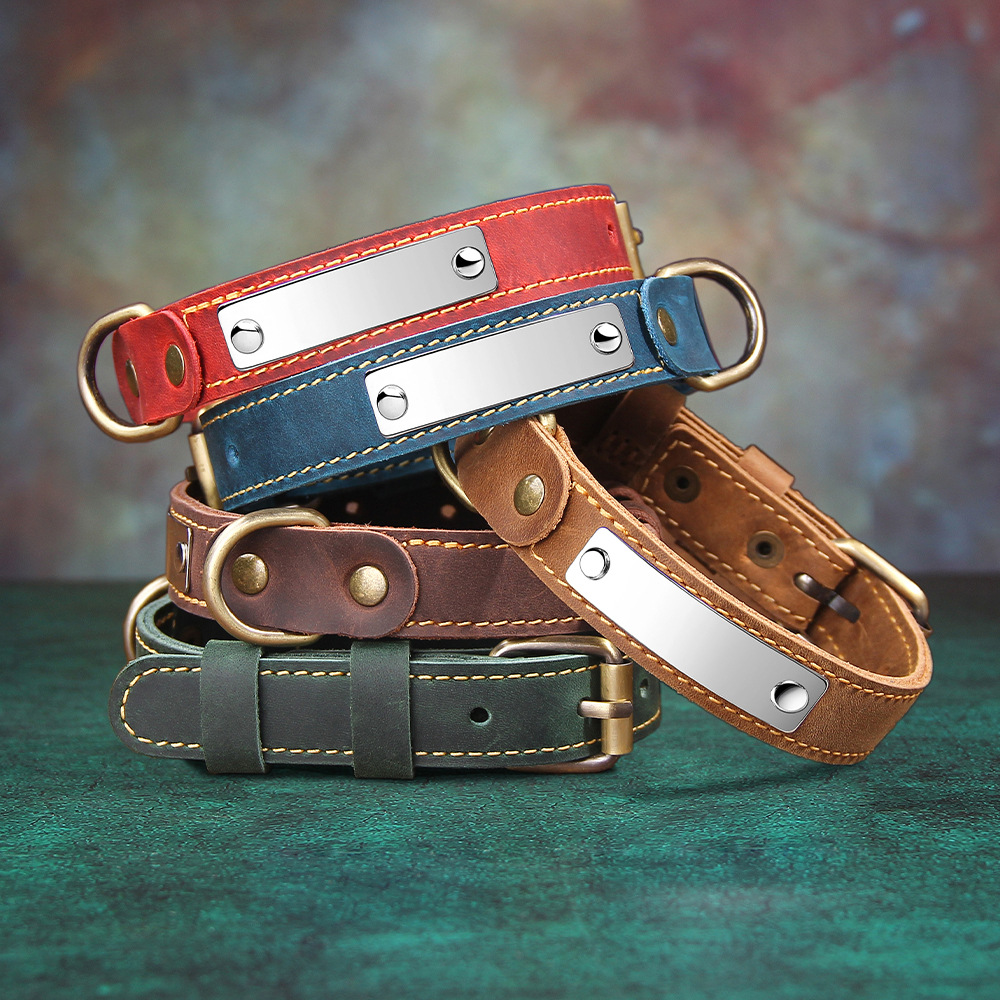
Aesthetics also play a significant role in the selection process. Leather offers a timeless look that complements the natural coat colors of most animals. Whether it is a rugged, distressed brown leather for a farm dog or a sleek, padded black leather for an urban companion, the material exudes a sense of quality that synthetic fibers cannot replicate. Personalized collars with nameplates are particularly effective with leather, as the metal plates can be riveted directly into the material, creating a permanent and silent identification system that won’t jingle or fall off like traditional hanging tags.
Conclusion
The choice of a leather pet collar is more than a fashion statement; it is an investment in quality, comfort, and tradition. Throughout history, leather has proven itself as the ideal material for animal accessories due to its remarkable durability and its ability to age gracefully alongside the pet. By understanding the different grades of leather, the importance of craftsmanship, and the necessary steps for maintenance, pet owners can provide their companions with a tool that is both functional and beautiful. In a world of disposable goods, the leather collar serves as a reminder that some things are still worth making by hand, and our pets deserve the very best we can offer.
How to purchase:Online B2B sourcing platform, China purchase, Chinese suppliers – LooperBuy
Frequently Asked Questions
1. Is a leather pet collar suitable for dogs that love to swim?
Leather is not ideal for frequent swimming as water strips its natural oils. If it gets wet, rinse it with fresh water and condition it once dry to prevent cracking and stiffness.
2. How often should I condition my pet’s leather collar?
Typically, every three to six months is sufficient. If you live in a very dry or sunny climate, you may need to apply conditioner more frequently to keep the leather supple.
3. Can leather collars cause fur staining?
High-quality drum-dyed leather rarely bleeds color. However, cheap surface-dyed leather may stain light-colored fur when wet, so it is best to choose vegetable-tanned or premium-grade options.
4. How do I know if the collar is too heavy for a small breed?
A collar should weigh no more than two or three percent of the pet’s body weight. For small breeds, choose lightweight, single-ply, or rolled leather designs to avoid neck strain.
5. Why is full-grain leather more expensive than genuine leather?
Full-grain leather uses the strongest outer layer of the hide and is much more durable. Genuine leather is a lower grade made from split layers and lacks long-term structural integrity.
HOT TAG:
Durable Leather Pet Collar, Full-Grain Leather Quality, Sustainable Pet Accessories, Vegetable Tanned Leather Benefits, Pet Safety and Sizing, Handcrafted Dog Collars, Rolled Leather for Fur Protection, Hypoallergenic Pet Gear, Leather Collar Maintenance Guide, Timeless Pet Fashion, High-Quality Pet Identification, Artisan Leather Craftsmanship, Eco-Friendly Pet Products, Premium Buckle Safety, Long-Lasting Pet Supplies, Genuine Leather vs Full Grain, Comfort for Sensitive Skin, Best Collars for Large Dogs, Luxury Pet Equipment, Hand-Stitched Leather Durability.