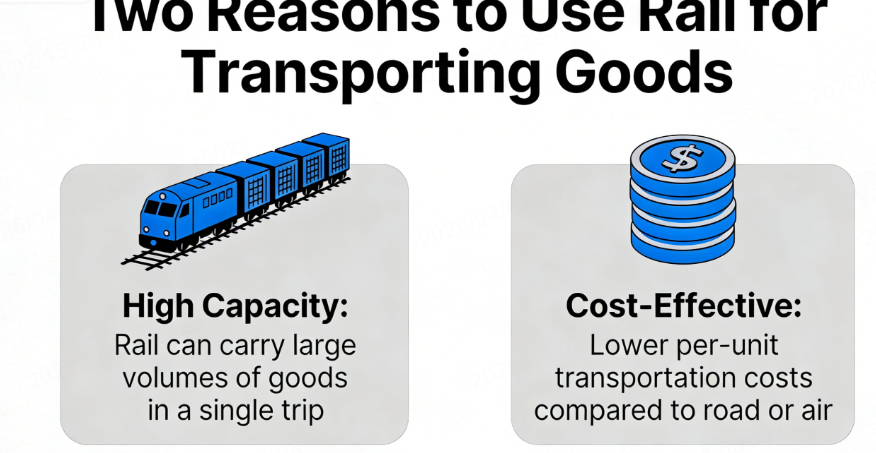
As a B2B sourcing and logistics strategist with over 15 years of experience helping global brand owners, wholesalers, and manufacturers move products from China to markets worldwide, I’ve watched freight rail evolve from a niche alternative to a core pillar of resilient supply chains. If you’re sourcing from China and shipping to Europe or Central Asia, you need to identify two reasons to use rail for transport goods that make it superior to both ocean and air freight for many B2B shipments.
In this guide, I’ll give you exactly those two reasons—backed by 2026 data and real-world examples—and show how LooperBuy’s one-stop sourcing platform integrates rail options to save you money, time, and headaches.
Table of Contents
Reason 1: Rail Offers the Best Balance of Cost and Speed
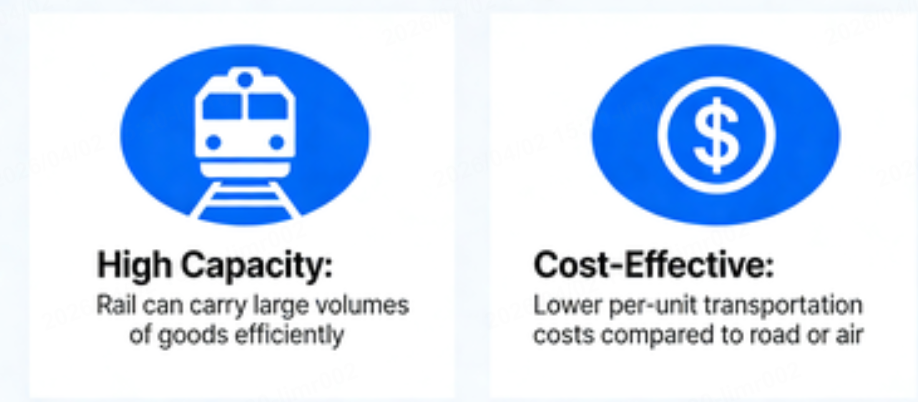
When you identify two reasons to use rail for transport goods, the first and most compelling is cost-speed optimization. Rail is consistently 30–50% cheaper than air freight and 30–50% faster than ocean freight on major China-to-Europe lanes.
Let me show you the numbers from 2026:
| Mode | Transit Time (China to Central Europe) | Cost per kg (approx.) | Best For |
|---|---|---|---|
| Ocean freight | 35–50 days | $0.30 – $0.60 | Non-urgent, high-volume, low-margin goods |
| Rail freight | 18–22 days | $0.80 – $1.50 | Time-sensitive, mid-to-high value goods |
| Air freight | 3–7 days | $4.00 – $8.00 | Urgent, high-value, low-weight goods |
Data compiled from China Railway Express and freight forwarder rate sheets, Q1 2026.
What this means for your business:
If you’re shipping consumer electronics, auto parts, or fashion accessories from China to Europe, rail gets your products to market two to three weeks faster than ocean—but at one-fifth the cost of air.
Real example: A LooperBuy client shipping 10 pallets of smart home devices from Shenzhen to Warsaw used rail instead of ocean. They saved 22 days of transit time, avoided peak ocean surcharges, and landed their goods in time for Black Friday. Rail cost them $2,800 vs $6,200 for air—a 55% saving.
Reason 2: Rail Provides Predictable Transit and Avoids Port Congestion
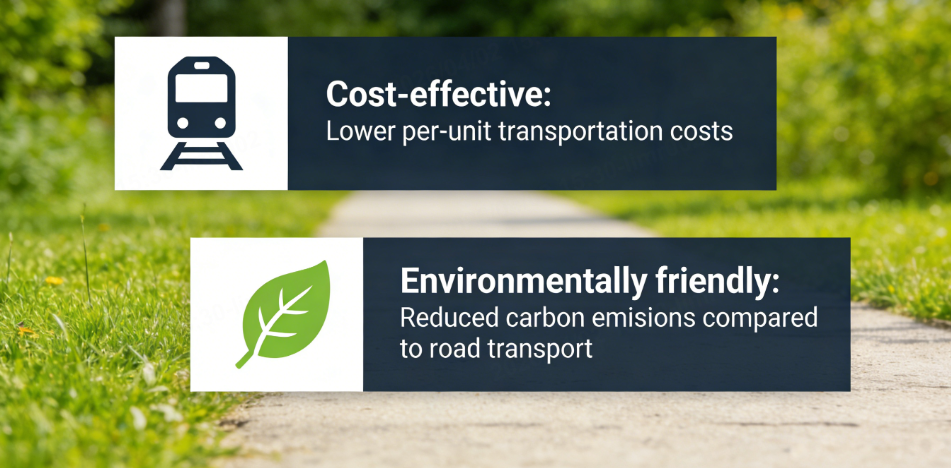
The second reason to identify two reasons to use rail for transport goods is reliability. Ocean shipping has become notoriously unpredictable. In 2025, global schedule reliability for ocean carriers averaged only 52%, according to Sea-Intelligence. Ports like Rotterdam, Hamburg, and Los Angeles regularly see vessel waiting times of 5–12 days.
Rail doesn’t have that problem.
China-Europe rail operates on fixed schedules with minimal congestion. Trains depart daily from major hubs like Xi’an, Chengdu, Chongqing, and Zhengzhou. They cross borders at dedicated rail ports with pre-cleared customs arrangements. The result: on-time arrival rates consistently above 90% for major rail operators.
| Metric | Ocean Freight (2025 avg) | Rail Freight (2025 avg) |
|---|---|---|
| On-time arrival rate | 52% | 91% |
| Transit variance (± days) | 10–20 days | 3–5 days |
| Port/terminal congestion delays | Common (5–15 days) | Rare (0–2 days) |
Why this matters for your supply chain:
Predictable transit means you can carry less safety stock, reduce warehousing costs, and promise customers accurate delivery dates. For B2B buyers sourcing from China, that’s a competitive advantage.
Pro tip: When you identify two reasons to use rail for transport goods to your finance team, lead with “lower inventory carrying costs” and “fewer lost sales from delays.” Those numbers resonate with CFOs.
New Section: The China-Europe Rail Network – A 2026 Snapshot
China’s rail freight network has grown explosively. In 2025, the China-Europe Railway Express operated over 18,000 trains carrying 1.8 million TEUs of cargo—up 12% from 2024. Key corridors include:
- Western route: China → Kazakhstan → Russia → Belarus → Poland → Germany (most popular)
- Middle route: China → Kazakhstan → Caspian Sea → Caucasus → Turkey → Europe (growing)
- Eastern route: China → Russia → Belarus → Poland (used for sanctions-compliant goods)
Best rail hubs for sourcing from China:
| Origin Hub | Key Industries Nearby | Destination Reach |
|---|---|---|
| Xi’an | Electronics, machinery | Duisburg, Hamburg, Malaszewicze |
| Chengdu | Consumer goods, IT products | Lodz, Tilburg |
| Chongqing | Auto parts, monitors | Duisburg |
| Zhengzhou | Smartphones, apparel | Hamburg |
When you source through LooperBuy, we automatically recommend the optimal rail origin based on your supplier’s location and your European destination.
New Section: A Real-World Case Study – Rail Saves a German Retailer €150,000
In early 2025, a German home goods retailer faced a crisis. Their ocean shipment from Ningbo was stuck outside Rotterdam for 18 days. They were about to miss the spring sales window.
The LooperBuy solution:
- We rerouted the next three containers from ocean to rail out of Xi’an.
- Transit time: 21 days to Duisburg vs 52 days for ocean.
- Cost increase: only 18% (€3,200 more per container) vs 300% for air.
The result:
- The retailer launched on time and captured €450,000 in sales.
- They avoided €60,000 in lost revenue penalties.
- They now ship 40% of their China volume by rail as a strategic hedge.
When you identify two reasons to use rail for transport goods, remember this case: predictability saved their season, and cost-speed balance kept margins healthy.
How LooperBuy Integrates Rail into Your One-Stop Sourcing Platform
LooperBuy isn’t just a supplier marketplace. We’re a full-service sourcing platform that gives you every logistics option—including rail.
When you source from China through LooperBuy, you can:
- Compare ocean, rail, and air costs side by side in our calculator
- See real-time rail schedules from 20+ China origins to 15+ European terminals
- Track your train via GPS and EDI updates (ETA accuracy within 1 day)
- Combine rail with trucking for door-to-door delivery from your Chinese supplier to your European warehouse
- Get consolidated rail LCL (less than container load) for smaller shipments
Our rail advantage: Because we move thousands of containers annually, we negotiate preferred rail rates 10–15% below market—and pass those savings to you.
Ready to test rail for your next China shipment? [Sign up for LooperBuy] and get a free rail vs ocean vs air quote. No obligation, just transparent pricing.
Call to Action: Stop Guessing – Start Optimizing
Now you can clearly identify two reasons to use rail for transport goods: the unbeatable cost-speed balance and the reliability that ocean can’t match. For B2B buyers sourcing from China to Europe, rail isn’t a “nice to have”—it’s a strategic necessity.
Let LooperBuy handle the complexity. We’ll vet your Chinese suppliers, manage quality inspection, and book the optimal rail route—all in one dashboard.
[Get Your Free Rail Quote Now] – and see how much time and money you can save.
Frequently Asked Questions (FAQ)
1. What are the two main reasons to use rail for transport goods?
First, rail offers the best balance of cost and speed—30–50% cheaper than air and 30–50% faster than ocean. Second, rail provides predictable transit with on-time arrival rates above 90%, avoiding port congestion that plagues ocean shipping.
2. Is rail freight cheaper than ocean freight?
No, rail is typically 2–3x more expensive than ocean per kg. However, rail is significantly cheaper than air and much faster than ocean. The value comes from the cost-speed trade-off: you pay a moderate premium for weeks of time savings.
3. What types of goods are best suited for rail from China?
Electronics, auto parts, machinery, fashion accessories, furniture, and consumer goods with medium to high value and time sensitivity. Rail is not ideal for very heavy, low-margin bulk commodities (use ocean) or urgent, lightweight items (use air).
4. How long does rail freight take from China to Europe?
Typical transit is 18–22 days from major Chinese hubs (Xi’an, Chengdu) to European terminals (Duisburg, Hamburg, Lodz, Malaszewicze). Add 3–5 days for trucking to final destination.
5. Can LooperBuy help me switch from ocean to rail?
Absolutely. LooperBuy’s platform lets you compare ocean, rail, and air costs in real time. Our logistics team will help you reroute existing orders or plan new ones with rail as the primary mode.
6. Does rail work for smaller shipments (less than a full container)?
Yes. LooperBuy offers LCL rail consolidation. We combine your goods with other buyers’ shipments to fill a container, then split at destination. You pay only for the space you use.
Article Summary
Identify two reasons to use rail for transport goods from China: cost-speed balance (30-50% cheaper than air, 30-50% faster than ocean) and reliability (>90% on-time vs 52% for ocean). Includes 2026 data, case study, and LooperBuy integration.
Hot Tags
rail freight benefits, reasons to use rail for transport goods, China Europe rail freight, rail vs ocean vs air, B2B rail logistics, cost speed balance rail, reliable rail transport, LooperBuy rail shipping, China sourcing rail option, rail freight cost comparison, rail transit time China to Europe, avoid port congestion rail, rail freight case study 2026, intermodal transport China, LooperBuy one stop sourcing
References
- China Railway Express. (2026). 2025 Operational Statistics and 2026 Corridor Updates. Retrieved from https://www.crexpress.cn
- Sea-Intelligence. (2026). Global Liner Performance Report – 2025 Annual Summary. Retrieved from https://www.sea-intelligence.com
- LooperBuy. (2026). Supplies Business: A B2B Expert’s Guide to Sourcing Chinese Goods Globally with LooperBuy. Retrieved from https://blog.looperbuy.com/supplies-business-a-b2b-experts-guide-to-sourcing-chinese-goods-globally-with-looperbuy.html
- DB Cargo. (2026). China-Europe Rail Freight Transit Times and Reliability. Retrieved from https://www.dbcargo.com
- Office of Rail and Road (UK). (2025). International Rail Freight Statistics. Retrieved from https://www.orr.gov.uk
- European Commission. (2026). Trans-European Transport Network (TEN-T) – Rail Freight Corridors. Retrieved from https://transport.ec.europa.eu
- McKinsey & Company. (2025). The Future of Rail Freight in Global Supply Chains. Retrieved from https://www.mckinsey.com/industries/travel-logistics/our-insights
- World Trade Organization (WTO). (2026). Trade Facilitation and Multimodal Transport. Retrieved from https://www.wto.org