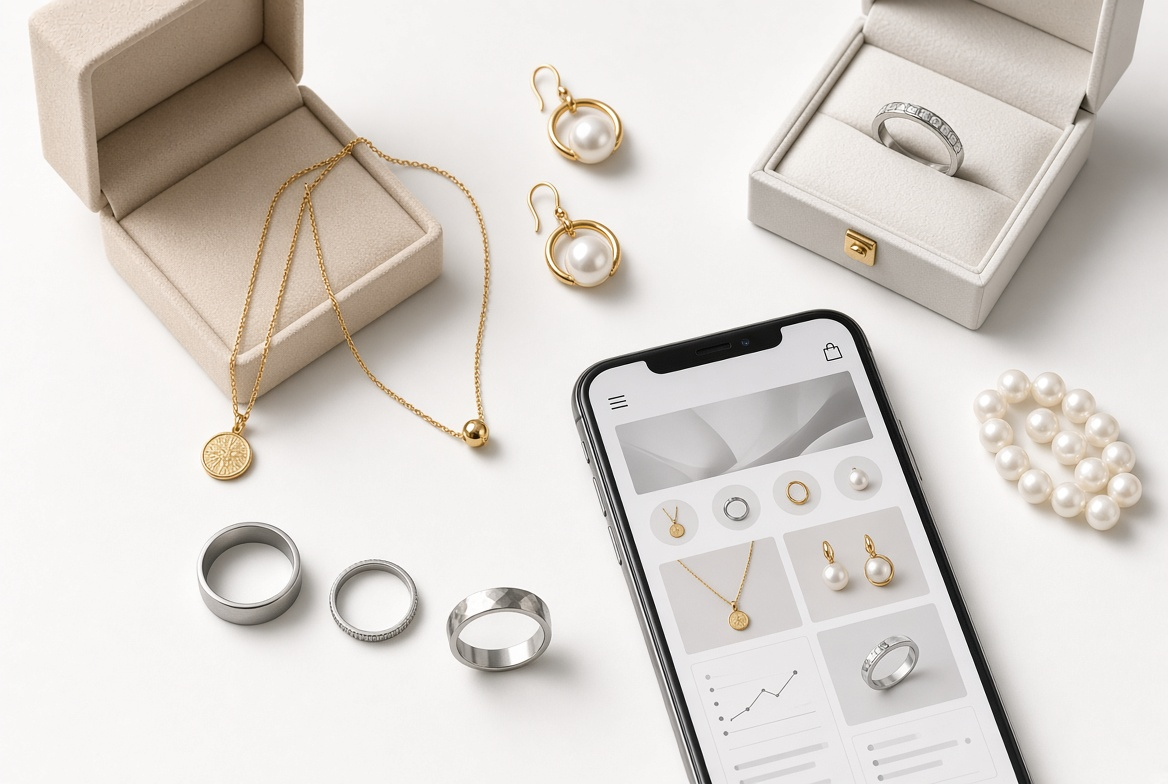
Discover how to find profitable jewelry products and reliable suppliers for dropshipping. Learn product research, sample testing, supplier vetting, material accuracy, shipping strategy, and how Looperbuy can simplify China sourcing, consolidation, quality checks, and global fulfillment.
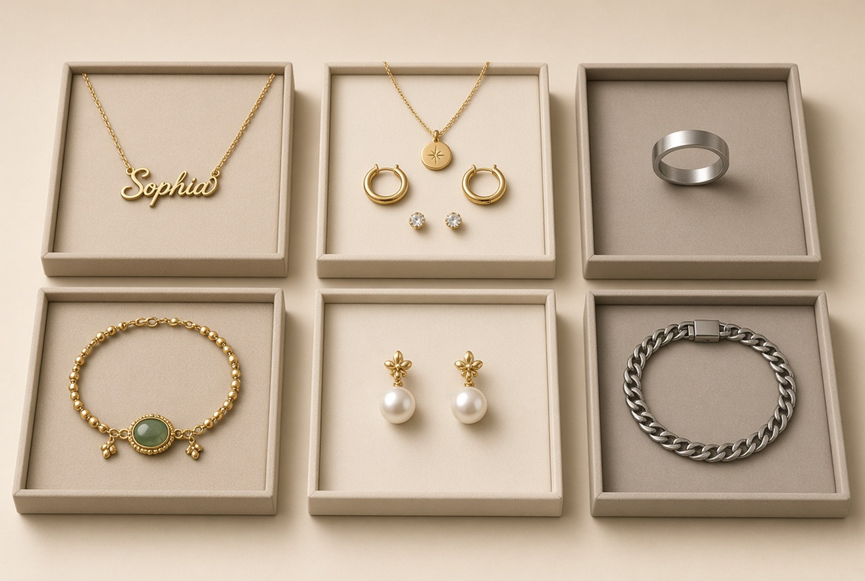
Jewelry dropshipping can be an attractive category for online sellers: products are usually compact, visually marketable, giftable, and easy to bundle. But sustainable growth does not come from listing hundreds of attractive rings, necklaces, or earrings. It comes from selecting products with real demand, verifying quality before launch, and building a supplier network that can fulfill orders consistently.
For B2B sellers, the challenge is even more specific. You need a sourcing process that protects cash flow, avoids unnecessary inventory, gives customers accurate delivery expectations, and creates a dependable experience from product page to final delivery. This guide explains how to find jewelry products and suppliers for dropshipping, how to test them properly, and how a China sourcing and fulfillment partner such as Looperbuy can help simplify purchasing, quality control, consolidation, and global shipping.
Table of Contents
Why Jewelry Dropshipping Requires More Than a Trendy Product
Jewelry is one of the most competitive ecommerce categories. Buyers can find thousands of similar-looking products within minutes, so a generic product catalog rarely creates a strong reason to purchase from one store instead of another.
The opportunity is still meaningful. The U.S. jewelry market alone was valued at approximately $63 billion in 2025, while consumer interest continues to shift across categories such as personalized pieces, lab-grown diamonds, accessible fashion jewelry, and items positioned around ethical or material-based considerations.
However, product appearance is only one part of the decision. A successful jewelry seller must manage five operational realities:
– Demand: Is there evidence that customers actually want this style?
– Differentiation: Does the item have a clear angle, story, bundle, customization option, or target audience?
– Product quality: Will plating, clasps, stones, packaging, and materials meet customer expectations?
– Fulfillment reliability: Can the product be sourced, processed, and shipped consistently?
– Listing accuracy: Are material, size, color, and delivery claims clear and supportable?
A visually appealing necklace with weak plating or an unclear material description can quickly produce returns, chargebacks, negative reviews, and lost repeat purchases. In jewelry, customers often evaluate a product emotionally. If the unboxing experience feels cheap or the item looks different from the listing images, trust can disappear immediately.
Choose a Jewelry Niche Before You Search Suppliers
New dropshippers often begin with a broad category such as “women’s jewelry” or “fashion accessories.” This creates a catalog without a clear identity and puts the store in direct competition with large marketplaces and established brands.
A more effective approach is to choose a focused niche with a recognizable audience, product style, and buying occasion.
Jewelry Niches Worth Evaluating
| Jewelry niche | Typical customer motivation | Product opportunities | Key sourcing concern |
| Personalized jewelry | Gifts, anniversaries, identity, milestones | Initial necklaces, name necklaces, birthstone bracelets | Customization accuracy and production time |
| Minimalist everyday jewelry | Wearability, layering, modern style | Thin chains, small hoops, stackable rings | Plating durability and sizing consistency |
| Stainless steel jewelry | Affordability, durability, low-maintenance wear | Waterproof rings, chains, earrings | Verify material claims and finish quality |
| Boho or natural-stone jewelry | Individual style, handmade aesthetic | Beaded bracelets, gemstone pendants, layered pieces | Stone variation and photo accuracy |
| Bridal and occasion jewelry | Weddings, parties, gifting | Pearl earrings, hair accessories, statement sets | Seasonal planning and packaging quality |
| Zodiac and spiritual jewelry | Self-expression and gifting | Zodiac pendants, tarot-inspired charms, crystal pieces | Avoid unsupported health or spiritual claims |
| Men’s jewelry | Style, gifting, personal identity | Chains, signet rings, bracelets, cufflinks | Size charts, weight, and clasp strength |
A niche does not need to limit your business permanently. It gives you a starting point. Once you understand which products, audiences, and price points are working, you can expand into adjacent collections.
For example, a store that begins with minimalist gold-tone jewelry might later add waterproof stainless steel pieces, travel jewelry cases, layered necklace bundles, and gift-ready packaging. The key is that every expansion should still make sense for the same buyer.
How to Find Jewelry Products With Real Selling Potential
Finding products for dropshipping should combine search behavior, social signals, competitor research, and supplier-side feasibility. Do not rely on one viral video or a single competitor’s bestseller page.
Start With Specific Search Terms
Broad keywords such as “necklace,” “earrings,” and “rings” are too broad to reveal useful buying intent. Instead, research more specific product phrases that indicate a clear style or use case.
Examples include:
– Waterproof stainless steel rings
– Gold-plated hoop earrings
– Dainty birthstone necklace
– Personalized name necklace
– Layered necklace set
– Minimalist pearl earrings
– Adjustable men’s chain bracelet
– Bridesmaid jewelry gift set
– Hypoallergenic stud earrings
– Stackable rings for women
Google Trends can help sellers explore search interest by time, location, and popularity. It also allows you to compare terms and investigate whether demand is rising, seasonal, or concentrated in a particular market.
When reviewing search trends, avoid assuming that a high score equals a high sales volume. Trends shows relative search interest, not direct transaction data. Use it as one validation signal, then compare it with marketplace listings, social engagement, competitor offers, and supplier availability.
Look for Commercial Signals on Social Platforms
Social content is useful when it reveals purchase intent rather than passive viewing. A video with millions of views may not be a viable product opportunity if comments do not show interest in buying.
Look for comments such as:
– “Where can I get this?”
– “I need this for my wedding.”
– “Does it tarnish?”
– “Is this waterproof?”
– “Can I get this with my initial?”
– “Do you ship to my country?”
These questions reveal the customer’s actual objections and purchasing criteria. They can also help improve your product-page copy before you ever launch.
For example, if customers repeatedly ask whether a gold-tone ring tarnishes, your listing should not simply say “premium ring.” It should clearly explain the material, finish, care guidance, and any claims that your supplier can verify.
Study Competitors Without Copying Them
Review 5 to 10 successful jewelry stores in your target niche. Focus on their customer experience rather than copying their products or descriptions.
Examine:
– Their best-selling collections
– Product price range
– Product photography style
– Review patterns
– Shipping information
– Return policy wording
– Bundle offers
– Gift packaging options
– Product-page questions and answers
– Negative customer feedback
Negative reviews are especially valuable. They show you what buyers dislike and what you can solve.
Common jewelry complaints include:
– The item looked smaller than expected.
– The gold color was too yellow.
– The clasp broke quickly.
– The ring size was inaccurate.
– The jewelry arrived tangled or damaged.
– Shipping took longer than expected.
– The material description was unclear.
– The product did not match the photo.
Each complaint is a potential improvement opportunity. If competitors are unclear about dimensions, include a scale photo and exact measurements. If customers complain about packaging, invest in better protection or offer a gift-ready option.
Use a Product Validation Scorecard
Before adding a product to your store, score it objectively. A simple scorecard prevents emotional decisions based on appearance alone.
| Evaluation factor | Questions to ask | Suggested target |
| Search interest | Is demand stable, growing, or seasonal? | Stable or rising |
| Visual appeal | Does the product look compelling in photos and video? | Strong |
| Margin potential | Can you cover product, shipping, payment, ad, and refund costs? | Sustainable margin |
| Shipping suitability | Is it lightweight, durable, and easy to protect? | High |
| Quality risk | Are materials, sizing, plating, and clasp quality verifiable? | Low risk |
| Differentiation | Can you create a bundle, custom option, or clear positioning? | Clear angle |
| Supplier stability | Are backup sources available? | At least two options |
| Return risk | Is the product likely to cause sizing or expectation issues? | Manageable |
A product does not need a perfect score. But if it has weak demand, unclear margins, no supplier backup, and high quality risk, it should not be your first product launch.
How to Find Reliable Jewelry Suppliers for Dropshipping
A supplier is not merely a catalog source. The supplier affects customer satisfaction, delivery speed, product consistency, availability, and your ability to resolve problems after an order is placed.
For dropshipping businesses sourcing from China, a reliable supplier or sourcing partner should provide accurate product information, responsive communication, transparent costs, and dependable fulfillment processes.
Where to Find Jewelry Suppliers
You can begin supplier discovery through several channels:
– B2B marketplaces and manufacturer directories
– Wholesale jewelry platforms
– Product sourcing agents
– Direct factory outreach
– Trade shows and supplier referrals
– Integrated dropshipping directories
– China sourcing and fulfillment platforms such as Looperbuy
Each option has advantages. Direct factory sourcing may offer better customization potential and pricing for repeat volume, but it can require more negotiation, communication, and quality control. Supplier directories can be faster for initial product discovery, but product listings may be less exclusive.
A sourcing and fulfillment platform can be particularly useful when you want to purchase products from multiple Chinese suppliers, consolidate them into one shipment, conduct product checks, manage packaging, and fulfill customer orders without holding large amounts of inventory.
Ask Suppliers the Right Questions
Do not send a vague message such as, “What is your best price?” It does not reveal whether a supplier can support your actual fulfillment needs.
Use a structured inquiry that covers the product, material, delivery process, and after-sales support.
Supplier inquiry checklist:
1. What is the exact base material?
2. What is the plating type and thickness, if applicable?
3. Is the item stainless steel, sterling silver, brass, alloy, or another material?
4. Is the product nickel-free, lead-free, or hypoallergenic? Can this be documented?
5. What are the item dimensions and net weight?
6. Is a size chart available for rings, bracelets, or chains?
7. What packaging is included?
8. Can the supplier provide custom cards, boxes, pouches, or logo inserts?
9. What is the processing time before shipment?
10. What shipping methods are available for your target countries?
11. How are damaged, missing, or incorrect items handled?
12. Can the supplier provide current product photos or videos?
13. What happens if the product is out of stock after a customer order is placed?
14. Can they support blind dropshipping without supplier invoices or promotional inserts?
15. What is the process for ordering samples?
The quality of the response matters as much as the content. A supplier that provides vague answers, avoids material questions, or cannot explain its return process is a higher-risk partner.
Order Samples Before You Sell
Never launch a jewelry product solely from supplier images.
Requesting a sample allows you to inspect the product’s appearance, comfort, finish, packaging, and delivery experience before you promote it to customers. Shopify’s supplier-sampling guidance similarly recommends identifying suppliers, contacting them with product specifications, requesting samples, tracking the shipment, reviewing the items, and sharing feedback before moving forward.
When the sample arrives, inspect the complete customer experience.
Jewelry sample inspection checklist:
– Compare the real color with supplier photos.
– Measure the chain, bracelet, ring, or pendant dimensions.
– Check the clasp several times.
– Look for scratches, loose stones, sharp edges, and uneven plating.
– Test whether earrings and backs fit properly.
– Inspect ring sizing consistency.
– Review the packaging for scratches, tangling, bending, or breakage.
– Photograph and film the item for your product page.
– Note the processing and delivery timeline.
– Compare the delivered experience with the supplier’s promise.
For a product positioned as waterproof, hypoallergenic, tarnish-resistant, or premium plated, do not make claims you cannot verify. Product claims should be supported by supplier documentation, test results, reliable product specifications, or conservative, accurate wording.
Create a Supplier Scorecard and Backup Plan
Your best-selling products should never depend on one untested source. Stock shortages, price changes, production delays, and shipping disruptions can happen without warning.
Create a supplier scorecard for every important product.
| Supplier metric | What to measure | Why it matters |
| Product quality | Sample condition, finish, functionality, consistency | Reduces complaints and returns |
| Communication | Response speed, clarity, issue handling | Helps resolve urgent order problems |
| Processing time | Days from payment to dispatch | Supports accurate delivery promises |
| Shipping options | Cost, tracking, delivery coverage | Affects conversion and customer satisfaction |
| Inventory reliability | Stock updates and replenishment ability | Prevents canceled orders |
| Customization | Packaging, cards, branding, product changes | Helps build differentiation |
| Returns support | Defect and wrong-item procedure | Protects your customer experience |
| Backup availability | Alternative supplier readiness | Reduces operational risk |
For your highest-priority SKUs, maintain at least one pre-vetted backup supplier. Ideally, you should already have a sample, a confirmed price range, and a documented fulfillment process before an emergency occurs.
This is especially important for seasonal jewelry. Valentine’s Day, Mother’s Day, wedding season, Black Friday, Christmas, graduation, and gifting periods can cause sudden demand spikes. A product that performs well in normal weeks may become unavailable precisely when it becomes most valuable.
Product Listings Must Match the Delivered Experience
The gap between product listing and delivered product is one of the most expensive problems in jewelry ecommerce. Buyers often expect jewelry to look, feel, and fit exactly as it appears online.
Your product page should answer the most common pre-purchase questions before the customer needs to ask them.
Include These Details on Every Jewelry Product Page
– Exact product material
– Plating or finish details, where relevant
– Necklace, bracelet, or earring dimensions
– Ring sizing guide
– Product weight when useful
– Close-up images of texture and finish
– On-model or scale-reference images
– Care instructions
– Shipping processing time and estimated delivery range
– Return or replacement policy
– Gift packaging availability
– Clear customization instructions, if applicable
Jewelry descriptions must also be careful with material claims. In the United States, the Federal Trade Commission’s Jewelry Guides address deceptive or misleading representations related to jewelry, precious metals, and pewter products. Sellers should ensure descriptions of metal content, plating, gemstones, and similar attributes are accurate and appropriately qualified.
For example, “gold-tone finish” and “18K gold-plated stainless steel” are not interchangeable claims. Use the wording that accurately reflects the product specification you can substantiate.
Improve Checkout With Clear Shipping Information
Shipping communication is not a small operational detail. It directly influences conversion.
Baymard Institute reports that 40% of shoppers abandon a checkout because extra costs, including shipping, taxes, or fees, are too high. It also reports that 20% abandon when delivery is too slow. Another Baymard resource recommends showing full order costs in the cart and clearly communicating shipping information as early as possible.
For jewelry dropshipping, this means you should:
– Show shipping costs before the final payment step.
– Provide realistic delivery ranges rather than overly optimistic promises.
– Explain processing time separately from transit time.
– Offer tracking when available.
– Display free-shipping thresholds clearly.
– Include duties or taxes information for international buyers where relevant.
– Avoid hiding extra handling charges.
A clear shipping policy can reduce confusion and support stronger customer trust. Shopify recommends that shipping policies communicate domestic and international shipping information, shipping fees, free-shipping thresholds, and other delivery options.
How Looperbuy Can Support Jewelry Dropshipping Operations
For sellers sourcing jewelry from China, Looperbuy can function as more than a purchasing channel. It can support a leaner operating model by helping sellers source products, purchase from Chinese suppliers, consolidate orders, manage inspections, and arrange international fulfillment.
This structure can be particularly valuable for stores that want to avoid large upfront inventory commitments while still improving control over the customer delivery experience.
A Practical Looperbuy Workflow
1. Identify products and suppliers through Chinese marketplaces, direct supplier contacts, or product research.
2. Submit product links or sourcing requirements to Looperbuy for purchasing support and pricing confirmation.
3. Order product samples before listing items on your store.
4. Review product quality, material details, measurements, and packaging through samples or available inspection services.
5. Create accurate product listings using real product information and original photos where possible.
6. Receive customer orders through your ecommerce store or order workflow.
7. Purchase and consolidate items through Looperbuy when products come from multiple suppliers.
8. Add branded packaging, inserts, or protective materials when appropriate and available.
9. Ship orders internationally with a selected shipping method and tracking where applicable.
10. Monitor recurring quality and delivery performance and replace underperforming suppliers early.
This approach can help B2B sellers reduce the complexity of dealing with multiple suppliers, separate payments, fragmented parcels, and individual shipping arrangements. It may also help reduce unnecessary storage requirements because products can be purchased and fulfilled based on actual customer demand rather than large speculative inventory orders.
Common Jewelry Dropshipping Mistakes to Avoid
Choosing Products Only Because They Look Good
A product can be visually attractive and still fail commercially. Validate demand, compare competitors, and calculate your complete landed cost before launching.
Making Unsupported Material Claims
Do not label jewelry as sterling silver, waterproof, hypoallergenic, nickel-free, 18K gold-plated, or tarnish-proof unless the supplier provides reliable product specifications and the statement is accurate.
Ignoring Product Dimensions
Jewelry often looks larger in close-up product photography. Include exact measurements and at least one scale-reference image to reduce “smaller than expected” complaints.
Skipping Packaging Protection
Necklaces can tangle, earrings can bend, and plated items can scratch during transit. Ask suppliers or fulfillment partners how each item is protected before shipment.
Promising Unrealistic Delivery Times
A fast-looking delivery promise may increase initial conversion, but late delivery creates support tickets, refunds, chargebacks, and poor reviews. Be transparent about processing and transit times.
Depending on One Supplier
A supplier may run out of stock, change product specifications, raise prices, or stop responding. Keep backup sources for your core products.
Final Thoughts
The best jewelry dropshipping businesses are not built by chasing every trend. They are built through disciplined product selection, supplier verification, accurate product information, and a delivery experience that meets customer expectations.
Start with a focused niche. Research detailed product keywords. Study customer reviews and social buying signals. Order samples. Use a supplier scorecard. Keep backup sources. Then build listings that clearly explain materials, measurements, care, and delivery.
If you want to source jewelry products from China without committing to large inventory, Looperbuy can help you organize purchasing, supplier coordination, quality checks, order consolidation, and global shipping in a more manageable workflow.
Ready to build a more reliable jewelry dropshipping supply chain? Use Looperbuy to source products from China, test samples, consolidate orders, and fulfill customer purchases with greater control over quality and delivery.
Frequently Asked Questions
1. Is jewelry a good product category for dropshipping?
Jewelry can be a strong dropshipping category because it is lightweight, giftable, visually appealing, and suitable for bundles. However, competition is high, so sellers need clear positioning, reliable suppliers, accurate material information, and strong product presentation.
2. What jewelry products are best for dropshipping?
Good options often include personalized jewelry, minimalist everyday pieces, stainless steel jewelry, layered necklaces, stackable rings, bridal accessories, and gift sets. The best choice depends on your target audience, product quality, shipping cost, and ability to differentiate your offer.
3. Should I order jewelry samples before selling?
Yes. Samples are essential for checking plating, color, weight, sizing, clasp quality, packaging, and shipping speed. You should also use samples to create original photos and videos for your product listings.
4. How can I tell whether a jewelry supplier is reliable?
Evaluate supplier communication, product samples, processing time, available shipping methods, inventory stability, quality documentation, return policies, and ability to handle damaged or incorrect items. Keep at least one backup supplier for important products.
5. How do I reduce jewelry returns?
Use accurate material descriptions, clear measurements, size guides, multiple product images, close-up photos, care instructions, and realistic shipping information. Test samples before launch and avoid product claims that cannot be verified.
6. Can I dropship jewelry from multiple Chinese suppliers?
Yes. A sourcing and fulfillment partner can help purchase products from multiple suppliers, consolidate them into fewer parcels, perform quality checks, and arrange international shipping. This can simplify operations and reduce the risk of customers receiving several separate packages.
7. What should I include in a jewelry product description?
Include the material, finish or plating details, dimensions, weight where useful, size information, care guidance, package contents, customization instructions, processing time, estimated delivery range, and return policy. Make sure all statements accurately match the item being sold.
References
1. [Doba — How to Find Jewelry Products & Suppliers for Dropshipping]
2. [Google Trends — Explore Search Interest by Time, Location, and Popularity]
3. [Google Trends Help Center — Get Started With Google Trends]
4. [Shopify — Try Before You Buy: Requesting Product Samples]
5. [Baymard Institute — Cart Abandonment Rate Statistics]
6. [Baymard Institute — How to Reduce Cart Abandonment]
7. [Federal Trade Commission — Jewelry Industry Resources]
9. [Shopify — How to Create a Shipping Policy]
10. [Statista — Jewelry Market Worldwide: Statistics and Facts]
11. [Statista — Jewelry Market in the United States: Statistics and Facts]