
Compare dropshipping vendors vs sourcing companies for eCommerce growth. Learn which model offers better product costs, quality control, branding, fulfillment flexibility, and scalable China sourcing for global sellers.
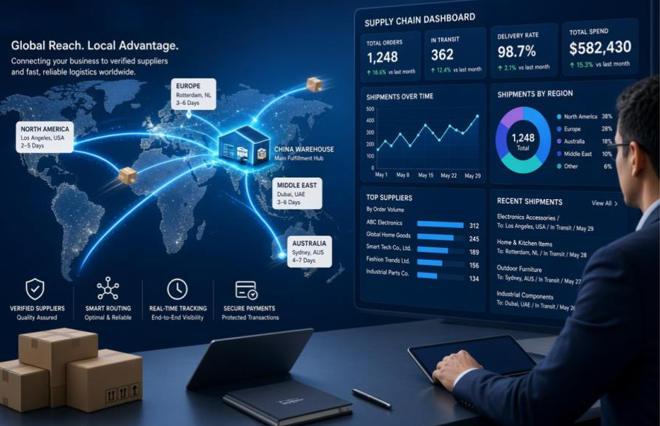
Dropshipping vendors are usually the faster way to test a product with minimal upfront commitment. Sourcing companies are usually the stronger option for scaling a repeatable, branded, and quality-controlled eCommerce business. The right choice depends less on which model is “better” in general and more on your order volume, product risk, target market, margin structure, and operational maturity.
For a growing online seller, the question is not simply *dropshipping vendors vs sourcing companies*. It is whether your supply chain can support the customer experience your brand promises. A low-cost product is not profitable if it arrives late, differs from the listing photos, fails quality checks, or generates refunds and chargebacks. This is where a China sourcing and fulfillment partner such as Looperbuy can become strategically valuable: it can help merchants source products, consolidate supplier operations, inspect goods, arrange fulfillment, and reduce the need to own inventory or manage complex cross-border logistics directly.
> Expert perspective: In my experience evaluating B2B supply-chain models, vendors are designed around product availability, while sourcing companies are designed around operational control. That distinction becomes much more important as order volume rises.
Table of Contents
What Are Dropshipping Vendors and Sourcing Companies?
Before comparing the two models, it is important to separate the business model from the service provider.
What Is a Dropshipping Vendor?
A dropshipping vendor is a supplier, wholesaler, manufacturer, catalog platform, or fulfillment provider that ships an item directly to your customer after you receive an order.
The merchant markets the product, sets the selling price, manages the storefront, and remains responsible for customer support. The vendor usually picks, packs, and dispatches the order.
Shopify defines dropshipping as a fulfillment method in which the seller does not keep the products it sells in stock. Instead, the seller buys inventory as needed from a third party, typically a wholesaler or manufacturer, which fulfills the order directly to the end customer.
Typical dropshipping vendor characteristics include:
– A public or semi-public product catalog.
– Ready-made product listings and images.
– Low or no minimum order quantity.
– Per-order purchasing.
– Standard packaging and shipping choices.
– Limited room for product customization.
– Multiple sellers potentially offering the same product.
This model reduces the capital required to launch a store. However, it can also produce a lack of differentiation. If many stores use the same vendor catalog, they may all sell the same products, use similar images, and compete primarily on price.
What Is a Sourcing Company?
A sourcing company works more like an outsourced procurement and supply-chain team. Instead of limiting you to a public catalog, it helps identify suitable factories or suppliers based on your product requirements.
Depending on the provider and service scope, a sourcing company may help with:
– Factory and supplier discovery.
– Quote comparison and negotiation.
– Product customization.
– Sampling and product development.
– Quality-control inspections.
– Private-label packaging and inserts.
– Warehousing and inventory consolidation.
– Order fulfillment and international shipping.
– Supplier communication and issue resolution.
A China sourcing company is particularly useful when a merchant wants to move from “selling available products” to building a supply chain around a product, brand, or target customer segment.
For example, Looperbuy can support global B2B sellers that want to source Chinese goods while reducing the operational burden of inventory storage, supplier coordination, payment handling, and logistics management.
Dropshipping Vendors vs Sourcing Companies: Core Comparison
The following table shows the practical differences between using conventional dropshipping vendors and using a sourcing company for eCommerce scaling.
| Comparison Area | Dropshipping Vendors | Sourcing Companies |
| Product selection | Usually limited to an existing catalog | Can source from factories, wholesalers, and multiple supplier channels |
| Startup speed | Very fast; products can often be listed immediately | Requires onboarding, product specifications, quotation, and verification |
| Upfront investment | Usually low or near zero | Often low at the beginning, but may require sampling, deposits, or inventory planning |
| Minimum order quantity | Often no MOQ for single-order fulfillment | May support low MOQ, but customized products can require MOQs |
| Unit price at scale | Can remain relatively high because of catalog markups | Often improves with factory negotiation and consolidated purchasing |
| Product differentiation | Limited; competitors may sell identical products | Stronger potential for customized products, packaging, and bundles |
| Quality control | Often limited or inconsistent | Can include pre-shipment inspection and supplier-level QC procedures |
| Branding options | Usually generic packaging | Private labels, inserts, custom packaging, and bundle configuration may be available |
| Shipping flexibility | Standard shipping methods selected by the vendor | More opportunity to compare carriers, consolidate parcels, and design shipping plans |
| Supplier communication | Merchant may communicate through a platform or ticket system | A sourcing team can coordinate supplier communication on the merchant’s behalf |
| Best use case | Product testing, niche validation, early-stage selling | Scaling winners, building a brand, improving margins, and reducing supply-chain risk |
The simple answer: Dropshipping vendors optimize for speed. Sourcing companies optimize for control.
When Dropshipping Vendors Are Better
Dropshipping vendors are not a poor choice. In fact, they are often the best starting point for sellers who are still testing demand.
1. You Need to Test Products Quickly
If you do not yet know whether customers will buy a product, committing to customized packaging, bulk manufacturing, or pre-purchased inventory can be risky.
A vendor lets you validate important questions before investing more heavily:
– Does the product attract clicks?
– Does the product page convert?
– Can advertising acquire customers profitably?
– Are customers satisfied after delivery?
– Does the return rate remain manageable?
– Can the offer survive price competition?
For early-stage merchants, the biggest benefit is speed of market validation.
2. You Have Low or Unpredictable Order Volume
If a store receives only occasional orders, it may not yet justify a sourcing workflow. A public-catalog vendor can be more convenient because you pay only when an order arrives.
This is especially useful for:
– New Shopify stores.
– Seasonal products.
– Trend-based products.
– Broad catalogs with many unproven SKUs.
– Sellers experimenting with multiple niches.
– Sellers with limited cash flow.
3. You Need Minimal Operational Complexity
Dropshipping allows a merchant to focus on marketing, product pages, conversion optimization, and customer acquisition rather than warehousing and order handling.
Shopify notes that third-party fulfillment can remove inventory-management responsibilities and let merchants focus more on marketing, website development, and customer experience.
However, less operational work does not mean no responsibility. The seller remains responsible for the customer relationship, delivery communication, tracking updates, refunds, and product-related complaints.
The Main Limitation of Vendor-Based Dropshipping
The low-barrier model becomes difficult when sales increase. A merchant may encounter:
– Inconsistent stock availability.
– Supplier price changes.
– Product substitutions.
– Generic packaging.
– Weak quality visibility.
– Limited control over delivery speed.
– Fragmented shipments from different suppliers.
– Slow resolution of fulfillment errors.
– Competitors using the exact same products.
A vendor can help you start selling. It may not help you build a defensible brand.
When a Sourcing Company Is Better for Scaling
A sourcing company becomes more valuable when a product has proven demand and the cost of operational mistakes starts to exceed the convenience of vendor-based fulfillment.
1. You Have Winning Products With Consistent Demand
Once a product consistently generates orders, the goal changes. You are no longer asking, “Will this sell?” You are asking:
– Can I lower my landed cost?
– Can I prevent stockouts?
– Can I improve delivery reliability?
– Can I add brand value?
– Can I reduce product defects?
– Can I create a better repeat-purchase experience?
At this stage, sourcing directly or through a sourcing company can improve the economics of each order.
A sourcing-company model often helps sellers compare factories, negotiate prices, request samples, and consolidate purchasing. This creates more leverage than repeatedly buying single orders from a catalog vendor.
2. You Need Better Quality Control
Product quality becomes a brand issue the moment customers associate an item with your store rather than with a marketplace supplier.
Quality failures can create:
– Refunds and replacements.
– Negative reviews.
– Payment disputes.
– Advertising-account risk.
– Customer-support costs.
– Long-term reputation damage.
Quality-control processes matter particularly for products involving safety, sizing, materials, electronics, cosmetics, children’s products, or regulated categories. QIMA recommends that sellers vet their supply chains, keep documentation, conduct appropriate testing, and carry out regular inspections to confirm products work as intended and remain free from defects.
A sourcing company can support a structured process, such as:
1. Create a detailed product specification sheet.
2. Request samples from shortlisted suppliers.
3. Approve a “golden sample.”
4. Define defect criteria and packaging standards.
5. Conduct inspections before shipment.
6. Track recurring supplier issues.
7. Maintain a backup supplier for critical products.
Expert insight: Sellers often focus on finding a cheaper factory. The larger opportunity is finding a repeatable quality process. A product that costs $1 less but doubles your return rate is not a sourcing win.
3. You Want Private Label or Branded Fulfillment
Generic packaging may be acceptable during testing. It is much less effective when you want customers to remember your brand.
A sourcing company can help create a branded unboxing experience through:
– Custom boxes.
– Logo stickers.
– Printed inserts.
– Thank-you cards.
– Product instructions.
– Bundled accessories.
– Barcodes and SKU labels.
– Promotional inserts for repeat purchases.
Branding is more than visual design. It can reduce customer confusion, improve perceived value, support post-purchase communication, and distinguish your offer from identical marketplace listings.
4. You Need Multi-Supplier Consolidation
A merchant selling products from several vendors may create a poor customer experience when orders arrive in separate parcels on different days.
A sourcing and fulfillment company can potentially consolidate goods from multiple suppliers into one warehouse workflow before shipping them to the end customer. This can simplify:
– Packaging consistency.
– Shipping-label management.
– Order tracking.
– Bundle creation.
– Multi-SKU orders.
– Inventory visibility.
– Customer communication.
For B2B sellers, consolidated procurement can also reduce administrative work across supplier payments, negotiations, and logistics coordination.
5. Your Market Requires Greater Customs and Cost Awareness
Cross-border fulfillment has become more complex, especially for sellers shipping into the United States. U.S. Customs and Border Protection states that products of China no longer qualify for duty-free treatment under the former de minimis administrative exemption, effective May 2, 2025; applicable duties, taxes, and fees may apply even to shipments that would previously have been under the $800 threshold.
This does not mean every seller should abandon direct shipping. It means merchants need clearer landed-cost calculations and should avoid making outdated assumptions about duty-free low-value shipments.
Your operational planning should include:
– Product classification and country-of-origin review.
– Destination-market duties and taxes.
– Carrier fees and customs-clearance charges.
– Returns handling.
– Delivery-time expectations.
– Shipping-line reliability.
– Accurate product declarations.
– Compliance documentation where required.
Important: Customs, tax, product-safety, and import obligations vary by product and destination. Consult qualified customs, tax, and legal professionals for decisions affecting your specific business.
Cost Analysis: Which Model Produces Better Margins?
The right cost comparison is not the product price alone. It is the landed cost per successful order.
Use this formula:
Landed Cost per Order=Product Cost+Packaging+Quality Control+Shipping+Duties/Taxes+Payment Fees+Returns and Replacement Cost
A vendor may show a low initial price but have a higher total cost because of shipping, product quality issues, limited packaging choices, or inconsistent order processing.
A sourcing company may initially appear more expensive because it adds sourcing, inspection, or fulfillment service fees. But it can lower the total cost at volume through better supplier pricing, fewer defects, more efficient shipping, and less operational waste.
Example: A Simplified Scaling Scenario
Imagine an online seller receives 900 orders per month for a proven product.
| Cost Category | Dropshipping Vendor Model | Sourcing Company Model |
| Product cost | $14.00 | $10.50 |
| Standard packaging | Included | $0.35 |
| Quality-control allocation | $0.00 | $0.30 |
| Shipping | $6.50 | $5.80 |
| Sourcing or fulfillment fee | $0.00 | $1.10 |
| Estimated total before duties/taxes | $20.50 | $18.05 |
In this example, the sourcing-company model costs $2.45 less per order before duties, taxes, payment fees, and returns. Across 900 monthly orders, that difference equals $2,205 per month.
This is an illustration, not a universal benchmark. Actual results depend on product type, dimensions, weight, destination, order frequency, packaging, shipping service, and negotiation outcomes.
The strategic lesson is clear: a sourcing company can become more economical when order volume is stable enough to justify operational coordination.
A Practical Decision Framework for Sellers
Use the following framework to decide whether to use dropshipping vendors, a sourcing company, or both.
Choose Dropshipping Vendors If You Are:
– Testing a new product or market.
– Receiving inconsistent order volume.
– Working with a limited budget.
– Selling low-risk, non-customized products.
– Prioritizing speed over product control.
– Building a broad catalog before identifying winners.
Choose a Sourcing Company If You Are:
– Selling a proven product consistently.
– Experiencing frequent supplier stock or quality issues.
– Seeking lower unit costs at higher volume.
– Building a private-label brand.
– Selling bundles or multi-SKU orders.
– Needing branded packaging.
– Managing multiple Chinese suppliers.
– Seeking improved fulfillment reliability.
– Preparing to enter new international markets.
Use a Hybrid Model If You Are Scaling Strategically
For many merchants, the best strategy is not choosing one model forever. It is using a staged approach:
1. Use dropshipping vendors to test several products.
2. Measure conversion rate, return rate, customer reviews, and delivery complaints.
3. Identify products with stable demand and acceptable margins.
4. Move winning products to a sourcing company.
5. Add quality control and custom packaging.
6. Build a supplier backup plan.
7. Consider small inventory buffers for your highest-volume SKUs.
This model protects cash flow while allowing the business to become more controlled as demand grows.
How Looperbuy Can Support Scalable Sourcing
Looperbuy is positioned to help global B2B sellers source Chinese products and manage fulfillment without taking on the full burden of inventory storage, supplier payments, warehouse operations, or international shipping coordination.
For a merchant moving beyond basic vendor dropshipping, a sourcing and fulfillment partner can support the transition by helping with:
– Product sourcing based on merchant requirements.
– Supplier communication in China.
– Purchasing and order coordination.
– Consolidation of goods from different suppliers.
– Quality checks before dispatch.
– Custom packaging and value-added fulfillment.
– Warehousing without requiring the seller to operate a warehouse.
– International dropshipping fulfillment.
– Shipping options aligned with destination markets and customer expectations.
The value is not simply “finding cheaper products.” The value is building a more predictable order-to-delivery workflow.
> For scaling sellers, supply-chain visibility is a competitive advantage. When you know what is being sourced, how it is inspected, where it is stored, and how it is shipped, you can make better decisions about pricing, advertising, customer support, and expansion.
Final Verdict: Which Is Better for Scaling?
Dropshipping vendors are better for starting. Sourcing companies are generally better for scaling.
Dropshipping vendors give entrepreneurs speed, low commitment, and access to ready-to-sell products. They are ideal when demand is uncertain and cash flow must remain flexible.
Sourcing companies provide more control over supplier selection, product costs, quality, branding, packaging, consolidation, and fulfillment. They become especially valuable when a product proves itself and the seller needs a stronger, more reliable supply chain.
The smartest approach is usually progressive:
– Start lean.
– Test demand.
– Track real fulfillment performance.
– Move proven products into a controlled sourcing workflow.
– Build quality assurance and brand differentiation before competitors do.
Ready to Scale Beyond Basic Dropshipping?
If you have identified winning products and want more control over sourcing, quality, branding, and fulfillment, contact Looperbuy to explore a China sourcing and dropshipping fulfillment workflow designed around your business needs. A structured sourcing partner can help you reduce operational friction while creating a more scalable customer experience.
Frequently Asked Questions
1. Is a sourcing company the same as a dropshipping supplier?
No. A dropshipping supplier normally sells products from an existing catalog and ships individual orders. A sourcing company typically helps you identify suppliers, compare quotes, coordinate purchasing, inspect goods, consolidate inventory, and arrange fulfillment based on your requirements.
2. When should I switch from a dropshipping vendor to a sourcing company?
Consider switching when a product has predictable sales, supplier errors are hurting customer satisfaction, you need custom branding, or the combined cost of vendor markups, shipping, refunds, and support is reducing margins. There is no universal order threshold, but consistency matters more than one short sales spike.
3. Can a sourcing company help with low-MOQ products?
Often, yes. A sourcing company may help find suppliers that accept smaller order quantities or can support order-by-order fulfillment. However, customized products, private-label packaging, and factory-direct production may require minimum order quantities.
4. Does using a sourcing company eliminate the need for inventory?
Not necessarily. Some sourcing companies provide dropshipping or warehousing services that let you avoid holding inventory yourself. However, you may still choose to buy small inventory buffers to improve availability, shipping speed, and cost efficiency.
5. How can I reduce product-quality problems when sourcing from China?
Create a detailed specification sheet, order samples, approve a golden sample, verify supplier credentials, define packaging requirements, use inspections, retain documentation, and maintain at least one backup supplier. Regular quality checks are especially important for regulated, safety-sensitive, or high-return products.
6. Are direct shipments from China still duty-free for U.S. customers under $800?
You should not assume so. U.S. Customs and Border Protection states that products from China no longer qualify for duty-free de minimis treatment effective May 2, 2025, and applicable duties, taxes, and fees may apply. Confirm the current requirements for your product and destination with qualified customs and tax professionals.
7. Can I use both dropshipping vendors and a sourcing company?
Yes. A hybrid model is often effective. You can use vendors to test new products and use a sourcing company for products that have become consistent sales winners and need better pricing, quality control, branding, or fulfillment reliability.
References
1. Shopify. “[Dropshipping Fulfillment: The Complete Guide].”
2. Shopify. “[Start a Dropshipping Business—Find Suppliers].”
3. Shopify Help Center. “[Dropshipping].”
4. U.S. Customs and Border Protection. “[Executive Order – Tariff on De Minimis Shipments From China].”
5. QIMA. “[How Amazon Sellers Can Ensure Product Quality].”
6. The White House. “[Fact Sheet: President Donald J. Trump Closes De Minimis Exemptions].”
7. DailyFulfill. “[The Ultimate Guide to Dropshipping Agents in 2026].”
-2-700x490.jpeg)