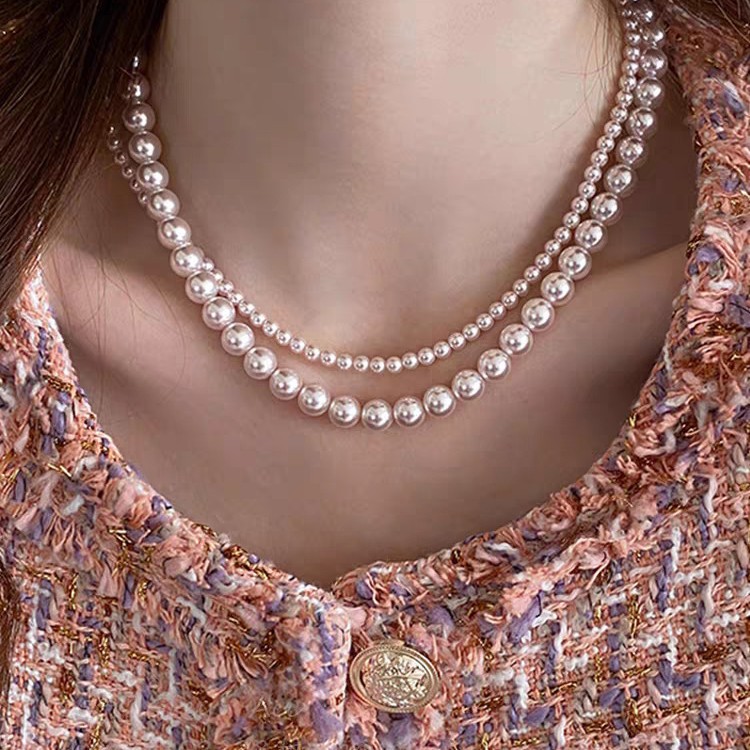
The human fascination with the ocean’s bounty has existed for millennia, yet few treasures evoke as much immediate reverence as the large pearl necklace. In the vast landscape of fine jewelry, pearls occupy a unique space; they are the only gemstones created by a living organism. While small, delicate strands have long been associated with purity and understated grace, the emergence of the oversized pearl strand has redefined the aesthetic boundaries of luxury.
A large pearl necklace is not merely an accessory; it is a declaration of presence. It represents a departure from the “safe” choices of traditional fashion and moves toward a more sculptural, authoritative form of self-expression. To wear pearls of significant diameter is to embrace a sense of weight—both literal and metaphorical—that connects the wearer to the raw power of the sea and the patient craftsmanship of nature.
In recent years, the fashion world has witnessed a dramatic resurgence of these bold gems. No longer confined to the jewelry boxes of aristocrats or the rigid dress codes of the mid-20th century, the large pearl has found a new home on the modern runway and in high-street style. This evolution reflects a broader cultural shift toward “maximalism,” where individuals seek pieces that carry a distinct story and a visible impact.
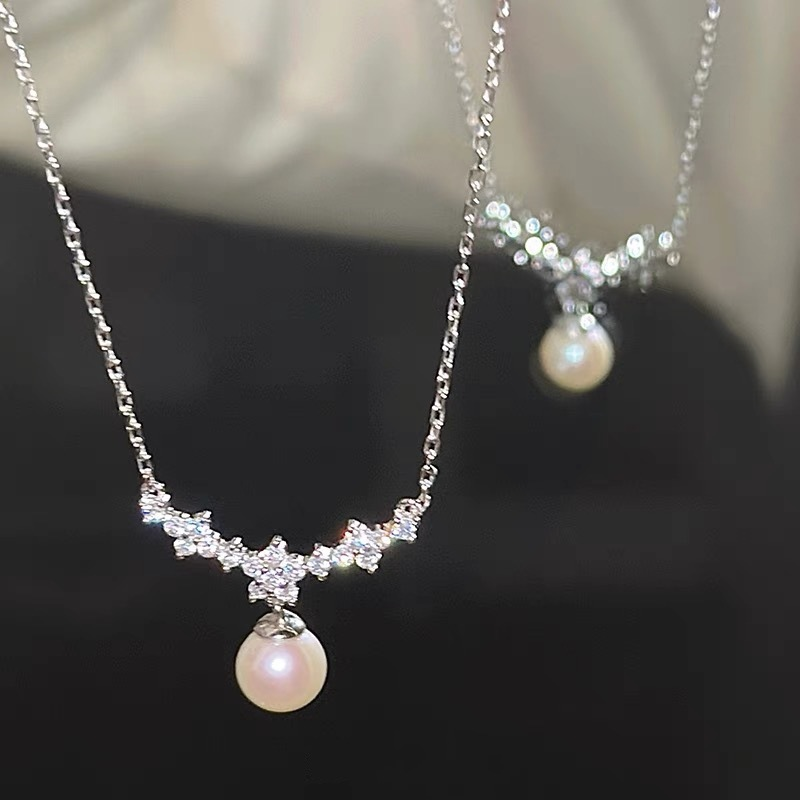
Table of Contents
The Biological Miracle of Size
To understand why a large pearl necklace is so rare and coveted, one must first look at the biology of the mollusk. Most pearls are grown over a period of two to five years. For a pearl to reach a diameter of twelve, fifteen, or even eighteen millimeters, the host oyster or mussel must be exceptionally healthy and provide a stable environment for an extended duration.
The process of nacre deposition is slow and meticulous. The mollusk secretes microscopic layers of aragonite and conchiolin, building the pearl’s body one layer at a time. In the case of large pearls, the animal must continue this process far longer than average. Any fluctuation in water temperature, nutrient levels, or local pollution can interrupt this growth, often resulting in a pearl that is stunted or misshapen.
The rarity of these large specimens is a matter of simple mathematics and biology. Out of thousands of harvested pearls, only a tiny fraction will achieve both the size and the spherical perfection required for a top-tier strand. This scarcity is a primary driver of the prestige associated with the large pearl necklace, making it a true collector’s item in the world of gemstones.
The Titans of Saltwater: South Sea and Tahitian Varieties
When collectors discuss the pinnacle of the large pearl necklace, the South Sea pearl is almost always the centerpiece of the conversation. Grown in the silver-lipped or gold-lipped Pinctada maxima oyster, these pearls are the undisputed giants of the industry. The warm, nutrient-rich waters of Australia, Indonesia, and the Philippines provide the ideal nursery for these massive oysters.
The sheer volume of a South Sea pearl allows its luster to take on a “satiny” quality. Unlike the sharp, metallic shine of smaller Akoya pearls, the South Sea variety glows with a deep, internal warmth. A necklace composed of these pearls feels substantial against the skin, offering a tactile luxury that smaller gems simply cannot provide.
The color palette of South Sea pearls ranges from a cool, icy white to a rich, regal gold. A large pearl necklace in a deep golden hue is often considered the ultimate symbol of prosperity and sophistication. These colors are entirely natural, reflecting the inner lip of the oyster shell that birthed them, ensuring that the beauty of the piece is as authentic as its origin.
The Dark Allure of Tahitian Pearls
For those who seek a more mysterious aesthetic, the Tahitian pearl offers a dramatic alternative to traditional white strands. Cultivated in the black-lipped Pinctada margaritifera oyster in French Polynesia, these pearls are famous for their dark body colors and vibrant overtones. While they are often called “black pearls,” they are rarely a flat black.
A large pearl necklace featuring Tahitian gems might display flashes of peacock green, eggplant purple, or shimmering silver. Because these pearls often reach sizes of ten to fourteen millimeters, the complex interplay of these colors becomes highly visible. This makes them a favorite for individuals who want a statement piece that feels edgy and contemporary rather than purely classical.
The popularity of large Tahitian pearls has also grown due to their versatility. They pair exceptionally well with darker evening wear, but they also look striking against casual denim or neutral tones. The oversized nature of the pearls ensures that their unique “orient”—the rainbow-like shimmer on the surface—is the focal point of any ensemble.
The Freshwater Revolution: Innovation and Accessibility
One of the most significant shifts in the history of the large pearl necklace has been the rise of high-quality freshwater pearls. Historically, freshwater pearls were small, crinkled, and lacked the luster of their saltwater counterparts. However, the development of the “Edison” and “Ming” pearl varieties has completely disrupted this narrative.
By using bead-nucleation techniques similar to those used in saltwater farming, freshwater pearl farmers in China are now producing massive pearls that rival the South Sea variety. These pearls can reach sizes up to twenty millimeters and come in an incredible array of metallic colors, including lavender, peach, and deep bronze.
This technological leap has made the large pearl necklace accessible to a much wider audience. While a top-grade South Sea strand might be priced beyond the reach of the average consumer, a stunning Edison pearl necklace offers a similar visual impact at a fraction of the cost. This democratization of luxury has allowed more people to experience the joy of wearing oversized, high-luster pearls.
The Charm of the Large Baroque Pearl
While perfectly round pearls are the traditional standard for quality, the modern jewelry world has fallen in love with the large baroque pearl. “Baroque” refers to any pearl that is non-spherical and irregular in shape. In large sizes, these irregularities create a sense of organic, sculptural beauty that is entirely unique.
A large pearl necklace made of baroque pearls feels like a collection of tiny, natural sculptures. No two pearls are exactly alike, which appeals to the modern desire for individuality. These strands often have a more relaxed, artistic vibe than round pearls, making them ideal for someone who wants to wear luxury in a way that feels effortless and unpretentious.
The surfaces of large baroque pearls often feature “rings” or “pits” that catch the light in unexpected ways. Rather than seeing these as flaws, many designers use them to highlight the pearl’s journey from the water to the wearer. In a large scale, these textures become part of the narrative of the piece, celebrating the imperfections of the natural world.
The Engineering of Elegance: Craftsmanship and Technicality
A large pearl necklace is a heavy object, and its construction requires specialized skills to ensure both beauty and durability. The weight of twenty or thirty large pearls puts significant strain on the thread. For this reason, professional pearl stringers almost exclusively use multi-ply silk thread, which offers the perfect balance of strength and flexibility.
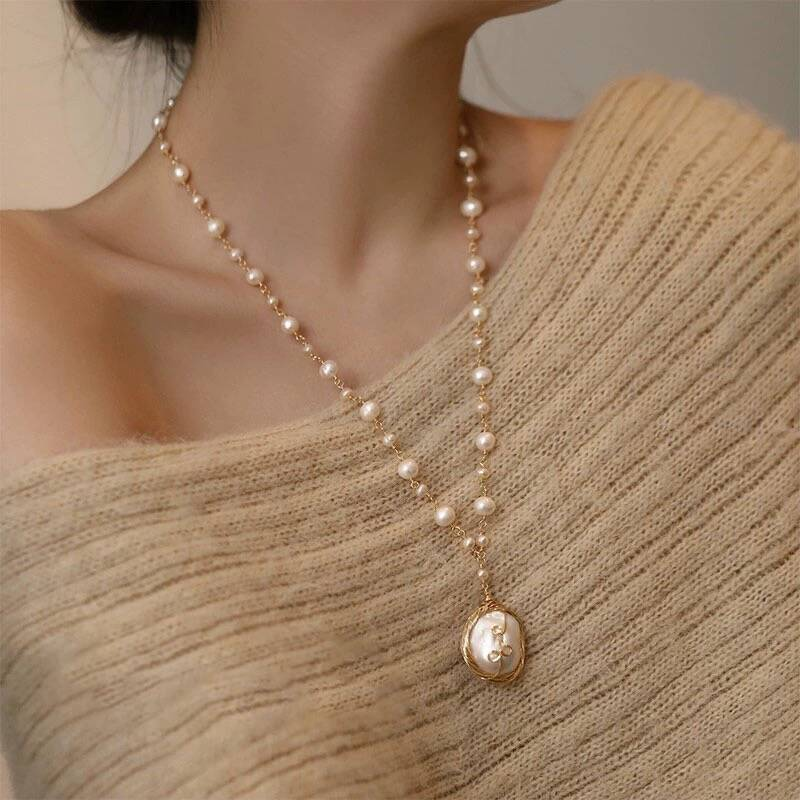
The most critical technical feature of a high-quality strand is the knotting. Each pearl in a large pearl necklace should be separated by a hand-tied knot. This is not just an aesthetic choice; it is a safety measure. If the strand were to break, the knots ensure that only one pearl would fall off. Furthermore, the knots prevent the pearls from rubbing against each other, protecting the delicate nacre from scratching.
The drape of a large pearl necklace is also a result of careful engineering. The stringer must maintain consistent tension throughout the strand so that it lies flat against the chest and follows the contours of the body. If the tension is too tight, the necklace will kink; if it is too loose, the pearls will sag and show gaps of thread.
Clasp Design and Security
The clasp of a large pearl necklace is more than just a fastener; it is a vital component of the design. Because the pearls themselves are so large, the clasp must be proportionally sized to prevent the necklace from feeling unbalanced. Many designers use the clasp as an opportunity for additional luxury, incorporating diamonds, gold filigree, or hidden magnetic closures.
Security is paramount when dealing with the weight of large pearls. A “fish-hook” or “tongue-and-groove” clasp is often preferred for its reliability. These mechanisms provide an extra layer of protection, ensuring that the necklace remains securely in place even during movement. The clasp is the unsung hero of the large pearl necklace, providing the peace of mind that allows the wearer to enjoy their treasure without worry.
The choice of metal for the clasp also matters. 18k gold is the standard for high-end pearls, as it is soft enough to be worked into intricate shapes but strong enough to hold the weight. Platinum is another popular choice, especially for white South Sea or Tahitian pearls, as its cool silver tone complements the pearls’ overtones perfectly.
Styling the Statement: Modern Ways to Wear Large Pearls
The versatility of the large pearl necklace is one of its most surprising attributes. In the past, such a piece might have been reserved for “state dinners” or black-tie galas. Today, the rules of fashion have been rewritten to encourage the mixing of high and low styles. A large pearl strand can be the perfect companion to a casual, everyday look.
One of the most effective ways to style a large pearl necklace is to pair it with a crisp, white oversized shirt and tailored trousers. The pearls add a layer of sophistication to the minimalist outfit, creating a look that is both professional and fashionable. This “power dressing” approach highlights the necklace without making the overall ensemble feel overly formal.
For the adventurous dresser, layering is a key trend. Mixing a large pearl necklace with gold chains of varying thicknesses creates a textured, multidimensional effect. This style moves away from the “prim and proper” image of pearls and pushes them into the realm of modern street style. It is about taking a classic icon and making it feel fresh and personal.
The Red Carpet and Beyond
When we look at red carpet events, the large pearl necklace frequently makes an appearance as a focal point. Celebrities and stylists often use these pieces to create a sense of timeless glamour that transcends current fads. A single strand of fifteen-millimeter pearls can be more impactful than a mountain of diamonds because of the way pearls reflect the light.
The glow of a large pearl is uniquely flattering to the human complexion. While diamonds sparkle and flash, pearls emit a soft, diffused light that seems to illuminate the wearer’s face from within. This “soft focus” effect is why pearls have remained a staple of portrait photography and high-profile public appearances for over a century.
Furthermore, the large pearl necklace is becoming increasingly gender-neutral. Male fashion icons have been seen sporting oversized pearls, proving that the appeal of these gems is not limited by traditional gender roles. This shift has opened up new creative avenues for pearl jewelry, focusing on the raw, material beauty of the gems rather than their historical associations.
Preserving the Radiance: Care and Longevity
Because pearls are organic, they require more attention than mineral gemstones like rubies or sapphires. The nacre of a large pearl necklace is susceptible to damage from acids, chemicals, and even excessive dryness. To maintain their luster for a lifetime, a few simple rules must be followed.
The most famous rule of pearl care is “last on, first off.” This means the necklace should be the very last thing a person puts on after applying makeup, perfume, and hairspray. The chemicals in these products can eat away at the nacre, leaving the pearls looking dull and chalky. When the day is over, the necklace should be the first thing removed and wiped down with a soft, clean cloth.
Storage is another critical factor. Pearls contain a small amount of water, and if they are stored in a dry, airtight environment—like a plastic bag or a safe—they can become brittle and crack. A large pearl necklace should be kept in a soft fabric pouch or a lined jewelry box that allows for a small amount of airflow.
Professional Maintenance
Over time, even the most carefully maintained large pearl necklace will need professional attention. The silk thread used for stringing can stretch or become dirty, which compromises the security and appearance of the strand. Most experts recommend having a frequently worn necklace restrung every one to two years.
A professional jeweler can also check the integrity of the clasp and ensure that the knots remain tight. During the restringing process, the pearls are often gently cleaned to remove any deep-seated oils or debris. This periodic “refresh” ensures that the necklace remains as beautiful and secure as the day it was first purchased, preserving it for future generations to enjoy.
Investing in a large pearl necklace is an investment in an heirloom. By following a consistent care routine, the owner ensures that the piece maintains its financial and emotional value. There is something profoundly special about passing down a strand of pearls that has retained its luster through decades of wear, carrying the memories of its previous owners within its iridescent layers.
The Ethical Landscape of Pearl Cultivation
In an era where consumers are increasingly concerned about the origin of their luxury goods, the large pearl necklace stands out as a relatively ethical choice. Unlike the mining of many gemstones, which can be destructive to the earth, pearl farming is inherently linked to the health of the marine environment.
Oysters and mussels are filter feeders, meaning they clean the water around them as they feed on plankton. To produce high-quality, large pearls, farmers must ensure that the water is pristine and free from pollutants. This gives pearl farmers a direct economic incentive to protect local ecosystems and advocate for clean water policies.
Many of the world’s leading pearl producers are involved in conservation efforts, such as coral reef restoration and the protection of local marine life. When someone purchases a large pearl necklace from a reputable source, they are often supporting an industry that works in harmony with nature rather than against it. This makes the pearl a “green” gemstone for the modern age.
The Future of the Large Pearl Necklace
As we look to the future, the large pearl necklace continues to evolve. Designers are experimenting with new ways to showcase these gems, such as mounting them in architectural gold settings or combining them with unconventional materials like leather or rubber. The definition of what a pearl necklace “should” look like is expanding every day.
However, despite these innovations, the classic strand of large, round pearls will never go out of style. Its appeal is rooted in a fundamental human attraction to symmetry, light, and the wonders of the natural world. The large pearl necklace remains a symbol of the ocean’s mystery and the enduring power of classic design.
In a world that often feels fast-paced and disposable, the slow growth and lasting beauty of a large pearl serve as a reminder of the value of patience. Whether worn as a personal talisman, a professional statement, or a family heirloom, the large pearl necklace is a treasure that speaks a universal language of elegance and grace.
Conclusion
The large pearl necklace is a masterclass in the balance between nature’s raw output and human artistry. From the biological endurance required to grow a massive gem to the technical precision needed to string a heavy strand, every aspect of these necklaces is a testament to quality. By choosing a large pearl necklace, one is not just buying jewelry; they are acquiring a piece of the earth’s history and a timeless icon of fashion. Whether it is the satiny white of a South Sea strand, the colorful depth of a Tahitian piece, or the metallic brilliance of a modern freshwater necklace, the impact of large pearls is undeniable. They remain the ultimate statement of confidence, a celebration of the sea, and a legacy of beauty that will continue to captivate for generations to come.
How to purchase:Online B2B sourcing platform, China purchase, Chinese suppliers – LooperBuy
Frequently Asked Questions
1. How do I know if the pearls in my large pearl necklace are real?
You can perform the “tooth test” by gently rubbing the pearl against the edge of your front tooth. A real pearl will feel slightly gritty or sandy due to the crystalline structure of the nacre, whereas a fake pearl will feel smooth and slippery like plastic or glass.
2. Is it normal for a large pearl necklace to be heavy?
Yes, a necklace made of large pearls (10mm and above) has significant weight because pearls are dense organic materials. This weight is actually a sign of quality, indicating that the pearls have thick nacre and are not hollow or made of lightweight synthetic materials.
3. Can I wear my large pearl necklace every day?
While pearls are durable enough for regular wear, they are softer than most gemstones. If you wear them daily, you must be diligent about cleaning them and avoiding contact with chemicals. For daily wear, a large baroque pearl necklace is often a practical choice as it hides surface wear better than a perfectly round strand.
4. What is the most expensive type of large pearl necklace?
The white or golden South Sea pearl necklace is generally the most expensive. This is due to the rarity of the Pinctada maxima oyster, the long growth period required to reach large sizes, and the high demand for their specific satiny luster and impressive dimensions.
5. Why do some large pearls have rings or grooves on them?
These are called “circles” and are common in large pearls, especially Tahitian and South Sea varieties. They occur during the growth process inside the oyster and are considered a natural characteristic. In a large pearl necklace, these features can add a unique, organic texture that many collectors find desirable.
HOT TAG: Large Pearl Necklace, South Sea Luxury, Tahitian Black Pearls, Edison Freshwater Pearls, Statement Jewelry Trends, Fine Jewelry Care, Baroque Pearl Style, Nacre Luster, Pearl Stringing Techniques, Ethical Gemstones, Marine Conservation, High-End Fashion Accessories, Heirloom Jewelry, Anniversary Gift Ideas, Gold-Lipped Oysters, Pearl Grading Standards, Modern Jewelry Styling, Luxury Fashion Statement, Organic Jewelry, Jewelry Maintenance Tips, Red Carpet Jewelry, Timeless Elegance, Sustainable Luxury, Gemstone Quality.