Apparel sourcing company vs local manufacturers: which model scales better for global B2B sellers? Compare capacity, cost, quality, and logistics, and see how Chinese sourcing platforms like Looperbuy enable low‑risk apparel growth with dropshipping and integrated cross‑border services.
Apparel sourcing companies are usually more scalable than relying only on local manufacturers, especially when you want to test lots of styles, sell cross‑border, and avoid inventory risk—but the best choice depends on your growth stage, product complexity, and supply chain control needs. For global B2B sellers working with Chinese suppliers, a hybrid model (platform + sourcing company + a few strategic local manufacturers) often delivers the strongest long‑term scalability. [global.lianlianpay]
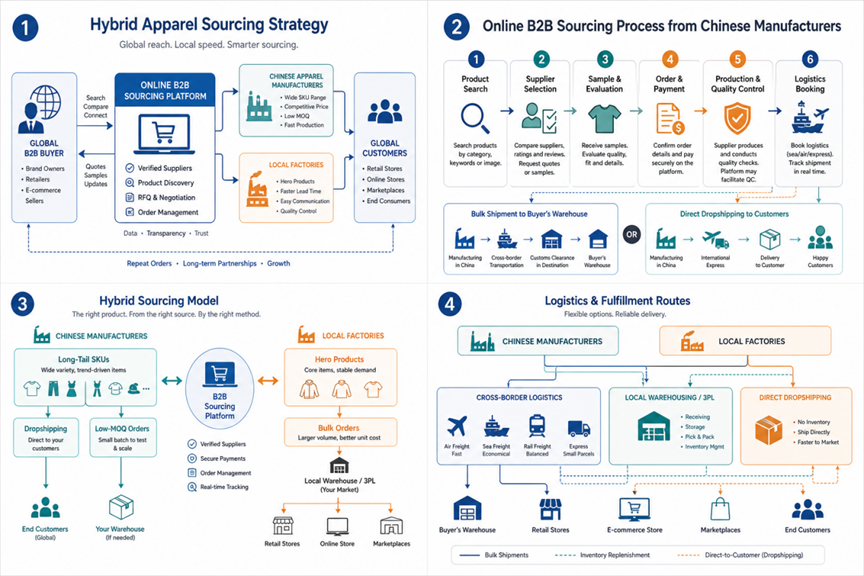
Table of Contents
What “Scalable” Really Means in Apparel Sourcing
In apparel, scalability is not just “producing more units”; it’s the ability to grow sales without linearly increasing cost, risk, or operational complexity. A scalable sourcing setup lets you: [shopify]
– Launch new SKUs quickly without massive upfront inventory. [juejin]
– Switch or add suppliers without disrupting cash flow. [bg.w10]
– Extend to new markets with minimal logistics, compliance, or payment friction. [global.lianlianpay]
From my experience working with B2B apparel brands and cross‑border sellers, the most scalable supply chains share three traits: supplier redundancy, flexible MOQs, and integrated logistics/payment infrastructure. [bg.w10]
Apparel Sourcing Company: How the Model Works
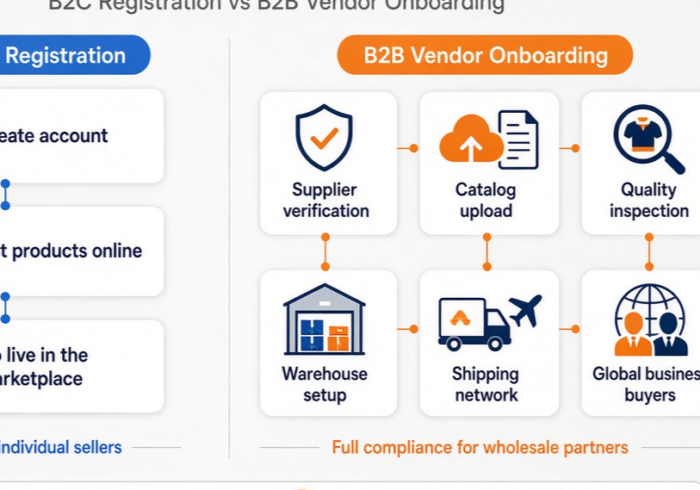
An apparel sourcing company (or sourcing agent/platform) acts as an intermediary between global buyers and a curated network of manufacturers, usually across regions like China and Southeast Asia. Many are now built as online B2B platforms that integrate product discovery, quality control, payments, and logistics—exactly the direction platforms like Looperbuy are taking for cross‑border procurement and dropshipping. [zjxw.hqcswzx]
From a UX and operations perspective, a mature sourcing company or platform typically offers:
– Supplier discovery and verification in one interface. [juejin]
– Consolidated payment, invoicing, and FX management. [zjxw.hqcswzx]
– Logistics, warehousing, and sometimes dropshipping to end customers. [shopify]
These layers reduce the operational load for small and mid‑size apparel brands who don’t have in‑house sourcing teams or local buying offices in China. [zjxw.hqcswzx]
Local Manufacturers: What You Actually Get
By local manufacturers, we’re usually talking about:
– Factories in your own country/region, or
– A small cluster of long‑term partner factories you work with directly, without intermediaries.
Local manufacturers shine when you need tight product control, short lead times for replenishments, and deep collaboration on complex designs. You often gain: [cloud.tencent]
– Direct communication with production, pattern making, and QA teams. [cloud.tencent]
– Easier visits, audits, and sample iterations, especially for higher‑end or technical garments. [amz123]
However, local capacity tends to be limited; when orders spike, their ability to add shifts, lines, or new fabric sources can be constrained and costly. [bg.w10]
Scalability Face‑Off: Sourcing Company vs Local Manufacturer
Key Scalability Dimensions
From a pure scalability lens, sourcing companies usually win on capacity, SKU velocity, and global reach, while local manufacturers win on product control and proximity. [cloud.tencent]
Cost, MOQ, and Margin at Scale
As order volumes grow, unit economics can improve dramatically—but in different ways for each model. [shopify]
With Apparel Sourcing Companies
– MOQs are typically lower, because they aggregate demand across multiple buyers and factories. [juejin]
– You can scale revenue by adding SKUs, regions, and channels without committing to huge production runs upfront. [bg.w10]
– Logistics and payments are optimized at platform level, reducing “hidden” costs (bank fees, documentary errors, partial shipments). [global.lianlianpay]
This is ideal for dropshipping or “test‑before‑stock” strategies where you validate winners before moving to bulk orders. [zjxw.hqcswzx]
With Local Manufacturers
– Per‑unit cost can be lower at very high volumes once you commit to large, predictable orders. [cloud.tencent]
– However, inventory, warehousing, and obsolescence risk sit on your balance sheet, which can kill scalability for fashion categories with short life cycles. [shopify]
– You also absorb more operational overhead—vendor management, logistics, and quality control—per incremental factory you add. [cloud.tencent]
For fast‑moving fashion and cross‑border B2B, that extra operational weight often offsets unit cost advantages.
Quality Control and Brand Consistency
Apparel buyers fear one thing most at scale: quality drift—the gradual decline in fabric, stitching, or sizing as orders get bigger. [shopify]
Sourcing Company Approach
– Many sourcing companies maintain standardized QA checklists, approved labs, and independent inspectors across their supplier network. [juejin]
– Platforms focused on China sourcing often bundle pre‑shipment inspections, photo/video checks, and defect reporting directly into the interface. [global.lianlianpay]
This centralization helps you maintain consistent quality while switching between factories or scaling SKUs across different regions. [bg.w10]
Local Manufacturer Approach
– With a strong local partner, you can embed your brand SOPs, fit standards, and test protocols directly into their production workflow. [cloud.tencent]
– You can physically audit production more often, which is valuable for premium or technical garments (e.g., performance wear, workwear, safety garments). [amz123]
However, when you add more local factories to scale, each one becomes its own QA system, increasing complexity and inconsistency risk. [bg.w10]
Logistics, Lead Times, and Cross‑Border Complexity
For global B2B sellers, lead time and logistics integration are as important as production capacity. [shopify]
Logistics with Sourcing Companies
Modern sourcing platforms focusing on Chinese supply often provide:
– Integrated cross‑border logistics: freight booking, customs documentation, last‑mile delivery options. [global.lianlianpay]
– Multi‑warehouse or direct‑to‑customer shipping (dropshipping) to reduce local storage needs. [zjxw.hqcswzx]
– Visibility dashboards for shipments, exceptions, and landed cost estimation. [bg.w10]
This kind of infrastructure allows you to scale into new markets without building your own logistics stack in each country. [shopify]
Logistics with Local Manufacturers
– Domestic manufacturers can offer shorter transport times and fewer customs issues for local markets. [cloud.tencent]
– But for cross‑border sales, you often must bolt on separate freight forwarders, 3PLs, and customs brokers, each adding cost and coordination overhead. [bg.w10]
If your goal is to scale internationally from day one, leveraging a sourcing platform that already solved payments and logistics from China to your target countries is usually more efficient. [global.lianlianpay]
Risk Management and Supply Chain Resilience
Scalability without resilience is fragile; a single factory shutdown or port disruption can undo months of growth. [shopify]
– Sourcing companies can reallocate production across their network if a particular factory or region becomes constrained. [juejin]
– They also spread risk across different cities or provinces in China, and sometimes across multiple countries. [bg.w10]
– In contrast, a local‑only strategy tends to be geographically concentrated, making you vulnerable to local labor, policy, or energy disruptions. [cloud.tencent]
From a risk‑adjusted growth standpoint, multi‑factory sourcing through a platform is usually more scalable than a small cluster of local manufacturers.
Expert Perspective: When Each Model Wins
Drawing from typical B2B apparel clients, here’s how I’d generalize the decision:
– Choose an apparel sourcing company (plus B2B platform) if you:
– Sell cross‑border or plan to. [zjxw.hqcswzx]
– Need to test many SKUs with low upfront inventory. [juejin]
– Want integrated logistics, payments, and QA without building your own team. [global.lianlianpay]
– Double down on local manufacturers if you:
– Operate mainly in one region with stable, predictable demand. [cloud.tencent]
– Focus on highly technical or premium garments with intense fit/finish requirements. [amz123]
– Already have strong in‑house sourcing and QA capabilities. [cloud.tencent]
In reality, many fast‑growing brands start with platform‑based sourcing from China (for breadth and speed) and then add 1–2 strategic local factories for hero products once volumes justify deeper integration. [juejin]
Practical Steps to Build a More Scalable Setup
1. Map Your Current Apparel Sourcing Footprint
– List your SKUs, volumes, and factories (local and overseas).
– Identify SKUs with frequent stock‑outs or high dead‑stock risk.
– Flag SKUs that could move to a dropship or low‑MOQ model via a sourcing platform to reduce capital lock‑in. [zjxw.hqcswzx]
2. Layer a Global Apparel Sourcing Platform on Top
For brands sourcing from China, a platform that offers product sourcing, payments, and logistics in one place dramatically lowers the barrier to scale. Look for: [global.lianlianpay]
– Verified apparel factories, with transparent MOQs and lead times. [juejin]
– Options for consolidated shipping, direct‑to‑warehouse, or direct‑to‑customer (dropshipping). [zjxw.hqcswzx]
– Clear fee structure and support for major currencies and payment methods. [global.lianlianpay]
This is precisely the gap solutions like Looperbuy are addressing: enabling overseas B2B merchants to source from China without owning inventory, warehouses, or complex logistics contracts. [zjxw.hqcswzx]
3. Reserve Local Manufacturers for Strategic Products
Instead of “either‑or,” use local manufacturers where they’re uniquely valuable:
– High‑margin hero products that define your brand.
– Products requiring tight IP control or unique proprietary patterns.
– Time‑sensitive capsule drops for local events and campaigns.
Everything else—especially long‑tail SKUs and trend‑driven categories—can be handled through a scalable sourcing platform with Chinese manufacturers. [juejin]
Where Looperbuy Fits in This Decision
For overseas B2B sellers who want Chinese apparel supply without inventory and logistics headaches, a platform like Looperbuy acts as the scalable backbone of your sourcing strategy. It essentially combines: [global.lianlianpay]
– The breadth and flexibility of an apparel sourcing company network across Chinese factories. [bg.w10]
– The operational simplicity of a one‑stop solution for sourcing, payment, and logistics, including dropshipping. [zjxw.hqcswzx]
This means you can:
– Test new apparel categories with low risk.
– Expand into multiple markets without building local warehouses.
– Keep your team focused on branding, marketing, and customer experience, not supply chain firefighting.
If your goal is scalable, cross‑border apparel growth with controlled risk, start by building your core sourcing around an apparel sourcing company or B2B platform connected to Chinese manufacturers, and then selectively layer local manufacturers where they add unique value.
Evaluate how many of your current SKUs could shift to a platform‑based sourcing and dropship model and run a 90‑day test. If you’re already sourcing from China or want to start, explore how a solution like Looperbuy can become your central sourcing and fulfillment hub so you can scale without adding warehouses, staff, or complex logistics contracts.
FAQs
1. Is an apparel sourcing company always better than local manufacturers?
No. Sourcing companies are usually more scalable for cross‑border growth and long‑tail SKUs, while local manufacturers can be better for premium, technical, or highly localized collections. [cloud.tencent]
2. Can I use both an apparel sourcing company and local manufacturers at the same time?
Yes, and this hybrid approach is often the most scalable: use the sourcing company or platform for breadth and speed, and local manufacturers for a few high‑impact hero products. [bg.w10]
3. How do I control quality when sourcing from multiple Chinese factories?
Work with a platform that standardizes QA, offers pre‑shipment inspections, and provides transparent defect reporting and supplier performance data. [global.lianlianpay]
4. Is dropshipping from Chinese suppliers reliable for B2B apparel?
With the right platform and logistics partners, dropshipping can reliably support B2B buyers by reducing inventory risk and speeding up assortment testing, especially for non‑customized apparel. [zjxw.hqcswzx]
5. How does a platform like Looperbuy reduce my sourcing risk?
By aggregating verified suppliers, centralizing payments, and managing cross‑border logistics, platforms like Looperbuy reduce the risk of factory issues, hidden costs, and logistics failures as you scale. [juejin]
References
1. LianLian Global – Looperbuy product overview (cross‑border sourcing, payment, logistics). [global.lianlianpay]
2. Looperbuy platform case and pain‑point analysis for overseas buyers. [zjxw.hqcswzx]
3. Supplier selection and factory comparison guidance for export e‑commerce sellers. [cloud.tencent]
4. 2026 cross‑border procurement platform evaluation and scalability insights. [bg.w10]
5. Cross‑border sourcing systems and how they reduce cost and improve efficiency for exporters. [juejin]
6. Shopify – Cross‑border e‑commerce supply chain management overview. [shopify]