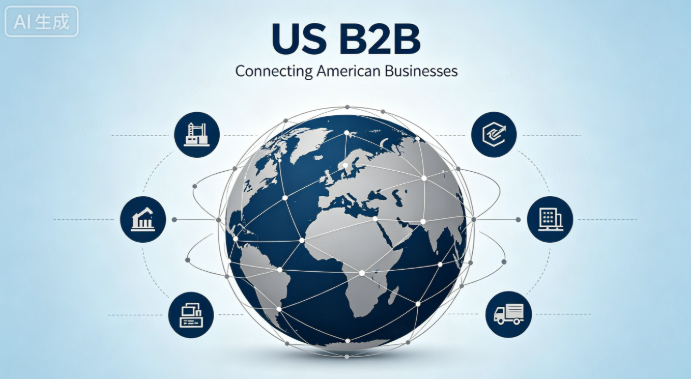
Learn what B2B ecommerce is, how it differs from B2C, and why global sellers use digital sourcing and fulfillment models to reduce inventory risk. Explore B2B business models, buyer expectations, sourcing checklists, and practical ways to simplify China product procurement and shipping.
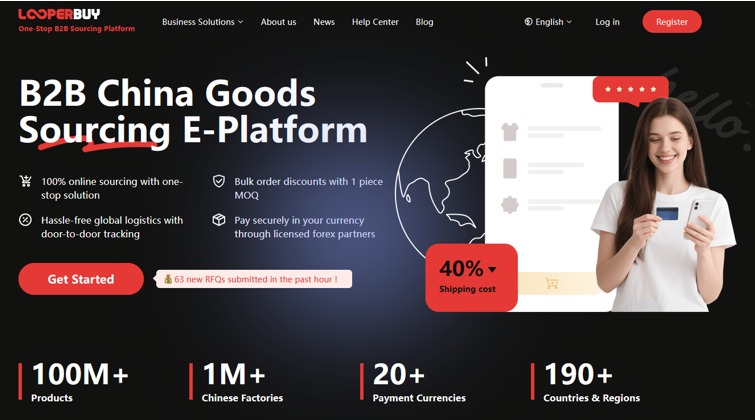
B2B ecommerce is the online sale of products or services between businesses rather than directly to individual consumers. For global merchants, wholesalers, retailers, and online sellers, it can turn sourcing, purchasing, order fulfillment, and repeat buying into a more transparent, scalable, and cost-efficient workflow.
At Looperbuy, we see B2B ecommerce as more than an online catalog or checkout page. It is a connected operating model that helps sellers source products from China, validate suppliers, consolidate purchases, manage fulfillment, and ship orders internationally—without needing to hold large amounts of inventory or operate their own warehouse.
Modern buyers expect the speed and convenience of digital purchasing, but they still need the commercial controls that make business procurement work: product specifications, request-for-quotation processes, account-based pricing, order tracking, payment flexibility, and reliable support. In McKinsey’s 2026 B2B survey, buyers reported using an average of ten channels during a purchasing journey, making consistent information and smooth movement between self-service and expert support increasingly important.
> Key takeaway: B2B ecommerce succeeds when it reduces operational friction for both the buyer and seller—not merely when it moves transactions online.
Table of Contents
What Does B2B Ecommerce Mean?
B2B stands for business-to-business. In a B2B ecommerce transaction, one company sells products, raw materials, services, software, or equipment to another company.
For example:
– A retailer orders private-label kitchen accessories from a manufacturer.
– A distributor buys bulk electronics from a Chinese supplier.
– An Amazon seller sources inventory from multiple factories.
– A business purchases packaging materials for its own products.
– A restaurant group orders recurring supplies from a wholesaler.
– An online seller uses a sourcing and dropshipping agent to procure and ship products directly to customers.
The essential difference is the customer. In B2C ecommerce, a business sells to an end consumer. In B2B ecommerce, the buyer is purchasing for resale, operations, production, procurement, or commercial use.
A typical B2B transaction often involves higher order values, multiple stakeholders, negotiated pricing, technical documentation, delivery requirements, and longer-term supplier relationships. That complexity is why B2B ecommerce needs more than a simple online shopping-cart experience.
How B2B Ecommerce Works in Practice
A B2B ecommerce journey may begin with a buyer searching for a product, but the process usually extends far beyond product discovery.
For global sourcing businesses, the workflow commonly looks like this:
1. Product discovery and supplier evaluation
The buyer identifies potential products, manufacturers, trading companies, or sourcing partners. They compare product features, minimum order quantities, pricing, lead times, customization options, certifications, and supplier responsiveness.
2. Quote request and negotiation
Buyers may request a quotation instead of checking out immediately. The final price can depend on volume, packaging, private labeling, freight method, destination country, and payment terms.
3. Product verification and order confirmation
Before purchasing, a buyer may confirm samples, dimensions, materials, product photos, color options, barcodes, compliance documents, or packaging requirements.
4. Procurement and payment
Once terms are accepted, the buyer places an order and completes payment. Depending on the business model, payment can be handled through cards, bank transfer, account credit, invoicing, or other approved methods.
5. Quality control, consolidation, and warehousing
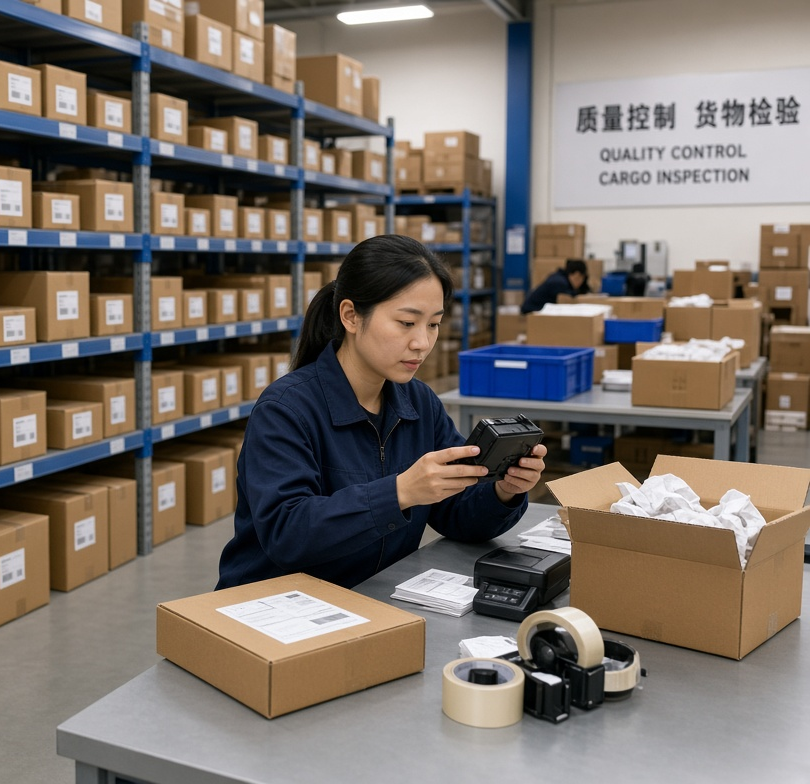
Products may be checked, labeled, repacked, combined with goods from other suppliers, or temporarily stored before fulfillment.
6. Shipping and delivery
Goods are shipped through an appropriate logistics channel based on weight, dimensions, delivery speed, destination, customs requirements, and order value.
7. Reordering and relationship management
If the product and service meet expectations, the buyer can reorder, expand the product range, negotiate better volume terms, or create a long-term purchasing arrangement.
This process explains why reliable B2B ecommerce is built around visibility. Buyers need to know what they are ordering, what it costs, where it is, and what will happen next.
B2B Ecommerce vs. B2C Ecommerce
B2B and B2C ecommerce use many of the same digital tools, but their purchasing logic is different. A consumer may buy a product in seconds. A business buyer may need to compare technical specifications, receive internal approval, request a quote, confirm shipping terms, and reconcile invoices.
| Area | B2B Ecommerce | B2C Ecommerce |
| Buyer | Business, reseller, distributor, organization | Individual consumer |
| Order size | Often bulk, repeat, or high-value orders | Usually smaller, single-unit orders |
| Decision process | May involve procurement, finance, managers, or technical teams | Usually one buyer |
| Pricing | Negotiated, tiered, account-specific, or volume-based | Mostly fixed public pricing |
| Product information | Specifications, certificates, MOQ, dimensions, packaging, compatibility | Consumer-focused features, reviews, and lifestyle benefits |
| Sales cycle | Often longer and more research-intensive | Usually shorter |
| Payment options | Purchase orders, invoices, bank transfer, trade terms, account credit | Cards, wallets, buy-now-pay-later |
| Fulfillment needs | Consolidation, bulk freight, customs, dropshipping, multi-destination shipping | Individual parcel delivery |
| Relationship | Ongoing supplier relationship and repeat purchasing | Frequently transactional |
The strongest B2B ecommerce experiences borrow the clarity of consumer shopping while preserving the controls business buyers require.
For instance, a seller sourcing from China should be able to see product details, order status, shipping updates, estimated costs, and support options in one place. However, they should also have access to commercial services such as quote assistance, supplier communication, product inspection, customized packaging, and consolidated shipping.
Common B2B Ecommerce Business Models
B2B ecommerce is not a single business model. It includes several structures, each serving different supply-chain roles.
Manufacturer to Wholesaler or Retailer
A factory sells directly to a wholesaler, distributor, retailer, or ecommerce brand. This model can reduce intermediaries, but the buyer must still manage supplier communication, quality checks, international payments, inventory planning, and logistics.
Example: A home-goods manufacturer sells reusable water bottles in bulk to an online retailer.
Wholesaler to Reseller
A wholesaler purchases products in volume and sells them to smaller retailers, marketplace sellers, or local distributors. The wholesaler creates value by carrying inventory, offering broader assortments, and simplifying access for smaller buyers.
Example: A distributor imports phone accessories and sells mixed cartons to independent ecommerce sellers.
Marketplace Model
A marketplace connects multiple sellers with multiple business buyers. It can improve product discovery and selection, but quality consistency, supplier verification, communication speed, and fulfillment coordination vary by platform.
Example: A retailer searches a marketplace for manufacturers offering custom packaging, pet products, or kitchenware.
Procurement Portal
A procurement portal helps businesses source, compare, request quotes, create approvals, and manage purchasing records. It is particularly useful for organizations with recurring supply needs or multiple buyers.
Example: A restaurant group uses a procurement portal to order packaging, disposable supplies, and kitchen accessories from approved vendors.
Dropshipping and Sourcing Agent Model
In this model, the seller does not necessarily purchase or store inventory in advance. Instead, a sourcing partner helps procure products, receive goods, inspect or consolidate them, and ship orders to customers when orders are placed.
This is especially valuable for cross-border ecommerce sellers testing new products, managing broad catalogs, or reducing inventory risk. A service such as Looperbuy can help connect sourcing and fulfillment into one workflow, allowing sellers to focus more on product selection, storefront operations, and customer acquisition.
Why Global Sellers Use B2B Ecommerce
For international sellers, B2B ecommerce can reduce both commercial risk and operating complexity.
Lower Inventory Exposure
Buying large volumes before validating demand can create expensive problems: unsold stock, storage fees, cash-flow pressure, and markdowns. A more flexible sourcing and fulfillment process lets sellers test products with smaller commitments where commercially feasible.
This does not eliminate risk. It changes the risk profile. Instead of placing capital into large speculative inventory orders, sellers can prioritize supplier reliability, product-market fit, order accuracy, and shipping performance.
Access to Manufacturing Capacity
China remains central to global product sourcing because of its mature manufacturing networks across categories such as electronics, home goods, textiles, beauty accessories, packaging, tools, toys, and consumer products.
However, access alone is not enough. A useful sourcing workflow should help a seller compare options, clarify specifications, confirm packaging requirements, manage samples, and communicate accurately with suppliers.
Better Operational Control
The business case for B2B ecommerce is often operational, not just transactional. A well-designed system can bring product information, supplier communication, payments, warehousing, shipping, and fulfillment status into a more manageable process.
Common B2B business functions include customer-specific pricing, quotation and inquiry functions, account management, catalog control, inventory and order management, rapid replenishment, and integration with business systems.
Easier International Fulfillment
Global fulfillment can involve multiple suppliers, different warehouse arrival dates, varied package sizes, customs documentation, and destination-specific shipping choices. Consolidation can be particularly useful when products are purchased from different sellers but need to be shipped together.
For a growing ecommerce business, the practical goal is simple: reduce unnecessary handling, avoid avoidable shipping costs, and make delivery expectations clear before the customer pays.
The B2B Ecommerce Features Buyers Expect
A B2B ecommerce platform should make complex transactions easier, not hide complexity behind attractive design.
The following features have the strongest impact on buyer confidence:
– Detailed product data, including materials, dimensions, variations, packing details, and use cases.
– Transparent pricing, including unit price, MOQ, volume tiers, estimated fulfillment fees, and shipping variables where possible.
– Request-for-quote support for customized, bulk, or non-standard orders.
– Supplier communication assistance to clarify technical or commercial details.
– Order tracking from purchasing through warehouse receipt and shipment.
– Flexible fulfillment, including consolidation, labeling, repacking, and dropshipping.
– Responsive human support when an automated workflow cannot resolve an exception.
– Secure payment processes and clear order records.
– Reordering tools for repeat products and stable supplier relationships.
– Mobile-friendly access for buyers who need to review orders, approve quotes, or check shipment status outside the office.
The current buyer journey is not purely digital or purely human. McKinsey reports that buyers use multiple channels and increasingly expect seamless transitions among self-service tools, remote interactions, and in-person support.
A Practical B2B Sourcing Checklist
Before committing to a supplier, product, or fulfillment plan, ask the questions that protect margin and customer experience.
Product and Supplier Questions
– What are the exact product specifications and materials?
– Is the supplier a manufacturer, trading company, or wholesaler?
– What is the minimum order quantity?
– Can the supplier provide samples or detailed photos?
– What are the production and handling lead times?
– Are there product certifications or destination-market compliance requirements?
– Can the supplier support custom logos, labels, inserts, or packaging?
– What happens if the delivered product differs from the agreed specification?
Cost Questions
– What is the unit cost at each volume tier?
– Are there setup, sample, packaging, inspection, or handling fees?
– What will domestic shipping to the warehouse cost?
– What will international shipping likely cost by available methods?
– What import duties, taxes, or customs costs could apply?
– What is the total landed cost per unit?
A simple landed-cost calculation can help prevent misleading product decisions:
Landed Cost per Unit=(Product Cost + Domestic Freight + Inspection + Packaging + International Freight + Duties)÷Total Sellable Units
A product with a low factory price can still become unprofitable if it is bulky, fragile, difficult to classify for customs, or expensive to ship.
Fulfillment Questions
– Can multiple supplier orders be consolidated?
– Can products be inspected before international shipment?
– Are labels, inserts, barcodes, or custom packaging available?
– Which shipping method fits the product’s weight, value, urgency, and destination?
– Will tracking be provided?
– What is the process for lost, damaged, or delayed shipments?
These questions are particularly important for sellers using a low-inventory or dropshipping model. Your customer sees one brand—yours—even when several suppliers, warehouses, and carriers are involved behind the scenes.
How Looperbuy Supports a Leaner Model
For B2B sellers sourcing from China, Looperbuy can serve as a bridge between product discovery and cross-border fulfillment. Rather than requiring merchants to manage every supplier, warehouse, payment, and international shipping task independently, an integrated sourcing service can centralize key parts of the workflow.
A practical Looperbuy use case may include:
1. A seller identifies products with potential demand in their market.
2. The seller submits product links or sourcing requirements.
3. The sourcing team helps confirm pricing, availability, and relevant product details.
4. Products are purchased and received at a warehouse.
5. Orders can be checked, consolidated, repacked, labeled, or prepared for delivery.
6. The seller selects a suitable international shipping option.
7. Products are shipped to the seller, a fulfillment location, or directly to end customers depending on the operating model.
The advantage is not simply convenience. It is the ability to operate with more flexibility. Sellers can test products, expand assortments, reduce fragmented purchasing work, and potentially avoid committing to excessive inventory before demand is proven.
Build a More Resilient B2B Supply Chain
B2B ecommerce gives global sellers a way to combine sourcing, procurement, fulfillment, and repeat ordering into a more efficient commercial system. The best results come from balancing digital speed with disciplined supplier evaluation, clear product requirements, transparent cost calculation, and dependable operational support.
For sellers who want to source products from China without taking on unnecessary inventory, warehouse, payment, and logistics burdens, Looperbuy can help create a more flexible path from supplier to customer.
Ready to simplify your sourcing and fulfillment workflow? Explore how Looperbuy can help you source products, consolidate orders, manage warehouse services, and ship internationally with greater confidence.
Frequently Asked Questions
1. What is B2B ecommerce in simple terms?
B2B ecommerce is the online buying and selling of products or services between businesses. Examples include a retailer buying inventory from a wholesaler, a brand ordering packaging from a supplier, or an ecommerce seller sourcing products from a factory.
2. What is the difference between B2B ecommerce and B2C ecommerce?
B2B ecommerce serves businesses, while B2C ecommerce serves individual consumers. B2B transactions often involve bulk orders, negotiated prices, repeat purchasing, technical product details, invoices, and longer decision cycles.
3. Can small online sellers use B2B sourcing services?
Yes. Small ecommerce sellers can use sourcing services to identify products, purchase from suppliers, consolidate goods, and arrange international shipping. This can be useful for testing products before investing in large inventory quantities.
4. How does dropshipping work in B2B ecommerce?
A seller lists products online without holding all inventory themselves. When an order is placed, a sourcing or fulfillment partner procures, prepares, and ships the product to the customer. The seller remains responsible for product selection, storefront operations, pricing, and customer communication.
5. What should I check before buying products from China?
Check supplier credibility, product specifications, samples, MOQ, production time, packaging options, quality-control process, shipping cost, customs requirements, and the total landed cost per unit. Do not make decisions based only on factory price.
6. Is B2B ecommerce only for large companies?
No. Large enterprises use B2B ecommerce for complex procurement and account management, but small and midsize businesses also use it to source products, find suppliers, manage wholesale purchasing, and streamline repeat orders.
7. Why is order consolidation important for international sellers?
Consolidation combines products from multiple suppliers into fewer shipments. This can reduce repeated handling, simplify shipping management, and potentially improve freight efficiency, especially when small orders arrive at different times.
References
1. Virto Commerce. “[B2B Digital Commerce: Your One-Stop Shop for Knowledge].”
2. McKinsey & Company. “[The Surprising Economics of B2B Growth: The New Survival Threshold and What It Takes to Thrive].”
3. McKinsey & Company. “[Winning B2B Customers in Technology and Telecommunications].”
4. U.S. Census Bureau. “[Quarterly Retail E-Commerce Sales Report].”
5. McKinsey & Company. “[The Future of B2B Sales: How Growth Champions Rewire Their Playbooks With AI].”