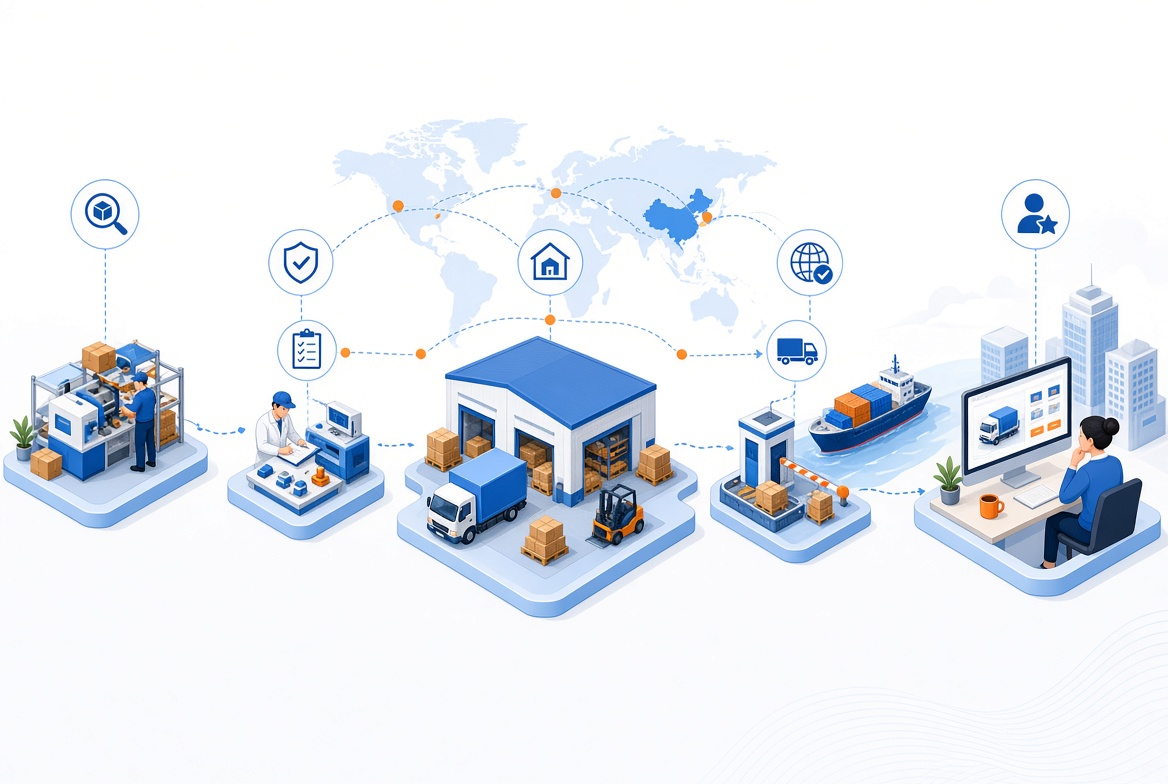
Learn how a stronger B2B post-purchase experience can turn China sourcing and dropshipping orders into lasting buyer relationships. Discover practical ways to improve order confirmation, quality visibility, shipment tracking, exception handling, customer support, and fast reordering for global business growth.
For global B2B sellers, a purchase is not the finish line. It is the moment when a buyer starts judging whether your sourcing and fulfillment process is reliable enough to trust again.
When you source products from China, sell across borders, or use a dropshipping model, the period after payment can feel uncertain. Buyers may worry about supplier accuracy, production progress, shipping costs, customs delays, tracking updates, and product quality. A strong B2B post-purchase experience turns that uncertainty into confidence.
At Looperbuy, the goal is not simply to help merchants source products from China. It is to help them run a leaner business by reducing the burden of inventory holding, warehousing, payment coordination, and logistics management. That makes the post-purchase journey especially important: every update, proof point, and exception-handling action affects whether a buyer places the next order.
This guide explains how B2B sellers can create a more transparent, useful, and repeatable post-purchase experience—from order confirmation through delivery, feedback, and reordering.
Table of Contents
What Is a B2B Post-Purchase Experience?
The B2B post-purchase experience includes every interaction after a buyer confirms an order. It begins with payment confirmation and continues through sourcing, production, quality control, packing, shipment, delivery, support, returns, and the next purchase.
In B2C, post-purchase satisfaction may depend on personal excitement or convenience. In B2B, it is usually tied to operational outcomes: Can the buyer meet customer demand? Can they forecast cash flow? Can they trust the delivery promise?
For a merchant using a China sourcing and dropshipping service, a practical post-purchase journey often includes:
– Order confirmation with product, quantity, price, and payment details
– Supplier sourcing or production-status updates
– Product photos, specification confirmation, or quality-check evidence
– Packaging and shipment preparation notices
– Tracking information and estimated delivery windows
– Proactive communication if an exception occurs
– Delivery confirmation and issue-resolution support
– Reorder recommendations based on sales velocity or product demand
The essential principle is simple: do not make buyers chase information that your operation already has.
Why Post-Purchase Trust Matters in B2B Commerce
A buyer may accept that cross-border fulfillment involves variables. What they will not accept is silence, surprises, or vague answers when something changes.
The business case for retaining the right customers is substantial. Harvard Business Review cites Bain research indicating that a 5% improvement in customer retention can raise profits by 25% to 95%, though the actual impact varies by business model and industry. In B2B sourcing, repeat orders also tend to become easier to manage because the buyer, product requirements, packaging preferences, and delivery expectations are better understood over time.
Recent B2B buyer research reinforces this point. More than 900 senior decision-makers surveyed across manufacturing, industrial, and technology sectors identified pricing transparency, slow vendor response, and time-consuming reordering as key frustrations. Real-time pricing, inventory access, and simple reordering are increasingly expected rather than viewed as premium features.
The Cost of Poor Communication
When updates are unclear, buyers often create their own assumptions:
– “The supplier may not have started production.”
– “My payment may not have been received.”
– “The order may be delayed, but nobody is telling me.”
– “I need to contact support again.”
– “I should use another sourcing partner next time.”
These concerns can lead to support tickets, refund requests, disputes, and lost repeat business. By contrast, proactive updates reduce uncertainty before it becomes a complaint.
Build the Right Journey From Day One
A reliable experience begins before the shipment leaves the warehouse. The order-confirmation page and first confirmation email should answer the buyer’s most immediate questions in plain language.
Make the Confirmation Page Operationally Useful
A generic “Thank you for your order” message is not enough for a business buyer. The page should function as the first order-control center.
Include:
– Order number and purchase date
– Product name, specifications, variants, and quantities
– Confirmed payment status
– Sourcing, processing, and estimated shipping stages
– Estimated dispatch or delivery range, where available
– A direct link to the order dashboard
– A clear support route for order-specific questions
– Next-step guidance, such as “We will verify product availability within 24 hours”
Avoid showing an unrealistic delivery date simply to make the purchase look attractive. A realistic range plus regular updates is better than a precise promise that cannot be kept.
Set Expectations Before Buyers Need Help
Every international order has dependencies: supplier stock, customization, quality checking, carrier handover, customs clearance, and final-mile delivery. Explain these stages early.
A clear status model might look like this:
| Order stage | What the buyer needs to know | Recommended update |
| Order received | Payment and order details are correct | Instant confirmation |
| Sourcing confirmed | Product availability and supplier response | Within 1 business day |
| Processing | Production, consolidation, or quality checks are underway | Milestone update |
| Ready to ship | Parcel details and chosen shipping method | Before dispatch |
| In transit | Tracking link, latest carrier event, delivery estimate | Automated tracking alerts |
| Delivered | Delivery confirmation and support options | Same day |
| After delivery | Feedback, issue reporting, and reorder path | 3–14 days later |
Make Shipment Visibility a Service, Not a Tracking Link
Tracking is valuable, but a raw carrier tracking number alone does not create confidence. Buyers may not understand carrier terminology, customs statuses, or why an event has not changed for several days.
Supply-chain traceability means tracking goods and materials across their journey, from origin through delivery. In practice, that visibility helps businesses manage risk and respond more efficiently when issues occur.
For Looperbuy-style sourcing and dropshipping operations, the best approach is to translate logistics data into useful buyer guidance.
What a High-Trust Tracking Experience Includes
A buyer should be able to see:
– Current shipment stage and latest scan event
– Carrier name and tracking number
– Shipping method selected
– Estimated delivery window, with an explanation that it may change
– Parcel weight, number of packages, and destination country
– Customs or delivery exceptions when available
– A clear action route if the shipment is delayed or appears lost
Do not wait for the buyer to discover a problem. If a shipment is delayed, send a short, specific update: what happened, what you are doing, when the next update will arrive, and whether the buyer needs to take any action.
For example:
> “Your parcel is undergoing an additional carrier processing step. No action is required from you at this time. We are monitoring the shipment and will provide another update within 48 hours, even if there is no new carrier scan.”
That message is more helpful than “Your order may be delayed.”
Use Quality Evidence to Reduce Cross-Border Risk
For many B2B buyers, the biggest concern is not shipping speed. It is receiving products that do not match the listing, specification, or customer expectation.
A sourcing platform can reduce this concern by making quality evidence part of the normal workflow rather than an optional, unclear add-on.
Show Evidence at the Right Moment
Depending on the product category and service scope, useful evidence may include:
– Supplier confirmation of required specifications
– Product photos before dispatch
– Color, size, model, or logo verification
– Quantity confirmation
– Packaging photos for fragile or branded items
– Consolidation confirmation for multi-supplier orders
– Notes about substitutions, variations, or known limitations
This process protects both parties. Buyers can identify a mismatch before shipment, while the platform can document what was checked and approved.
For high-value, customized, or repeat-order products, create a product brief that records the approved version: SKU, images, specifications, packaging rules, labels, and acceptable tolerances. The next order then becomes less dependent on memory, chat history, or individual staff members.
Turn Exceptions Into a Proof of Reliability
No international fulfillment operation can guarantee that every order will move without disruption. The differentiator is how a company handles exceptions.
An exception may include supplier stockouts, incorrect specifications, quality failures, split shipments, carrier delays, customs holds, damaged parcels, or delivery-address issues. Buyers do not expect perfection; they expect ownership.
A Four-Step Exception-Handling Framework
1. Detect the issue early. Monitor supplier confirmations, quality-control results, carrier events, and support requests so issues are found before the buyer escalates.
2. Explain the impact honestly. State what happened and what it means for the product, price, or timeline. Avoid vague language.
3. Offer practical options. Depending on the situation, options may include a replacement, alternative product, partial shipment, revised shipping method, refund, or waiting for restock.
4. Close the loop. Confirm the chosen solution in writing, update the order record, and ask whether the buyer’s underlying business need was met.
A good exception message should never sound defensive. It should make the buyer feel that someone is actively accountable for the order.
Help Buyers Succeed After Delivery
Delivery confirmation is not the end of the relationship. It is the right time to help the buyer sell, use, or reorder the product successfully.
For dropshipping sellers, support may include product descriptions, key specifications, product-care instructions, package-opening guidance, or answers to common end-customer questions. For wholesale buyers, it may involve restock planning, compatible products, replacement parts, or volume-order guidance.
Send Follow-Ups That Have a Job
Each message should have one clear purpose.
| Timing | Message objective | Useful content |
| On delivery day | Confirm receipt | Delivery notice, issue-reporting link |
| 3–7 days later | Confirm product suitability | Short feedback question, product guide |
| 14–30 days later | Support repeat demand | Reorder link, stock reminder, related products |
| Based on sales cycle | Prevent stockouts | Replenishment suggestion, lead-time reminder |
| After a support case | Measure resolution quality | Brief satisfaction survey |
Ask for feedback when the buyer has had enough time to evaluate the order. A simple question such as “Did the delivered products match your approved requirements?” often produces more actionable insight than a broad request for a five-star review.
Make Reordering Fast, Accurate, and Predictable
B2B buyers value speed, but they value accuracy more. Reordering should not require them to search old emails, re-enter specifications, or explain their packaging requirements again.
A well-designed reorder path should allow buyers to:
– View past orders and repeat them in a few clicks
– Duplicate a previous order while editing quantity or destination
– Reuse approved product specifications
– See updated price, availability, and lead-time information
– Choose a preferred shipping method
– Request a quote for larger quantities
– View alternatives if an item is out of stock
This is where post-purchase experience supports future revenue. A buyer who can confidently reorder is less likely to compare suppliers for every transaction.
Measure What Buyers Actually Experience
Do not judge the post-purchase journey only by total sales. Track operational signals that reveal whether buyers feel informed and supported.
Core Metrics for B2B Sourcing and Fulfillment
– Order confirmation speed: Time from payment to confirmed order details
– Supplier confirmation rate: Percentage of orders verified within the promised timeframe
– Tracking activation time: Time from dispatch to usable tracking visibility
– On-time delivery rate: Orders delivered within the communicated delivery window
– Exception response time: Time from issue detection to first meaningful update
– First-contact resolution rate: Support cases resolved without repeated buyer follow-up
– Repeat purchase rate: Buyers who place another order within a defined period
– Reorder completion time: Time needed for a returning buyer to submit a repeat order
Review these metrics by product category, destination country, supplier, carrier, and shipping method. Patterns matter. If buyers repeatedly ask the same question, the answer probably belongs in the order dashboard or an automated update.
Create a More Reliable Buying Experience With Looperbuy
Global merchants should not have to choose between access to China’s product supply and control over their customer experience. The right sourcing and dropshipping partner helps turn complex fulfillment steps into a process buyers can understand and manage.
With Looperbuy, businesses can simplify product sourcing, reduce the need for inventory and warehouse commitments, and avoid coordinating every payment and logistics detail alone. The most valuable outcome is not merely a completed shipment. It is a buyer who feels confident enough to place the next order.
Ready to make your China sourcing and dropshipping workflow easier to manage? Explore how Looperbuy can support clearer procurement, more visible fulfillment, and repeatable order operations.
FAQs
1. What is a B2B post-purchase experience?
It is the full customer journey after an order is placed, including confirmation, sourcing updates, quality checks, shipping, delivery, support, feedback, and reordering.
2. Why is order tracking important for B2B buyers?
Order tracking reduces uncertainty, helps buyers plan inventory and customer commitments, and lowers the need to contact support for basic shipment-status questions.
3. How can a sourcing platform reduce buyer concerns about product quality?
It can provide clear product confirmation, quality-check procedures, photos, specification verification, and documented communication before goods are shipped.
4. What should a business do when an international shipment is delayed?
Notify the buyer proactively, explain the known cause, state the expected impact, provide available options, and commit to a specific next-update time.
5. How can B2B sellers encourage repeat orders?
Make prior orders easy to find and duplicate, preserve approved specifications, show current availability and lead times, and offer relevant replenishment reminders.
6. Which post-purchase metric matters most?
There is no single universal metric. For cross-border B2B fulfillment, a combination of on-time delivery, exception response time, first-contact resolution, and repeat purchase rate provides a more useful view.
References
1. Vorontsova, M. (2022). [Tips on Improving B2B Post-purchase Experience].
2. Harvard Business Review. (2014). [The Value of Keeping the Right Customers].
3. Contentful. (2025). [The 2025 B2B Buyer Benchmark Report].
4. Sana Commerce. (2026). [B2B Buyers Demand More: Real-Time Data Is the Answer].
5. Epicor. (2024). [Why Supply Chain Traceability Matters].
6. Cart.com. (2024). [Optimizing the Post-Purchase Experience].

-700x490.jpeg)