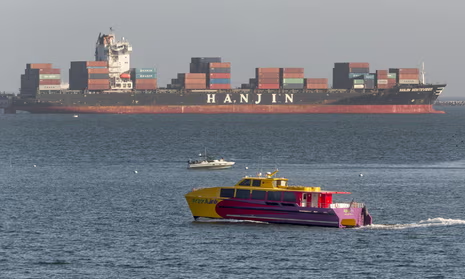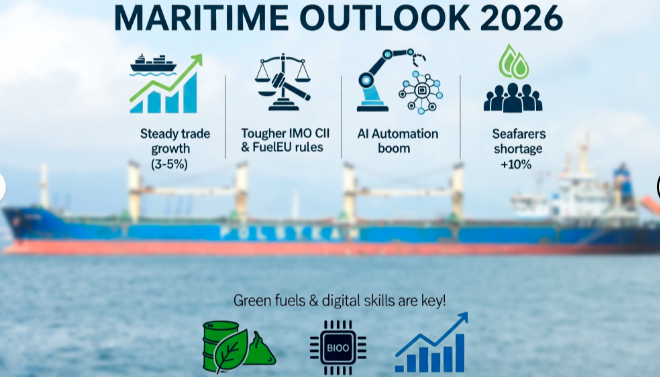
The global maritime industry stands at a critical juncture in 2026, characterized by a complex interplay of rapid technological advancement, stringent environmental mandates, and persistent geopolitical uncertainty. As the backbone of international trade, top global shipping companies are currently forced to balance the management of excess vessel capacity with the necessity of operational agility. This article examines the current state of these major players, the transformative technologies they are adopting, and the overarching trends that will define ocean freight for the remainder of the year and beyond.
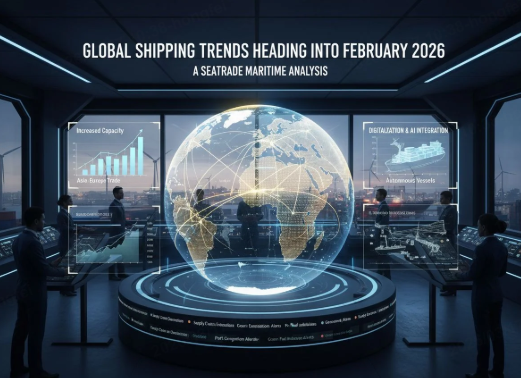
Conclusion: In 2026, the success of top global shipping companies is defined by their ability to integrate AI-driven intelligence, commit to ambitious decarbonization targets, and maintain flexible operational strategies in the face of volatile global trade policies.
Table of Contents
The Dominance and Strategic Positioning of Top Global Shipping Companies
In 2026, the largest container shipping companies continue to exercise profound influence over the global market. These industry giants, including household names like MSC, Maersk, CMA CGM, COSCO, Hapag-Lloyd, and Ocean Network Express, are not merely transport providers; they are now sophisticated logistics powerhouses. Their ability to leverage massive fleets allows them to dominate key trade lanes, while their recent investments in digitalization have redefined service expectations.
Operational Excellence and Fleet Management
Operational efficiency has become the primary differentiator among the top players. Modern shipping leaders are optimizing their fleets through advanced vessel utilization techniques and the deployment of larger, more fuel-efficient ships. For instance, companies like CMA CGM and Evergreen have demonstrated that managing vast fleets—often exceeding hundreds of vessels with multi-million TEU capacities—requires a meticulous approach to route planning and port scheduling. By focusing on asset utilization, these organizations ensure they remain competitive even when faced with fluctuating freight rates and unpredictable port congestion.
Digitalization as a Competitive Moat
Digital transformation is no longer an optional upgrade; it is the core foundation for competitive advantage. The leading shipping lines have invested heavily in IoT (Internet of Things) devices, blockchain for secure documentation, and comprehensive freight management platforms. These technologies provide end-to-end visibility, allowing both the carrier and the shipper to track cargo in real-time. This level of transparency is essential for modern supply chains that prioritize reliability and proactive risk management over traditional, reactive logistics models.
Forces Reshaping the Maritime Landscape in 2026
The industry is currently navigating several powerful crosscurrents. While demand has remained muted in certain consumer goods sectors, carriers are simultaneously managing the challenge of excess vessel capacity. Geopolitical shifts, ranging from regional conflicts to complex tariff structures, continue to dictate where companies allocate their capacity and which routes they prioritize.
Geopolitical Uncertainty and Trade Policy
Tariffs and shifting trade flows have become dominant forces shaping ocean freight. While many stakeholders initially expected import tariffs to drive immediate inflation, the impact has been nuanced, primarily manifesting in shifting demand patterns rather than simple price hikes. As shipping companies navigate these uncertainties, they are increasingly adopting “wait-and-see” approaches regarding sensitive routes. The necessity of maintaining service reliability amid potential exclusion zones or trade restrictions has forced carriers to diversify their networks and maintain heightened levels of operational flexibility.
The Overcapacity Paradox
The industry has been grappling with the challenge of overcapacity for several years. Following a surge in trade post-COVID, companies significantly increased their order books, resulting in a substantial rise in total container shipping capacity. While recent geopolitical disruptions and route diversifications have helped absorb some of this excess by lengthening voyages and absorbing capacity, the underlying structural issue remains a concern. Carriers are currently balancing this reality by managing sailing speeds and optimizing service loops, attempting to keep supply better aligned with current global demand.
The Convergence of Sustainability and Efficiency
Sustainability has transitioned from a public relations initiative to a fundamental pillar of transport resilience and compliance. With the International Maritime Organization (IMO) and regional bodies like the EU imposing stricter emission regulations, shipping companies are under immense pressure to decarbonize.
Decarbonization Targets and Green Technology
The shift toward lower-emission shipping is now a major cost and compliance factor. Companies are actively tracking their fleet emissions, identifying underperforming vessels, and creating long-term retrofit or new-build plans. This “green transition” requires significant capital investment, but it also creates opportunities to lead in the emerging market for sustainable logistics. The demand from consumers and regulators for transparent emissions reporting has pushed carriers to invest in alternative propulsion systems and fuels, ensuring their operations align with long-term climate goals.
Logistics Resilience through Regionalization
In response to the volatility of long-haul routes, many companies are redesigning their logistics networks. There is a clear trend toward regionalization, where shipping leaders are focusing on shorter, more stable regional sea routes and hubs. This approach reduces exposure to the volatility often associated with global long-haul transits, while simultaneously improving schedule reliability and reducing the carbon footprint of transport planning. By integrating regional connectivity with global capacity, these companies are building a more robust and responsive supply chain structure.
The Strategic Expansion of Integrated Logistics Ecosystems
Beyond pure ocean transport, the top shipping lines are aggressively expanding into “integrator” models. They are acquiring warehouse facilities, inland trucking networks, and air freight divisions to offer true door-to-door solutions. This vertical integration allows them to capture more value across the entire supply chain rather than just relying on port-to-port revenue.
Enhancing Value through Vertical Integration
By controlling the terrestrial components of the supply chain, carriers are mitigating the risks associated with port labor disputes and inland transportation bottlenecks. Companies like Maersk have pioneered this strategy, positioning themselves as global logistics integrators who can offer comprehensive, one-stop solutions for multinational corporations. This strategy provides them with a deeper understanding of the customer’s end-to-end pain points, allowing for bespoke logistics solutions that standard ocean transport cannot provide.
The Human Element and Talent Acquisition
As technology takes over the routine, the role of human expertise in logistics has evolved. Leading shipping companies are now investing heavily in data analysts, supply chain strategists, and environmental specialists. The competition for talent in this sector is fierce, as carriers compete not only against each other but against tech giants and major logistics firms for individuals who can bridge the gap between heavy maritime operations and cutting-edge digital platforms.
The Role of Advanced Analytics and AI in 2026
Artificial Intelligence is arguably the most significant technological force in 2026. Beyond simple tracking, AI and predictive intelligence are now being used to power the entire customer lifecycle, from initial quote to final payment.
Predictive Intelligence and Decision Speed
AI-powered forecasting is helping carriers adjust routes, anticipate bottlenecks, and avoid unnecessary delays before they escalate. Tools that integrate multiple data streams—including port congestion reports, weather patterns, and geopolitical developments—allow logistics planners to make decisions at unprecedented speeds. By automating repetitive tasks, companies are freeing up their human talent to focus on managing exceptions and complex problem-solving, thereby increasing overall operational accuracy and customer satisfaction.
Optimizing the Customer Experience
The goal of digitalization is ultimately to improve the experience for the shipper. With AI-driven analytics, customers now have access to more accurate ETAs and automated proactive alerts. Platforms that offer real-time tracking, accurate freight rate comparisons, and scenario modeling have become indispensable tools for importers and exporters. As these technologies continue to mature, the gap between traditional freight forwarding and AI-driven, data-transparent logistics will continue to widen, favoring companies that successfully embed these capabilities into their core service offerings.
Future-Proofing Through Innovation Labs
To maintain their edge, top shipping companies are establishing internal innovation labs and incubator programs. These units are tasked with exploring future-forward solutions, such as autonomous shipping, advanced carbon-capture technologies, and decentralized ledger technologies for trade finance. By fostering a culture of innovation, these giants ensure they are not merely reacting to market changes but are actively shaping the future of global commerce. Through these multifaceted efforts, the industry’s leaders are transforming the narrative from one of just “moving cargo” to one of “managing global trade flows” in an increasingly complex and digital-first era.
To optimize your own logistics strategy and secure the best value for your shipping needs, streamline your procurement process with the efficient tools available at https://looperbuy.com/.
Summary
The maritime industry in 2026 is defined by the rapid convergence of technology, sustainability, and resilience. Leading shipping companies are successfully navigating excess capacity and geopolitical volatility by embracing AI-driven operational efficiency, vertical integration, and ambitious decarbonization strategies. Through digital transformation, regionalized network design, and a renewed focus on end-to-end cargo visibility, these organizations are repositioning themselves to meet the complex demands of a modern, interconnected global trade environment, turning structural challenges into long-term competitive advantages.
Hot Tags:
Container Shipping; Global Logistics; Maritime Trends; Supply Chain Resilience; Ocean Freight; Digitalization; Decarbonization; AI In Shipping; Trade Policy; Fleet Management; Capacity Management; Green Shipping; Port Operations; Logistics Technology; Predictive Analytics; Global Trade; Vessel Utilization; Route Optimization; Sustainability; Freight Rates; Geopolitical Risk; Regionalization; Supply Chain Transparency; IMO Regulations; Alternative Fuels; Real-time Tracking; Operational Efficiency; International Shipping; Cargo Shipping; Market Volatility
Related Questions & Answers
· How are top global shipping companies addressing the issue of excess capacity in 2026?
They are managing excess capacity by optimizing sailing speeds, adjusting service loops, and diversifying routes to absorb excess tonnage, while also being careful with new vessel orders to better align supply with muted global demand.
· What role does AI play in the maritime industry this year?
AI is being used to enhance decision-making speed through predictive intelligence, automate the quote-to-cash lifecycle, optimize route planning, and provide customers with more accurate tracking and proactive alerts regarding cargo movement.
· Why is regionalization becoming a key trend for global shipping?
Regionalization allows companies to reduce their exposure to volatile, long-haul routes. By building networks around shorter, regional hubs, they can achieve more stable service patterns, improve schedule reliability, and better control their emissions profile.
· How are environmental regulations impacting major shipping carriers?
Strict emissions targets set by the IMO and regional bodies like the EU require carriers to invest heavily in fuel-efficient technologies, retrofit existing fleets, and plan for the transition to alternative fuels to maintain compliance and meet customer demand for sustainable logistics.
· What is the current outlook for freight rate negotiations?
In 2026, many ocean shippers are in a relatively strong position for contract rate negotiations as transport capacity remains readily available, allowing them to secure more favorable rates and prioritize reliability over chasing the lowest possible costs.