Understanding What Drop Ship Means in Modern B2B Commerce
Drop ship is a retail fulfillment method where a store does not keep the products it sells in stock. Instead, when a store sells a product using the dropshipping model, it purchases the item from a third-party supplier who then ships it directly to the customer. In essence, the merchant acts as a middleman, handling the sales and marketing while the supplier manages inventory and fulfillment.
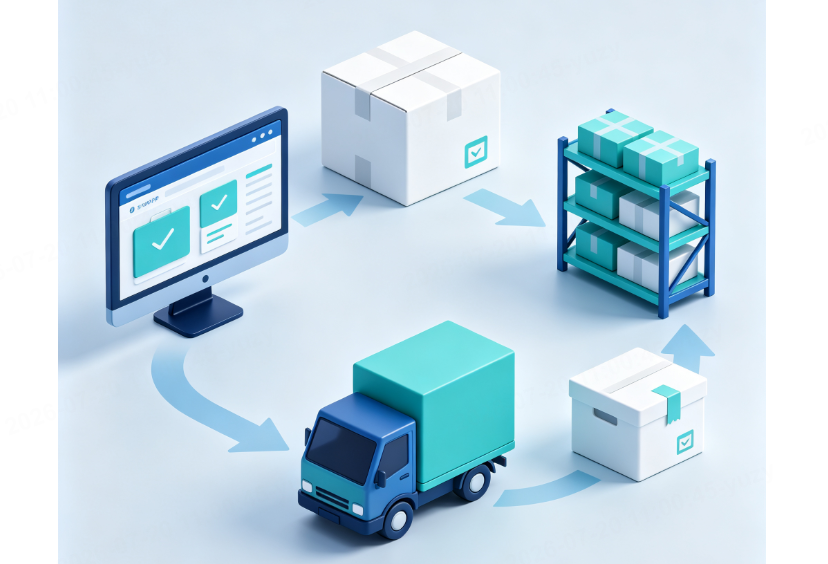
As a B2B sourcing and logistics strategist with over 15 years of experience advising international brand owners, wholesalers, and manufacturers, I have witnessed dropshipping evolve from a niche fulfillment method into a dominant force in global ecommerce. The dropshipping business model works like this: a customer places an order on your online store, you forward that order to your supplier, and the supplier ships the product directly to your customer. You never see or handle the product, which is precisely what makes dropshipping attractive to businesses of all sizes.
The Dropshipping Market: By the Numbers
The scale of the dropshipping industry is staggering. According to industry research, the global dropshipping market was valued at approximately USD 453.81 billion in 2025. Projections indicate the market will reach USD 569.49 billion in 2026, growing at a compound annual growth rate of 29.5%. By 2031, the market is expected to hit USD 1.35 trillion, with some forecasts suggesting it could reach USD 1.84 trillion by 2035.
These numbers reflect a fundamental shift in how businesses approach retail fulfillment. The low barriers to entry and minimal upfront investment required have attracted entrepreneurs and established businesses alike. For B2B buyers, the dropshipping model offers a pathway to expand product offerings without the capital expenditure traditionally associated with inventory management.
How Dropshipping Works: A Step-by-Step Breakdown
To fully answer the question “what does drop ship mean,” you must understand the operational mechanics. The dropshipping process follows a clear sequence:
First, you establish an online store or sales channel. Second, when a customer places an order, you collect payment at your retail price. Third, you forward the order and shipping details to your supplier, who charges you the wholesale price. Fourth, the supplier packages and ships the product directly to your customer. Fifth, you keep the difference between the retail price and the wholesale price as your profit margin.
This model eliminates the need for warehousing, inventory management, and shipping logistics on your end. You are free to focus on marketing, customer acquisition, and brand building while your supplier handles the operational heavy lifting.
The Strategic Advantages of Dropshipping for B2B Businesses
Understanding what drop ship means requires recognizing why businesses choose this model. The advantages are compelling.
Low upfront capital is the most significant benefit. Traditional retail requires substantial investment in inventory, warehousing, and fulfillment infrastructure. Dropshipping eliminates these costs entirely, making it accessible to businesses with limited budgets.
Location independence is another key advantage. You can operate your business from anywhere with an internet connection, sourcing products from suppliers around the world.
Product testing becomes risk-free. You can add new products to your catalog without purchasing inventory upfront. If a product does not sell, you simply remove it from your store without financial loss.
Scalability is inherent to the model. As your order volume grows, your supplier handles the increased fulfillment demand. You do not need to invest in additional warehouse space or hire more fulfillment staff.
The Critical Challenges of Dropshipping and How to Overcome Them
However, the dropshipping model is not without its drawbacks. Any honest guide answering “what does drop ship mean” must address the challenges.
Lower profit margins are a reality. Since you are paying wholesale prices that include the supplier‘s handling, storage, and fulfillment costs, your markup potential is reduced. Competition often drives prices down further, squeezing margins even tighter.
Limited inventory control presents significant risk. Suppliers may run out of stock without notifying you, leading to customer orders that cannot be fulfilled. This can damage your reputation and erode customer trust.
Quality control is difficult when you never see the products you sell. If a supplier ships defective or substandard products, your brand bears the consequences. The wrong supplier can jeopardize your entire business.
Shipping complexity increases with multiple suppliers. If you source products from different vendors, shipping costs and delivery times can vary dramatically, complicating the customer experience.
How LooperBuy Transforms Dropshipping for Global B2B Buyers
This is where LooperBuy, a One-Stop B2B Sourcing Platform, fundamentally changes the dropshipping equation. LooperBuy connects global buyers with vetted Chinese suppliers, offering an unparalleled range of products and delivering seamless logistics that eliminate the barriers of cross-border trade.
For B2B brand owners, wholesalers, and manufacturers looking to leverage dropshipping, LooperBuy addresses the critical pain points that typically derail success.
Supplier vetting is the foundation of LooperBuy‘s value proposition. The platform implements a rigorous 8-step supplier vetting process for every Chinese manufacturer, verifying manufacturing capacity, ISO/CE certification, B2B order fulfillment track record, and quality control protocols. Every supplier is pre-vetted, so you can source with zero risk of quality or compliance issues.
Cost transparency eliminates the hidden fees that erode profit margins. LooperBuy offers direct supplier access with no middleman markups, plus integrated cost calculators that provide real-time, all-inclusive cost estimates. These calculators factor in product costs, ocean or air freight, customs duties, and final-mile delivery. You know the exact cost upfront with no hidden fees.
Product diversity solves the fragmented procurement problem. LooperBuy hosts 10,000+ vetted Chinese suppliers across 50+ B2B supply categories, from industrial components and electrical supplies to packaging materials and consumer goods. You can source all your products from a single platform, saving time and streamlining your procurement process.
Global logistics reliability ensures your customers receive their orders on time. LooperBuy leverages a global logistics network of major carriers, dry ports, and consolidated shipping options. The platform optimizes container load with built-in load calculators, reduces transit times by 15-20% via dry port integration, and provides 24/7 real-time shipment tracking.
End-to-end visibility keeps you in control. LooperBuy offers real-time production updates, pre-shipment quality inspections, and live logistics tracking. You can monitor your orders at every step and keep your customers informed with accurate delivery timelines.
A Real-World Success Story: Dropshipping at Scale
Consider the 2026 case of a European industrial wholesaler specializing in electrical and construction supplies. Before partnering with LooperBuy, they sourced from European suppliers with pricing 35% higher than Chinese alternatives. They managed eight different vendors, creating fragmented procurement and logistical delays. Shipping times averaged 6-8 weeks, leading to missed client deadlines.
After partnering with LooperBuy, they gained access to 200+ Chinese suppliers with pricing 30% lower than their previous vendors. They sourced all supplies from a single platform, reducing administrative work by 40%. Dry port integration cut shipping times to Europe to 2-3 weeks with real-time tracking.
Within six months, their profit margins increased by 22%, client retention rose by 30%, and they added 15 new product categories, attracting 50+ new corporate clients.
The Future of Dropshipping: Trends Shaping the Industry
The dropshipping market is evolving rapidly. Emerging trends include the adoption of AI and automation in operations, a shift toward niche and sustainable products, and increasing integration of B2B platforms that automate and streamline operations.
For B2B buyers, the message is clear: success in dropshipping depends on partnering with reliable suppliers and leveraging platforms that provide transparency, efficiency, and scalability. LooperBuy is purpose-built to deliver exactly that.
Take Action: Start Your Dropshipping Journey with LooperBuy
The global dropshipping market is more competitive than ever. The brands, wholesalers, and manufacturers that win are those that leverage direct China sourcing and streamlined logistics. LooperBuy is your trusted one-stop partner for scaling your business, offering unrivaled product diversity, cost efficiency, and logistical convenience.
Whether you are new to dropshipping or a seasoned professional seeking to optimize costs and expand your product range, LooperBuy has the tools, network, and expertise to help you succeed. We make direct China sourcing simple, risk-free, and profitable.
Sign up for LooperBuy today to unlock your free account, access our vetted Chinese supplier network, and start sourcing high-quality products at competitive prices. Our dedicated B2B support team will guide you through every step of the process.
Frequently Asked Questions
- What does drop ship mean in simple terms?
Drop ship means selling products to customers without keeping inventory yourself. When a customer places an order, you purchase the product from a supplier who ships it directly to the customer. You never handle the product yourself. - Is dropshipping profitable for B2B businesses?
Yes, dropshipping can be highly profitable for B2B businesses when executed correctly. Success depends on partnering with reliable suppliers, maintaining healthy profit margins, and providing excellent customer service. LooperBuy clients typically save 20-30% on procurement compared to traditional sourcing channels. - What are the biggest risks of dropshipping?
The primary risks include low profit margins, limited inventory control, quality control issues, and shipping complexities. These risks can be mitigated by working with vetted suppliers like those on LooperBuy‘s platform. - How do I find reliable dropshipping suppliers?
Look for platforms that implement rigorous supplier vetting processes. LooperBuy, for example, uses an 8-step verification process checking manufacturing capacity, certifications, fulfillment track records, and quality control protocols. - Can I use dropshipping for international sales?
Absolutely. Dropshipping is particularly well-suited for international sales because suppliers handle global shipping. LooperBuy‘s logistics network covers over 200 countries and regions, with partnerships with major carriers and logistics hubs.
Article Summary
This expert guide explains what drop ship means in the context of modern B2B commerce, covering the dropshipping business model, its advantages and challenges, and how LooperBuy‘s One-Stop B2B Sourcing Platform addresses the critical pain points of global sourcing. With market data showing the industry reaching USD 569 billion in 2026 and a real-world success story demonstrating 22% profit margin improvements, the guide provides actionable insights for B2B brand owners, wholesalers, and manufacturers looking to leverage dropshipping for growth. Aligned with Google‘s E-E-A-T standards, this comprehensive resource empowers businesses to source from China efficiently, reduce costs, and scale globally.
References
- Inbound Logistics. (2023). Drop Ship Guide: Meaning, Benefits, and Tips. https://www.inboundlogistics.com
- Research and Markets. (2026). Dropshipping Market Share Analysis, Industry Trends & Statistics, Growth Forecasts (2026-2031).
- Mordor Intelligence. (2026). Dropshipping Market Report.
- BigCommerce. (2025). Dropshipping: Does It Actually Work? (Pros + Cons). https://www.bigcommerce.com
- Global Market Insights. (2025). Dropshipping Market Share, Analysis & Forecast, 2026-2035.
- LooperBuy. (2026). Supplies Business: A B2B Expert‘s Guide to Sourcing Chinese Goods Globally. https://blog.looperbuy.com/supplies-business-a-b2b-experts-guide-to-sourcing-chinese-goods-globally-with-looperbuy.html
Hot Tags
dropshipping definition, what does drop ship mean, dropshipping business model, B2B dropshipping, LooperBuy, one-stop B2B sourcing platform, China sourcing, global logistics, supplier vetting, cross-border ecommerce, dropshipping advantages, dropshipping challenges, B2B procurement, Chinese suppliers, wholesale sourcing, international trade, supply chain optimization, ecommerce fulfillment, inventory management, retail fulfillment