Wood carving is a timeless art form that requires precision, patience, and the right tools. Among the various tools used in wood carving, wood carving knives are essential for creating intricate designs and shaping wood. Whether you’re a beginner or an experienced carver, understanding the different types of wood carving knives and their techniques can elevate your craft. This comprehensive guide explores the world of wood carving knives, providing insights into their types, techniques, and maintenance.
Table of Contents
Understanding Wood Carving Knives
Wood carving knives are specialized tools designed to cut and shape wood. They come in various types, each suited for specific carving tasks. The quality of the knife significantly impacts the carving experience and the final result. A good wood carving knife should have a sharp, durable blade and an ergonomic handle for comfortable use.
Types of Wood Carving Knives
Sloyd Knives
Sloyd knives are general-purpose wood carving knives with a long blade (2 to 3 inches) and a full tang. They are ideal for removing large sections of wood and are commonly used for roughing out a carving, carving spoons, or general-purpose wood carvings. These knives are widely available and easy to maintain.
Bench Knives
Bench knives are perfect for smaller wood carvings and adding fine details. They typically have a blade length of 1 to 2 inches and excel at making small, precise cuts like adding details to hair and eyes. Bench knives come in various blade and handle styles to suit different carving needs.
Chip Carving Knives
Chip carving knives are designed for creating intricate patterns and designs on flat pieces of wood. They allow carvers to remove small chips of wood to form geometric shapes and detailed motifs. These knives are essential for decorative carving on furniture, boxes, and panels.
Scoops and Hook Knives
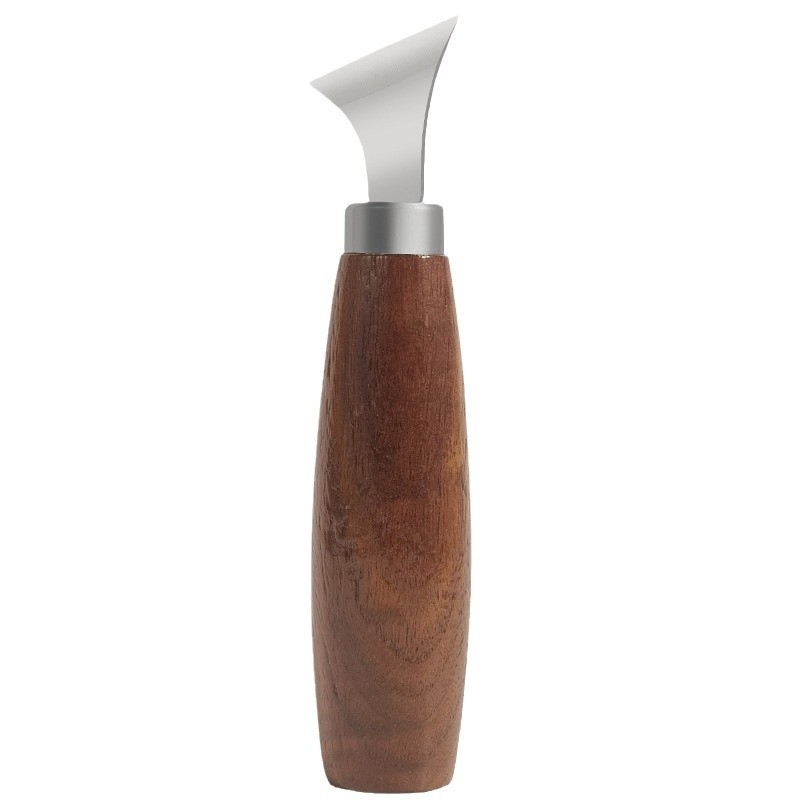
Scoops and hook knives are popular among spoon carvers. The rounded bend of these knives allows carvers to “scoop” wood, creating a concave effect. They are particularly useful for creating recesses in wood to store liquids in spoons and kuksa cups.
Chisels and Mallets
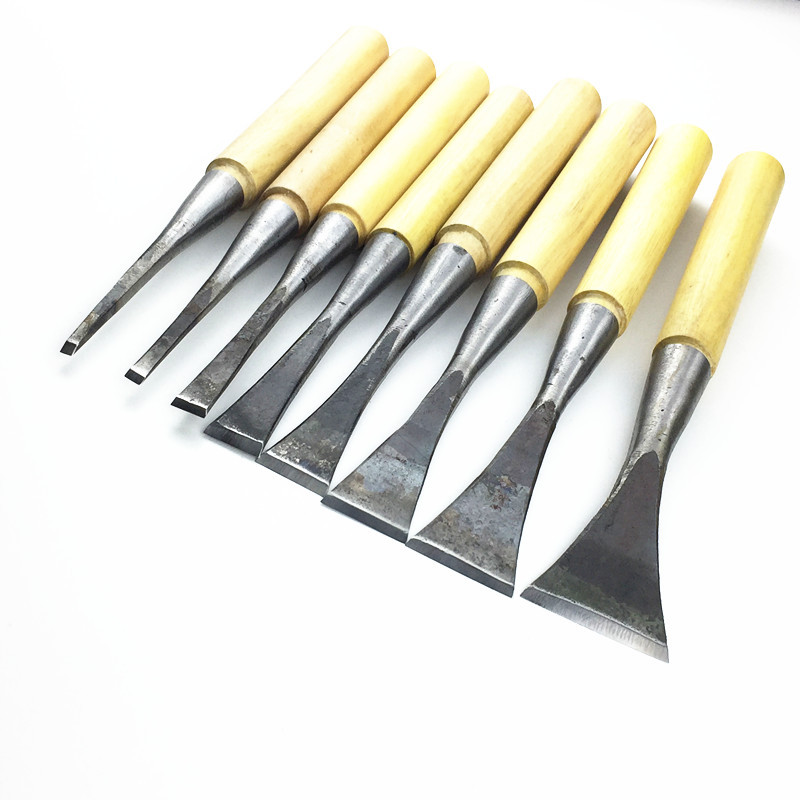
While not strictly knives, chisels and mallets are fundamental tools in wood carving. Chisels are designed to cut directly into wood and are typically driven by a mallet. This combination allows for rapid and precise wood removal, making it efficient for carving and joinery work.
Wood Carving Techniques
Chip Carving
Chip carving involves removing small chips of wood from a flat surface to create intricate patterns and designs. Start by making a triangular incision and then removing the chip with a push motion of the knife. This technique is excellent for creating geometric shapes and decorative motifs.
Relief Carving
Relief carving involves carving figures or designs into a flat piece of wood, leaving the design raised above the background. Begin by outlining your design and then gradually carve away the excess wood around it to create a three-dimensional effect.
Whittling
Whittling is a form of wood carving where you carve away small pieces of wood to shape it into a specific form. It’s ideal for creating simple and elegant wooden objects like figurines or utensils. Start with a sharp knife and slowly remove small pieces of wood to shape your desired object.
Detailing
Detailing is crucial in wood carving to add texture, definition, and realism to your creations. Use specialized carving tools like veiners, gouges, and V-tools to add intricate details. Work slowly and patiently, focusing on one small section at a time to achieve precise and realistic details.
Hollowing
Hollowing involves carving out the inside of a wooden object to create cavities or recessed areas. This technique is commonly used in creating bowls, vases, and sculptures. Use gouges or chisels to carefully hollow out the wood, ensuring even thickness and smooth surfaces inside the carved object.
Choosing the Right Wood Carving Knife
When selecting a wood carving knife, consider factors such as blade material, handle design, blade shapes, and knife sharpness. Here are some top wood carving knives available in the market:
Flexcut Cutting Knife
The Flexcut Cutting Knife offers high-quality carving with its razor-sharp edge, ideal for intricate detail work and general carving tasks. Its ergonomic handle design ensures comfortable use for extended periods, enhancing precision and control.
Morakniv Wood Carving Knife
The Morakniv Wood Carving Knife is renowned for its durable carbon steel blade that maintains sharpness over time. It’s a versatile option suitable for both beginners and experienced woodworkers, providing excellent carving performance across various wood types.
BeaverCraft Wood Carving Detail Knife
With a fine-pointed blade, the BeaverCraft Wood Carving Detail Knife excels at intricate carving projects. The comfortable wooden handle allows for precise movements, making it a favorite among those focusing on delicate woodwork.
Helvie Chip Carving Knife
Ideal for chip carving, the Helvie Chip Carving Knife features a specially designed blade that allows for precise cuts and intricate chip carving patterns. Its balanced weight and comfortable grip enhance carving accuracy.
Two Cherries Skew Chisel
The Two Cherries Skew Chisel is a versatile tool suitable for detailed carving work and shaping wood surfaces. Its high-quality steel construction ensures durability and sharpness, making it an excellent choice for fine woodworking projects.
Maintenance and Safety Tips
Sharpening
Proper sharpening is essential for maintaining the performance of your wood carving knives. Use a sharpening stone or honing rod to keep the blade edge sharp. Regular sharpening ensures clean cuts and reduces the risk of accidents caused by a dull blade.
Cleaning
After each use, clean the knife blade with a soft cloth to remove wood residues and dust. For wooden handles, avoid excessive moisture to prevent warping or splitting. Store the knives in a dry place to prevent rust and deterioration.
Storage
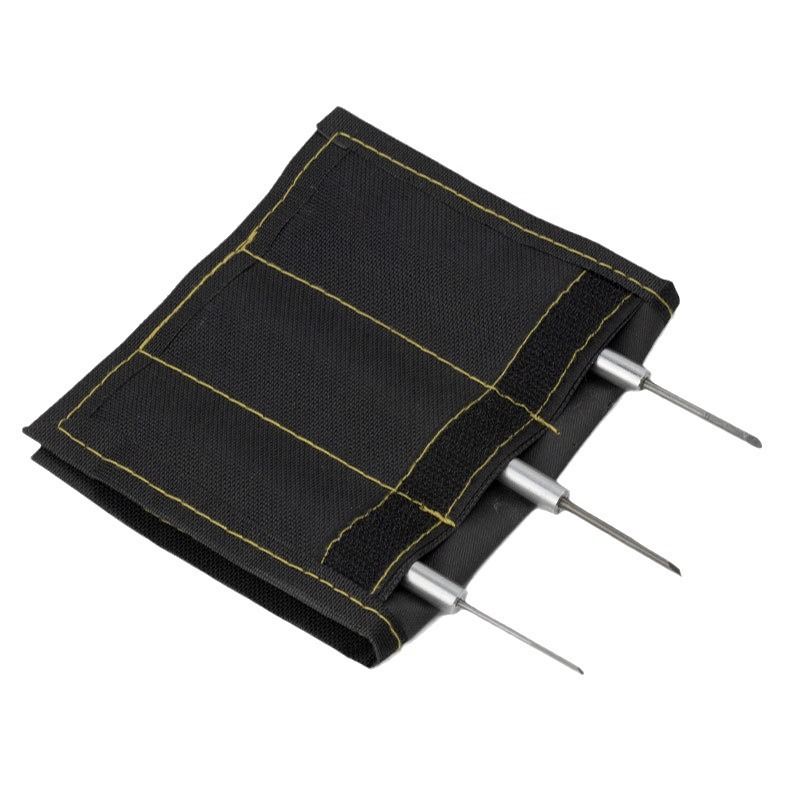
Store your wood carving knives in a protective case or sheath when not in use. This protects the blades from damage and prevents accidental cuts. Consider using a knife roll or pouch for multiple knives to keep them organized and safe.
Safety Precautions
Always exercise caution when using wood carving knives. Keep your fingers clear of the blade path and use a push stroke rather than a slicing motion. Wear protective gear such as gloves and eye protection to minimize the risk of injury.
Conclusion
Wood carving knives are essential tools for creating beautiful and intricate wood carvings. By understanding the different types of knives and mastering various carving techniques, you can enhance your wood carving skills and produce stunning works of art. Investing in quality knives and maintaining them properly ensures longevity and optimal performance. Whether you’re a beginner or an advanced carver, the right wood carving knife can make all the difference in your projects.
How to Purchase:https://looperbuy.com/search?keywords=wood+carving+knife
Frequently Asked Questions
Q: What are the best wood carving knives for beginners?
A: The best wood carving knives for beginners are lightweight, comfortable, and controllable. Ergonomically designed handles that fit well in the hand are best for reducing strain during use. The Flexcut Cutting Knife and Morakniv Wood Carving Knife are excellent choices for beginners due to their sharp, durable blades and user-friendly design.
Q: How do I sharpen a wood carving knife?
A: Sharpening a wood carving knife requires a sharpening stone or honing rod. Begin by holding the knife at a 20-30 degree angle to the sharpening surface. Use smooth, even strokes to sharpen the blade, maintaining the angle consistently. Regular sharpening ensures the blade remains sharp and performs optimally.
Q: What safety precautions should I take when using wood carving knives?
A: Always keep your fingers clear of the blade path and use a push stroke rather than a slicing motion. Wear protective gear such as gloves and eye protection to minimize the risk of injury. Store knives in a protective case or sheath when not in use to prevent accidental cuts.
Q: Can I use a regular kitchen knife for wood carving?
A: While it’s possible to use a regular kitchen knife for simple wood carving tasks, dedicated wood carving knives are designed specifically for this purpose. They offer better control, precision, and safety, making them more suitable for detailed and intricate carving work.
Q: How do I choose the right wood for carving?
A: Select wood that is appropriate for your skill level and the type of carving project. Softwoods like basswood and butternut are ideal for beginners due to their ease of carving. Hardwoods like oak and maple are more challenging but offer greater detail and durability for advanced projects.
Hot Tags: Wood Carving Knife; Types of Wood Carving Knives; Wood Carving Techniques; Best Wood Carving Knives for Beginners; Wood Carving Knife Sharpening; Wood Carving Knife Safety; Chip Carving Knives; Relief Carving Knives; Whittling Knives; Detail Carving Knives.