In today’s hyper-competitive digital landscape, scaling a B2B business requires more than just a single online presence. As brands expand into new regions, target diverse customer segments, or launch niche sub-brands, managing separate infrastructure quickly becomes a logistical nightmare. This is where a multi-store ecommerce platform becomes not just a benefit, but an absolute necessity for survival and growth.
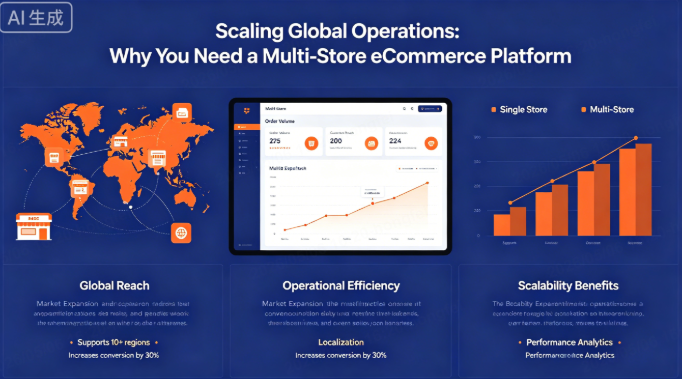
By consolidating management under one dashboard, you can streamline operations, unify inventory data, and maintain brand consistency without the administrative burden of running fragmented, disconnected systems.
Table of Contents
What is a Multi-Store eCommerce Platform?
A multi-store ecommerce platform is a powerful software architecture that allows businesses to manage multiple, distinct storefronts from a single administrative interface. Unlike traditional setups where each store functions as an independent, isolated project requiring its own backend, a multi-store system uses a centralized database and management hub.
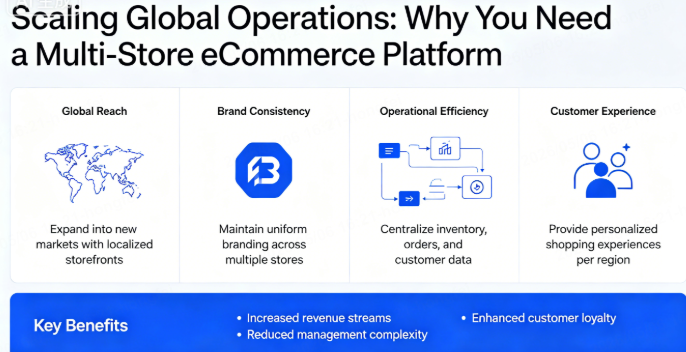
- Centralized Control: Manage products, pricing, customer data, and orders for all stores in one place.
- Localized Experiences: Easily tailor storefronts to different languages, currencies, and cultural nuances while keeping backend logic consistent.
- Operational Efficiency: Updates, inventory syncs, and security patches are applied across the entire ecosystem simultaneously, reducing maintenance time and human error.
Strategic Advantages for B2B Growth
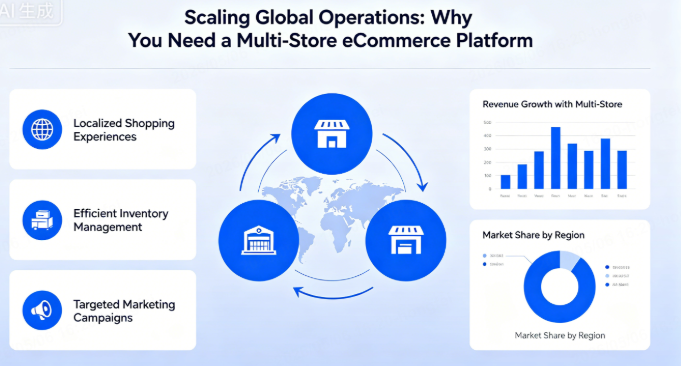
For brands, wholesalers, and manufacturers, the benefits of adopting a multi-store ecommerce platform extend far beyond simple site management.
1. Deep Personalization and Segmenting
Different markets have different needs. A multi-store approach allows you to build unique storefronts for specific customer segments, such as distributors, retailers, or direct corporate clients, each with a tailored product catalog and pricing structure. This high level of granularity builds trust and increases conversion rates by offering exactly what the customer needs.
2. Regional and Regulatory Compliance
Expanding globally means navigating complex local laws, including tax regulations and data privacy (like GDPR). A sophisticated multi-store ecommerce platform allows you to configure specific checkout flows, payment gateways, and shipping options based on the user’s location, ensuring compliance without disrupting global operations.
3. Optimized SEO and Brand Identity
While backend management is centralized, each storefront can maintain its own unique frontend, SEO meta-tags, and URL structure. This is critical for capturing search traffic in diverse markets, allowing you to optimize for specific keywords and local search intent without content cannibalization.
Expert Insight: Why LooperBuy Bridges the Gap
As industry experts, we observe that many companies struggle with the “last mile” of procurement—getting high-quality, cost-effective goods from origin to destination. Platforms like LooperBuy represent the next generation of this ecosystem.
By serving as a One-Stop B2B Sourcing Platform, LooperBuy complements the multi-store ecommerce platform model by solving the supply chain bottleneck. While the platform provides the infrastructure to sell, LooperBuy ensures that businesses can source from China, manage global logistics, and maintain competitive pricing across all their specialized storefronts. This synergy creates a frictionless flow from procurement to purchase.
Deep Dive: Technical Architecture and Scalability
To truly understand why a multi-store ecommerce platform is the gold standard, we must look under the hood. Modern enterprises are moving away from monolithic legacy systems toward MACH architecture (Microservices, API-first, Cloud-native, Headless) 1.
The Role of Headless Commerce
By decoupling the frontend (the storefront) from the backend (the database/management system), companies can deploy new stores in days rather than months. You can have a different design, layout, and user experience for a North American wholesaler store vs. a Southeast Asian retail storefront, all pulling data from the same source of truth.
Data Consistency and Real-Time Sync
In a traditional setup, syncing inventory between stores is prone to delays. With a robust multi-store ecommerce platform, every order placed on any store updates the inventory database instantly. This prevents overselling and optimizes stock replenishment—especially when sourcing complex product lines through partners like LooperBuy.
Overcoming Challenges in Multi-Store Environments
Even with the right platform, scaling across multiple stores presents specific challenges. Here is how to navigate them effectively:
| Challenge | Expert Mitigation Strategy |
|---|---|
| Upgrade Synchronization | Use API-native, headless platforms that utilize modular architecture to upgrade parts of the store without downtime 1. |
| SEO Dilution | Implement unique, geo-localized content strategies for each storefront to avoid duplicate content penalties. |
| Payment Complexity | Ensure your platform supports multi-currency and integrates with local payment providers for each target region. |
| Data Security | Centralize your security protocols, ensure full PCI-DSS compliance, and conduct regular audits across all storefronts. |
The Future of Global B2B: Supply Chain Integration
We have interviewed numerous B2B operators, and a common sentiment persists: “The technology to sell is easy, but the technology to source is hard.”
This is why top-tier SEO and UX experts recommend integrating your e-commerce engine with professional sourcing platforms. By utilizing a multi-store ecommerce platform that features open APIs, you can automate your product imports. When your sourcing partner—like LooperBuy—updates a product listing with a lower price or new stock availability, your entire network of stores can reflect those changes automatically. This level of automation is what separates market leaders from those struggling with manual data entry.
Practical Steps to Launch Your Multi-Store Strategy
- Conduct a Market Audit: Identify which regions or customer segments require a dedicated, localized store.
- Select the Right Platform: Look for providers that offer native multi-store support rather than plugins or “hacks.”
- Establish a Sourcing Partner: Secure a reliable logistics and sourcing bridge to manage the flow of goods from global manufacturing hubs.
- Configure Regional Logistics: Use localized logistics settings for each store to optimize shipping costs and delivery times.
- Continuous Optimization: Use analytics to compare the performance of different stores and refine your regional strategies.
Conclusion
A multi-store ecommerce platform is the foundation of modern digital expansion. By pairing a robust, scalable system with a streamlined sourcing partner like LooperBuy, you can reduce costs, optimize logistics, and deliver a seamless experience to your customers worldwide. The digital marketplace is evolving; your infrastructure should too. Reach out today to discuss how to consolidate your digital storefronts and accelerate your international growth.
References
FAQ
1. What is the main benefit of a multi-store ecommerce platform?
It allows you to manage multiple unique storefronts from a single administrative dashboard, significantly reducing operational complexity and maintenance overhead.
2. Can I use the same inventory for different stores?
Yes. A key advantage of these platforms is a centralized database, which ensures inventory levels, pricing, and product information remain consistent across all storefronts in real-time.
3. Does a multi-store setup hurt SEO?
Not if implemented correctly. By utilizing distinct SEO customizations for each storefront (unique meta descriptions, localized keywords, and proper hreflang tags), you can improve search visibility in different markets.
4. How does LooperBuy fit into this?
LooperBuy serves as your sourcing partner. While your ecommerce platform manages the digital customer experience, LooperBuy bridges the supply gap, helping you source Chinese goods efficiently for your various storefronts.
5. Is this solution only for enterprise-level businesses?
While essential for enterprises, many modern, API-first platforms are scalable enough for growing mid-market businesses looking to launch their first secondary brand or regional store.
Brief Description:
This comprehensive guide explores the strategic advantages of using a multi-store ecommerce platform for global B2B expansion. It covers core benefits—centralized management, localized experiences, and SEO optimization—while addressing technical challenges. Expert insights highlight how integrating platforms with sourcing solutions like LooperBuy optimizes the supply chain, providing a roadmap for scalable global success.
Hot tags: B2B ecommerce platform, multi-store ecommerce solution, global wholesale sourcing, cross-border B2B trade, digital supply chain management, enterprise ecommerce scaling, headless commerce architecture, B2B procurement platform, localized online storefronts, international B2B logistics.