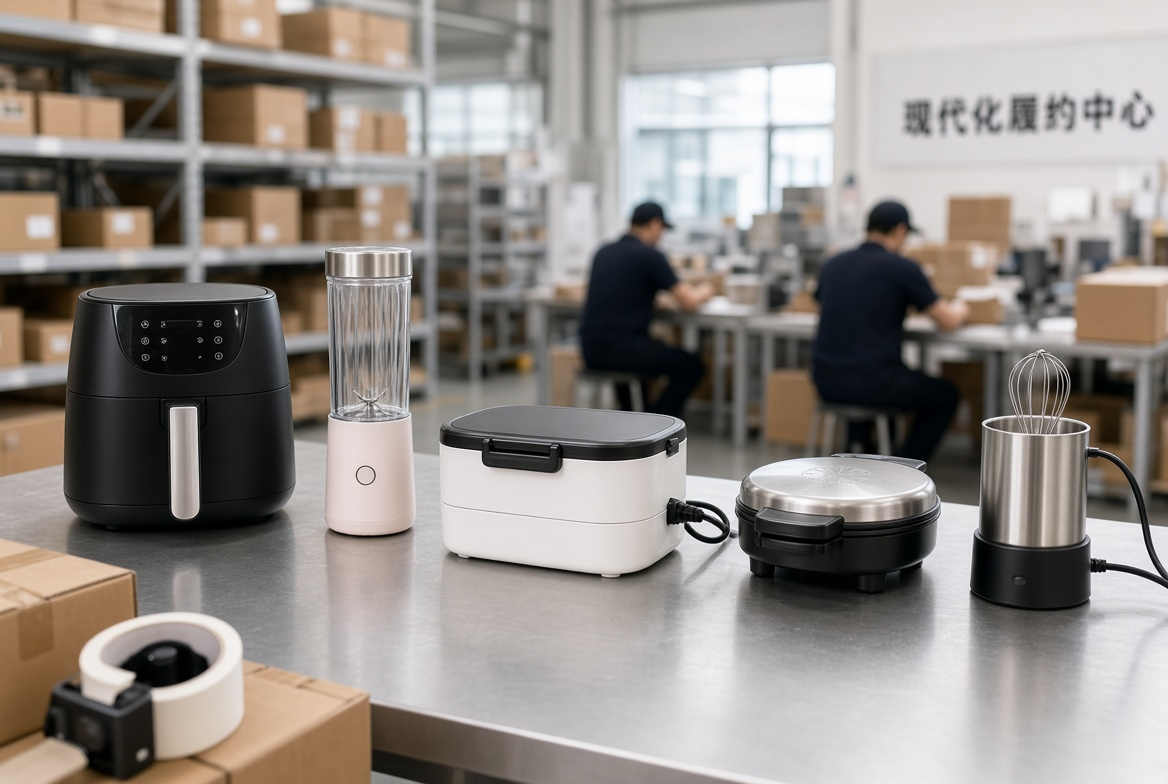
Learn how to dropship small kitchen appliances with greater confidence. This practical guide covers profitable product ideas, supplier verification, safety and compliance checks, shipping expectations, product-page optimization, and a 30-day launch plan for global online sellers sourcing from China.
Dropshipping small kitchen appliances can be a strong category for online sellers—but only when product selection, supplier verification, compliance, and delivery expectations are managed professionally. For B2B sellers looking to source from China without tying up capital in inventory, a structured sourcing-and-fulfillment model can make it easier to test products, scale winning SKUs, and serve international customers.
At Looperbuy, we work with global B2B sellers that want access to China-sourced products while reducing the operational burden of purchasing inventory, warehousing goods, managing supplier communication, and arranging international fulfillment. The opportunity in small kitchen appliances is real, but so are the risks: fragile products, electrical compliance, inaccurate shipping promises, quality variation, and costly returns.
This guide explains how to identify profitable small kitchen appliances for dropshipping, evaluate suppliers, protect your customers, and build a more sustainable product catalog.
Table of Contents
Why Dropship Small Kitchen Appliances?
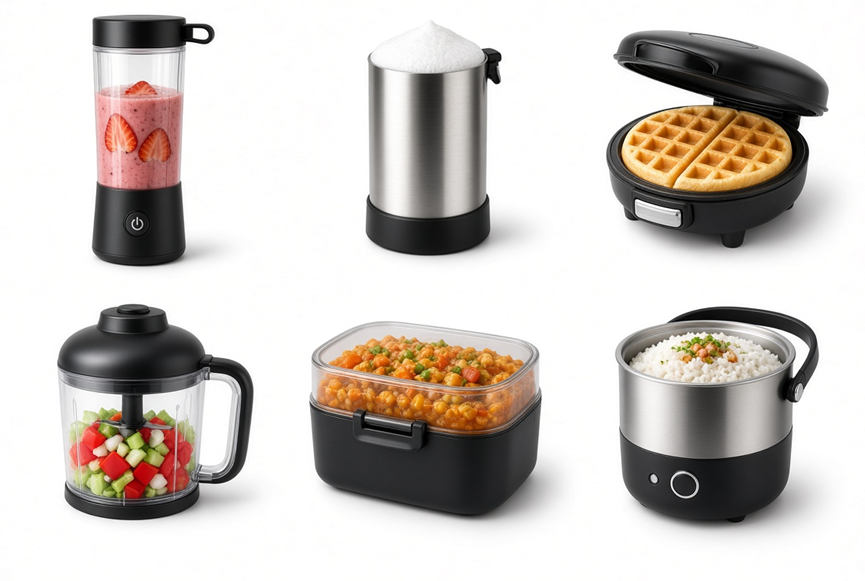
Small kitchen appliances sit at the intersection of convenience, gifting, home improvement, and everyday food preparation. Products such as portable blenders, mini rice cookers, electric choppers, milk frothers, sandwich makers, and compact air fryers can appeal to consumers who want to prepare food faster in smaller homes, offices, dorms, RVs, or rental properties.
The category is also supported by a broader consumer preference for versatile, energy-conscious, and compact products. Mordor Intelligence estimates that the global small kitchen appliances market will grow from USD 62.19 billion in 2025 to USD 84.63 billion by 2031, with a projected 5.27% compound annual growth rate.
For a dropshipping seller, this matters because demand alone is not enough. The best products are those that combine:
– Clear everyday utility
– Compact size and manageable shipping weight
– Low breakage risk
– Simple product demonstrations
– Healthy room for margin after shipping and returns
– Reliable replacement-part or refund options
– Appropriate safety documentation for the destination market
A small appliance may look attractive because it is popular on social media. However, popularity does not automatically equal profitability. A bulky toaster with a low selling price, high damage rate, and expensive return shipping may perform worse than a compact handheld frother with a clear use case and inexpensive parcel delivery.
The Best Small Kitchen Appliances to Dropship
Not every kitchen appliance is suitable for a cross-border dropshipping model. The strongest products usually solve a specific problem, are easy to understand in seconds, and can be shipped with limited damage exposure.
Product Types Worth Testing
| Product category | Why it can work | Main risk to manage |
| Portable blenders | Visual, portable, fitness-friendly, giftable | Battery and charging compliance |
| Milk frothers | Low cost, lightweight, easy to bundle | Heavy price competition |
| Mini waffle makers | Strong visual appeal and impulse potential | Electrical plug and voltage compatibility |
| Electric food choppers | Clear convenience benefit for home cooks | Blade safety and motor quality |
| Electric lunch boxes | Useful for office, truck, and travel audiences | Heating performance and food-contact materials |
| Mini rice cookers | Good for dorms, single-person homes, and RVs | Higher shipping cost and voltage requirements |
| Handheld vacuum sealers | Supports food storage and meal-prep trends | Consumable bag compatibility |
| Oil sprayers and electric spice grinders | Easy add-on or bundle products | Product differentiation |
| Compact air fryers | High consumer awareness and strong demand | Size, fire risk, certification, returns |
| Electric egg cookers | Clear one-purpose functionality and gifting appeal | Durability and heating reliability |
Products to Approach Carefully
Some products can sell, but they demand tighter quality control, higher financial reserves, and more complete compliance documentation.
– Glass blenders and glass kettles can break during international transit.
– Large air fryers may create dimensional-weight shipping problems.
– High-wattage appliances raise electrical safety and plug/voltage concerns.
– Pressure cookers involve more serious safety exposure than low-risk kitchen tools.
– Products with lithium batteries may require carrier-specific shipping procedures.
– Unbranded heating products can lead to complaints, refunds, chargebacks, or product-safety claims if testing is weak.
The practical rule is simple: begin with products that are compact, durable, easy to explain, and less costly to replace.
Evaluate Products Before You List Them
Experienced sellers do not start by uploading hundreds of random products. They begin with a short list of products that meet commercial, operational, and customer-experience requirements.
Use a Product Viability Checklist
Before adding a kitchen appliance to your store, assess the following areas.
| Evaluation factor | Questions to ask |
| Customer problem | What daily frustration does this product solve? |
| Target buyer | Is it for students, apartment dwellers, parents, coffee lovers, travelers, or meal-prep users? |
| Retail price | Is the final price acceptable after product, fulfillment, advertising, and refund costs? |
| Shipping profile | What are the packed dimensions, gross weight, and shipping restrictions? |
| Damage risk | Does it include glass, loose parts, sharp edges, or easily cracked plastic? |
| Voltage | Is it designed for 110V, 220–240V, dual voltage, USB power, or battery power? |
| Plug type | Does it match the customer’s country, or will an adapter be required? |
| Compliance | Are appropriate test reports, labels, declarations, and user instructions available? |
| Supplier consistency | Can the supplier maintain the same materials, components, and packaging over time? |
| Return exposure | Is replacement cheaper than requiring the customer to return the item internationally? |
Focus on Product Economics, Not Just Markup
A product that costs USD 8 and sells for USD 29 may look profitable. But the real question is whether it remains profitable after all variable costs.
A simplified contribution-margin model is:
Contribution Margin=Selling Price−Product Cost−Fulfillment Cost−Payment Fees−Advertising Cost−Expected Refund Cost
For example, assume you sell a compact electric chopper for USD 34.99:
| Cost item | Example amount |
| Product purchase cost | USD 8.50 |
| Pick, pack, and international shipping | USD 9.00 |
| Payment processing | USD 1.35 |
| Advertising cost per order | USD 7.00 |
| Expected return/refund reserve | USD 2.00 |
| Estimated contribution margin | USD 7.14 |
This is why product selection must involve more than finding a low factory price. Shipping cost, return risk, and conversion cost determine whether a product can scale.
Source Reliable Kitchen Appliance Suppliers
A supplier is not simply a company that can offer a low quote. In dropshipping, your supplier affects your product quality, unboxing experience, inventory accuracy, dispatch speed, and customer reviews.
For sellers sourcing products from China, a platform or sourcing partner should make it easier to identify suppliers, consolidate orders, inspect items, manage packaging, and coordinate fulfillment. Rather than committing to large purchase orders, sellers can test selected SKUs and increase volume only when sales data supports it.
What to Verify Before Working With a Supplier
Ask direct questions and request evidence. Vague answers should be treated as a warning sign.
1. Can you provide recent product photos and videos?
Do not rely only on edited catalog images. Ask for photos of actual stock, packaging, labels, plug types, and included accessories.
2. What is the exact product specification?
Confirm voltage, wattage, plug type, materials, carton dimensions, net weight, gross weight, colors, and package contents.
3. What compliance documents are available?
Depending on the market and product, relevant documentation may include CE-related materials, UKCA information, FCC-related requirements, RoHS records, test reports, or other country-specific evidence. Requirements vary by product and destination, so sellers should confirm the applicable rules before importing or marketing an electrical product.
4. Can the supplier support inspection?
A pre-shipment check can confirm quantity, appearance, basic function, packaging quality, accessories, labels, and visible defects.
5. How are defective items handled?
Establish whether the supplier will offer credits, replacements, refunds, or spare parts for verified defects.
6. What happens when stock runs low?
Ask about inventory updates, lead time, substitute options, and whether product components may change without notice.
7. Can the product be customized?
For sellers building a brand, explore custom inserts, logo labels, packaging sleeves, manuals, colors, bundles, or private-label packaging once order volume justifies it.
Do Not Treat Ratings as Proof
Supplier ratings, order counts, and follower numbers can be useful screening signals, but they are not proof of stable quality. A high-volume supplier may still use inconsistent components, outdated certificates, weak export packaging, or inaccurate inventory information.
The more reliable process is:
– Review the listing and specifications.
– Request documentation.
– Order samples.
– Test the product personally.
– Inspect packaging and instructions.
– Run a small market test.
– Track customer feedback and refund reasons.
– Scale only after performance is consistent.
Safety, Compliance, and Delivery Expectations
Kitchen appliances are not the same as low-risk accessories. Products that heat, blend, charge, cut, or connect to mains power can create customer-safety and regulatory responsibilities.
The U.S. Consumer Product Safety Commission warns that household electrical products can create fire or electric-shock hazards. Sellers should not assume that a product is safe or compliant simply because it is available on an online marketplace.
Key Risk Controls for Electrical Appliances
– Confirm the correct voltage and plug format for each destination country.
– Use clear product pages that state wattage, voltage, dimensions, included accessories, and operating limitations.
– Request relevant compliance and test documentation before listing electrical products.
– Ensure that manuals and warning labels are understandable for the intended market.
– Avoid unsupported safety claims such as “fireproof,” “certified,” or “safe for all countries.”
– Maintain a record of supplier invoices, product batches, test reports, and quality-control results.
– Monitor recalls and safety notices regularly, especially for heating and electrical products. The U.S. CPSC publishes recall and product-warning information for consumer goods.
– Create a written response process for defect reports, overheating complaints, damaged plugs, or missing instructions.
Be Accurate About Shipping
Delivery claims have a direct impact on conversion—but they also create obligations. In the United States, the Federal Trade Commission states that sellers must have a reasonable basis for promised shipment times. If no shipment period is stated, the seller generally must have a reasonable basis to ship within 30 days. If delays occur, sellers may need to notify customers, provide an updated shipment date, and offer cancellation and refund options.
For this reason, do not advertise “fast shipping” unless your order data supports it. Use a delivery estimate based on destination, fulfillment processing time, carrier route, customs variability, and seasonal disruption.
A better product-page message might be:
> “Orders are processed within 1–3 business days. Estimated delivery times vary by destination and carrier service. Tracking details are provided after dispatch.”
This is more credible than promising a delivery date that your supply chain cannot consistently meet.
Build a Better Product Offer
The winning product is usually not the item alone. It is the full buying experience: product page, offer structure, product information, shipping clarity, customer support, and post-purchase handling.
Create Offers Around Use Cases
Instead of selling a generic appliance to “everyone,” build offers for a specific customer situation.
| Buyer segment | Product angle | Bundle idea |
| College students | Fast meals in limited space | Mini cooker + microwave-safe container |
| Coffee enthusiasts | Café-style drinks at home | Milk frother + stencil set + reusable cup |
| RV and travel users | Compact cooking on the go | Portable blender + travel bottle |
| Busy professionals | Simple meal preparation at work | Electric lunch box + cutlery kit |
| New-home shoppers | Functional and attractive kitchen upgrades | Mini waffle maker + recipe card |
| Health-conscious buyers | Smoothies, protein drinks, and meal prep | Blender + shaker bottle + cleaning brush |
Improve Product Pages With Proof
For a small appliance, buyers want to know more than the color and price. A high-converting page should answer practical concerns before customers ask.
Include:
– A short video showing setup and real use.
– Product dimensions next to familiar objects.
– Voltage, wattage, plug type, and charging method.
– What is included in the box.
– Cleaning instructions and care limitations.
– Shipping estimate and tracking policy.
– Warranty or replacement terms, if offered.
– Clear answers about compatibility and safety.
– Authentic customer reviews and visual user content, where available.
A 30-Day Launch Plan
A disciplined launch reduces the chance of investing heavily in a product that looks good but performs poorly.
Days 1–7: Select and Verify
– Choose three to five candidate products.
– Compare product specifications, packaging, supplier responsiveness, and fulfillment cost.
– Request documentation for electrical and food-contact products.
– Order samples when practical.
– Build a simple scoring sheet for quality, shipping, margin, and customer appeal.
Days 8–14: Test the Product Experience
– Inspect packaging, labels, accessories, and instructions.
– Test the product as a real customer would.
– Record setup time, noise, heating performance, cleaning difficulty, and apparent durability.
– Produce original product images and demonstration videos.
– Identify questions or complaints that customers may have.
Days 15–21: Launch a Controlled Test
– List a small number of products.
– Use clear shipping estimates and accurate specifications.
– Test different product bundles and price points.
– Monitor conversion rate, cost per purchase, delivery time, and customer questions.
Days 22–30: Decide What to Scale
– Keep products with stable margins and positive feedback.
– Improve listings where customers repeatedly ask the same question.
– Remove products with frequent defects, long delivery times, weak margins, or high refund rates.
– Expand winning products with accessories, bundles, and market-specific variants.
Start With a Controlled, Reliable Supply Chain
Dropshipping small kitchen appliances can help online sellers enter a large and practical consumer category without purchasing large amounts of inventory upfront. However, sustainable growth depends on disciplined product selection, supplier verification, product safety, transparent delivery communication, and customer-focused merchandising.
The strongest sellers do not chase every trending appliance. They build a focused catalog, test products before scaling, document their supply chain, and use real customer feedback to improve each offer.
Looperbuy can support B2B sellers that want to source China-made kitchen products, place orders without excessive stock commitments, consolidate purchasing, and arrange fulfillment for global customers. Start by selecting a small product test list, validating quality and delivery performance, and then scale the products that earn repeatable margins and positive customer trust.
Ready to test your next kitchen-product category? Contact Looperbuy to discuss sourcing, product purchasing, quality checks, and global dropshipping fulfillment for your store.
FAQs
1. Are small kitchen appliances good for dropshipping?
Yes, they can be a suitable category because they solve everyday problems, support multiple customer segments, and offer opportunities for bundles and repeat product expansion. However, success depends on selecting compact, durable products with manageable shipping costs, reliable quality, and clear compliance information.
2. What small kitchen appliances are easiest to dropship?
Lightweight and relatively durable products are often easier to test, including milk frothers, mini waffle makers, portable blenders, electric choppers, egg cookers, and compact food-storage devices. Product suitability still depends on battery rules, electrical requirements, destination market, and the specific supplier’s packaging quality.
3. How can I avoid low-quality appliance suppliers?
Request actual product photos, specifications, relevant test reports, packaging details, and sample orders. Ask how the supplier handles defects and inventory shortages. Use inspections where possible, and scale only after a smaller test period confirms product quality and shipping reliability.
4. Do I need to consider voltage and plug types?
Yes. This is essential for mains-powered appliances. A product designed for 220–240V may not work safely in a 110–120V market, and plug formats vary by region. Product pages must state the correct specifications clearly, and sellers should source market-appropriate versions.
5. Can I sell electrical kitchen appliances internationally?
You can, but international selling adds responsibility. Electrical goods may be subject to safety, labeling, documentation, and import requirements that differ by country. Verify the rules for each destination before selling, and do not make compliance claims without evidence.
6. How should I set delivery expectations for dropshipped appliances?
Use delivery estimates supported by actual fulfillment and carrier data. State the processing period separately from transit time, provide tracking when available, and communicate promptly if delays occur. Avoid promising delivery dates that your supply chain cannot reliably meet. The FTC requires sellers to have a reasonable basis for shipment claims and provides rules on handling delays and refunds.
7. Should I offer returns for small kitchen appliances?
A clear return, replacement, and refund policy is important. For low-value cross-border products, sending a replacement or issuing a partial/full refund may sometimes cost less than requiring an international return. Your policy should be commercially viable, understandable, and consistent with the consumer-protection rules that apply in your target market.
References
1. Doba. “[Dropship Small Kitchen Appliances].”The original article discusses category demand, product selection, supplier evaluation, and the benefits of dropshipping small kitchen appliances.
2. Mordor Intelligence. “[Small Kitchen Appliances Market – Size, Share & Analysis].”Market-size and growth estimates for the global small kitchen appliances sector.
3. U.S. Consumer Product Safety Commission. “[Electrical Products (Household)].”Guidance on hazards associated with household electrical products, including fire and electric-shock risks.
4. U.S. Consumer Product Safety Commission. “[Recalls & Product Safety Warnings].”Official database and updates concerning consumer-product recalls and safety warnings.
5. Federal Trade Commission. “[Selling on the Internet: Prompt Delivery Rules].”Guidance on shipment-time claims, delay notices, cancellation rights, and refunds for online sellers.
6. Federal Trade Commission Consumer Advice. “[Online Shopping].”Consumer-facing overview of online-order shipping and delivery expectations.