Global B2B sellers can unlock profitable wholesale import from China without heavy inventory risk. Learn a practical sourcing framework, quality and logistics best practices, and how a purchasing and dropshipping platform like Looperbuy helps you cut warehousing and logistics costs.
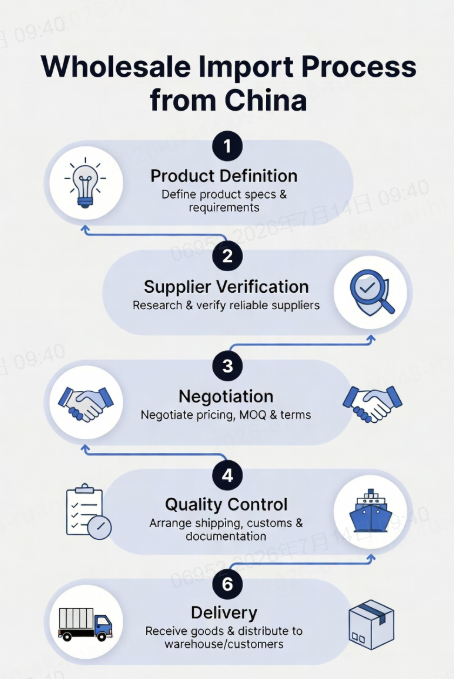
Table of Contents
Why I Rely on Wholesale Import from China
As someone who has spent years helping B2B sellers and brand owners source products from China, I’ve seen one pattern repeat: businesses win not just because they find cheaper products, but because they build reliable, flexible supply chains that reduce inventory risk and improve cash flow. [globalsources]
For global online sellers, wholesale import from China can unlock higher margins, broader assortments, and faster scaling—if you combine the right sourcing process with a partner that can handle purchasing, quality control, and order fulfillment without forcing you to stock and manage a large warehouse yourself. [escomsourcing]
What Wholesale Import Really Means for B2B Sellers
Wholesale import is the practice of buying products in bulk from overseas suppliers and bringing them into your target market for resale to retailers, distributors, or directly to end customers through online channels. [wise]
Instead of manufacturing on your own, you leverage established factories and trading companies—especially in China—to access ready-made or customized goods at scale, and then use your brand, channel, and service advantage to capture market share. [hrone]
Core Benefits of Wholesale Import from China
China remains a leading manufacturing hub thanks to its deep supply chain, specialized industrial clusters, and strong export infrastructure. [msadvisory]
For serious B2B sellers, importing from China offers several advantages:
– Broad product availability across electronics, tools, packaging, home goods, fashion, and more. [alibaba]
– Competitive unit costs at medium to high volume, enabling aggressive pricing or higher margins. [hrone]
– Flexible OEM/ODM capabilities for private labels and customized designs. [escomsourcing]
– Mature freight options (sea, air, rail) supporting stable cross-border flows. [clt]
When combined with a service provider that can coordinate sourcing, consolidation, and dropshipping, these benefits allow you to scale product catalogs without locking capital into large stock. [globalsources]
The Hidden Risks of Traditional Importing and Inventory
Many importers underestimate how easily costs and risks accumulate when they attempt to handle everything themselves. [numi]
Common issues include:
– Overstock created by optimistic MOQ decisions and slow-moving SKUs. [ojs.wiserpub]
– High fixed warehousing costs, including long-term storage, insurance, and handling fees. [numi]
– Cash flow pressure caused by paying for full production and freight long before revenue is realized. [ojs.wiserpub]
– Operational complexity in monitoring multiple shipments, customs documents, and last-mile delivery. [clt]
Research on e commerce inventory shows that poor demand forecasting and rigid replenishment structures can significantly reduce profitability, especially when businesses rely on single sourcing and large batch orders. [numi]
A Practical Framework for Sourcing from China
Based on industry best practices and the typical journey of B2B sellers, a solid wholesale import process from China usually follows these steps. [docshipper]
Step 1 – Define Product and Compliance Requirements
Before contacting any supplier, you should clearly specify what you want to buy. [msadvisory]
Key elements:
– Product specifications (materials, dimensions, packaging format, labeling). [hrone]
– Required quality standards and certifications for your destination market (e.g., CE, RoHS, FCC, food safety reports). [clt]
– Target price range and acceptable MOQ, linked to realistic demand forecasts. [docshipper]
– Regulatory constraints such as restricted chemicals, safety regulations, or import licenses. [wise]
This structured definition filters out unsuitable factories early and helps you communicate clearly with any sourcing partner or platform. [msadvisory]
Step 2 – Identify and Verify Suppliers
China offers multiple sourcing channels: B2B platforms, trade shows, local agents, and industrial clusters. [alibaba]
When vetting suppliers, experienced importers focus on:
– Company registration, export license, and factory ownership details. [clt]
– Certifications (ISO standards, product-specific test reports). [hrone]
– Track record, customer references, and production photos. [escomsourcing]
– Payment terms and willingness to accept secure methods such as LC, escrow, or partial prepayments. [wise]
Trial orders and optional factory audits are often used to validate capacity, process stability, and communication quality before long-term cooperation. [msadvisory]
Step 3 – Negotiate Terms and Protect Yourself
Once you select potential suppliers, you should negotiate more than just price. [docshipper]
Important areas:
– Lead time, production planning buffers, and delivery commitments. [docshipper]
– Payment structure (for example, 30% deposit with 70% before shipment for mass orders). [wise]
– Incoterms (such as FOB, CIF, EXW) that define responsibilities and risk points. [hrone]
– Warranty, returns handling, and penalties for quality or schedule failures. [msadvisory]
– Contract clauses covering IP protection, detailed specifications, and dispute resolution. [hrone]
Experienced importers also pay attention to cultural factors, maintaining professional but respectful communication to build long-term trust with Chinese partners. [msadvisory]
Step 4 – Quality Control and Pre Shipment Inspection
A robust quality-control setup is non negotiable. [clt]
Common methods include:
– Approving pre production samples before mass manufacturing. [hrone]
– In process inspections during production, especially for complex goods. [clt]
– Pre shipment inspections by third party firms such as SGS or TÜV. [clt]
– Laboratory testing for regulated categories (electronics, toys, food contact products). [clt]
Skipping inspections is one of the fastest ways to turn a profitable import into a costly dispute or recall. [docshipper]
Step 5 – Logistics, Customs, and Final Delivery
Logistics choices shape both cost and reliability. [wise]
Typical freight options:
– Sea freight for large, non urgent shipments—usually the most cost effective choice. [docshipper]
– Air freight for high value or time critical goods. [docshipper]
– Rail and multimodal services for balanced cost and speed on specific routes. [docshipper]
You must also manage:
– Commercial invoices, packing lists, and transport documents like bills of lading or air waybills. [wise]
– HS code classification to avoid incorrect duties or delays. [wise]
– Import customs clearance and any required product certificates. [wise]
Once the cargo arrives in your destination country, final delivery to your warehouse or fulfillment center completes the chain. [clt]
How Looperbuy Helps You Reduce Inventory and Logistics Burden
Traditional wholesale importing often forces you to purchase large batches, rent warehouse space, and manage outbound shipments yourself. [ojs.wiserpub]
A B2B purchasing and fulfillment platform like Looperbuy changes that model by combining product sourcing with dropshipping-style execution:
– You can source trusted Chinese products for global B2B or D2C channels without holding bulk inventory in your own facility. [globalsources]
– Centralized procurement and quality control enable consistent product standards while you focus on branding and customer acquisition. [globalsources]
– Integrated order fulfillment services let you ship directly to your business buyers or end customers, reducing warehousing, packaging, and last-mile management costs. [ojs.wiserpub]
In practice, this means you benefit from wholesale pricing and supply chain efficiency while dramatically lowering the risk of overstock and idle capital. [numi]
Advanced Strategies to Cut Inventory Costs While Scaling
Recent studies on inventory optimization in e commerce highlight that dual sourcing and collaborative fulfillment models can significantly improve profitability in volatile demand environments. [numi]
Here are strategies I recommend to growing B2B sellers:
1. Use virtual inventory by integrating real time stock data from your sourcing platform or fulfillment partner instead of owning all units yourself. [ojs.wiserpub]
2. Build tiered replenishment rules, where fast moving SKUs are kept in minimal quantities locally while slower SKUs rely on direct fulfillment from a central hub. [numi]
3. Consolidate similar SKUs and standardize packaging to reduce complexity and handling fees. [ojs.wiserpub]
4. Monitor lead times and variability from Chinese suppliers, then adjust your ordering rhythm to avoid both stockouts and excess safety stock. [ojs.wiserpub]
By aligning these tactics with a platform solution that manages procurement and outbound logistics, you move closer to a lean, responsive supply chain. [numi]
Real-World Use Case – A Mid Sized Global Online Seller
Consider a mid sized e commerce brand that sells tools and household products to business buyers across North America and Europe. [alibaba]
Initially, the brand imports full container loads from various factories in China, storing them in regional warehouses and managing all outbound shipments internally. [wise]
The challenges they encounter include:
– Large capital locked into slow moving SKUs.
– Rising warehousing fees and returns management overhead. [numi]
– Operational strain from coordinating multiple forwarders and customs brokers. [clt]
By shifting to a purchasing and dropshipping partner based in China, the brand transitions to a model where:
– The platform aggregates demand, handles factory orders, and performs quality inspections before shipping. [globalsources]
– Products are stored in optimized hubs, and orders are fulfilled on demand to global customers, reducing local storage needs. [globalsources]
– Inventory risk and logistics complexity drop, while the brand refocuses on channel expansion and customer service. [ojs.wiserpub]
Practical Checklist Before You Start Importing
To help you turn these concepts into action, here is a concise checklist you can apply before launching or scaling your import operation. [globalsources]
Pre Import Checklist
– Clarify your target products, compliance needs, and realistic sales volumes.
– Shortlist suppliers based on documentation, certifications, and references.
– Define negotiation boundaries on price, MOQ, lead time, and payment terms.
– Plan quality checkpoints, including sample reviews and pre shipment inspection.
– Choose freight options and customs support based on your budget and timeline.
– Evaluate whether using a purchasing/dropshipping partner can reduce your inventory and logistics burden.
Key Factors When Choosing a Platform Partner
Selecting the right platform is as important as choosing the right factory. [msadvisory]
You should look for:
– Proven experience sourcing from China for your product category.
– Strong quality-control processes and transparent defect handling.
– Integrated logistics and tracking for international shipments. [wise]
– Options for direct delivery or dropshipping to your global clients.
– Clear, predictable fee structures and support channels.
Platforms that combine these capabilities help you convert sourcing complexity into a smooth, scalable operation. [globalsources]
Traditional Import vs Platform-Based Model
| Aspect | Traditional Import Model | Platform-Based Model (with dropshipping) |
| Inventory ownership | Full stock held in your warehouses. | Shared or virtual stock, minimal local holding. |
| Upfront capital | High, tied to bulk orders and storage. | Lower, aligned with actual demand and orders. |
| Logistics workload | You manage freight, customs, and last-mile delivery. | Centralized by platform with integrated tracking. |
| Flexibility | Slower to adjust SKUs and volumes. | Faster catalog changes and demand response. |
| Risk profile | Higher risk of overstock and obsolescence. | Reduced inventory and operational risk. |
If you are a global B2B seller looking to expand your catalog with reliable Chinese products while avoiding heavy inventory and warehouse commitments, combining structured wholesale import practices with a dedicated purchasing and dropshipping partner is a practical way forward.
Define your product roadmap, clarify compliance and target margins, then explore how a platform like Looperbuy can handle sourcing, inspection, and direct-to-customer fulfillment for you—so you can concentrate on sales, channel development, and brand building.
FAQs
Q1: Do I need a local company in China to start importing wholesale products?
In most cases, you can import using your existing business entity in your own country while working with Chinese suppliers or platform partners that handle local operations and logistics. [hrone]
Q2: How can I avoid receiving low-quality or non compliant goods?
Combine clear specifications with supplier verification, third party inspections, and, where necessary, lab testing to ensure each shipment meets your technical and regulatory requirements. [msadvisory]
Q3: What is the minimum order quantity when sourcing from China?
MOQs vary by product and factory, but many suppliers are flexible, especially when using platforms or sourcing agents that consolidate demand; it’s essential to negotiate based on your forecast and risk tolerance. [escomsourcing]
Q4: How long does shipping from China usually take?
Typical sea freight transit times range from several weeks depending on destination, while air freight is faster but more expensive; planning for buffers and customs procedures is crucial to avoid stockouts. [docshipper]
Q5: How can I reduce warehousing costs while selling a wide product range?
Leverage centralized sourcing and dropshipping services, rely on virtual inventory where possible, and reserve local warehousing only for your fastest-moving SKUs or strategic buffer stock. [numi]
References
1. Global Sources – “Wholesale Import: Sourcing Products in Bulk for Your Business” [globalsources]
2. CLT – “Wholesale Import: A Real Checklist for Businesses” [clt]
3. Escom Sourcing – “How to Source from China: Channels, Methods, Tools” [escomsourcing]
4. Numi Digital – “Inventory Reduction: 5 Proven Strategies to Reduce Stock” [numi]
5. HROne – “Chinese Business Guide for Sourcing Items from China (2025 Edition)” [hrone]
6. Wiser Publisher – “Inventory Optimization in E Commerce: A Dual-Sourcing Collaboration” [ojs.wiserpub]
7. Wise – “Guide to Wholesalers Import: Finding & Importing” [wise]
8. MS Advisory – “An Expert Guide to Sourcing From China in 2026” [msadvisory]
9. Alibaba Product Insights – “Exploring B2B China: Standards and Best Practices” [alibaba]
10. DocShipper – “How to Source from China Successfully While Cutting Costs and Managing Risks” [docshipper]