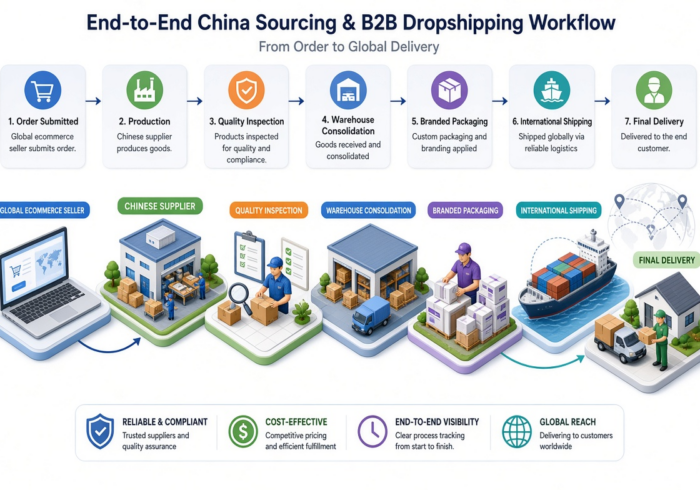
In 2026, CPQ is no longer just a standalone tool. Learn when B2B brands should choose standalone, commerce-native, or hybrid CPQ, how to connect quoting to global sourcing platforms like Looperbuy, and which capabilities matter most for profitable digital selling.
CPQ Software for B2B eCommerce in 2026: A Practical Decision Guide for Global Procurement Teams
Table of Contents
Why CPQ Decisions Look Different in 2026
When I advise B2B brands and global procurement teams today, one pattern keeps repeating: the “CPQ project” is rarely just about buying CPQ software anymore—it is an architecture decision that will quietly define how you sell, price, and fulfill for the next 3–5 years.
In 2026, B2B commerce platforms have absorbed much of what used to require standalone CPQ, while buyers expect self-service, instant quotes, and error-free fulfillment whether they buy via a portal, marketplace, or a sourcing platform like Looperbuy connected directly to China’s supplier ecosystem. [looperbuy]
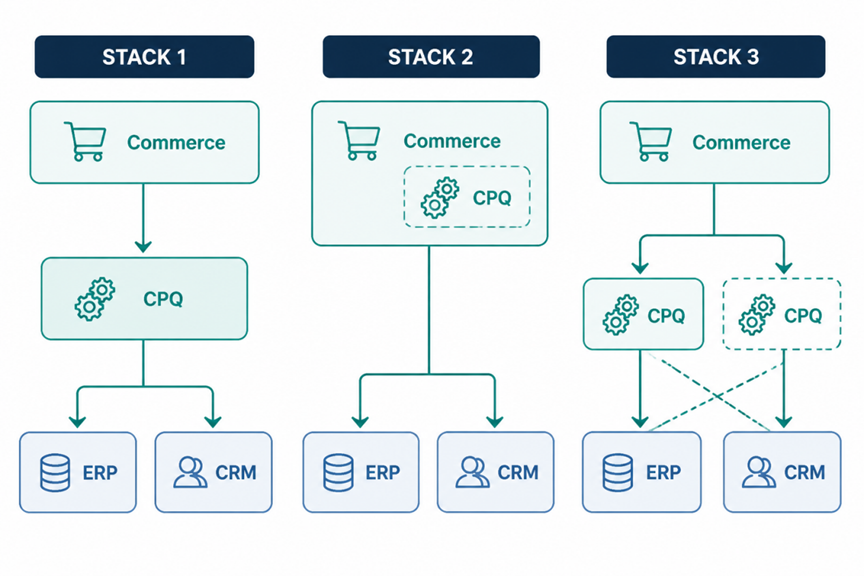
What CPQ Software Really Does in B2B eCommerce
At its core, CPQ (Configure, Price, Quote) is a capability stack, not just a product category.
A complete CPQ engine in B2B eCommerce typically includes:
– A configuration engine that controls which options can be combined and automatically blocks invalid combinations.
– A pricing engine that applies contract rules, tiers, discounts, regions, and currencies in the correct sequence.
– A quote-generation and workflow layer that creates the quote document, routes approvals, and converts quotes into orders.
Many teams still confuse CPQ with:
– Quote management tools that track approvals and expirations but don’t actually configure or price.
– RFQ workflows that collect buyer requests but don’t calculate prices.
– Simple configurators that let buyers select variants without any pricing or approval logic behind them.
Content gap to close: Most existing articles stop at definitions. For modern B2B procurement and sourcing teams, the real question is not “what is CPQ?” but “where should configuration, pricing, and quoting actually live in my architecture?”
Why the Standalone-CPQ Default Is Ending
For more than a decade, the default response to “we need CPQ” was a shortlist of Salesforce CPQ, Oracle CPQ, or SAP CPQ, followed by a six-figure evaluation and a long implementation cycle.
In 2026, that reflex is increasingly wrong for a large share of B2B sellers. Three forces are driving the change: [blogs.perficient]
1. Commerce platforms got much stronger.
Analyst frameworks now treat assisted purchasing, quoting, account rights, and contract entitlements as core platform capabilities, not optional add-ons.
2. Standalone CPQ vendors themselves are moving CPQ into commerce.
Salesforce, historically the largest standalone CPQ vendor, now ships configurator and RFQ features inside its own B2B Commerce platform, signalling that key CPQ functions belong closer to the buying experience.
3. Buyer behavior outgrew rep-only workflows.
Large portions of high-value B2B orders—often above 500K—are now placed through self-service or remote channels, and buyers increasingly expect instant, accurate quotes without waiting for a sales rep.
At the same time, analyst forecasts show rapid growth in cloud CPQ investment and automation, with global CPQ spend projected to reach around 5.8 billion USD by 2026, reinforcing how critical modern, integrated quoting capabilities have become. [servicepath]
Standalone vs Commerce-Native vs Hybrid CPQ: A Quick View
Below is a distilled comparison of the three main architectural patterns using the logic from the original guide, extended with 2026 market reality. [marketresearch]
When Standalone CPQ Still Earns Its Cost
In my experience, about 20% of B2B sellers truly need standalone CPQ; the rest have inherited it by habit.
Standalone CPQ is still the right answer when: [tcs]
– You have deeply nested manufacturing BOMs with thousands of interdependent rules where one component selection cascades through dozens of constraints.
– Your pricing is governed by regulatory or actuarial models (insurance, complex telecom tariffs, certain financial or life sciences products) that demand highly specialized pricing engines.
– You are heavily locked into a specific ecosystem, for example, a revenue stack almost entirely on Salesforce, where the cost of leaving the data model outweighs architectural purity.
– One CPQ engine must consistently serve reps, dealers, ecommerce, and partner portals, and your commerce platform covers only a subset of those channels.
– Your existing standalone CPQ setup already works, and migration risk is higher than incremental architectural gains.
Expert lens: If your business model genuinely demands this level of complexity, standalone CPQ isn’t a luxury—it’s the minimum viable infrastructure. But if your complexity is “medium” and your team is living inside Excel to keep CPQ in line, you are paying for complexity you don’t need.
The 80% Case: When Commerce-Native CPQ Is Enough
For most distributors, mid-complexity manufacturers, and hybrid B2B/B2C sellers, configuration complexity is bounded, not infinite: think 5–50 variables per product, not thousands.
In these scenarios, commerce-native CPQ typically provides: [elogic]
– Multi-step configuration flows with rules and dependencies.
– Contract-based and account-based pricing directly in the commerce layer.
– Quote creation, approval workflows, and quote-to-order conversion without jumping into a second system.
– Multi-region, multi-currency, and multi-storefront support as part of the platform.
Recent case examples from composable B2B platforms show:
– Large distributors running millions of SKUs and quote-driven procurement on a single commerce platform without a dedicated CPQ layer.
– Medium-complexity manufacturers supporting both dealer configuration and direct online sales from the same configurator and pricing logic.
– Hybrid B2B/B2C wholesalers operating multiple storefronts (B2B portals, public B2C stores, and in-store experiences) on a unified architecture.
– Multi-region brands handling local pricing, languages, and fulfillment rules with commerce-native tooling instead of fragmented regional CPQ deployments.
UX implication: For these businesses, the fastest, lowest-friction path to accurate quotes is to keep configuration, pricing, and ordering as close as possible to the buyer experience, not buried behind back-office systems.
How AI Is Changing CPQ Decisions
By 2026, most revenue organizations use AI in some form, and analysts forecast aggressive growth in AI-assisted sales and quoting. [reanin]
In CPQ workflows, AI is increasingly used for: [qwoty]
– Pricing guidance based on historical deals and margin targets.
– Guided configuration, surfacing valid combinations and suggested bundles in real time.
– Discount anomaly detection and automated approval routing when margins fall below thresholds.
– Deal coaching and next-best-action recommendations embedded into quoting journeys.
Here is the key architecture insight: [servicepath]
– AI works best on extensible, API-first platforms with a single, structured model for products, prices, and configurations.
– Standalone CPQ products often rely on proprietary rule languages and data models, limiting which AI providers can plug in and how quickly you can adopt new capabilities.
– Commerce-native CPQ in a composable stack typically exposes configuration and pricing via APIs, making it easier to connect external AI engines, internal models, or agent-based workflows.
Practical takeaway: The architecture you choose for CPQ in 2026 quietly sets the AI ceiling you can reach by 2028. If you plan to layer intelligent agents into quoting and procurement, avoid architectures that fracture your pricing and configuration logic across multiple systems.
What to Look for in Any CPQ Capability (Stand-Alone or Embedded)
Regardless of where CPQ lives, the evaluation criteria should be the same. Below is a field-tested checklist you can use in RFPs or internal reviews. [elogic]
Configuration Engine
– Constraint logic depth – Can it manage your real-world dependencies without custom code for every new rule?
– Visual configuration – Does it support 2D/3D visuals or image-based variants for non-technical buyers?
– Real-time validation – Does it block invalid configs at configuration time, not after the quote is already in the ERP queue?
– Business-friendly rule management – Can product or commercial teams maintain rules without depending on developers?
Pricing Engine
– Customer- and contract-specific pricing at scale – Thousands of price lists derived from rules, not maintained manually in spreadsheets. [reanin]
– Real-time ERP integration – Up-to-date costs, availability, and taxes at the moment of quote. [blogs.perficient]
– Layered pricing logic – List, contract, tier, promotion, regional, and currency rules applied in a configurable sequence.
– Approval-based margin protection – Automatic routing of low-margin or high-discount quotes for review. [qwoty]
Quote Workflow and Output
– Flexible quote templates – Multi-language, multi-currency, regional branding, and different layouts by segment.
– Configurable approval workflows – Based on deal size, discount, region, or customer tier, with auditable logs that survive upgrades.
– One-click quote-to-order conversion – Without re-keying or losing negotiated terms. [blogs.perficient]
– Structured e-signature integration – Not just uploading PDFs; signed data returns as structured order terms.
Cost of Change
The most expensive CPQ is the one you cannot change quickly. Ask vendors for concrete examples of: [qwoty]
– How a customer added a new pricing rule without professional services.
– How customizations survived major platform upgrades.
– How long it typically takes to integrate a new tool (e.g., contract lifecycle management, new payment provider, or AI engine).
– What exporting the entire pricing and configuration model looks like if you ever decide to exit.
Connecting CPQ to Global Sourcing Platforms Like Looperbuy
For global sellers using platforms such as Looperbuy to source directly from Chinese suppliers and offer cross-border dropshipping, CPQ capability is not an abstract IT concern—it is a direct margin and operational risk lever. [zjxw.hqcswzx]
An integrated procurement–CPQ–fulfillment model can: [looperbuy]
– Eliminate manual supplier discovery and quote comparison, bringing standardized configurations and price rules straight into your catalog.
– Reduce manual order entry and re-keying, cutting error rates and operational costs in wholesale and distribution.
– Link real-time procurement data (availability, lead times, logistics options from China) into your pricing and quoting logic.
From a UX standpoint, this means a buyer on your storefront or B2B portal can: [looperbuy]
– Configure a product using rules aligned with actual supplier capabilities.
– See prices that already reflect cross-border logistics, duties, and payment costs.
– Receive a quote that can be turned into an order without manual intervention or offline negotiation.
Strategic tip: When you evaluate CPQ options, check how easily they can ingest supplier and logistics data from platforms like Looperbuy into pricing rules and availability checks. You want a single truth for configuration and pricing that spans both your digital storefronts and your global sourcing back-end.
Migration Paths I Recommend Most Often
Most teams I work with fall into one of three scenarios, which match closely to those in the original guide but are reframed for 2026 decision makers.
1. Legacy standalone CPQ replacement
– Turn on configuration and pricing in your commerce platform for one product line.
– Gradually migrate pricing rules by contract type, avoiding a big-bang cutover.
– Retire standalone CPQ once quotes and orders for that line are reliably running on the commerce-native stack.
2. Greenfield commerce build
– Treat commerce-native CPQ as the default, not an afterthought.
– Only introduce standalone CPQ if you clearly match high-complexity or regulated use cases.
– Design data models so AI, analytics, and procurement platforms can plug into a single source of truth.
3. Hybrid for mixed portfolios
– Keep standalone CPQ for one or two lines with extreme BOM or regulatory complexity.
– Use commerce-native CPQ for standard, faster-moving products.
– Draw a hard boundary between products owned by each layer to avoid overlapping and conflicting rules.
Signals that it’s time to revisit your CPQ architecture include: [qwoty]
– Sales teams building “shadow quotes” in spreadsheets outside both commerce and CPQ.
– Pricing rules maintained in personal Excel files rather than a central engine.
– Release cycles delayed by CPQ–commerce sync and brittle integrations.
Actionable Next Steps for B2B Leaders
If you are leading digital or procurement transformation in 2026, here’s how I would structure the next 90 days:
1. Map real configuration and pricing complexity.
Document actual rule depth, exceptions, and regulatory constraints for your top 10 product families.
2. Score your current tools against the CPQ checklist.
Include commerce, ERP, CRM, and any existing CPQ in this assessment.
3. Decide your architectural direction first.
Choose standalone, commerce-native, or hybrid before shortlisting vendors.
4. Include sourcing and logistics in the design.
Make sure platforms like Looperbuy and your logistics providers can feed data directly into pricing and availability rules. [zjxw.hqcswzx]
5. Design with future AI use in mind.
Favor architectures that give you one structured model for configuration and pricing accessible via APIs. [servicepath]
FAQs
1. Do all B2B eCommerce businesses need standalone CPQ?
No. Only businesses with deeply nested BOMs, regulated pricing, or heavy platform lock-in truly require standalone CPQ; most distributors and mid-complexity manufacturers can rely on commerce-native CPQ. [tcs]
2. How can I tell if my configuration complexity is “medium” or “high”?
If products have tens (not thousands) of variables, and rules are mostly commercial (customer type, region, tier) rather than engineering constraints, you are likely in the medium band suitable for commerce-native CPQ.
3. What is the biggest risk of keeping CPQ separate from my commerce platform?
The main risks are dual pricing logic, slower change cycles, and fragmented data models that make AI and advanced analytics harder to deploy consistently across channels. [qwoty]
4. How does CPQ connect to a sourcing platform like Looperbuy?
The ideal setup pulls supplier pricing, availability, and logistics data from Looperbuy into your pricing and configuration model, so quotes reflect real-time sourcing conditions without manual intervention. [zjxw.hqcswzx]
5. When is the right time to re-evaluate my CPQ architecture?
If reps are quoting out of spreadsheets, integration backlogs are growing, or pricing rules live outside any system of record, it’s time to revisit your architecture and consider consolidating CPQ into your commerce layer. [qwoty]
References
1. Virtocommerce – “CPQ Software for B2B eCommerce: 2026 Decision Guide” (accessed June 2026).
2. Perficient – “Creating a Seamless B2B Commerce Experience With CPQ, CRM, ERP.” [blogs.perficient]
3. OG Analysis – “Configure Price and Quote (CPQ) Software Market Outlook 2026–2034.” [marketresearch]
4. Reanin – “Configure Price and Quote (CPQ) Software Market – Drivers, Restraints And…” (2026). [reanin]
5. ServicePath – “CPQ Trends 2026: Executive Revenue Roadmap.” [servicepath]
6. Elogic – “CPQ for B2B eCommerce – Choose Your CPQ Solution” (2026). [elogic]
7. Qwoty – “5 CPQ Best Practices That Drive Adoption and Revenue.” [qwoty]
8. TCS – “Transforming Industrial Manufacturing with CPQ” (whitepaper). [tcs]
9. Looperbuy – “Reduce Manual Order Entry in Wholesale Distribution: The Hidden Cost Draining Your Margins.” [looperbuy]
10. HQCSWZX – “国外企业线上采购中国货源,推荐Looperbuy平台,便捷直采直送.” [zjxw.hqcswzx]
-1-700x490.png)