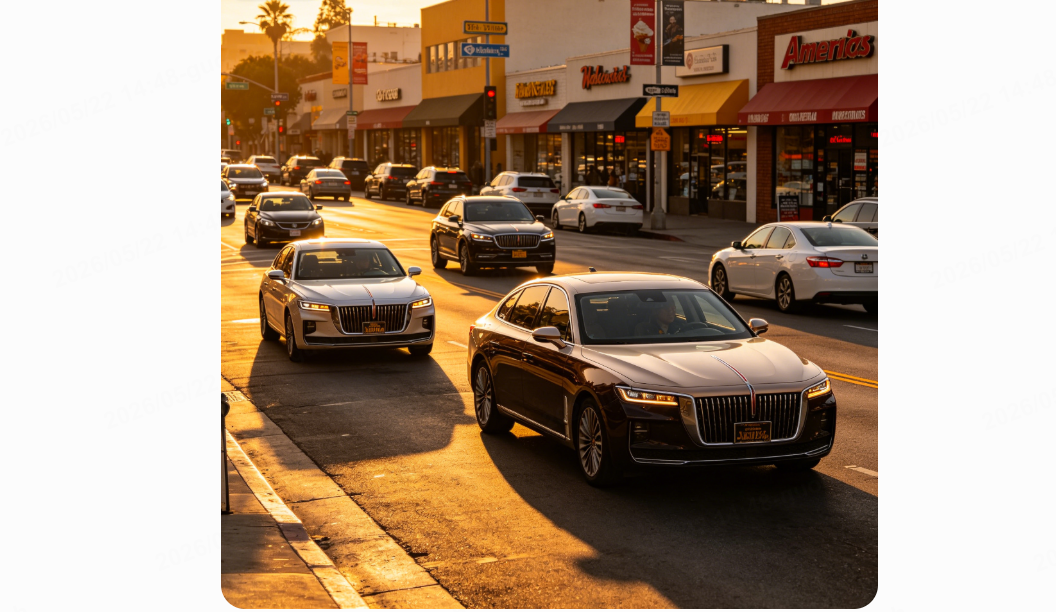
Despite a thick wall of tariffs and regulatory hurdles, Chinese cars in America have become one of the most talked-about topics in the automotive world. American consumers are watching YouTube reviews of BYD, Geely, and Xiaomi EVs from across the Pacific—and wondering why they can‘t buy them at home. But here’s what most articles don‘t tell you: While passenger vehicles remain locked out, a massive B2B opportunity is already flowing through the back door. From automotive parts and EV components to entire vehicle assemblies for commercial fleets, Chinese manufacturers are supplying the U.S. market at scale. And platforms like LooperBuy, a one-stop B2B sourcing platform with global reach, competitive pricing, and seamless logistics, are making it happen.
The question isn’t whether Chinese cars will arrive in America—it’s how fast and through which channels. This article pulls together the latest market data, real consumer sentiment, and actionable sourcing strategies to help you navigate this shifting landscape. Let me walk you through what‘s really happening.
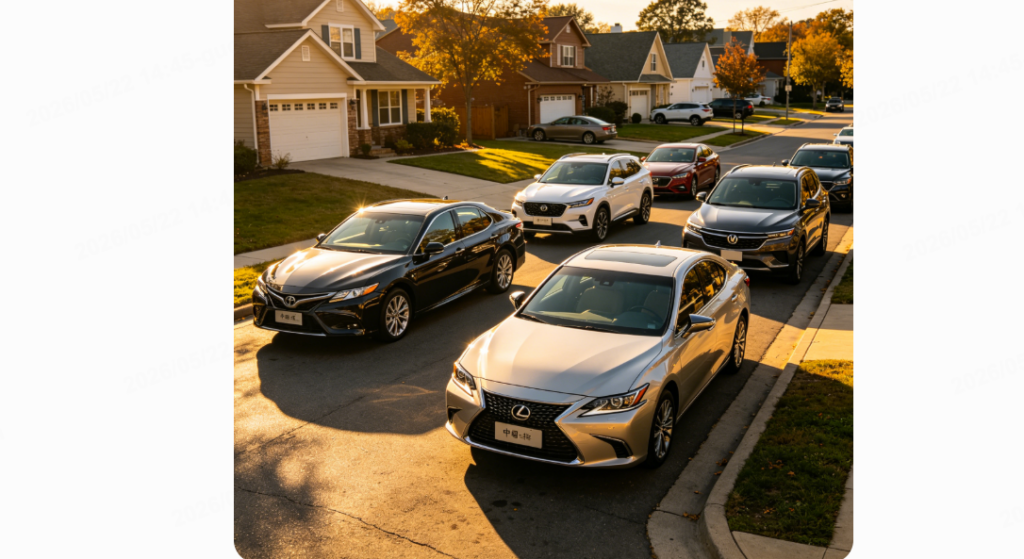
Table of Contents
The Market Reality: American Buyers Are Ready—But Can’t Get the Cars
Let‘s start with the most surprising data point: 40% of U.S. consumers now support Chinese automotive brands entering the American market, according to a 2026 Cox Automotive survey. That’s a staggering shift. Among Gen Z buyers, the number jumps to 69%. Thirty percent of American car buyers say they would consider a Chinese vehicle—double the rate from a decade ago. In Reddit threads and TikTok comment sections, frustrated users lament, “Why can I only watch but not buy?”
Here‘s what’s driving this hunger: affordability.
The average new car in the U.S. now costs $51,456. In China, more than 200 battery-powered models—including hybrids—sell for the equivalent of less than $25,000. A Reuters analysis found that you could buy five new Chinese EVs for the price of one average new vehicle in America. One EV industry insider put it bluntly: “We cannot compete at the same price as the Chinese,” said Hyundai CEO José Muñoz. And a former GM executive who moved abroad admitted: “After trying Chinese cars, I find it extremely difficult to justify paying 40–60% more for a car made by GM.”
But here‘s where the story gets complicated—and where most articles stop short.
The 137.5% Tariff Wall: Why Chinese Cars Aren‘t on U.S. Roads
The barriers facing Chinese cars in America are not subtle.
A Chinese EV entering the U.S. faces a stack of tariffs: 2.5% MFN base duty, 25% Section 232 tariff, 100% Section 301 EV tariff, and an additional 10% IEEPA tariff—pushing the combined rate to over 137.5%. That means a $20,000 Chinese EV lands on a U.S. dock with more than $27,000 in added duties alone. Factor in shipping, FMVSS modifications ($10,000–$50,000 per vehicle), and EPA certifications, and your “bargain” EV easily crosses $90,000.
Beyond tariffs, the regulatory maze is daunting. The National Highway Traffic Safety Administration (NHTSA) enforces Federal Motor Vehicle Safety Standards (FMVSS) covering crashworthiness, lighting, and braking—certifications that most Chinese manufacturers haven‘t yet obtained for the U.S. market. The EPA adds another layer of emissions and battery compliance. And effective January 2025, the Department of Commerce bans the sale of “connected vehicles” containing Chinese software or hardware starting in 2027 and 2030, respectively.
Yet, despite this wall, Chinese cars are already here—just not the way you’d expect.
The B2B Secret: How Chinese Automotive Products Are Already Supplying America
This is where the sourcing opportunity comes into focus.
While Chinese passenger cars face a closed door, Chinese automotive parts and components are flooding into the U.S. market through B2B channels. In 2025, the North American online auto parts market was estimated at $45 billion. eBay data shows that Chinese sellers on its U.S. site saw engine assembly sales grow 500% year-over-year, differential assembly sales rise over 60%, and bumper sales jump 45%.
“We set up a dedicated auto parts team for the U.S. market this year, and our U.S. business grew more than 200%,” said the CEO of Shenzhen Xinshengshang Technology, a cross-border e-commerce company. The logic is simple: tariffs drove some sellers out, but demand hasn‘t disappeared. Those who stayed captured the market.
Commercial vehicle parts represent another high-growth corridor, with heavy truck steering knuckle sales growing over 56% in two years. And the U.S. vehicle fleet is aging—average car age hit 12.8 years in 2025, with 29.3% of vehicles over 16 years old. Older cars need parts, and American consumers are increasingly turning online for affordable replacements. As one industry executive noted, U.S. e-commerce penetration in auto parts is only about 15%—leaving enormous room for growth.
What Actual Americans Are Saying About Chinese Cars
Let me share some real voices from the ground.
A 28-year-old Baltimore resident named Mousavi spent three months researching EVs before narrowing his wish list to just three brands: BYD, Geely, and Zeekr. None are available in the U.S. “I really hope to have the opportunity to buy one, or even just test drive one,” he told a reporter.
At a dealership in Ciudad Juárez, Mexico—just five miles from the U.S. border—Geely sedans sell for $17,000 and BYD hybrid SUVs for $31,500. Across the border, the cheapest new car costs over $20,000. “If these Chinese models were allowed to be sold in the U.S., they would completely overturn the American car market,” said Luis Hernández, a Geely salesperson.
And here‘s a comment from a YouTube review of the Xiaomi SU7, which costs around $42,000 in China but would feel like a $75,000 car if built in America: “People should really be angry at the government for keeping these cars out. Let the free market decide!”
Behind the scenes, a California dealer admitted: “We get dozens of calls every month asking about Chinese cars, but we can only say, ‘Sorry, the U.S. doesn‘t sell them.’ If policies opened up, Chinese cars would absolutely become our main sales model.”
One Reddit comment captured the sentiment perfectly: “The only reason the U.S. auto industry still exists is because of tariffs.”
Bridging the Gap: How LooperBuy Helps You Source Chinese Automotive Products Globally
This is where LooperBuy comes in. As a one-stop B2B sourcing platform operating globally, LooperBuy connects international brands, wholesalers, and manufacturers directly with verified Chinese suppliers—across every product category.
Whether you need:
- Complete EV assemblies for commercial fleets (buses, trucks, utility vehicles)
- Automotive parts (engine components, suspension systems, lighting, interiors)
- EV batteries and charging components
- Custom-branded accessories (floor mats, dash cams, car covers)
LooperBuy provides the infrastructure to source, negotiate, and ship—all in one place. Our global logistics network ensures competitive freight rates and reliable delivery to North America. Our low-price advantage comes from direct factory partnerships and bulk purchasing power. And our comprehensive product catalog spans everything from heavy machinery to micro-components.
Even if finished Chinese passenger cars remain restricted, the B2B opportunity is wide open. The data proves it: North American demand for Chinese automotive products is real, growing, and underserved.
A Strategic Framework for Sourcing from China
To succeed in this market, follow these four steps:
1. Identify your target product category. Focus on areas where China has an established manufacturing advantage: EV components, aftermarket parts, electronics, and commercial vehicle systems.
2. Verify supplier credentials. Look for responsiveness, reorder rates (above 30% suggests customer satisfaction), and on-time delivery records (100% is the gold standard). Request factory documentation and sample testing for safety-critical components.
3. Plan for compliance. For U.S. imports, ensure your products meet FMVSS, EPA, or other relevant standards. Many Chinese suppliers already produce U.S.-compatible versions; ask for compliance documentation upfront.
4. Leverage a full-service sourcing partner. Platforms like LooperBuy streamline the entire process—from discovery to delivery—while de-risking the transaction through verified supplier networks and logistics coordination.
The Bottom Line
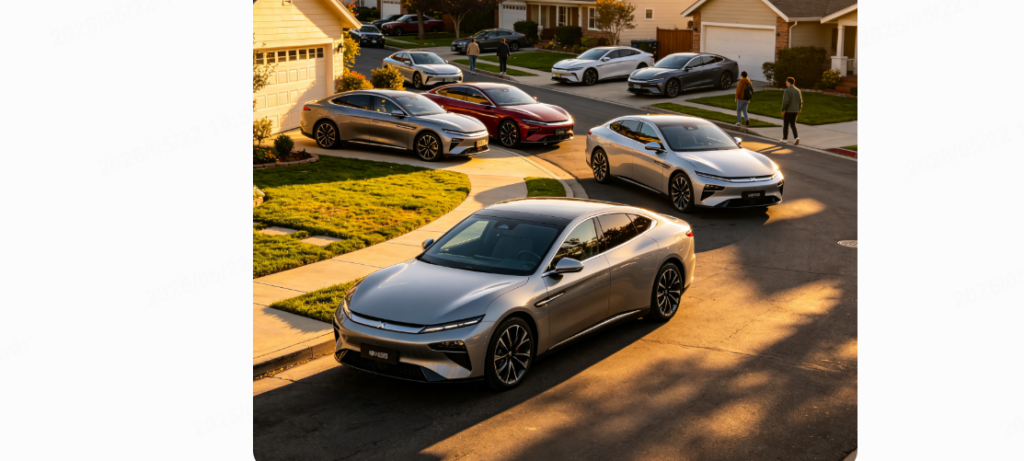
Chinese cars in America remain a story of almost. Demand is explosive. The product is ready. The quality is proven. But the regulatory door is only cracked open.
For forward-thinking B2B buyers, however, the opportunity is already here. Chinese automotive parts, EV components, and commercial vehicles are flowing into the U.S. through established supply chains. The companies that recognize this early will capture market share before the competition wakes up.
Call to Action: Ready to start sourcing from China? Visit LooperBuy.com to browse thousands of verified automotive suppliers, request customized quotes, and get logistics support tailored to your business. Subscribe to our newsletter for the latest updates on cross-border trade and U.S.-China automotive trends.
Frequently Asked Questions (FAQ)
Q1: Can individuals import a Chinese car to the USA for personal use?
Generally, no. Most new Chinese-manufactured cars cannot be directly imported for road use in the U.S. due to NHTSA safety standards (FMVSS), EPA emissions regulations, and the “connected vehicle” ban. The only major exception is vehicles 25 years or older, which are exempt from modern safety standards.
Q2: Which Chinese car brands have the highest awareness among U.S. consumers?
BYD leads with 35% awareness, though only 17% of U.S. consumers say they are familiar with the brand. Geely is known through its ownership of Volvo and Polestar. Polestar 2 has sold over 15,000 units in the U.S. as of mid-2025.
Q3: Can U.S. businesses source Chinese automotive parts legally?
Yes, absolutely. Thousands of U.S. businesses currently import Chinese-made automotive parts, including engine assemblies, differentials, bumpers, sensors, and electronics. Compliance with NHTSA and EPA standards is required for certain categories, but many suppliers already produce U.S.-compatible versions.
Q4: How can LooperBuy help with sourcing Chinese automotive products?
LooperBuy is a one-stop B2B sourcing platform that connects global buyers with verified Chinese suppliers across all product categories. We provide competitive pricing, global logistics coordination, and end-to-end support—from product discovery to final delivery.
Q5: Will Chinese passenger cars ever be sold in the U.S. market?
Most industry analysts believe it‘s a matter of “when,” not “if.” Reuters Breakingviews concluded in May 2026 that the arrival of Chinese cars on American roads is “only a matter of time.” Possible pathways include U.S.-based manufacturing, joint ventures with American automakers, or tariff exemptions for specific product categories.
Article Brief : Chinese cars in America face 137.5% tariffs and strict regulations, yet 40% of U.S. consumers want them. While passenger EVs remain blocked, Chinese auto parts and commercial vehicles are flowing in through B2B channels. LooperBuy connects global buyers to verified Chinese suppliers with low prices and seamless logistics.
References
- Reuters Breakingviews. (2026, May 12). Chinese cars on U.S. roads “only a matter of time.” CRI Online. https://news.cri.cn/20260513/06f2da2c-c9ce-422a-a1dd-8178e011fe64.html
- Cox Automotive. (2026). Chinese auto brands: What U.S. consumers and dealers think. Dealership Guy. https://news.dealershipguy.com/p/cheap-chinese-evs-highlight-growing-affordability-challenge-for-u-s-market
- Small, J. (2026, April 30). China‘s high-tech $17,000 cars are winning over Americans — you just can’t buy them here. Entrepreneur. https://www.entrepreneur.com/business-news/chinas-high-tech-17000-cars-are-popular-with-americans/495216
- Reuters. (2026, April 28). Average price of car in U.S. vs. China. DCar. https://www.reuters.com/business/autos-transportation/average-price-car-us-you-could-buy-5-new-chinese-evs-2026-04-28/
- Zhang, X. (2025, December 25). Guangdong auto parts accelerate expansion into U.S. market. Jiemian News. https://www.jiemian.com/article/13808763.html
- Motorwatt. (2025, October 15). Importing a Chinese electric car to the USA: Costs, rules & risks. https://motorwatt.com/ev-blog/howtos/importing-a-chinese-electric-car-to-the-usa
- Wang, Y. (2026, May 13). Chinese car brands enter the U.S. economy sedan market. Auto Quality Network. https://www.12365auto.com/news/20260513/568276.shtml
- Dazhong News. (2026, May 11). Americans ‘crying‘ for Chinese cars, crossing from Mexico to buy them. https://hb.dzwww.com/p/p4LysnEjx8.html
- ParkingDay.org. (2026). Can you import Chinese cars to the USA? https://parkingday.org/can-you-import-chinese-cars-to-the-usa/
Hot Tags
Chinese cars in America, B2B automotive sourcing from China, LooperBuy B2B platform, Chinese auto parts import USA, EV components sourcing China, US-China automotive tariffs 2026, Chinese EV brands America, global sourcing automotive products, cross-border automotive procurement, China to USA supply chain logistics
-700x490.png)