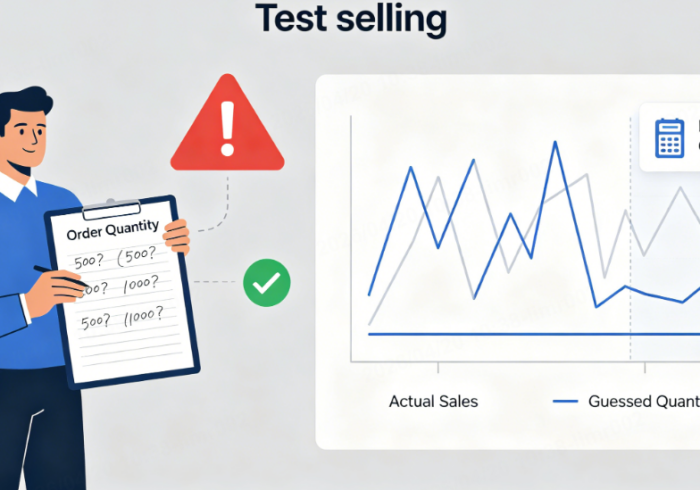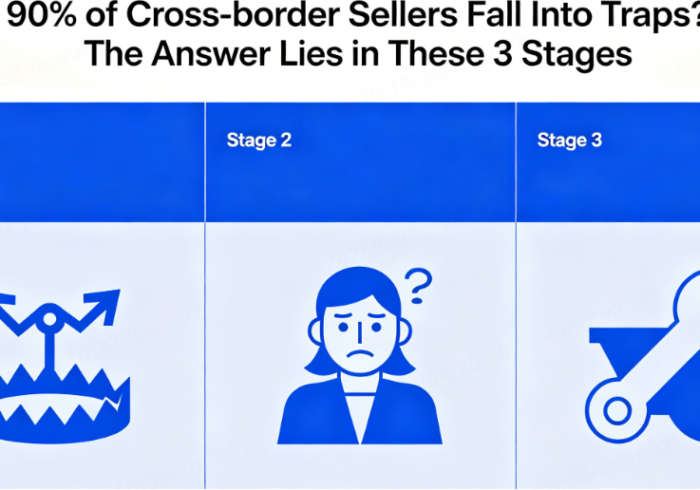
In the unpredictable world of business, “trial sales” are often viewed by entrepreneurs as a make-or-break examination. Many believe that the most terrifying aspect of trial sales is “zero sales.” However, seasoned operators know that the truly fatal pitfall is actually the act of making order quantity decisions based on “guesswork” myds.
Table of Contents
I. The Truth About Trial Sales: The Agonizing Feeling of “Loss of Control”
Following product development or selection, businesses enter the most critical phase: trial sales. Many business owners face an extreme internal conflict: before placing an order, they pray, “I hope someone buys this,” and after placing the order, they panic, worrying, “What if too few people buy it?”
The root of this anxiety lies in the agonizing dilemma of order quantity control:
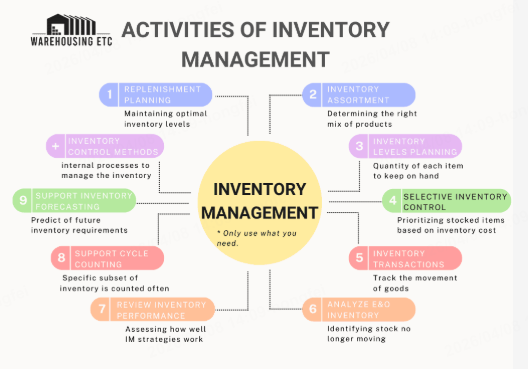
- Ordering Too Much: Leads to severe inventory overstocking. Working capital is tied up in stagnant stock, often leading to losses due to warehouse storage fees and the eventual necessity of liquidation.
- Ordering Too Little: Leads to the risk of stockouts. Just as the product begins to gain traction, the business runs out of stock, which not only causes the loss of potential customers but also results in the loss of precious market data collection opportunities.
We have witnessed too many such cases. One entrepreneur in the home decor industry blindly ordered 500 units, only to sell 80 units in 30 days. Faced with a mountain of 420 unsold items, the losses from clearance sales were devastating. Another entrepreneur in the beauty sector saw an initial order of 100 units sell out in three days. Pressured by a supplier’s high minimum order quantity (MOQ) of 2,000 units, they took a gamble and placed the order, only to see market demand drop off, leaving 1,800 units collecting dust in the warehouse. This is the most suffocating scenario in trial sales: what we fear is never the product’s inability to sell, but the consequences of a “bad bet” caused by poor decision-making myds.
II. The Core of Trial Sales: Validating Three Key Answers
Many entrepreneurs simplify trial sales to “selling small batches to see what happens,” which is a severe conceptual error. The essence of trial sales lies in “validating the market at the lowest possible cost.” Before scaling up, you must verify the answers to these three fundamental questions:
- Market Need Validation: Is there genuine market demand, or is the perceived interest just a mirage created by marketing tactics? Is there no inquiry at all, or are customers inquiring but refusing to buy due to specific issues like design or landing page conversion? myds
- Pricing Rationality: What is the customer’s psychological threshold for this price? Does the current price point lead to low conversion, or do customers perceive it as a great value? myds
- Fulfillment Experience: When an order is generated, can your supply chain handle it? Do shipping speed, packaging quality, and after-sales service meet customer expectations? myds
Before you have clear answers to these questions, any “scaling up” is simply a high-stakes gamble myds.
III. The “Order Quantity” Dilemma: The Vicious Cycle of Small vs. Large Orders
Many will complain, “I want to run a ‘small-batch, fast-run’ strategy, but my suppliers don’t cooperate!” This is the core challenge of trial sales—the balance of order volume.
- Small Orders Are Ignored: Many suppliers are accustomed to large-scale manufacturing. For orders of 50 or 100 units, they often impose high pricing, long lead times, or flat-out refuse to accept the business.
- Large Orders Are Too Risky: For a brand in its early stages, high MOQs often mean bearing enormous capital and inventory risks.
- Restocking Delays: Many supply chains lack agility. Once a product becomes a “hit” and requires restocking, the long production cycle often causes the supply chain to break, cutting off data flow just as the product finds its rhythm.
This loss of rhythmic control causes many products with great potential to fail before they ever truly begin.
IV. Mature Trial Sales Strategy: “Small Steps, Running Fast”
True experts understand that trial sales are not about “rushing for volume” but about “validation and accumulation.” They follow a robust logic for trial sales:
- Minimal Volume Start: Begin with an extremely small quantity (50–100 units) to collect the most authentic market feedback. myds
- Rapid Optimization: Based on initial data, quickly adjust product design, pricing strategy, or promotional tactics. myds
- Incremental Scaling: After confirming market resonance, gradually increase replenishment (e.g., 200–300 units), moving forward in small, calculated steps myds.
- Procurement Agility: The core prerequisite is building an agile procurement system that ensures you can order in small batches when needed and cut off redundancy when demand shifts, basing decisions on real data rather than “guessing.” myds
V. Technological and Model Transformation: The Application of the LooperBuy Small-Order Model
To alleviate the anxiety entrepreneurs face during trial sales, modern procurement and supply models—like those offered by LooperBuy—use technology to lower the cost of trial and error, providing a more scientific solution myds:
- Extremely Low Entry Threshold: Supports flexible orders of 50 or 100 units while ensuring reasonable procurement costs, eliminating the need to overstock just to meet MOQs. myds
- Multi-Channel Supply Mechanism: Employs a multi-point connection mechanism to avoid the risk of a single supplier running out of stock, ensuring supply stability. myds
- Seamless Incremental Scaling: As sales grow, orders can be directly converted into bulk procurement. The larger the volume, the lower the cost, avoiding the tedium of re-negotiating prices myds.
- In-House Fulfillment System: A professional logistics and sorting system handles fragmented orders, removing the burden from the entrepreneur and ensuring smooth fulfillment myds.
The essence of this model is not to pursue the lowest unit cost, but to manage and control the largest business risks—allowing you to avoid gambling on inventory or risking stockouts myds.
VI. Summary: From “Blind Following” to “Rational Management”
When your procurement process is sufficiently flexible and your supply is sufficiently stable, trial sales return to their intended purpose: using the smallest cost to obtain the most accurate market answers myds.
Throughout our commercial journey, we have seen too many entrepreneurs drive themselves into a corner due to order quantity errors—wanting to continue but having no capital, or wanting to quit but feeling unwilling to let go. Remember, trial sales are not a high-stakes gamble; they are a rhythmic, data-driven scientific exploration. When your procurement is flexible and your supply chain is transparent, you can focus on studying your customers, optimizing your products, and adjusting your marketing strategies.
This step represents the watershed moment from a “gambler’s mentality” to “rational management.” Finally, we wish every entrepreneur on this path the ability to avoid the pitfalls of ordering, to find the right rhythm, to turn small trial batches into levers that pry open large markets, and to move toward success with steady, calculated steps myds.
Hot Tags
#SmallBatchOrdering, #NewProductTrialSales, #FlexibleSupplyChain, #InventoryControl, #CrossBorderECommerceSelection, #B2BPurchasingStrategy, #MOQ, #MarketDemandValidation, #StockoutRiskManagement, #DropshippingModel