In the modern digital economy, the landscape of commerce is primarily defined by two major models: B2B (Business-to-Business) and B2C (Business-to-Consumer). While both share the fundamental goals of generating revenue and satisfying customers, their underlying dynamics, psychological drivers, and operational requirements differ profoundly [1, 3, 15]. For companies looking to scale, understanding these nuances is not just advantageous—it is essential for long-term survival in an increasingly competitive global marketplace [16].
Table of Contents
The Core Definitions: Decoding B2B and B2C
At its simplest, the distinction lies in the target customer and the intent of the purchase:
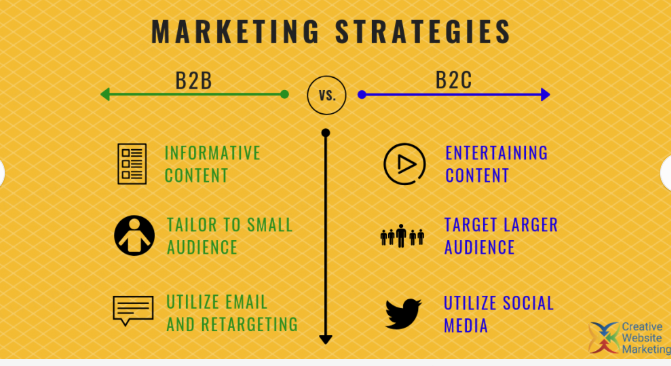
- B2B (Business-to-Business): One business sells products or services to another business [5, 15]. The focus here is on efficiency, ROI, and solving operational challenges [6, 10]. Purchases are often made to sustain production, resell, or improve business operations.
- B2C (Business-to-Consumer): A business sells directly to an individual consumer [5, 15]. The primary focus is on personal needs, emotion, and immediate satisfaction [10, 11, 15]. Products are typically used for personal enjoyment or utility.
Key Strategic Differences at a Glance
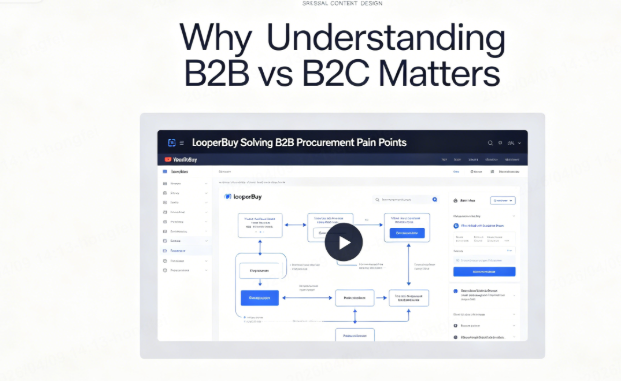
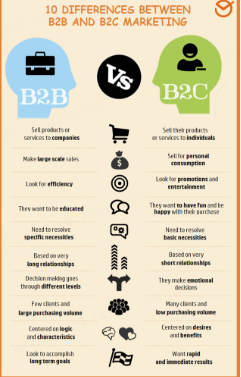
Navigating between these models requires distinct strategic approaches. The following table summarizes the primary operational contrasts that business leaders must consider.
| Feature | B2B Model | B2C Model |
|---|---|---|
| Primary Driver | Logic, ROI, Efficiency [2, 6, 10] | Emotion, Desire, Convenience [10, 12, 19] |
| Sales Cycle | Long, complex, multi-stakeholder [10, 15] | Short, fast, often impulsive [15, 19] |
| Decision Makers | Multiple stakeholders (CEO, IT, Procurement) [3, 15] | Individual consumer [15] |
| Relationship | Long-term, high-trust partnership [1, 4, 11] | Short-term, transactional [15, 19] |
| Pricing | Custom, negotiated, bulk discounts [9, 17] | Standardized, fixed prices [17] |
Why Understanding B2B vs B2C Matters for Modern Sourcing
For businesses utilizing platforms like LooperBuy, the distinction is critical. Professional buyers on our platform are not looking for entertainment; they are looking for reliability, transparent logistics, and cost-effective bulk procurement to sustain their own business margins.
1. The Power of Rational Decision-Making
B2B procurement is rarely an impulse buy. It is a process-driven exercise where data and trust reign supreme [2, 10]. Professional buyers prioritize:
- Product Specifications: Detailed technical data sheets, certifications, and compliance documentation are mandatory.
- Scalability: The ability to fulfill large, recurring orders consistently.
- Logistics Transparency: Predictable shipping times and costs are non-negotiable for supply chain planning and inventory management.
2. The Emotional Edge in B2C
Conversely, B2C strategies prioritize the “frictionless” experience [10]. Successful B2C interactions are built on:
- Brand Storytelling: Creating an emotional connection that justifies a purchase.
- Simplicity: A seamless, one-click checkout process.
- Immediate Gratification: Fast shipping and easy returns drive repeat purchases and customer loyalty.
Deep Dive: Challenges in the Global Sourcing Arena
The Complexity of Global Supply Chains
One of the most significant challenges in B2B sourcing is navigating international borders. While B2C retail often relies on local distribution, B2B sourcing platforms like LooperBuy must overcome:
- Regulatory Compliance: Understanding import duties, tariffs, and product safety standards for different regions.
- Language and Cultural Barriers: Bridging the communication gap between Chinese manufacturers and global wholesalers.
- Quality Control: Ensuring that mass-produced goods meet the rigorous standards expected by B2B buyers.
Data-Driven Procurement: The New Standard
Modern B2B buyers are moving away from traditional “cold calling” sales toward self-service digital platforms. Research suggests that over 70% of B2B buyers prefer remote human interaction or digital self-service [9]. This shift mandates that B2B platforms must invest heavily in UX design, ensuring that product search, bulk pricing tables, and shipping calculators are as intuitive as a B2C retail site.
The Evolution of the B2B Buyer Journey
The traditional B2B sales funnel has transformed. It is no longer a linear path but a complex web of research, peer reviews, and digital engagement.
- Awareness: The buyer identifies an operational gap or a need for inventory.
- Consideration: Extensive research is conducted. Buyers look for supplier reputation, past performance, and scalability.
- Decision: Multiple stakeholders review the proposal. Pricing and shipping logistics are the final hurdles.
- Retention: This is where the magic happens. A successful B2B partnership evolves into a long-term supply agreement, often facilitated by automated replenishment and dedicated account management.
Bridging the Gap: The Rise of B2B2C and Unified Commerce
The rigid lines between these models are blurring. Forward-thinking companies are increasingly adopting B2B2C (Business-to-Business-to-Consumer) models or using unified commerce engines to manage both channels simultaneously [9, 18].
Digital transformation has empowered B2B buyers to demand a B2C-level user experience [9]. They expect modern, intuitive interfaces, real-time tracking, and self-service portals, even when placing complex bulk orders. Platforms that successfully blend these expectations—offering the deep utility of B2B with the sleek usability of B2C—are capturing significant market share. By integrating supply chain transparency directly into the procurement portal, platforms enable businesses to act with the speed of a consumer.
Actionable Strategies for B2B Success
To excel in the B2B landscape, consider these three pillars:
- Educate, Don’t Just Sell: Build authority through high-value content—white papers, detailed case studies, and transparent pricing models [10].
- Optimize for Stakeholders: Design your platform to accommodate different user roles (e.g., procurement managers vs. financial controllers) with tailored access and reporting [9].
- Leverage Global Logistics: In a globalized market, your competitive advantage often hinges on the efficiency of your supply chain. Ensure your logistics partner is as transparent and reliable as your product [1, 9].
Conclusion: Optimizing Your Approach for Future Growth
Whether you operate primarily in the B2B sector, target individual consumers, or bridge both, the key to sustainable growth is alignment. By tailoring your marketing messages, sales processes, and customer service to the specific psychological and operational needs of your target audience, you build the trust necessary for long-term success. The future of commerce belongs to those who can offer the deep utility and reliability of professional sourcing alongside the speed and simplicity of modern digital retail.
Are you ready to streamline your B2B sourcing? Discover how LooperBuy simplifies global procurement with a seamless, one-stop platform designed for modern business needs.
References
- [1] Alibaba: A Definitive Guide to B2B vs B2C Business Models
- [2] McKinsey: The B2B digital sales transformation
- [3] Search Engine Land: B2B vs. B2C Key Differences & Marketing Tactics
- [4] IMD Business School: B2B vs B2C Marketing
- [5] HubSpot: B2B vs B2C Definition
- [6] Forbes: Why B2B Marketing Is Different
- [9] Commercetools: How B2C and B2B Commerce Compare
- [10] Adience: What Marketers Need to Know About B2B vs B2C
- [11] Shopify: B2B vs B2C Differences
- [12] Harvard Business Review: The New B2B Buying Journey
- [15] BigCommerce: B2B vs B2C Ecommerce
- [16] Gartner: The Future of B2B Sales
- [17] Oracle: B2B Pricing Strategy
- [18] Salesforce: B2B2C Explained
- [19] MarketingProfs: B2C vs B2B Psychology
Frequently Asked Questions (FAQ)
1. What is the most significant difference between B2B and B2C sales?
The main difference is the decision-making process. B2B sales involve multiple stakeholders, rational logic, and long-term relationship building, while B2C sales are typically faster, driven by individual consumer emotions, and more impulsive [10, 15, 19].
2. Can a business operate both B2B and B2C models?
Yes. Many companies leverage unified commerce platforms to manage both channels simultaneously, allowing them to diversify revenue streams while benefiting from shared backend infrastructure [9, 15, 18].
3. Why do B2B sales cycles take longer?
B2B cycles are longer because the purchase involves higher risk, larger financial investments, and a consensus-driven procurement process involving various departments within an organization [10, 15].
4. Does B2B marketing require less creativity than B2C?
No. While B2B focuses on logic and ROI, it still requires high-level creativity to build trust, establish authority, and communicate complex solutions effectively to busy decision-makers [10, 19].
5. How is the digital landscape affecting B2B and B2C boundaries?
Digital transformation is blurring these lines. B2B buyers now expect the same seamless, intuitive, and self-service user experience (UX) that they are accustomed to in their personal B2C purchasing journeys [9, 16].
Brief Summary:
This comprehensive guide examines the fundamental differences and evolving intersections of B2B and B2C business models. It highlights how B2B procurement prioritizes rationality and long-term value, while B2C focuses on emotional engagement and transactional speed. By exploring the rise of unified commerce and B2B2C strategies, the article provides actionable insights for businesses—like LooperBuy—to optimize their sourcing operations by aligning with modern buyer expectations for efficiency and experience.
Hot tags: B2B vs B2C, B2B procurement, global sourcing platform, B2B e-commerce strategy, B2B buyer journey, business-to-business wholesale, B2B supply chain management, B2B digital transformation, global B2B marketplace, and wholesale sourcing solutions.