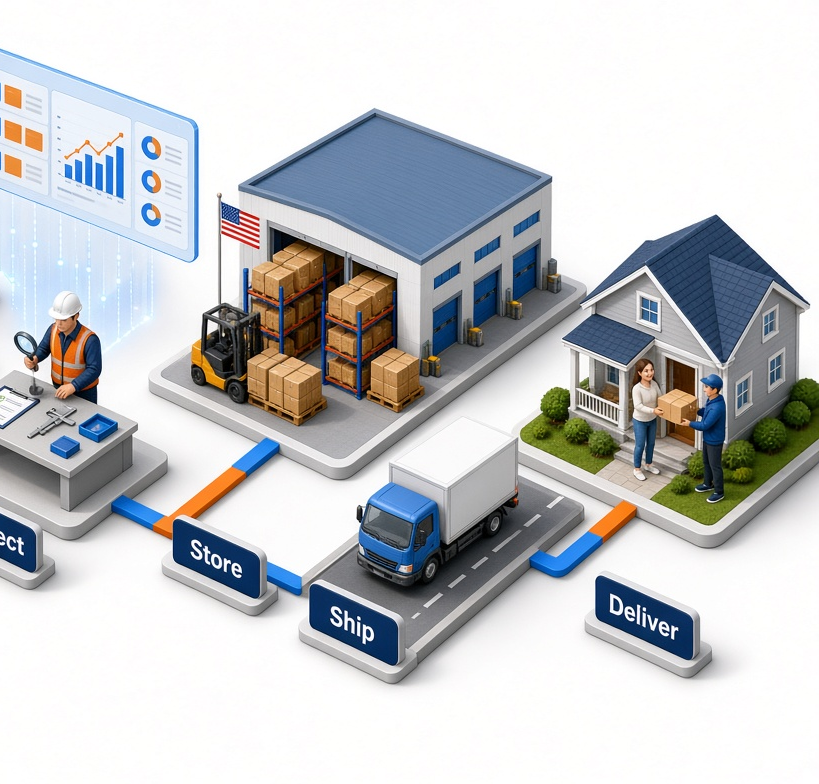
Learn how to build a compliant Walmart dropshipping operation in 2026. Explore sourcing rules, packaging requirements, fulfillment models, supplier vetting, product testing, shipping performance, and practical China sourcing strategies for global B2B sellers.
Walmart dropshipping can be a viable way to test products and expand an online catalog without buying large quantities of inventory upfront. However, it is not a shortcut to retail arbitrage: sellers must control the customer experience, use reliable supply partners, protect delivery performance, and ensure every shipment follows Walmart Marketplace requirements.
For global B2B sellers, the strongest model is usually supplier-led fulfillment: source products directly from manufacturers or authorized suppliers, validate quality and delivery capacity, then fulfill orders through a controlled warehouse, fulfillment network, or neutral-package dropshipping workflow. This approach is very different from buying products from another retailer after a customer places an order.
> Important: Walmart Marketplace rules can change. Before launching or modifying a fulfillment workflow, review the current policies in Walmart Seller Center and seek professional legal, tax, and compliance advice when needed.
Table of Contents
What Is Walmart Dropshipping?
Walmart dropshipping is a retail fulfillment model in which a seller lists products on Walmart Marketplace but does not necessarily hold every unit in its own warehouse. When an order is placed, a qualified supplier, manufacturer, warehouse, or fulfillment provider prepares and ships the item to the customer on the seller’s behalf.
The seller remains responsible for the transaction. That includes:
– Product listing accuracy
– Inventory availability
– Pricing
– Order processing
– On-time delivery
– Valid tracking
– Customer service
– Returns and refunds
– Product safety, authenticity, and regulatory compliance
This distinction matters. A supplier may physically ship the product, but the Marketplace seller is still accountable for the buyer’s end-to-end experience.
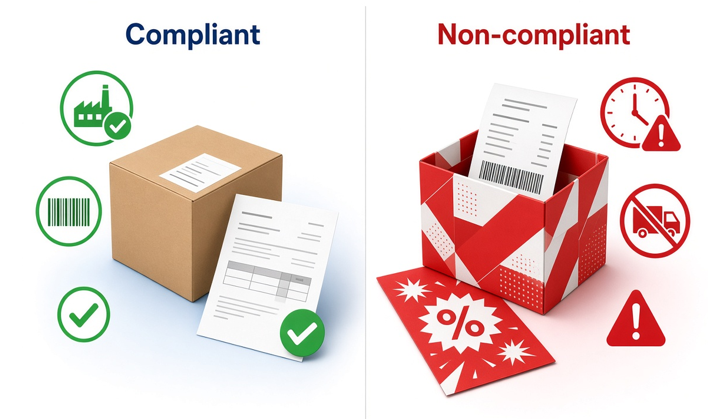
Walmart expressly prohibits purchasing a product from another retailer and having that retailer ship it directly to a Walmart customer. It also prohibits competitor-branded boxes, other-retailer identifiers, and unauthorized promotional inserts in shipments. In practical terms, a compliant strategy requires a direct supplier relationship or a fulfillment model that gives you control over packaging, tracking, delivery expectations, and customer communications.
Walmart Dropshipping vs. Retail Arbitrage
| Fulfillment approach | Generally suitable for Walmart Marketplace? | Why it matters |
| Direct manufacturer fulfillment | Potentially, if policy and service requirements are met | Provides greater control over sourcing, packaging, quality, and product authorization |
| Authorized wholesaler fulfillment | Potentially, if inventory, delivery, and packaging are controlled | Can support branded product resale when authorization is documented |
| Third-party logistics provider (3PL) | Potentially | Allows sellers to hold limited stock while outsourcing pick, pack, and ship operations |
| Walmart Fulfillment Services (WFS) | Yes, for inventory sent into WFS | Requires inventory to be stocked and prepared according to WFS procedures |
| Buying from another retailer after an order | No | Walmart prohibits retailers from shipping directly to Walmart customers |
| Supplier shipping with invoices, retailer branding, or promotions | No | Packaging and inserts must not reference another marketplace business or provider |
A healthy Walmart operation is therefore not about avoiding inventory at all costs. It is about building a low-risk, controlled inventory model that balances cash flow, delivery speed, compliance, and customer satisfaction.
Why Walmart Marketplace Can Be Attractive for Sellers
Walmart Marketplace gives sellers access to a large U.S. retail audience while allowing several fulfillment approaches. Sellers can manage fulfillment themselves, work with qualified fulfillment partners, or send eligible inventory into Walmart Fulfillment Services.
The opportunity is especially relevant for merchants that already have:
– A registered business entity
– A clear product catalog
– Reliable suppliers
– U.S.-ready product compliance documentation
– Competitive pricing
– A realistic shipping and returns workflow
– The operational capacity to maintain accurate inventory and tracking
Walmart’s seller-registration guidance emphasizes business verification, payout setup, market details, fulfillment management, shipping policies, and return settings. It also identifies WFS or another B2C U.S. warehouse with returns capability as fulfillment options during the onboarding process.
For product businesses that source from China, this creates an important strategic choice: should you ship each order internationally, store inventory in a U.S. warehouse, use a domestic 3PL, or replenish Walmart Fulfillment Services?
In most cases, the answer depends on your product margin, demand predictability, delivery promise, return rate, and customs complexity.
Walmart Dropshipping Rules You Must Understand
A marketplace account can be damaged quickly if its fulfillment process is not aligned with Walmart’s shipping and packaging rules. The safest way to approach Walmart dropshipping is to treat compliance as an operating system—not as a final checklist.
1. Do Not Use Retail-to-Customer Fulfillment
You may not purchase items from another retailer and have that retailer send the package directly to a Walmart customer. This is commonly called retail arbitrage, and it creates obvious problems:
– The customer may receive a competitor’s box or receipt
– Pricing and inventory can change without warning
– Tracking may not sync accurately
– Returns become difficult to manage
– The seller loses control over packaging and service quality
Instead, work with manufacturers, authorized distributors, qualified wholesalers, or fulfillment partners that can meet your documented service requirements.
2. Use Neutral, Controlled Packaging
Walmart’s packaging guidance permits nonbranded, neutral packaging and allows certain manufacturer boxes or unbranded packing slips. However, shipments cannot include references to another marketplace business or fulfillment provider. Original supplier invoices that show your costs, competitor packaging, and promotional materials are prohibited.
Before you activate a supplier, confirm these points in writing:
– Can the supplier ship in neutral outer packaging?
– Can it remove supplier invoices and pricing documents?
– Can it avoid coupons, catalogues, QR-code promotions, and review requests?
– Can it use your approved packing-slip format?
– Can it provide product labels, barcodes, and country-of-origin details where required?
– Can it send photos of a finished parcel before the first production shipment?
3. Ship Fast Enough to Meet Customer Expectations
Walmart requires sellers to support at least one shipping method and to select an appropriate lag time, carrier, and service level to deliver by the expected delivery date. Sellers are also generally required to ship orders within two operational days after receiving them unless an approved lag-time exemption applies.
Walmart also expects sellers to provide accurate, valid tracking numbers only after the package has been tendered to the carrier. Marking an order as shipped before the item has physically shipped can create financial and account-level consequences.
4. Maintain Delivery Performance
Walmart’s seller-performance standards identify an on-time delivery rate target of at least 90%. This makes supplier speed, warehouse cutoff times, order routing, and carrier selection central to your business model—not back-office details.
A product with a strong gross margin can still become unprofitable if it repeatedly ships late, produces refunds, or requires extensive customer-support work.
The Best Fulfillment Model for Walmart Sellers
There is no single “best” Walmart dropshipping model. The right approach depends on what you sell and how predictable demand is.
| Model | Best for | Main advantage | Main risk |
| China direct-to-customer fulfillment | Lightweight, low-value, test-stage products | Minimal inventory commitment | Transit times, customs delays, and inconsistent delivery promises |
| U.S. 3PL fulfillment | Growing catalogs and repeatable demand | Faster domestic delivery and easier returns | Requires inventory planning and storage costs |
| Walmart Fulfillment Services | Sellers focused on Marketplace execution | Walmart-managed fulfillment experience | Inventory must be sent, labeled, and stocked in fulfillment centers |
| Hybrid sourcing and fulfillment | Sellers testing many SKUs while scaling winners | Limits upfront inventory while improving speed for proven products | Requires stronger inventory and data management |
For many B2B sellers, a hybrid model is the most practical.
Start by sourcing and sampling a focused group of products. Test demand with limited quantities or carefully controlled supplier fulfillment. When a product demonstrates stable conversion, acceptable return rates, and durable margins, move inventory into a U.S. 3PL or WFS.
This protects working capital while helping you improve delivery speed on proven products.
When Direct Shipping From China Is Usually a Poor Fit
International order-by-order shipping can create issues when products are:
– Heavy, oversized, or fragile
– Highly seasonal
– Low margin
– Likely to be returned
– Subject to complex safety, labeling, or customs rules
– Needed within a short delivery window
– Purchased frequently by customers who expect fast domestic shipping
A low unit cost does not automatically mean a profitable product. The correct decision should be based on landed cost, not factory price alone.
Landed Cost=Product Cost+Domestic Handling+Packaging+International Shipping+Duties/Taxes+Payment Fees+Expected Returns Cost
How to Build a Compliant Walmart Sourcing Workflow
A reliable sourcing workflow reduces surprises before an item goes live. The following process is especially useful for sellers sourcing consumer products, home goods, accessories, packaging supplies, tools, and other China-made goods.
Step 1: Build a Product Requirement Sheet
Do not begin by asking a supplier for “the cheapest version.” Create a written product brief that includes:
– Target customer and sales market
– Target selling price
– Maximum acceptable landed cost
– Product dimensions and weight
– Materials and finish requirements
– Required colors, variants, and sizes
– Packaging preferences
– Private-label or logo requirements
– Expected monthly demand
– Target delivery countries
– Product certifications or testing needs
– Restricted-material requirements
– Return-risk considerations
A detailed brief makes supplier quotations easier to compare and reduces the risk of undocumented substitutions.
Step 2: Vet the Supplier Before Listing
Supplier selection should focus on more than the quoted product price. Ask for evidence and operational details.
Use a supplier scorecard with these categories:
| Evaluation area | Questions to ask |
| Product quality | Can the supplier provide samples, specifications, and quality-control records? |
| Production reliability | What is the normal lead time? What happens during peak season? |
| Packaging control | Can the supplier meet neutral-package and packing-slip requirements? |
| Inventory visibility | How often is stock updated, and how are out-of-stock items handled? |
| Shipping capability | Which carriers are used? Are tracking numbers valid and timely? |
| Compliance | Can the supplier support required labels, product documentation, and testing? |
| Communication | Is there a dedicated contact who can resolve defects and shipping exceptions? |
| Returns | Is there a process for defects, replacements, refunds, and reverse logistics? |
A sourcing platform such as LooperBuy can help international sellers consolidate supplier communication, request products from Chinese supply networks, coordinate inspections, arrange warehousing, and manage global fulfillment workflows. LooperBuy describes its service as an all-in-one B2B sourcing platform covering product sourcing, dropshipping, OEM/ODM manufacturing, quality inspection, warehousing, and global fulfillment.
Step 3: Order Samples and Approve a Quality Standard
Never rely solely on supplier photos. A sample should be treated as the first version of your product specification.
Review:
– Dimensions and net weight
– Material quality and finish
– Color accuracy
– Product function and durability
– Packaging protection
– Barcode and label placement
– User instructions
– Required warning labels
– Brand/logo position
– Compatibility with your listing claims
For repeat orders, save an approved sample and create a written inspection checklist. If the supplier changes materials, packaging, color, or manufacturing location, review the item again before shipping to customers.
Step 4: Test the Entire Order Flow
Before listing at scale, complete a real test order to your own address or a controlled test location.
Verify:
1. The order reaches the supplier or warehouse correctly.
2. The correct product and variant are picked.
3. Outer packaging is neutral and compliant.
4. No supplier invoice or promotional material is included.
5. Tracking activates accurately after carrier handoff.
6. The delivery time matches the promise shown to customers.
7. The parcel arrives without damage.
8. A return can be initiated and handled realistically.
This test identifies failures that product sourcing alone cannot reveal.
Step 5: Monitor the Numbers That Protect Your Account
Review operational performance weekly, especially during your first 60 to 90 days.
Track:
– On-time delivery rate
– Valid tracking rate
– Order cancellation rate
– Defect rate
– Return and refund rate
– Customer-service contact rate
– Average fulfillment time
– Shipping cost per order
– Gross margin after refunds and delivery costs
– Supplier response time
– Stock-out frequency
If a supplier has low product prices but high cancellation rates, slow handoffs, or inconsistent tracking, the supplier is not low cost. The downstream impact on refunds, support workload, and account health can be far more expensive.
Product Selection for Walmart Dropshipping
The best products are not necessarily viral products. They are items that combine stable demand, manageable logistics, acceptable margins, and manageable return risk.
Look for products with these characteristics:
– Lightweight relative to selling price
– Durable and easy to package
– Clear product use and customer value
– Low technical complexity
– Low defect potential
– Non-seasonal or predictably seasonal demand
– Limited size or fit complications
– Sufficient margin after shipping and returns
– Supply availability from multiple qualified sources
Examples may include selected home-organization products, office accessories, basic tools, pet accessories, kitchen storage items, packaging materials, and non-regulated household goods. Product suitability always depends on current category rules, competition, demand, pricing, intellectual-property rights, and safety obligations.
Avoid listing products simply because they are cheap on a sourcing platform. A product must also survive the realities of shipping, customer expectations, and after-sales support.
A Practical 30-Day Launch Plan
A disciplined first month can prevent costly mistakes.
Days 1–7: Choose Your First Product Group
– Select one focused category rather than hundreds of unrelated SKUs
– Define target pricing, buyer profile, margin, and acceptable delivery window
– Create detailed product requirement sheets
– Shortlist multiple suppliers for each key product
Days 8–14: Sample and Validate
– Order samples
– Evaluate material, packaging, function, and listing accuracy
– Check brand, patent, trademark, and authorization issues
– Calculate fully landed cost
– Reject products that cannot support realistic shipping and return costs
Days 15–21: Design Fulfillment Controls
– Confirm packaging and invoice-removal procedures
– Establish inventory-update frequency
– Configure shipping methods and realistic processing times
– Set customer-service and returns procedures
– Run at least one complete test order
Days 22–30: Launch Small and Learn
– Publish a limited catalog
– Monitor cancellations, tracking, late deliveries, and buyer questions daily
– Pause weak suppliers quickly
– Improve listing content based on actual customer feedback
– Replenish or localize inventory only after performance proves demand
The goal is not to launch fast at any cost. The goal is to build a repeatable system that can scale without damaging profitability or customer trust.
How LooperBuy Supports Global B2B Sellers
For sellers sourcing from China, the operational challenge is often not finding products. It is coordinating suppliers, comparing quotations, controlling quality, consolidating purchases, managing packaging, and moving products into the correct fulfillment route.
LooperBuy positions itself as a B2B sourcing platform that connects global merchants with Chinese goods and services, including sourcing, OEM/ODM support, inspections, warehousing, and global fulfillment. Its sourcing resources state that buyers can access a network of more than 10,000 verified Chinese factories through its platform.
For a Walmart-oriented business, the practical value of a sourcing partner is the ability to create more control before a parcel reaches the customer:
– Source directly from Chinese manufacturers and suppliers
– Compare product specifications and supplier options
– Request samples before broader purchasing
– Coordinate product inspections
– Consolidate products from multiple suppliers
– Store inventory before domestic or international fulfillment
– Define neutral packaging and packing-slip instructions
– Build a more predictable replenishment plan for proven SKUs
A sourcing platform does not remove the seller’s responsibility to follow Walmart policies. It can, however, reduce the fragmented manual work that often leads to packaging mistakes, inventory inconsistencies, and delivery failures.
Start With Control, Then Scale
Walmart dropshipping works best when it is treated as a controlled retail operation rather than a hands-off reselling shortcut. Your supplier, packaging process, fulfillment route, tracking accuracy, delivery promise, return workflow, and product compliance all affect the customer experience—and your marketplace performance.
Start with a narrow product range, test the supply chain before scaling, and move successful products into faster and more reliable fulfillment channels as demand becomes predictable.
Ready to source products from China without committing to excessive inventory? Explore LooperBuy to identify suitable suppliers, request product sourcing support, coordinate quality checks, consolidate orders, and build a fulfillment workflow that supports your long-term marketplace growth.
FAQ
1. Is dropshipping allowed on Walmart Marketplace?
Walmart Marketplace can support supplier-led or third-party fulfillment arrangements, but sellers must comply with its shipping, packaging, performance, product, and customer-service requirements. Sellers may not buy products from another retailer and have that retailer ship directly to a Walmart customer.
2. Can I use a Chinese supplier for Walmart dropshipping?
You can source products from Chinese manufacturers or suppliers, but your fulfillment model must reliably meet Walmart’s shipping requirements and customer delivery expectations. You must also control packaging, tracking, product quality, returns, and regulatory compliance. For many products, a U.S. warehouse or hybrid inventory strategy may be more practical than shipping every order internationally.
3. Can packages include my supplier’s invoice?
No. Walmart packaging guidance prohibits original supplier invoices that display your costs. Packages also cannot reference another marketplace business or fulfillment provider. Use approved, neutral packing slips and controlled packaging procedures instead.
4. How quickly must Walmart Marketplace sellers ship orders?
Walmart generally requires sellers to ship orders within two operational days of receiving them, unless Walmart approves a lag-time exemption. The shipping method, carrier, and processing time must support delivery by the expected delivery date.
5. What is the most important metric for Walmart fulfillment?
There is no single metric, but on-time delivery is especially important. Walmart’s seller-performance standards state a target of at least 90% for on-time delivery rate. Sellers should also monitor valid tracking, cancellations, defect rates, returns, and fulfillment time.
6. Should I use Walmart Fulfillment Services or a 3PL?
WFS can be suitable if you want Walmart-managed fulfillment and are ready to send inventory into Walmart fulfillment centers. A 3PL may offer more flexibility for multichannel sales, customized packaging, and returns. The best choice depends on demand, product size, margin, sales channels, and inventory strategy. WFS requires inventory on hand and compliance with shipping-plan, labeling, and barcode requirements./Getting%20started%20with%20WFS/WFS-seller-onboarding-setup)
7. How can I reduce inventory risk when sourcing from China?
Start with samples, small test orders, defined inspection standards, limited initial SKUs, and a measured replenishment plan. Use data from actual conversion, delivery, refund, and return performance before committing larger quantities to a U.S. warehouse or fulfillment center.
References
1. Doba. “[Walmart Dropshipping].”
2. Walmart Marketplace Learn. “[Shipping & Fulfillment Policy].”
3. Walmart Marketplace Learn. “[Packaging Policy].”
4. Walmart Marketplace. “[How to Start Selling on Walmart.com: A Step-by-Step Guide].”
5. Walmart Marketplace Learn. “[Seller Performance Standards].”
6. Walmart Marketplace Learn. “[WFS Seller Onboarding and Setup]”
7. LooperBuy. “[B2B China Goods Sourcing E-Platform].”
8. LooperBuy. “[China Sourcing Services & Bulk Procurement].”