Compare a global sourcing platform with Amazon FBA wholesale to find the easier way to scale. Learn the differences in inventory risk, capital needs, sourcing flexibility, fulfillment, fees, multi-channel growth, and how Looperbuy helps global sellers source from China and ship efficiently.

For online sellers, the question is no longer simply where to find products. The real question is: which business model lets you grow without creating expensive inventory, storage, and operational problems? When comparing a global sourcing platform with Amazon FBA wholesale, the easier model to scale depends on your sales channel, available capital, product strategy, and appetite for inventory risk.
Amazon FBA wholesale can scale quickly for sellers with proven demand, sufficient cash flow, and strong operational control. However, a global sourcing platform can be more flexible for merchants that want to source from China, test products in smaller quantities, fulfill orders across multiple channels, and reduce the burden of inventory storage and shipping coordination. For many growing B2B sellers, the second approach creates a more capital-efficient path to expansion.
Table of Contents
What Is the Difference Between a Global Sourcing Platform and Amazon FBA Wholesale?
Both models help sellers access products and deliver them to buyers. But the business mechanics are very different.
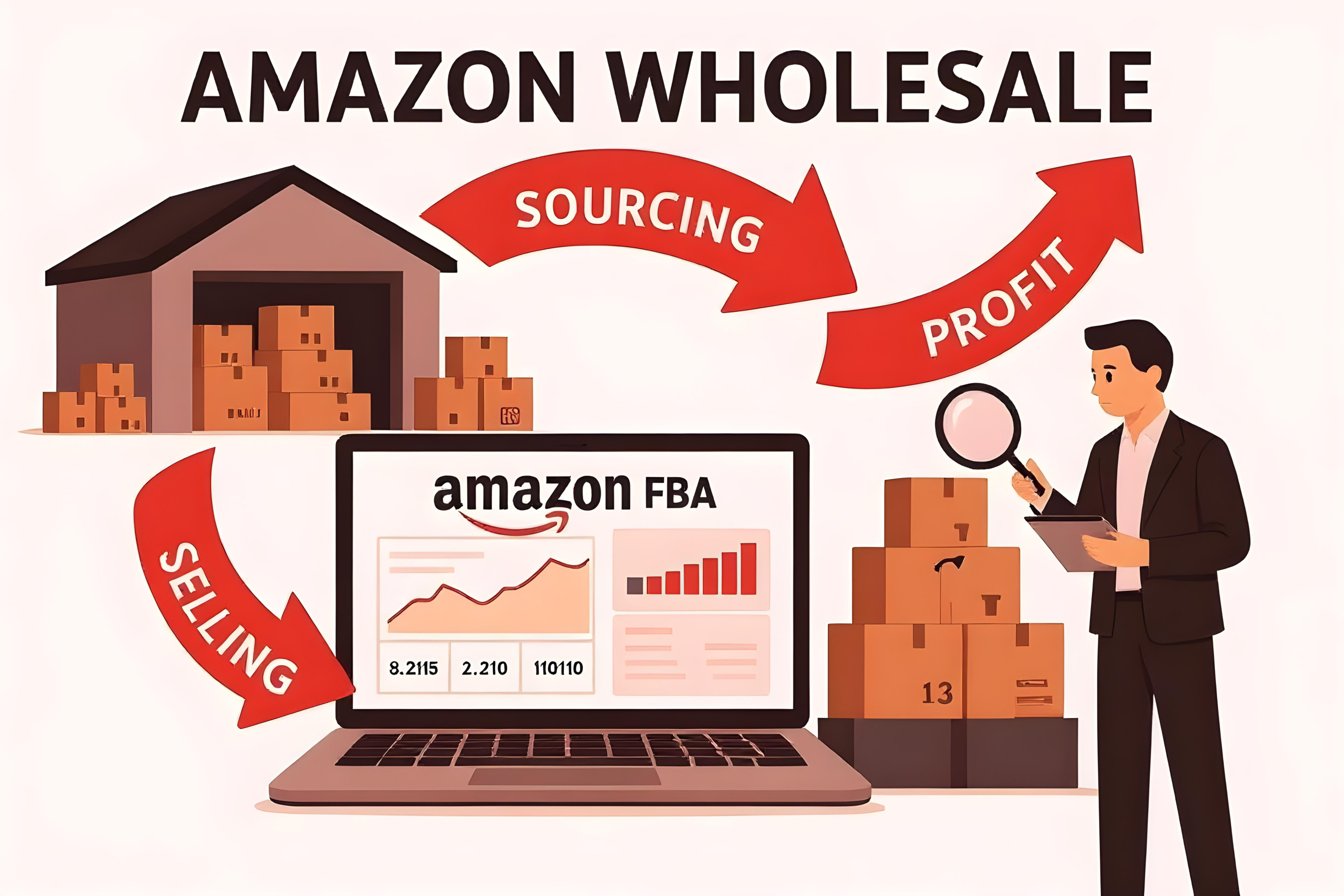
Amazon FBA wholesale typically means buying branded or approved wholesale products in bulk, sending inventory to Amazon fulfillment centers, and selling those products through Amazon’s marketplace. Amazon stores, picks, packs, ships, and manages much of the customer-service process for FBA orders.
A global sourcing platform helps merchants source products from suppliers, often in China, while coordinating services such as supplier communication, product purchasing, quality inspection, consolidation, warehousing, customized packaging, and direct international shipping. Depending on the platform and order model, sellers may purchase inventory in bulk, hold limited stock, or fulfill orders after receiving customer demand.
The difference is important:
| Area | Global Sourcing Platform | Amazon FBA Wholesale |
| Primary goal | Source and fulfill products across channels | Sell inventory through Amazon |
| Inventory model | Can support flexible, low-inventory, or bulk purchasing | Usually requires inventory sent to Amazon in advance |
| Sales channels | Shopify, marketplaces, social commerce, wholesale buyers, private stores, and more | Mainly Amazon marketplace |
| Supplier access | Often connects sellers with Chinese factories and product markets | Usually relies on established distributors, brands, or authorized suppliers |
| Fulfillment control | Seller can choose shipping methods, packaging, destinations, and service options | Amazon controls much of the fulfillment experience |
| Startup capital | Potentially lower when testing or using order-based fulfillment | Often higher because sellers buy stock before sending it to FBA |
| Main risk | Supplier selection, product quality, delivery consistency | Inventory lockup, price competition, fees, account dependence, and unsold stock |
For a business that wants to build a multi-channel brand or serve B2B buyers worldwide, a global sourcing platform often provides more operational freedom. For a seller focused on Amazon demand and Prime conversion, FBA can be powerful—but it requires tighter inventory planning.
Amazon FBA Wholesale: Strengths and Scaling Limits
Amazon FBA wholesale remains attractive because it offers access to one of the world’s most established retail marketplaces. Sellers can list products where buyers already have purchase intent, and eligible FBA offers may benefit from Amazon’s fulfillment infrastructure and Prime delivery experience.
Amazon’s official FBA process requires sellers to set up an account, create listings, prepare products according to packaging and labeling requirements, create shipping plans, and send inventory to Amazon fulfillment centers. This creates a structured path, but it also means the seller must coordinate inventory before the product can become available for fulfillment.
Why Amazon FBA Wholesale Can Scale Fast
When a seller has a reliable wholesale supplier and a profitable product listing, Amazon FBA can support rapid sales growth.
Its major strengths include:
– Built-in customer traffic. Amazon has high purchase intent, which can reduce the need to build an audience from zero.
– Fast fulfillment experience. FBA can make eligible products available with Prime shipping benefits.
– Operational outsourcing. Amazon handles picking, packing, delivery, and many customer-service activities for FBA orders.
– Established buying trust. Many shoppers already trust Amazon’s payment, delivery, and return processes.
– Potentially predictable replenishment. Sellers with stable sales data can forecast inventory needs and reorder from authorized suppliers.
The model is especially suitable for merchants that have:
– Reliable access to branded wholesale goods.
– Sufficient capital to purchase inventory upfront.
– Strong product research and pricing discipline.
– Experience with Amazon listing, advertising, and account operations.
– A clear plan for monitoring stock levels and sales velocity.
The Inventory Commitment Behind FBA Growth
The challenge begins when growth requires more inventory. FBA wholesale is not just a sales model; it is an inventory-management model.
Amazon provides inventory health tools and advises sellers to maintain enough stock to cover approximately 30 to 60 days of expected sales while avoiding excess inventory. This is reasonable guidance operationally, but it also means that scaling may require committing more cash to products before those products are sold.
A fast-growing seller may need to fund:
1. Product purchases from distributors or suppliers.
2. Freight from supplier to Amazon fulfillment centers.
3. Product preparation and labeling.
4. Amazon selling and fulfillment fees.
5. Monthly storage costs.
6. Advertising spend.
7. Returns, removals, or unsold inventory exposure.
Amazon charges monthly storage fees based on the daily average volume of inventory stored in fulfillment centers. It may also apply a storage-utilization surcharge, depending on inventory conditions. In addition, Amazon announced that 2026 FBA fees would increase by an average of $0.08 per unit sold, with variations by product size and price range.
This does not mean Amazon FBA wholesale is unprofitable. It means sellers must calculate margins carefully before ordering larger volumes.
Global Sourcing Platforms: A More Flexible Way to Grow
A global sourcing platform changes the operational starting point. Instead of beginning with a large inventory purchase and a single marketplace, the seller begins with sourcing capability.
For example, a merchant may identify a product opportunity, request quotations from Chinese suppliers, compare materials and specifications, order samples, arrange quality checks, and ship products to end customers or a destination warehouse. The seller can use the same sourcing and fulfillment infrastructure for a branded website, social-commerce store, marketplace account, retail client, or wholesale customer.
This approach is particularly valuable for merchants that do not want their entire business to depend on one marketplace.
Where a Global Sourcing Platform Creates Leverage
A well-managed sourcing platform can help sellers reduce complexity across the purchasing and fulfillment process.
Common advantages include:
– Broader product access. China’s manufacturing network offers a wide range of categories, materials, production capabilities, and customization options.
– Flexible order quantities. Sellers can begin with samples, test orders, smaller production runs, or consolidated purchases before committing to larger volume.
– Multi-channel fulfillment. Products can be shipped to customers, third-party warehouses, retail buyers, or marketplaces.
– Product customization. Sellers may add branded packaging, inserts, labels, bundles, or custom product features.
– Supplier coordination. A sourcing partner can help communicate specifications, verify product details, and manage order progress.
– Consolidation opportunities. Products from multiple suppliers can potentially be checked and combined before international shipment.
– Lower inventory pressure. Depending on the operating model, sellers may keep less inventory on hand or use smaller replenishment cycles.
For a business using Looperbuy, the value is not simply product purchasing. It is the ability to build a more connected workflow between Chinese sourcing, quality control, warehousing, and direct fulfillment. This can reduce the number of separate suppliers, freight contacts, warehouse providers, and payment processes a merchant must manage independently.
A Practical Example: Testing Before Buying Deep
Imagine a seller who wants to launch a line of office organization products.
Under a traditional Amazon FBA wholesale approach, the seller may need to purchase a substantial quantity from a distributor, prepare labels, send the goods to Amazon, and hope that pricing remains competitive after fees and advertising.
Under a sourcing-platform model, the seller could:
1. Request samples from several Chinese suppliers.
2. Compare quality, dimensions, packaging, and production options.
3. Launch a small selection through an independent store or social-commerce channel.
4. Use early order data to identify the best-selling colors, bundles, and price points.
5. Scale the winning product variation with larger purchase orders.
6. Add branded packaging or bundles once demand becomes more predictable.
7. Ship directly to international buyers or forward selected inventory to regional warehouses.
The second approach does not eliminate risk. It shifts risk from large early inventory commitments toward supplier evaluation, quality management, and order coordination. For many new or diversified sellers, that is a more manageable risk profile.
Which Model Is Easier to Scale?
The most accurate answer is that neither model is automatically easier. Each model scales different parts of the business well.
Amazon FBA wholesale is easier to scale when you already have product-market fit within Amazon, sufficient working capital, and a dependable replenishment system. A global sourcing platform is easier to scale when your priority is product flexibility, lower inventory exposure, international fulfillment, and multi-channel growth.
| Scaling Factor | Global Sourcing Platform | Amazon FBA Wholesale | Easier Option |
| Testing new products | Small orders, samples, flexible sourcing | Often requires inventory commitment before FBA launch | Global sourcing platform |
| Selling across channels | Supports independent stores, social platforms, marketplaces, and wholesale | Strongest within Amazon ecosystem | Global sourcing platform |
| Prime delivery access | Depends on shipping setup and destination | Strong FBA advantage | Amazon FBA wholesale |
| Upfront capital needs | Can be lower with staged buying and order-based fulfillment | Often higher due to bulk buying and inbound inventory | Global sourcing platform |
| Brand customization | Can source custom packaging, bundles, and private-label options | Possible, but wholesale branded products may have restrictions | Global sourcing platform |
| Operational simplicity | Requires a reliable sourcing and fulfillment partner | Amazon manages fulfillment after inventory arrives | Amazon FBA wholesale |
| Inventory risk | Potentially lower with flexible replenishment | Higher when stock is held at Amazon | Global sourcing platform |
| Marketplace conversion | Depends on seller’s own channels | Benefits from Amazon shopper trust and fulfillment system | Amazon FBA wholesale |
| Supplier diversification | Can work with multiple factories and product categories | Often constrained by approved wholesale relationships | Global sourcing platform |
| Long-term brand ownership | Strong potential through independent channels | Can be limited by marketplace competition and account dependence | Global sourcing platform |
The better question is not “Which model is best?” It is “Which bottleneck is limiting my business today?“
– If your bottleneck is customer traffic, Amazon FBA may be the better first channel.
– If your bottleneck is product sourcing, fulfillment coordination, or inventory cost, a global sourcing platform may provide more leverage.
– If your bottleneck is dependence on one marketplace, sourcing directly and building multiple sales channels can reduce concentration risk.
– If your goal is private-label growth, supplier access and customization may matter more than Amazon fulfillment alone.
The Hidden Cost of Scaling: Cash Flow
Many merchants focus on product margins but overlook the timing of cash flow.
A product can be profitable on paper and still create financial pressure if money is tied up too long in inventory, shipping, storage, and advertising before sales are collected.
Consider a simplified comparison:
| Cash Flow Stage | Global Sourcing Platform | Amazon FBA Wholesale |
| Product decision | Can begin with samples and smaller test orders | Often requires approved wholesale sourcing and bulk purchasing |
| Inventory purchase | May be staged or tied to demand strategy | Usually purchased before Amazon sales occur |
| Fulfillment | Can ship to customers or multiple destinations | Inventory must first arrive at Amazon |
| Storage exposure | May be controlled through leaner stock strategy | Monthly storage charges can apply to inventory held in FBA |
| Unsold stock | May be reduced through shorter replenishment cycles | May require price reductions, removal orders, or continued storage |
| Growth capital | Can be allocated to sourcing, testing, and marketing | Often absorbed by inventory replenishment and Amazon operations |
Amazon’s current fee structure makes inventory discipline increasingly important. The company’s inventory tools include indicators for available, inbound, and reserved units, as well as fee previews. Sellers must treat these metrics as part of their financial planning rather than as an administrative task.
A sourcing-led model does not remove the need for cash flow discipline. But it can give sellers more options: smaller orders, product consolidation, selective warehousing, customized fulfillment routes, and sales-channel diversification.
A Better Scaling Framework for B2B Sellers
From an industry perspective, the strongest sellers do not treat sourcing and fulfillment as separate afterthoughts. They build a repeatable operating system.
Here is a practical framework for deciding how to scale.
1. Start With Product Validation
Do not assume a product will sell because it is popular on a marketplace or inexpensive from a supplier.
Validate:
– Buyer demand.
– Competitive positioning.
– Product quality expectations.
– Shipping weight and dimensional cost.
– Potential return reasons.
– Required certifications or compliance standards.
– Margin after product, shipping, platform, payment, and marketing costs.
For B2B products, also examine minimum order quantities, repeat-purchase potential, packaging requirements, and buyer-specific customization.
2. Use Samples and Inspection Standards
A supplier quotation is not a product-quality guarantee.
Before committing to a large order, define:
– Material requirements.
– Product dimensions and tolerances.
– Color standards.
– Packaging specifications.
– Labeling requirements.
– Functional tests.
– Acceptable defect rates.
– Photo or video inspection checkpoints.
This is where a sourcing platform can add practical value. Clear specifications reduce the risk of receiving a product that looks correct in images but fails in real use.
3. Choose Inventory by Sales Certainty
Use a tiered inventory approach:
– Unproven products: Samples, small tests, or order-based fulfillment.
– Emerging winners: Limited stock with frequent review cycles.
– Proven bestsellers: Larger purchase orders, better freight planning, branded packaging, and possible regional warehousing.
– Seasonal products: Conservative ordering, clear exit plans, and tighter replenishment controls.
This approach prevents a common scaling error: treating every product as a bestseller before the data supports that decision.
4. Build Multiple Sales Routes
A merchant that relies only on Amazon can face pricing pressure, listing competition, account risks, and marketplace policy changes. A merchant that relies only on a direct website may face higher customer-acquisition costs.
A balanced approach may include:
– Amazon for high-intent retail demand.
– A branded website for customer data and long-term brand value.
– Social-commerce channels for product discovery.
– Wholesale outreach for larger order values.
– B2B marketplaces for international buyers.
– Regional distributors for recurring demand.
A global sourcing platform can support this broader model because products do not need to be dedicated to one fulfillment network from the start.
5. Measure the Right Numbers
Track more than revenue.
Monitor:
– Gross margin per unit.
– Landed cost.
– Contribution margin after advertising and fulfillment.
– Inventory turnover.
– Days of stock on hand.
– Return rate.
– Defect rate.
– Delivery time by destination.
– Supplier lead time.
– Reorder cycle.
– Cash conversion cycle.
– Customer lifetime value.
The U.S. retail e-commerce market remains substantial and growing. The U.S. Census Bureau estimated seasonally adjusted retail e-commerce sales at $340.2 billion in the second quarter of 2026, up 3.8% from the previous quarter. That growth creates opportunity, but it also rewards sellers that can maintain product availability and margin discipline as demand changes.
When Amazon FBA Wholesale Is the Better Choice
Amazon FBA wholesale may be the right model if most of the following are true:
– You have authorized access to trusted wholesale suppliers or brands.
– You want to focus primarily on Amazon’s marketplace.
– You can purchase inventory in larger quantities without damaging cash flow.
– You understand Amazon listing quality, advertising, pricing, and account health.
– Your products have consistent demand and manageable storage requirements.
– Your margin remains healthy after referral fees, FBA fees, storage, freight, and advertising.
– You have a strong replenishment system and backup supply options.
For sellers with proven products, FBA can turn fulfillment into a competitive advantage. The key is not merely sending inventory into Amazon. The key is sending the right inventory, at the right time, with margins that can survive changing costs.
When a Global Sourcing Platform Is the Better Choice
A global sourcing platform may be the better choice if you want to:
– Source directly from China with more supplier and product flexibility.
– Test product ideas before buying deep inventory.
– Sell through your own website, marketplaces, and B2B channels.
– Reduce the operational burden of managing separate suppliers, warehouses, and shipping agents.
– Create custom products, bundles, packaging, or branded inserts.
– Expand to new countries without building a separate fulfillment relationship in each market.
– Keep more control over sourcing decisions and customer experience.
– Build a business that is not dependent on one sales platform.
For many global sellers, the best answer is not choosing one model forever. It is using each model where it performs best.
For example, a seller could use Looperbuy to source, inspect, consolidate, and test new products from China. Once a product proves strong demand on Amazon, the seller could then send a calculated quantity into FBA for faster marketplace fulfillment. This hybrid approach combines sourcing flexibility with Amazon’s delivery infrastructure.
Final Verdict
Amazon FBA wholesale is easier to scale inside Amazon. A global sourcing platform is easier to scale across products, suppliers, and sales channels.
If your goal is to win Amazon search visibility and serve marketplace buyers with fast fulfillment, FBA wholesale can be highly effective. But it requires more upfront capital, disciplined replenishment, and careful fee management.
If your goal is to build a flexible international commerce operation—with direct Chinese sourcing, lower inventory pressure, product customization, and multi-channel fulfillment—a global sourcing platform offers a broader foundation for growth.
For sellers who want to reduce unnecessary inventory, warehousing, payment, and logistics complexity, Looperbuy can help centralize the sourcing-to-fulfillment workflow. Start with a focused product brief, request product sourcing support, validate quality with samples, and scale inventory only after demand is proven.
Frequently Asked Questions
1. Is a global sourcing platform the same as dropshipping?
Not exactly. Dropshipping is a fulfillment method where a seller ships products to customers after receiving orders, often without holding inventory. A global sourcing platform may support dropshipping, but it can also provide sourcing, supplier coordination, quality inspection, consolidation, private labeling, warehousing, and bulk fulfillment services.
2. Is Amazon FBA wholesale profitable in 2026?
It can be profitable, but profitability depends on product cost, supplier terms, referral fees, FBA fulfillment fees, storage costs, advertising spend, return rates, and competitive pricing. Sellers should calculate contribution margin before placing a wholesale order rather than relying only on estimated revenue.
3. Can I use a global sourcing platform and Amazon FBA together?
Yes. Many sellers use a sourcing partner to find suppliers, inspect products, arrange custom packaging, and consolidate inventory before forwarding selected quantities to Amazon FBA. This can be an effective hybrid strategy for sellers that want product flexibility and Amazon fulfillment.
4. What is the biggest risk of Amazon FBA wholesale?
The biggest risk is often cash tied up in inventory. Sellers may buy products, pay for inbound freight, and incur storage or removal costs before knowing whether demand, price, and margins will remain stable.
5. What is the biggest risk of sourcing products from China?
The most common risks include inconsistent product quality, unclear specifications, poor communication, incorrect packaging, delayed production, and shipping complications. These risks can be reduced through sample approval, documented requirements, quality inspections, and reliable sourcing coordination.
6. Is a global sourcing platform better for new sellers?
It can be, especially for sellers who want to test products with lower inventory exposure, source customized products, or sell through multiple channels. However, new sellers still need to validate demand, understand shipping costs, and set clear quality standards.
7. Should B2B sellers hold inventory?
It depends on demand stability, lead times, order size, and customer expectations. Proven products with consistent demand may justify inventory. New, seasonal, or uncertain products are usually better suited to smaller test orders and controlled replenishment cycles.
References
1. U.S. Census Bureau. “[Quarterly Retail E-Commerce Sales Report].”
2. Amazon Seller Central. “[Get Started with Fulfillment by Amazon (FBA)].”
3. Amazon Seller Central. “[FBA Inventory].”
4. Amazon Seller Central. “[FBA Inventory Overview].”
5. Amazon Seller Central. “[FBA Inventory Management Features].”
6. Amazon Seller Central. “[Monthly Inventory Storage Fees].”
7. Amazon Seller Central. “[2026 US Referral and FBA Fee Changes Summary].”
8. Amazon Seller Central. “[FBA Features, Services, and Fees].”