Discover how composable commerce helps B2B sourcing platforms connect product discovery, supplier data, quotations, payments, fulfillment, and global logistics. Learn how Looperbuy can help sellers source China-made products, reduce inventory pressure, and simplify cross-border order management.
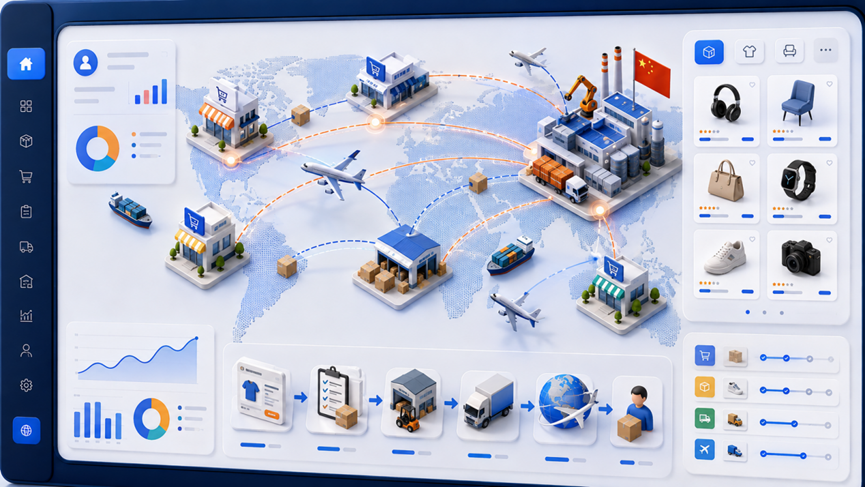
For global B2B sellers, a sourcing platform is no longer just a place to find products. It must connect product discovery, supplier communication, order processing, inventory decisions, payments, fulfillment, and shipment tracking into one dependable buying experience.
That is why composable commerce for B2B matters. Rather than forcing every business function into one rigid platform, it allows companies to combine independent capabilities—such as catalog management, quote workflows, pricing, supplier sourcing, order orchestration, and logistics tracking—and improve them without rebuilding the entire system.
For a global sourcing and dropshipping platform such as Looperbuy, this model can help sellers source China-made products more efficiently, reduce the need to pre-purchase inventory, and operate internationally without managing every warehouse, payment, or logistics task themselves.
Table of Contents
What Is Composable Commerce for B2B?
Composable commerce is an approach to building a digital commerce system from separate but connected business capabilities.
Instead of relying on one large, tightly connected platform where every function depends on every other function, a business can use modular components. Each component has a specific responsibility and can be improved, replaced, or scaled independently.
For example, a B2B platform may separate:
– Product catalog and supplier data
– Customer-specific pricing
– RFQ and quotation workflows
– Order management
– Payment and billing
– Inventory visibility
– Warehouse and fulfillment coordination
– Shipping-rate calculation
– Tracking notifications
– Customer account permissions
– Content management and multilingual storefronts
This does not mean that every company needs dozens of tools. The goal is not to create a complicated technology stack. The goal is to make sure critical business capabilities can change without creating unnecessary disruption elsewhere.
In a traditional all-in-one commerce system, improving product search may require changes to the storefront, database, integrations, and ordering logic. In a composable B2B commerce model, the search experience can be improved as an independent capability while core pricing, order, and fulfillment processes remain stable.
For B2B businesses, that distinction is important because selling is rarely a simple “browse, add to cart, and pay” transaction. A buyer may need to compare suppliers, request a quote, confirm minimum order quantities, check product specifications, validate shipping options, approve a purchase internally, and manage repeat orders across multiple markets.
Why B2B Sourcing Businesses Need Flexibility
Global B2B buyers increasingly expect a purchasing experience that combines self-service convenience with reliable human support. Research from McKinsey indicates that B2B buyers continue to use in-person, remote, and digital self-service interactions throughout the purchasing journey, rather than relying on a single channel.
This shift is particularly relevant for sellers sourcing products from China. Their business model may involve:
– Testing products before placing larger orders
– Adding new product categories quickly
– Selling across multiple marketplaces or independent stores
– Managing buyer expectations for shipping times
– Working with changing product specifications
– Responding to seasonal demand
– Avoiding high upfront inventory commitments
– Coordinating suppliers, warehouses, and delivery providers
A rigid commerce platform can make these changes slow and expensive. Every new supplier integration, shipping rule, marketplace connection, or product workflow can become a custom development project.
A modular approach gives the business more room to adapt.
For example, Looperbuy can improve its supplier-product matching process without changing its order-management workflow. It can introduce a new logistics partner for a specific destination market without redesigning the complete checkout experience. It can also add a more advanced product-search tool without disrupting customer accounts or payment processes.
Monolithic vs. composable B2B commerce
| Business change | Traditional monolithic platform | Composable B2B commerce model |
| Improve product search | May require broad platform changes and regression testing | Upgrade or tune the search capability independently |
| Add a new supplier source | Often requires custom development within the core platform | Connect the supplier data source through defined APIs or workflows |
| Launch a new regional storefront | Can require a separate platform instance | Reuse core functions while adapting language, currency, shipping, and content |
| Add quote-request functionality | May affect checkout and order logic across the platform | Add or extend a dedicated RFQ workflow |
| Change fulfillment partners | Logistics logic can be deeply embedded in the platform | Connect a new fulfillment or shipping service as a separate capability |
| Support seller-specific pricing | May require complex platform customization | Apply account, contract, or volume pricing through a pricing service |
The commercial benefit is not simply “more technology.” It is the ability to make practical changes with a smaller operational risk.
The B2B Capabilities That Matter Most
A successful composable commerce strategy begins with real business requirements, not a shopping list of software tools.
For a global China sourcing and dropshipping platform, the following capabilities are usually the highest priority.
Product and supplier information management
Product data is the foundation of any sourcing platform. Sellers need more than product images and prices. They often need accurate details about specifications, materials, dimensions, variants, packaging, certifications, minimum order quantities, supplier lead times, and shipping considerations.
A strong product-information capability should support:
– Detailed product specifications
– SKU and variant management
– Supplier references
– MOQ information
– Product images and videos
– Compliance documents
– Multilingual product descriptions
– Category structures and filters
– Product availability status
– Packaging and shipping details
For sellers buying from China, clear product information reduces avoidable disputes and makes it easier to compare sourcing options before placing an order.
Search, filtering, and product discovery
Search is not a minor feature in a large B2B catalog. It is one of the main ways sellers find the correct product quickly.
A good B2B sourcing search experience should support:
– Search by product name, SKU, model number, material, or application
– Attribute filtering, such as color, size, voltage, dimensions, or certification
– Supplier and price-range filters
– MOQ and lead-time filters
– Similar-product recommendations
– Product comparison tools
– Search results that prioritize relevant specifications over generic keywords
In practical terms, a seller searching for “portable label printer” should not have to browse hundreds of loosely related products. They should be able to filter by printing method, label width, connectivity, battery type, MOQ, target market, and shipping suitability.
The better the search and filtering experience, the faster a seller can move from product research to purchase confidence.
Pricing, quotations, and payment workflows
B2B pricing is rarely fixed. A supplier’s unit price may depend on quantity, packaging requirements, product customization, destination country, payment terms, or current material costs.
This makes pricing a distinct business capability rather than a static number on a product page.
A flexible platform should support:
– Tiered pricing based on order quantity
– Supplier quotation requests
– Custom product requests
– Freight estimate calculations
– Deposit and balance-payment workflows
– Currency conversion
– Payment-status visibility
– Credit or account-based payment arrangements where appropriate
– Clear fee breakdowns before order confirmation
For Looperbuy’s users, pricing transparency is particularly important. Sellers need to understand the full sourcing cost, not only the factory product price. That includes product cost, domestic handling, quality checks where applicable, packaging, international shipping, and any service fees.
Order orchestration and fulfillment visibility
For global sellers, placing an order is only the beginning. They need to know what happens next.
A reliable B2B sourcing workflow should make each order stage visible:
1. The seller selects products and submits the sourcing request.
2. The platform confirms product availability, price, MOQ, and supplier conditions.
3. The seller reviews the complete quotation and payment requirement.
4. The order is placed with the supplier.
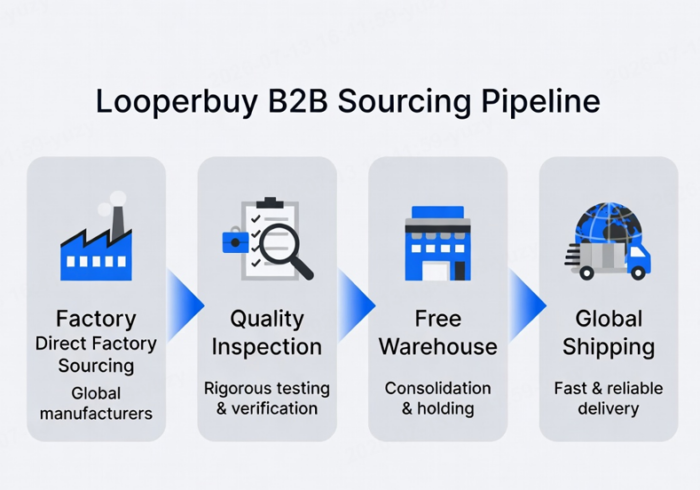
5. Products move to quality inspection, consolidation, packaging, or warehouse processing.
6. International shipping is arranged.
7. Tracking information is shared with the seller.
8. The seller can respond to delivery issues or post-order questions.
This workflow can reduce uncertainty for sellers who do not have their own procurement team in China.
How Composable Commerce Supports Looperbuy Users
For Looperbuy, composable commerce is not primarily an infrastructure discussion. It is a way to make global sourcing easier for online sellers.
The platform’s value increases when sellers can complete more of their work from one connected environment:
– Find China-based products and suppliers
– Request sourcing support
– Review product details and quotations
– Place orders without maintaining a local purchasing team
– Consolidate items from different suppliers
– Reduce unnecessary inventory commitments
– Access warehouse and fulfillment support
– Manage international delivery through coordinated logistics services
– Track the order from sourcing through dispatch
This model is especially useful for small and growing B2B sellers, marketplace merchants, e-commerce brands, wholesalers, and retailers that want product flexibility but do not want the operational burden of holding large volumes of inventory.
The ability to operate with less inventory can improve cash-flow flexibility. Instead of paying for large quantities before validating demand, sellers can test products, reorder proven items, and adjust their catalog more frequently.
This does not remove every operational risk. Product quality, supplier reliability, customs rules, market regulations, shipping costs, and delivery times still require careful management. However, a connected sourcing and fulfillment workflow can make those risks easier to see and manage.
A Practical Implementation Roadmap
Composable commerce works best when a business starts with the most painful problem instead of trying to rebuild everything at once.
For a B2B sourcing platform, a practical roadmap may look like this:
1. Map the customer journey
Start by identifying where sellers experience friction.
Common questions include:
– Is it difficult to find the right product?
– Do sellers lack confidence in product specifications?
– Are quotation processes slow?
– Is pricing unclear?
– Are order-status updates incomplete?
– Do sellers struggle to compare shipping options?
– Are repeat orders difficult to manage?
– Do customer-service teams spend too much time answering routine questions?
The goal is to identify the workflows that create the greatest customer effort or internal cost.
2. Define systems of record
Every important data type should have a clear source of truth.
| Data type | Typical system of record |
| Product specifications | Product information management system or supplier database |
| Supplier pricing | Supplier portal, procurement system, or pricing engine |
| Customer account details | CRM or customer-account service |
| Order status | Order-management system |
| Warehouse inventory | Warehouse-management system |
| Shipment tracking | Logistics provider or tracking integration |
| Payment status | Payment service or finance system |
Without clear ownership, the same product, price, or inventory information can appear differently across different parts of the platform. That creates buyer confusion and operational rework.
3. Prioritize one high-impact capability
For many sourcing platforms, the first priority is usually one of these areas:
– Better product discovery and filtering
– More accurate supplier-product data
– Faster quotation workflows
– Clearer landed-cost estimates
– Stronger order-status visibility
– Improved warehouse and shipment tracking
A focused improvement creates a measurable result and reduces the risk of a broad, expensive technology project.
4. Create reliable integration standards
Integration quality determines whether a modular commerce system becomes flexible or chaotic.
Every connected service should have clear rules for:
– Data formats
– API documentation
– Error handling
– Retry procedures
– Status updates
– Version control
– Security permissions
– Monitoring and alerting
For example, if a supplier changes a product’s MOQ or lead time, the platform should define how quickly that information reaches the product page, quotation process, and customer-support team.
5. Measure outcomes that matter to sellers
Technology metrics alone are not enough. Measure improvements that reflect actual user value.
Useful indicators include:
– Product-search success rate
– Time from sourcing request to quotation
– Quote-to-order conversion rate
– Repeat-order rate
– Order-status inquiry volume
– Product-data correction rate
– Shipping-estimate accuracy
– Customer-support resolution time
– Seller satisfaction after fulfillment
Common Mistakes to Avoid
Composable commerce can create real advantages, but only when it is governed carefully.
Adding tools without a capability map
More software does not automatically create a better platform. If several tools overlap in responsibility, teams can lose clarity about where data belongs and who owns each process.
Before adding a new service, define the problem it solves, the data it owns, and how it connects to existing workflows.
Treating integrations as an afterthought
In B2B sourcing, integrations are often the operational backbone. Supplier data, payment status, warehouse updates, and shipping tracking all depend on reliable data flow.
A polished storefront cannot compensate for inaccurate product availability or delayed order updates.
Building for every possible scenario too early
Not every seller needs a highly customized workflow on day one. Start with the most common and commercially important journeys, then expand based on actual user needs.
A simple, dependable sourcing process is more valuable than a feature-rich but confusing platform.
Ignoring operational ownership
Each capability needs an owner. Someone must be responsible for product-data quality, supplier onboarding, payment exceptions, fulfillment updates, customer permissions, and integration monitoring.
Modularity improves flexibility, but it also makes clear accountability more important.
The Opportunity for Global B2B Sellers
The B2B buying journey is increasingly digital, but it remains complex. Buyers expect self-service convenience while still requiring accurate information, dependable fulfillment, and responsive support. McKinsey’s research shows that buyers continue to use a balanced mix of digital, remote, and in-person channels, making consistency across these touchpoints essential.
For global sellers sourcing from China, the winning platform will not simply offer a large product catalog. It will help them make better business decisions with less operational friction.
Looperbuy can support this journey by bringing together the capabilities sellers value most:
– Reliable China product sourcing
– Clear product and supplier information
– Flexible order and quotation workflows
– Reduced inventory pressure
– Warehouse and consolidation support
– Coordinated payment handling
– International logistics management
– Order visibility from purchase to delivery
The right commerce architecture makes it easier to improve these services over time. It allows the platform to adapt as seller expectations, supplier networks, product categories, and international delivery requirements change.
Start Building a More Flexible Sourcing Operation
Global product sourcing should not require sellers to manage every supplier conversation, warehouse task, payment process, and shipping arrangement on their own.
With Looperbuy, sellers can explore China-sourced products, request procurement support, manage purchasing workflows, and access fulfillment assistance through a more connected operating model.
Ready to reduce sourcing complexity and test new products with less inventory risk? Explore how Looperbuy can support your global B2B sourcing and dropshipping workflow today.
Frequently Asked Questions
1. What is composable commerce in B2B?
Composable commerce is a way of building a B2B digital commerce platform from connected, independent capabilities. Instead of relying on one rigid system, businesses can separately manage functions such as product catalogs, pricing, quoting, orders, payments, supplier data, fulfillment, and shipping.
2. Why is composable commerce useful for a B2B sourcing platform?
A sourcing platform often needs to connect suppliers, product information, buyer accounts, payment workflows, warehouses, and shipping providers. A modular setup makes it easier to improve one part of the customer journey—such as product search or tracking—without disrupting the entire platform.
3. Can composable commerce help sellers reduce inventory risk?
It can support a lower-inventory operating model by making it easier for sellers to source products, test demand, place orders in response to sales activity, and coordinate fulfillment. Sellers should still review product lead times, supplier conditions, shipping costs, and market demand before relying on any inventory strategy.
4. What features should a B2B sourcing platform provide?
The most important features usually include product discovery, detailed specifications, supplier and MOQ information, quote requests, transparent pricing, order management, payment visibility, warehouse support, shipping options, tracking, and customer-service access.
5. How does a sourcing platform support dropshipping?
A sourcing platform can help sellers identify products, coordinate purchasing from suppliers, arrange consolidation or fulfillment, and manage shipping to the destination market. The exact workflow depends on product type, supplier terms, destination country, and shipping service.
6. Is composable commerce suitable for small B2B sellers?
Yes, but the implementation should match the business’s real complexity. A smaller seller does not need a large technology ecosystem. The practical goal is to use connected tools and workflows that improve product discovery, ordering, fulfillment visibility, and customer support without creating unnecessary operational overhead.
7. What is the biggest challenge in a composable B2B system?
The largest challenge is usually integration governance. Product data, prices, inventory, order statuses, and shipment updates must remain accurate across the connected systems. Clear data ownership, documented integrations, monitoring, and responsible operational teams are essential.
References
1. [Virto Commerce, “Composable Commerce for B2B: Unlocking Agility and Growth for Complex Businesses”]. The source article explains how modular commerce capabilities can support B2B requirements such as complex pricing, approvals, account structures, ERP integration, search, product data, and phased modernization.
2. [McKinsey, “Five Fundamental Truths: How B2B Winners Keep Growing”]. McKinsey reports that B2B buyers use in-person, remote, and digital self-service channels across their purchasing journeys.
3. [McKinsey, “The Surprising Economics of B2B Growth”]. McKinsey’s 2026 Global B2B Pulse Survey notes that buyers interact through an average of ten touchpoints and expect seamless transitions and consistent information across channels.
4. [Forrester, “Unleashing the B2B Revolution: The Bold Power of E-Commerce”]. The article discusses the growing importance of seamless digital experiences, customer segmentation, and B2B e-commerce capabilities.
5. [Forrester, “CPQ: Empowering Buyers to Buy With Omnichannel Sales”]. Forrester discusses B2B buyers’ expectations for self-service convenience, personalized information, and consistent omnichannel experiences.
6. [Gartner Peer Insights, “Digital Commerce Market”]. Gartner defines digital commerce as technology that enables customers to purchase goods and services through interactive self-service or assisted experiences.