Discover what truly makes an apparel sourcing company reliable for fashion brands. Learn how to evaluate partners on quality control, capacity, cost transparency, compliance, technology, and fulfillment, and see how platform-based sourcing can support scalable, low-risk growth.
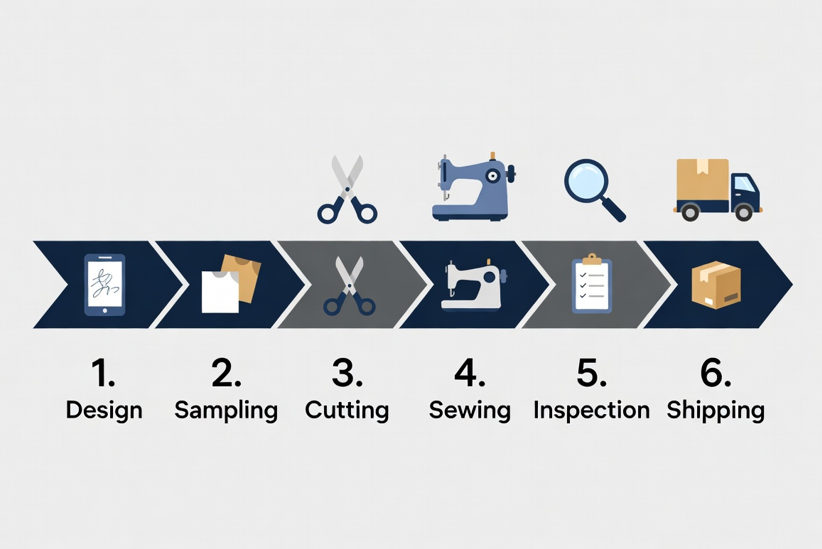
A reliable apparel sourcing company for fashion brands is one that consistently delivers the right products, at the right quality, within the right timelines, while protecting your brand, cash flow, and supply chain. From a sourcing strategist’s and buyer’s perspective, this reliability is built on verifiable systems: compliance, quality control, transparent costing, robust logistics, and responsive communication.
Table of Contents
Understanding Apparel Sourcing Reliability
Choosing a reliable apparel sourcing company can make or break a fashion brand’s growth. When your collections launch on time, meet quality expectations, and support your brand values, you build customer trust and protect margins.
In practice, a reliable apparel sourcing partner is one that:
– Manages factory risk and QC so you don’t get production surprises
– Offers transparent costing and realistic MOQs for your stage
– Coordinates logistics and documentation with minimal friction
– Aligns with your brand positioning, ethics, and sustainability goals
> From my experience working with global brands sourcing from China and Asia, the most reliable partners behave less like “traders” and more like embedded supply chain teams—they understand both your design calendar and your operational constraints.
Core Traits Of A Reliable Apparel Sourcing Company
1. Proven Track Record With Fashion Brands
Fashion brands rarely want to be someone’s first serious production run. A reliable apparel sourcing company can clearly demonstrate who they serve and what they’ve delivered.
Look for:
– Portfolio of brands: references in your category (streetwear, athleisure, luxury, basics, kidswear)
– Use cases or case studies: how they solved specific problems (late deliveries, quality failures, factory disruptions)
– Repeat customers and long-term contracts: evidence they’re trusted beyond one-off orders
From an insider’s perspective, what matters is not just “we worked with big brand X,” but:
– How many seasons they’ve supported
– How they managed size runs, colorways, and repeat orders
– Whether they helped the brand scale from small MOQ to large volumes
2. Capacity, Speed, And Flexibility
Reliable sourcing companies maintain sufficient capacity and flexibility to meet changing fashion calendars and demand. Research on apparel sourcing highlights *capacity, lead time, and flexibility* as one of the key factor groups that brands evaluate when choosing sourcing destinations and partners.
Key capacity questions:
– Can they support your volume today and your growth plan (e.g., from 300 pieces per style to 3,000)?
– How do they handle peak seasons (holiday, festival, back-to-school)?
– Can they offer flexible MOQs for testing new styles or D2C drops?
Operational indicators:
– Clear production calendars for fabric booking, cutting, sewing, and finishing
– Ability to shift production between backup factories when needed
– Experience with rush orders or quick replenishment for bestsellers
Quick check-list (for buyers):
1. Ask for average and maximum line capacity per month.
2. Check their lead time breakdown (fabric sourcing vs. CMT vs. finishing).
3. Confirm contingency plans if a factory line goes down or a fabric is delayed.
3. Rigorous Quality Control Systems
Quality is one of the five principal factors brands use to evaluate sourcing options, alongside cost, capacity, stability, and sustainability. A reliable apparel sourcing company treats quality control as a process, not a final inspection.
Expect to see:
– Documented quality standards: construction, measurements, tolerances, packaging
– Multi-stage QC:
– Pre-production sample and approval
– Inline inspections (during sewing and finishing)
– Final AQL inspection before shipment
– Use of standard test methods: color fastness, shrinkage, seam strength where applicable
From a practitioner’s angle, reliable partners:
– Share measurement reports and inspection photos proactively
– Escalate any deviation early instead of hiding issues
– Drive corrective action with factories, not just reject shipments
4. Transparent Costing And Commercial Clarity
Transparent costing, rigorous compliance oversight, and staged quality control are often described as the three pillars of reliable garment sourcing.
A trustworthy apparel sourcing company:
– Breaks down unit costs (fabric, trims, CM, overhead, margin)
– Clarifies Incoterms (EXW, FOB, CIF, DAP) and logistics responsibilities
– Discloses extra charges upfront: printing, embroidery, special packaging, testing, certification
Signals of reliability:
– They push back when your target price is unrealistic, explaining the cost structure instead of overpromising.
– They help you optimize specs to hit price points (e.g., switching fabrics, changing trims) while preserving brand quality.
– They suggest payment structures that reduce risk for both sides (deposits, letters of credit, escrow solutions).
Mini-table: Cost transparency indicators
| Factor | Reliable behavior | Red flag behavior |
| Cost breakdown | Detailed line items, clear margins | One lump sum, no explanation |
| Price changes | Linked to raw material or FX shifts | Frequent unexplained price revisions |
| Payment terms | Standard, documented, fair | Vague, changing, or off-the-record |
| Discounts | Tied to volume or long-term commitments | Conditional on unspoken favors |
5. Compliance, Ethics, And Sustainability
Brands increasingly evaluate suppliers not only on cost and speed but also on social, environmental, and governance metrics. A reliable apparel sourcing partner makes compliance and sustainability part of their core offering, not a marketing afterthought.
What to look for:
– Certifications and audits: e.g., BSCI, WRAP, Sedex SMETA, ISO, OEKO-TEX for fabrics, where applicable
– Code of conduct: clear policies on labor, working hours, child labor, and safety
– Traceability initiatives: partial or full visibility into fabric mills, dye houses, and cut-and-sew facilities
From an industry expert view, even if a partner doesn’t work only with fully certified factories, they should:
– Have a process to screen and upgrade factories
– Be comfortable with third-party audits
– Provide factory documentation and basic traceability on request
6. Supply Chain Stability And Risk Management
Beyond factory performance, brands need to think about macroeconomic stability, logistics, and geopolitical risk. Major studies highlight “stability” and “price & tariff” as key dimensions in apparel sourcing decisions.
Reliable sourcing companies:
– Diversify factory locations or countries where possible
– Monitor tariff changes, freight costs, and route disruptions
– Design multi-country strategies (e.g., China for basics, Vietnam or Bangladesh for volume, nearshoring for speed)
In practical terms, this means:
– They can reroute production if a country faces sudden restrictions or port congestion
– They propose multi-source plans for critical evergreen styles
– They understand duty structures and help optimize your landed costs
7. Communication, Transparency, And UX For Brands
From a UX standpoint, a reliable apparel sourcing company is one that simplifies your everyday work as a fashion brand. This means clear, timely, and structured communication.
Best practices:
– Dedicated account manager or merchandiser for your brand
– Regular production status updates: fabric in, cutting completed, sewing progress, QC status, shipment booked
– Centralized documentation: tech packs, POs, approvals, inspection reports in one place
On digital-first sourcing and procurement platforms, reliability shows up as:
– Real-time order tracking and notifications
– Easy chat and file sharing between your brand and sourcing team
– Integrated payment and logistics dashboards, reducing manual follow-up
8. Technology-Enabled Sourcing And Dropship Capabilities
Modern fashion brands increasingly combine wholesale, D2C, and dropshipping. Platforms and sourcing companies that integrate digital tools and fulfillment add another layer of reliability.
Key technology-driven reliability features:
– Online catalogs with real-time stock and flexible order quantities
– Integration with e-commerce platforms for automated order forwarding, inventory sync, and tracking
– Consolidation and fulfillment services (including pick-and-pack, after-sales, and returns support)
Companies and platforms that offer China-based sourcing plus global fulfillment can help brands:
– Reduce inventory risk and warehousing costs
– Test new markets quickly with dropshipping or low-MOQ models
– Maintain consistent lead times through optimized logistics centers
How Fashion Brands Can Assess Reliability Step By Step
Step 1: Define Your Risk And Growth Profile
Before you assess any sourcing company, clarify:
– Your order volumes and growth plan (e.g., capsule brand vs. established label)
– Your speed-to-market requirements (e.g., fast fashion vs. timeless basics)
– Your compliance and brand values (e.g., strict sustainability standards, vegan materials)
This will shape how much you prioritize price, lead time, or compliance when judging reliability.
Step 2: Shortlist Sourcing Companies And Platforms
Use:
– Online sourcing platforms and directories dedicated to apparel and garment manufacturing
– Recommendations from other brands in your segment
– Industry events and trade shows to meet sourcing partners in person
Evaluate their online footprint:
– Website clarity and case studies
– Quality of documentation, blogs, and explanations of their process
– Presence of transparent service descriptions for sourcing, inspection, logistics, and payments
Step 3: Run A Structured Supplier Evaluation
Borrowing from common supplier evaluation frameworks for apparel and fashion, score each potential partner across:
1. Compliance and certifications
2. Production capacity and MOQs
3. Lead times and flexibility
4. Quality systems and past defect rates
5. Pricing, transparency, and payment terms
6. Communication and project management
7. Logistics, shipping options, and fulfillment services
Use a simple scoring matrix (e.g., 1–5 for each dimension) and compare partners side by side.
Example Evaluation Matrix For Apparel Sourcing Partners
| Criterion | Partner A | Partner B | Partner C |
| Compliance & certifications | 4 | 3 | 5 |
| Capacity & MOQs | 5 | 4 | 3 |
| Lead times & flexibility | 4 | 3 | 4 |
| Quality control systems | 5 | 3 | 4 |
| Cost transparency | 4 | 5 | 3 |
| Communication & UX | 5 | 3 | 4 |
| Logistics & fulfillment | 4 | 4 | 3 |
| Overall reliability score | High | Medium | Medium |
Why Reliable Apparel Sourcing Matters For Brand Strategy
From a strategic perspective, choosing a reliable partner is more than a procurement decision; it’s a brand protection and growth decision.
Benefits:
– Fewer delays and launches on time, which sustains customer trust
– Lower defect rates, reducing returns and customer complaints
– Stronger margins, through better cost visibility and fewer surprises
– More agile product development, enabled by predictable lead times and responsive sourcing teams
As fashion continues to shift toward shorter cycles, omni-channel distribution, and sustainability expectations, brands that partner with robust sourcing companies gain a significant competitive edge.
Where A Platform Like Looperbuy Fits In
For global B2B sellers and fashion brands sourcing from China, a platform-based sourcing and fulfillment model can enhance reliability by centralizing vendor management, order control, and dropshipping logistics.
A platform such as Looperbuy can support reliability by:
– Matching brands with vetted apparel factories and suppliers suited to their product categories
– Handling consolidated purchasing, inspection, and outbound logistics from China
– Offering dropshipping and distributed fulfillment, helping brands reduce inventory risk, warehousing costs, and logistics complexity
– Providing transparent tracking, centralized payments, and after-sales support, so brands manage fewer relationships while maintaining control
For fashion brands, this means more time spent on design, marketing, and customer experience, and less time troubleshooting factory, logistics, or payment issues.
Practical Tips: Questions To Ask Any Apparel Sourcing Company
Use these questions to test reliability during your first calls or emails:
1. “Which brands or categories do you specialize in?”
Look for alignment with your segment and evidence of repeat work.
2. “Can you walk me through your QC process from sampling to shipment?”
Reliable partners can explain each stage clearly and provide sample reports.
3. “How do you handle delays or quality issues when they occur?”
You want to hear about documented escalation and corrective action, not vague reassurances.
4. “What is your typical lead time for my type of product, and how do you handle rush orders?”
Check for realistic timelines aligned with your launch plans.
5. “What logistics and fulfillment options do you provide?”
Confirm whether they can support dropshipping, warehouse consolidation, and multi-country shipping.
Start Sourcing With Reliability In Mind
If you are evaluating apparel sourcing options today, start by mapping your volumes, timelines, and risk tolerance, then shortlist partners who can prove their reliability with data, processes, and real case outcomes.
Whether you are launching your first collection or scaling an established label, consider working with a platform like Looperbuy that connects you to vetted apparel suppliers in China, coordinates QC and logistics, and offers flexible inventory, dropshipping, and fulfillment solutions tailored to global B2B fashion sellers.
Next step:
– Define your top 3 priorities (e.g., lead time, quality level, sustainability)
– Prepare your tech packs or product specs
– Reach out to a sourcing partner or platform to run a pilot orders batch, and benchmark their performance against the reliability criteria in this article.
Frequently Asked Questions
1. How do I know if an apparel sourcing company is truly reliable?
Check their track record, QC system, and clarity on costs and lead times. Ask for references, sample reports, and concrete examples of how they handled delays or defects. A reliable partner is transparent about what can go wrong and how they mitigate it.
2. Is it better to work directly with factories or with a sourcing company?
Working directly with factories can be suitable for brands with strong internal sourcing teams. A sourcing company or platform can add value by vetting factories, managing QC, consolidating logistics, and handling documentation, especially for brands that don’t have in-house sourcing expertise.
3. What minimum order quantities (MOQs) should I expect?
MOQs vary widely by product type and factory. Some vendors support low MOQs for startups, especially through sourcing platforms, while others require large runs. Discuss MOQs early and clarify whether they differ by fabric, color, or size range.
4. How important are certifications and audits when choosing a sourcing partner?
Certifications and audits (e.g., BSCI, WRAP, ISO, OEKO-TEX) signal that a factory or sourcing company is investing in compliance and process control. While they are not the only factor, they are important when you sell into markets or retail channels with strict compliance requirements.
5. Can a sourcing company help with dropshipping and fulfillment for my fashion brand?
Yes. Many modern sourcing companies and platforms offer warehouse, order consolidation, and global fulfillment services, including dropshipping. They can store inventory closer to end customers and ship on demand, helping you reduce upfront stock and logistics complexity.
References
1. Ho, J. (2013). “Which Apparel Sourcing Factors Matter?” (summarized in industry teaching materials and blog). [uark.pressbooks]
2. Epsilon Global Sourcing. “Apparel Sourcing: A Complete Guide to Garment Manufacturing Processes and Sourcing.” [epsilongs]
3. Ryzeal Sourcing. “Key Factors to Consider When Selecting a Clothing Supplier.” [ryzealsourcing]
4. Business of Fashion & McKinsey. “How Fashion Is Shaking Up Its Global Sourcing Strategies.” [businessoffashion]
5. Fashion For Good. “Case Studies: Textile Industry Supply Chain Innovations and Transparency Initiatives.” [fashionforgood]
6. Wonnda. “How To Find Clothing Manufacturers For Your Business.” [wonnda]
7. CJdropshipping. “Top 10 Clothing Sourcing Agents in 2026.” [cjdropshipping]
8. Epsilon Global Sourcing. Company overview page. [epsilongs]