Distributor pricing in B2B eCommerce determines how business buyers see, compare, and trust your prices across markets and channels. This article explains the main pricing models, the systems behind them, and practical ways to improve pricing accuracy, scalability, and buyer experience for global B2B trade.
In B2B commerce, distributor pricing is not just a number on a price list. It is a living system shaped by account tiers, contract terms, volume commitments, channels, regions, and the buyer’s relationship with the seller.
For global B2B sellers, getting distributor pricing right means more than protecting margin. It means creating a buying experience that is accurate, scalable, and trustworthy across portals, sales teams, and markets.
Table of Contents
What Distributor Pricing Really Means
Distributor pricing refers to the price logic used when a manufacturer, wholesaler, or platform sells to distributors, resellers, dealers, or other business buyers. The same product can have different prices depending on who is buying, where they are buying, how much they buy, and what agreement already exists.
In practice, distributor pricing usually includes:
– Tiered pricing, based on account level or purchase volume.
– Contract pricing, based on negotiated terms.
– Channel pricing, based on buyer type or sales route.
– Volume pricing, based on quantity or annual spend.
– Rebate pricing, where the final net price is settled later.
This is why distributor pricing is far more complex than simple wholesale markup. It is designed to support relationships, not just transactions.
Why distributor pricing is harder online
Offline, a sales rep can explain exceptions, adjust a quote, or confirm a contract term. Online, the system must do all of that instantly and consistently.
If the price shown in a portal is wrong, the buyer loses confidence. If the ERP, storefront, and sales quote show different prices, disputes follow. If a distributor has to call a rep for every order, self-service breaks down.
The Main Distributor Pricing Models
Most distributors do not use only one pricing model. They combine several models to fit different customer groups and product types.
| Model | How it works | Best use case |
| Multi-tier pricing | Different prices by account tier or buyer type | Core distributor accounts |
| Contract pricing | Custom rates tied to a signed agreement | Strategic customers |
| Volume pricing | Lower unit price as order size grows | Bulk purchasing |
| Channel-specific pricing | Prices vary by sales channel or role | Multi-channel operations |
| Quote-based pricing | Price confirmed after review or negotiation | Custom or complex orders |
A mature distributor pricing strategy should support all five. The challenge is not choosing one model. The challenge is making them work together without manual intervention.
Why Pricing Becomes a Growth Bottleneck
Pricing usually becomes a business problem only after growth starts to expose operational weakness. Common warning signs include:
– Price updates taking days or weeks to reach the customer.
– Sales teams correcting prices manually.
– Frequent billing disputes.
– Different prices across portal, email, and invoice.
– Heavy dependence on spreadsheets.
– Rising headcount just to manage exceptions.
These are not small process issues. They are signs that pricing logic has outgrown the system built to manage it.
At scale, this matters even more. The global B2B ecommerce market reached $24.08 trillion in 2025 and is projected to rise to $28.03 trillion in 2026, which means pricing mistakes can affect a very large revenue base.
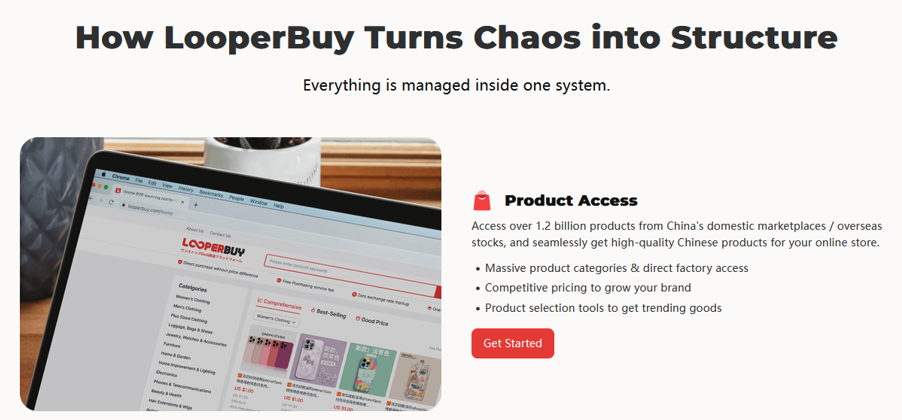
For a business like Looperbuy, which helps B2B sellers source Chinese products and manage dropshipping globally, pricing clarity matters even more. Buyers need to understand landed cost, order economics, and fulfillment impact before they commit to stock decisions.
Why Global Pricing Logic Matters
Cross-border B2B pricing is not the same as domestic pricing. One trade reference notes that Asia accounts for roughly 80% of the global B2B ecommerce market, and China alone has been valued at 18.4 trillion yuan in B2B ecommerce activity.
That matters because global sourcing platforms need pricing logic that can handle:
– Currency differences.
– Regional taxes or landed cost changes.
– Buyer expectations across markets.
– Logistics and fulfillment variance.
– Contract terms that differ by country or channel.
A single list price cannot solve that problem. A pricing framework built for global trade can.
A Better Way to Structure Pricing
A stronger distributor pricing system usually has three layers:
1. Source of truth
The ERP or finance system holds the master data: cost, contract terms, customer records, and pricing rules.
2. Pricing engine
This layer resolves the actual price based on the buyer’s account, tier, region, and order conditions.
3. Presentation layer
The portal, marketplace, or storefront displays the correct price to the right buyer at the right time.
When these layers are connected well, the business can scale without turning pricing into a manual service desk.
B2B pricing systems today often need account-specific prices, role-based pricing, contract pricing with expiration dates, real-time discount calculation, and multi-currency support. Those capabilities are what make “your price” possible instead of a generic list price.
What happens when they are not aligned
When the ERP and storefront are not synchronized, the business pays for it in three ways:
– Margin leakage from outdated prices.
– Higher support workload from disputes.
– Lost conversion because buyers do not trust the portal.
That is why distributor pricing should be treated as part of the commerce architecture, not as a back-office afterthought.
New Pressures Reshaping Pricing
Distributor pricing is being reshaped by three major pressures.
1. Faster market changes
Commodity costs, shipping rates, exchange rates, and supplier pricing can shift quickly. Static price lists cannot keep up. Businesses that rely on slow price refresh cycles often absorb margin loss before they even notice it.
2. More channel complexity
Many B2B sellers now sell through direct portals, distributor networks, resellers, marketplaces, and social commerce touchpoints. Each channel may require different logic, which increases the risk of inconsistency.
3. Buyers expect self-service
Business buyers increasingly expect to log in, see their terms, and place orders without waiting for a quote by email. They want speed, transparency, and accuracy. If pricing is unclear, they will move to a supplier that makes the process easier.
Practical Steps to Improve Distributor Pricing
If you are rebuilding or improving distributor pricing, start with these steps.
1. Map all existing price rules
List every tier, exception, rebate, and contract rule currently in use.
2. Identify the pricing owner
Decide who approves changes: finance, sales ops, pricing, or a cross-functional team.
3. Separate base price from overrides
Keep the standard price logic clean, then layer exceptions on top.
4. Connect pricing to ERP
Make sure contract data, costs, and customer records stay in sync.
5. Test with one segment first
Start with one region, one account type, or one product line before scaling.
6. Build governance
Define approval thresholds, audit trails, and escalation paths.
7. Review performance regularly
Track margin, order accuracy, dispute rate, and quote-to-order conversion.
Simple example
Imagine one product sold to three buyer groups:
– A strategic distributor gets a negotiated contract rate.
– A regional reseller gets a tiered wholesale price.
– A new buyer gets list price until a contract is signed.
The product is the same. The commercial logic is different. The system must resolve that difference automatically.
Where Distributor Pricing Creates UX Value
Good pricing is also a user experience issue. Buyers should not have to guess what they will pay.
A strong pricing experience should provide:
– Login-based pricing visibility
– Clear tier progression
– Quote request paths for custom orders
– Consistent prices across devices
– Transparent contract terms
– Accurate currency and region handling
For global procurement platforms, this reduces friction and improves trust. It also lowers the need for repetitive sales follow-up.
Market Data and Real-World Lessons
The numbers are clear: B2B ecommerce is massive, Asia dominates global activity, and pricing models are becoming more personalized and dynamic.
For distributors and sourcing platforms, three lessons stand out:
– Pricing must be account-aware, not generic.
– Pricing must be synchronized across systems and channels.
– Pricing must be flexible enough to absorb cost, currency, and logistics changes.
A company selling into multiple regions cannot rely on a single list price and expect consistent results. Buyers want clarity, and operations need control. The businesses that win are the ones that can combine accuracy, speed, and flexibility in one pricing framework.
FAQ
1. What is distributor pricing in B2B eCommerce?
Distributor pricing is the pricing logic used to charge different business buyers different prices based on account tier, contract terms, volume, region, and channel.
2. Why is distributor pricing difficult to manage?
Because it often combines multiple pricing rules at once, and those rules must stay consistent across ERP, portal, sales quotes, and invoices.
3. What is the best pricing model for distributors?
There is no single best model. Most distributors use a mix of tiered pricing, contract pricing, volume pricing, and quote-based pricing.
4. How can a business reduce pricing disputes?
By syncing pricing data across systems, defining clear approval rules, and showing buyers accurate prices at login or checkout.
5. When should a company move away from spreadsheets?
When pricing changes become frequent, exceptions multiply, and manual updates start causing margin leakage or customer complaints.
6. What is the role of a pricing engine?
A pricing engine calculates the correct price for each buyer based on account data, contract rules, volume, and channel logic.
If your current pricing process depends on spreadsheets, email threads, or manual overrides, it is time to rebuild the system behind it. Start by auditing your tiers, contracts, and channel rules, then move toward a pricing structure that can support scale without losing accuracy.
For B2B sellers, distributors, and sourcing platforms like Looperbuy, better pricing is not only about protecting margin. It is about making buying easier, faster, and more trustworthy.
References
1. Virto Commerce. “Distributor Pricing in B2B eCommerce: Strategies & Models.”[virtocommerce]
2. Virto Commerce. “B2B Pricing: Strategies, Models & Best Practices for Ecommerce.” [virtocommerce]
3. Virto Commerce. “Dynamic Pricing in B2B eCommerce: Strategy, Engines & Implementation [2026].”[virtocommerce]
4. Virto Commerce. “What Is Multi-Tier Pricing in B2B eCommerce and Why It&rsquo’s Harder Than It Looks.”[virtocommerce]
5. Anchanto. “E-commerce Distribution Challenges and Solutions + Case Studies.” [anchanto]
6. KVY Technology. “B2B Ecommerce: Case Studies, Examples, Platforms, and Features.” [kvytechnology]
7. B2B eCommerce Statistics: Market Size & Growth (2026). [uncap]
8. B2B E-Commerce. [statista]
9. Trade Data and Analysis. [trade]
10. Import/Export Price Indexes. [bls]