The global trade landscape for Chinese goods has shifted dramatically in 2026. If you are a brand owner, wholesaler, or manufacturer sourcing products internationally, understanding how AliExpress and tariffs interact is no longer optional — it is essential for protecting your margins. For years, the de minimis exemption allowed low-value parcels under $800 to enter the United States duty-free, making platforms like AliExpress a convenient sourcing channel. That era ended in 2025. On May 2, 2025, the U.S. eliminated the de minimis exemption for shipments from China and Hong Kong. On August 29, 2025, the suspension expanded to cover imports from all countries. In June 2026, President Trump signed an executive order formally abolishing the $800 duty-free threshold for all parcels originating from mainland China and Hong Kong, requiring full customs declaration and tariff payment on every package.
This is not just a consumer issue. For B2B buyers — importers bringing in samples, test orders, or small-batch inventory — the end of de minimis has fundamentally changed the cost structure of sourcing from China. This article breaks down what changed, what it means for your business, and how a one-stop B2B sourcing platform can help you navigate the new normal.
Table of Contents
The De Minimis Rule: What It Was and Why It Mattered to B2B Sourcing
Section 321 of the U.S. Tariff Act, commonly known as the de minimis rule, allowed one shipment per person per day valued at $800 or less to enter the United States free of duties and with simplified customs clearance. Originally designed in the 1930s to reduce administrative costs for processing low-value parcels, it became the foundation of an entire cross-border e-commerce model. For B2B buyers, this rule made it economical to order product samples, small-batch test runs, and low-volume inventory directly from Chinese suppliers via platforms like AliExpress without worrying about customs duties or complex entry procedures.
That model is now over. Every parcel entering the U.S. — regardless of value — now requires formal customs entry with HTS classification and full duty payment. The change has cut the volume of sub-$800 parcels entering the U.S. by roughly 54% since elimination. Direct-to-consumer cross-border e-commerce from China is no longer cost-competitive at the per-parcel level for most product categories.
The 2026 Tariff Stack: What B2B Buyers Actually Pay
Understanding what you will actually pay requires looking beyond the base duty rate. Today, a shipment from China to the U.S. faces a stacked tariff structure. Section 301 tariffs of 20–30% apply to most Chinese goods. IEEPA emergency tariffs and reciprocal tariffs add additional layers. Effective rates for Chinese-origin goods now exceed 45 percentage points above the standard MFN rate in many categories, and some product categories have seen tariffs reach up to 145%.
Let us look at a concrete example. For a typical small e-commerce order valued at $600 FOB, the landed duty and fees under the new regime would be approximately $150 or more, compared to zero under the old de minimis exemption. That is a 25% cost increase on the goods value alone — and that is before factoring in customs broker fees, which typically run $30–$60 per entry. For B2B buyers placing multiple small orders, these costs compound rapidly.
The EU and Global Tariff Wave: It Is Not Just America
The U.S. is not alone in tightening import rules. The European Union ended its €150 de minimis exemption on July 1, 2026, replacing it with a flat €3 customs duty per parcel. A handling fee of approximately €2 is also expected to take effect in September 2026. The EU reports that low-value parcels entering the bloc skyrocketed from 1.3 billion in 2022 to 5.9 billion in 2025, with approximately 90% originating from China. The new fee is a transitional measure that will remain in force until July 2028, after which normal tariffs based on product categories are expected to apply. Japan has also overhauled its tax system for low-priced cross-border purchases, abolishing the import consumption tax exemption for goods priced at 10,000 yen and eliminating the 40% tax discount on personal imports. Mexico raised tariffs on Chinese goods from 19% to 33.5% for low-value imports.
The global duty-free e-commerce era is closing, not just in the U.S. but across major markets.
How AliExpress Is Responding to Tariff Changes
AliExpress has adapted its pricing strategy in response to these policy shifts. In the EU, the platform displays prices inclusive of tariffs and value-added taxes (VAT) in some countries, providing greater price transparency. In Poland and other EU markets, AliExpress has chosen to incorporate most of the new tariff costs directly into the product price, rather than adding them at checkout like some competitors. This approach gives buyers a clearer view of the total cost upfront, reducing the risk of surprise fees upon delivery. However, the fundamental reality remains: the cost of importing from China has increased across the board.
Why B2B Sourcing Still Makes Sense — With the Right Partner
Despite these tariff increases, sourcing from China remains economically viable. China holds the top spot as the world’s leading sourcing destination, and 95% of companies surveyed consider their China operations important for staying competitive globally. The key is adapting your sourcing strategy. The old approach — placing multiple small, duty-free orders directly to consumers — is no longer workable. The new approach requires bulk importing, proper customs classification, and a sourcing partner who can manage the end-to-end logistics and compliance burden.
This is where a one-stop B2B sourcing platform becomes invaluable. Platforms that consolidate orders, handle customs classification, manage shipping logistics, and provide transparent landed cost calculations can help B2B buyers maintain predictable margins. By shifting from small direct-to-consumer shipments to bulk imports via a professional sourcing partner, businesses can spread the fixed costs of customs clearance across larger order volumes, reducing the per-unit tariff burden.
The LooperBuy Advantage: Sourcing Without the Tariff Headache
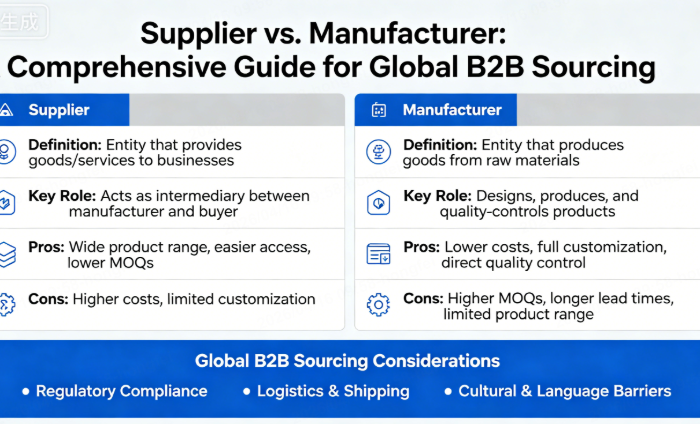
As a global one-stop B2B sourcing platform, LooperBuy is purpose-built for this new tariff environment. We serve brand owners, wholesalers, and manufacturers worldwide who need reliable access to Chinese products without the complexity of managing international logistics, customs compliance, and supplier relationships on their own.
LooperBuy connects global buyers directly to premium Chinese products from 1688.com, China’s largest B2B sourcing platform. Our platform handles the entire procurement process — from product sourcing and quality verification to global shipping and multi-currency payment support. We help海外中小微商家大幅降低全球供应链服务的准入门槛与运营成本. Our partnership with LianLian Global enables seamless cross-border payments, allowing overseas merchants to pay suppliers in their original foreign currency. This eliminates the currency conversion friction that often eats into margins.
Most importantly, LooperBuy provides consolidated shipping and professional customs clearance services. Instead of managing dozens of small shipments with individual customs entries — each incurring broker fees and duty assessments — our platform aggregates orders into bulk shipments. This approach significantly reduces per-unit logistics and tariff costs, making Chinese sourcing economically viable even in the current tariff environment.
Expert Insight: The New Economics of China Sourcing
Industry experts agree that the de minimis elimination has permanently changed the economics of cross-border e-commerce. According to Peking University’s Mingzhi Jimmy Xu, the old system allowed Chinese exporters to deliver small parcels at low costs, a benefit that translated directly into lower prices for consumers. Disrupting this system imposes higher shipping costs, leading to either higher retail prices or lower profit margins — both of which could fundamentally alter business models. The lesson for B2B buyers is not that importing from China is no longer worth it. The lesson is that duties must now be priced into margins from day one, exactly like every established importer already does. A commissioned sourcing agent with transparent factory pricing makes the bulk-import model easier to run because buyers can verify per-SKU landed cost against the original factory invoice.
Practical Steps for B2B Buyers in the New Tariff Era
If you are a B2B buyer navigating AliExpress and tariffs in 2026, here is a practical action plan:
Audit your current sourcing. Identify every product category you currently source from China. Determine the correct HTS code for each SKU and calculate the total tariff burden under current rates.
Shift from DTC to bulk. Stop placing small, individual orders that trigger per-parcel customs fees. Consolidate orders into larger shipments that spread fixed costs across more units.
Partner with a professional sourcing platform. Work with a one-stop platform like LooperBuy that handles customs classification, consolidated shipping, and landed cost calculations. This eliminates the guesswork and reduces your operational burden.
Price tariffs into your margins. Treat duties as a fixed cost of goods sold, not a variable expense. Build them into your pricing models from the start.
Consider multi-sourcing. While China remains the dominant sourcing destination, explore suppliers in other regions for critical SKUs to reduce tariff exposure.
Conclusion: Tariffs Are Here to Stay — Smart Sourcing Is the Answer
The days of duty-free small-parcel imports from China are over. AliExpress and tariffs are now inextricably linked for every B2B buyer. But this does not mean the end of Chinese sourcing. It means the end of amateur sourcing. Professional buyers who adapt — who consolidate orders, work with expert sourcing partners, and build tariffs into their cost models — will continue to thrive. The global sourcing landscape has matured. The question is no longer whether you can avoid tariffs. The question is whether you have the right partner to help you manage them.
LooperBuy is that partner. We provide the platform, the logistics, the payments, and the expertise to keep your supply chain running smoothly. Whether you are a brand owner launching a new product line, a wholesaler restocking inventory, or a manufacturer sourcing components, LooperBuy delivers one-stop, cost-effective access to China’s manufacturing ecosystem. Visit LooperBuy today and discover how smart sourcing can protect your margins in the new tariff era.
FAQ
1. Do I have to pay tariffs on AliExpress orders in 2026?
Yes. The U.S. eliminated the $800 de minimis exemption for shipments from China and Hong Kong on May 2, 2025, and expanded the suspension to all countries on August 29, 2025. Every parcel now requires full customs declaration and duty payment.
2. How much are the tariffs on Chinese goods in 2026?
Tariff rates vary by product category and HTS code, but effective rates for Chinese-origin goods now typically exceed 45 percentage points above standard MFN rates, with some categories reaching 145%. A typical $600 order now incurs approximately $150 or more in duties and fees.
3. Does the EU also charge tariffs on AliExpress orders?
Yes. Effective July 1, 2026, the EU imposes a flat €3 customs duty per parcel on all low-value shipments under €150 from third countries. A handling fee of approximately €2 is expected to take effect in September 2026.
4. Can I still source from China profitably despite the tariffs?
Absolutely. China remains the world’s top sourcing destination. The key is shifting from small individual shipments to bulk imports, properly classifying goods with correct HTS codes, and working with a professional sourcing platform like LooperBuy that handles consolidated shipping and customs clearance.
5. What is the best way to reduce tariff costs when sourcing from China?
Consolidate orders into larger shipments to spread fixed customs costs across more units. Work with a one-stop B2B sourcing platform that provides professional customs classification, consolidated logistics, and transparent landed cost calculations. Price duties into your margins from day one.
Article Introduction (300 characters):
The 2026 elimination of the $800 de minimis exemption has fundamentally changed how B2B buyers source from China via AliExpress. This article breaks down the new tariff stack, global policy shifts, and practical strategies for protecting your margins. Learn how one-stop sourcing platforms like LooperBuy help brands, wholesalers, and manufacturers navigate the new trade landscape with consolidated shipping, customs expertise, and cost-effective global logistics.
References
- AliExpress Official Blog. “Navigating AliExpress Tariffs: A Complete Guide to Customs Duties and Taxes for Home Shoppers.” May 2026. https://www.aliexpress.com/p/blog/article/navigating_aliexpress_tariffs_a_complete_guide_to-481062.html[reference:58]
- Epic Sourcing. “Section 321 De Minimis Ended: US Importer Guide 2026.” June 2026. https://www.epicsourcing.co/post/section-321-de-minimis-ended-us-importers-2026[reference:59]
- New Buying Agent. “De Minimis Rule Changes 2026: What the End of the $800 Threshold Means for Your China Imports.” July 2026. http://www.newbuyingagent.com/resources/de-minimis-rule-changes-2026-what-the-end-of-the-800-threshold-means-for-your-china-imports[reference:60]
- Peacock Tariff Consulting. “How to import from AliExpress: SMB Importer Guide.” April 2026. https://www.peacocktariffconsulting.com/how-to-import-aliexpress[reference:63]
- New Age. “Shein, Temu face cost of adapting to new US customs rules.” July 2026. https://www.newagebd.net/print/post/257323[reference:64]
- CHOSUNBIZ. “EU imposes fees on China e-commerce as US, Japan tighten import rules.” July 2026. https://biz.chosun.com/en/en-international/2026/07/02/V3ZLE4JEEFDB7AZR2A6QNXKUTE
- SellerSprite. “Amazon FBA Tariffs 2026: How US-China Trade Policy Is Hitting Your Margins.” June 2026. https://sellersprite.ai[reference:67]
- GoCubic. “China Sourcing Under Elevated Tariffs: Diversification and Logistics Strategy for 2026.” February 2026. https://www.gocubic.io[reference:68]
- The Guardian. “EU introduces €3 customs charge on small parcels to curb cheap Chinese imports.” June 2026. https://www.theguardian.com[reference:69]
Hot Tags
AliExpress tariffs 2026, de minimis elimination, China import duties, B2B sourcing China, cross-border ecommerce tariffs, Section 321 ended, US China tariff 2026, EU parcel duty 2026, LooperBuy sourcing platform, China sourcing strategy 2026