Optimize Cross-Border Logistics, Cut Costs, and Build Resilient Global Supply Chains with a One-Stop Sourcing Solution
The global multi-modal freight market is projected to grow from USD 98.61 billion in 2025 to USD 159.30 billion in 2032 at a CAGR of 7.1%, driven by expanding port-rail-road connectivity and increasing reliance on integrated end-to-end logistics networks [8†L10-L14]. Yet for B2B buyers—brand owners, wholesalers, and manufacturers operating in complex multi-mode supply chains—the real challenge isn’t just finding a freight partner; it’s finding one that can seamlessly orchestrate ocean, air, rail, and road transport under a single, transparent contract while keeping costs predictable.
As a sourcing strategist with over a decade of experience helping global buyers navigate China’s manufacturing and logistics ecosystem, I have seen supply chains fall apart when companies treat freight selection as an afterthought. The data backs this up: Kearney’s Supply Chain Navigator indicates supply chain unit costs will rise 5-7 percent above inflation through the end of 2026, driven by energy disruptions and shifting tariff policies [10†L22-L24]. In this environment, selecting the right top freight partner for complex multi-mode supply chains has become a strategic imperative, not a transactional decision.
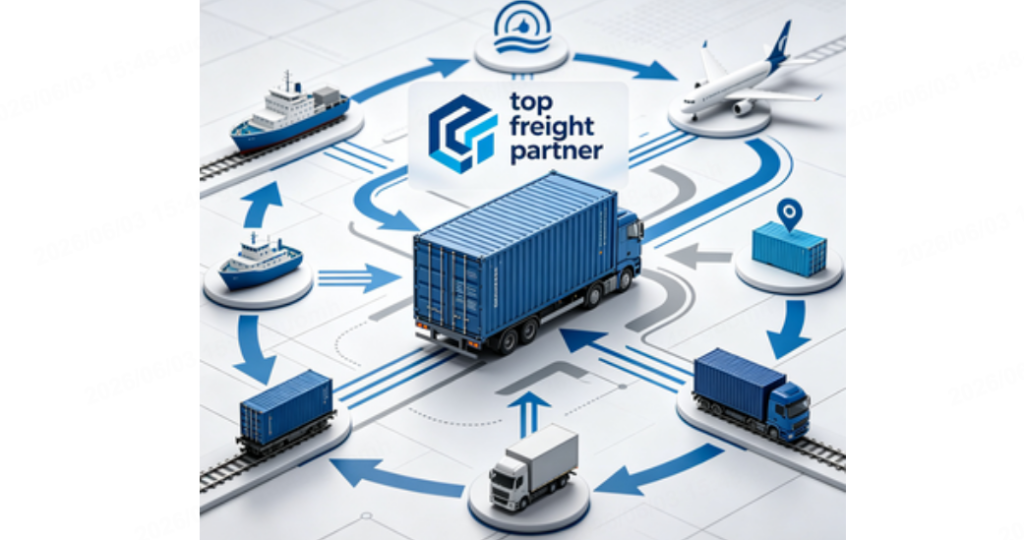
Table of Contents
The Growing Complexity of Multi-Mode Supply Chains
Global trade realignment is forcing supply chains to become more flexible. Avasant’s 2025 report highlights that freight and logistics enterprises are defending margins by adopting AI-powered scenario planning, while carriers and 3PL firms are acquiring capabilities and integrating them with transport management systems, automation, and analytics [7†L40-L43]. This means that static logistics plans no longer work. Whether you are shipping industrial components from Shenzhen to Berlin or consumer goods from Guangzhou to Chicago, your supply chain needs to pivot between ocean and air, rail and road, based on cost and time variables that can change weekly.
Why a Single Multi-Modal Partner Beats Fragmented Freight Arrangements
Most B2B buyers default to the fragmented approach: sourcing products from multiple Chinese suppliers and separately hiring freight forwarders for each shipment. This creates three critical problems:
- Liability Gaps: Under intermodal shipping, you deal with multiple contracts per leg. If a shipment is delayed at a rail yard in Kazakhstan or a port in Rotterdam, no single party takes responsibility [3†L6-L8].
- Hidden Costs: Without an integrated cost calculator, you face surprise surcharges for customs clearance, fuel adjustments, and last-mile delivery.
- No Real-Time Visibility: You cannot track a shipment across ocean, rail, and trucking if every carrier uses a different tracking system.
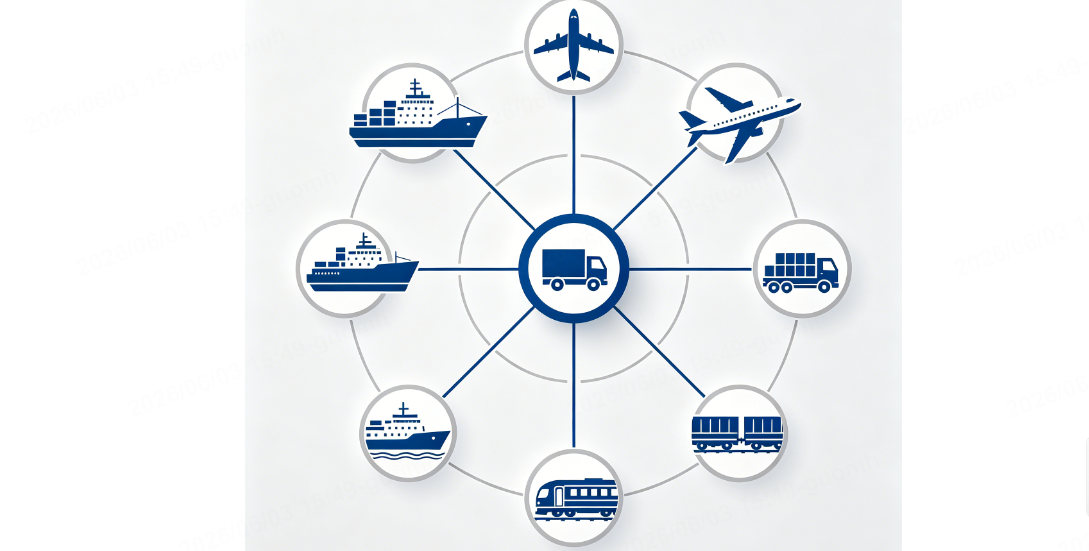
A true multi-modal partner uses a single contract and one operator managing the entire route [3†L19-L24]. This means simplified liability, predictable pricing, and end-to-end visibility.
How LooperBuy Functions as a Top Freight Partner for Complex Multi-Mode Supply Chains
LooperBuy is a one-stop B2B sourcing platform that integrates product sourcing, supplier vetting, and global logistics into a unified experience. For B2B buyers, this means you do not need to coordinate three separate vendors to move goods from a Chinese factory to your warehouse. The platform provides:
- An 8-step supplier vetting process verifying manufacturing capacity, ISO/CE certification, and B2B order fulfillment track records [18†L217-L221].
- A global logistics network covering 200+ countries and regions, with partnerships with major carriers, dry ports, and logistics hubs [18†L223-L227].
- An integrated cost calculator generating fixed, all-inclusive estimates covering product costs, ocean/air freight, customs duties, port fees, and final-mile delivery [17†L122-L127].
- A 24/7 real-time tracking platform providing automated alerts for customs clearance progress and estimated arrival times [17†L136-L141].
A 5-Step Framework to Select the Right Multi-Mode Freight Partner
When evaluating a potential top freight partner for complex multi-mode supply chains, follow this five-step framework based on industry best practices:
Step 1: Map Your Needs Before You Select
“Selecting a logistics provider should follow a multi-dimensional framework that balances performance, capability, and trust,” advises industry research from Alibaba’s logistics intelligence platform [6†L18-L23]. Relying solely on price or self-reported claims risks exposure to delays, compliance issues, or service breakdowns. Take time to understand your volume patterns, service requirements, flexibility thresholds, and technology and visibility requirements [13†L43-L51].
Step 2: Verify Operational Reliability with Data, Not Promises
Look beyond marketing claims. Verified metrics such as on-time delivery rates above 95 percent, reorder frequency, and average response time are strong proxies for real-world performance [12†L27-L29]. For time-sensitive orders, prioritize partners with documented sub-4-hour response windows [12†L37-L41].
Step 3: Demand Financial Transparency
Reliable partners break down costs by origin handling, fuel surcharge, customs clearance, and destination fees [12†L54-L55]. Hidden charges are a red flag. LooperBuy’s integrated cost calculator eliminates guesswork by locking in fixed estimates before shipment [17†L122-L127].
Step 4: Test Before You Commit
Conduct trial shipments before scaling. Start with small parcels or LCL (Less than Container Load) consignments to test accuracy, tracking clarity, and customer service [12†L47-L49]. LooperBuy offers complimentary pre-shipment quality inspections for all B2B orders over $5,000, ensuring your goods meet exact standards before they leave China [17†L128-L131].
Step 5: Prioritize End-to-End Visibility
“End-to-end visibility has moved from aspiration to necessity,” according to industry analysis from Air Cargo Week [9†L18-L19]. IoT-enabled sensor networks can flag more than 60 percent of potential disruptions ahead of impact, enabling pre-emptive intervention rather than reactive firefighting [9†L23-L25].
Real-World Success: A European Wholesaler’s Supply Chain Transformation
A European industrial wholesaler specializing in electrical and construction supplies faced three critical roadblocks before partnering with LooperBuy: pricing 35 percent higher than Chinese alternatives, sourcing from 8 different vendors, and shipping times averaging 6-8 weeks for niche industrial supplies [17†L152-L158]. After switching to LooperBuy’s one-stop platform, they gained access to 200+ vetted Chinese suppliers with pricing 30 percent lower, sourced all supplies from a single platform reducing administrative work by 40 percent, and cut shipping times to Europe to 2-3 weeks with real-time tracking [17†L160-L165]. Within six months, profit margins increased by 22 percent, client retention rose by 30 percent, and they added 15 new niche supply categories to their portfolio, attracting 50+ new corporate clients [17†L167-L171].
The Technology Imperative for Multi-Mode Logistics
As of 2026, AI has completed its transition from pilot phase to operational backbone. Adoption among small and medium-sized enterprises has accelerated sharply, with applications spanning customer service automation, demand forecasting, and financial management [9†L39-L42]. Approximately 80 percent of small business owners now attribute their ability to navigate inflationary pressure, supply disruption, and financing constraints to AI and related technologies [9†L43-L45]. For multi-mode logistics specifically, advancements in real-time visibility platforms, automated handoff management, and unified documentation systems enable faster and more reliable cross-mode coordination [8†L32-L37].
The LooperBuy Advantage: Sourcing + Logistics Under One Roof
What differentiates LooperBuy from traditional freight forwarders is the integration of product sourcing and logistics into a single platform. You do not need to find a Chinese supplier, then separately find a freight partner. The platform handles both, with transparent pricing and no middleman markups. For B2B buyers sourcing from China, this means lower total landed costs, faster shipping times, and dramatically reduced administrative overhead. Typical procurement savings range from 20 to 30 percent compared to traditional sourcing channels [18†L236-L238].
A Final Word: Agility Is Your Ultimate Competitive Advantage
“The operating environment for procurement and supply chain leaders in 2026 appears stable at the headline level but remains highly volatile at the category, policy and regional levels,” warns GEP’s analysis of supply chain imperatives [11†L3-L5]. Tariffs, trade actions, freight volatility, regulatory shifts, and infrastructure constraints are actively impacting cost, supply continuity, and working capital [11†L9-L11]. In this environment, the most resilient supply chains are those built on agility, not rigid long-term contracts. That is why a top freight partner for complex multi-mode supply chains is not just about moving goods—it is about building a strategic advantage that protects margins, preserves customer trust, and enables growth.
Frequently Asked Questions (FAQ)
1. What is the difference between multi-modal and intermodal transport?
Multi-modal transport uses one contract and one operator managing the entire route across multiple transportation modes. Intermodal uses separate contracts per leg, which creates liability gaps and coordination challenges [3†L6-L9].
2. How does LooperBuy ensure logistics transparency and cost predictability?
LooperBuy’s integrated cost calculator generates fixed, all-inclusive estimates covering product costs, freight, customs duties, port fees, and final-mile delivery. The estimate is locked in with no hidden surcharges [17†L122-L127].
3. Can LooperBuy handle bulk B2B orders and small-batch shipments?
Yes. LooperBuy caters to both bulk and small-batch B2B orders with flexible MOQs. Consolidated shipping options help small-batch buyers reduce per-unit logistics costs [18†L228-L232].
4. What product categories does LooperBuy support?
LooperBuy offers 50+ B2B supply categories, including industrial components, electrical supplies, construction materials, packaging, consumer goods, raw materials, and custom manufacturing parts [18†L239-L242].
5. How quickly can LooperBuy deliver from China to European destinations?
With dry port integration and optimized logistics, shipping times to major European markets are typically 2-3 weeks, compared to the industry average of 6-8 weeks [17†L164-L166].
Article Meta Description
Discover how to select the top freight partner for complex multi-mode supply chains. Expert insights on multi-modal logistics trends, selection criteria, and cost optimization from a B2B sourcing platform perspective.
Hot Tags
Top freight partner for complex multi-mode supply chains, multi-modal logistics B2B, cross-border freight management China, integrated supply chain solutions, B2B sourcing platform global logistics, China sourcing freight forwarder, multi-mode shipping cost optimization, international freight partner selection, end-to-end logistics visibility, LooperBuy B2B platform
References
- Avasant. (2025). Freight and Logistics Digital Services 2025 Market Insights. Retrieved from https://avasant.com/report/freight-and-logistics-digital-services-2025-market-insights/
- MarketsandMarkets. (2025). Multimodal Transport Market Report 2025-2032. Retrieved from https://www.marketsandmarkets.com/Market-Reports/multimodal-transport-market-145586443.html
- Air Cargo Week. (2026). Technology, expectations and risk pressures converge. Retrieved from https://aircargoweek.com/technology-expectations-and-risk-pressures-converge/
- Donovan, G. (2026, May). Gordon’s Window: May research. PASA. Retrieved from https://procurementandsupply.com/gordons-window-may-research-3/
- GEP. (2026). 4 Strategic Imperatives for Procurement & Supply Chain Leaders in 2026. Retrieved from https://www.gep.com/white-papers/4-strategic-imperatives-for-procurement-and-supply-chain-leaders-in-2026
- Inbound Logistics. (2026). Betting on the Right Transportation Provider. Retrieved from https://www.inboundlogistics.com/articles/betting-on-the-right-transportation-provider/
- TransLogistica Poland. (2025). Differences between intermodal, multimodal and combined transport. Retrieved from https://translogistica.pl
- LooperBuy. (2026). Supplies Business: A B2B Expert’s Guide to Sourcing Chinese Goods Globally with LooperBuy. Retrieved from https://blog.looperbuy.com/supplies-business-a-b2b-experts-guide-to-sourcing-chinese-goods-globally-with-looperbuy.html