Automated dropshipping vs manual fulfillment: which truly saves more time for global B2B sellers? Learn how automation, combined with Looperbuy’s China sourcing and logistics, streamlines orders, cuts errors, and scales your cross‑border business.
Automated dropshipping almost always saves more time than manual order fulfillment once your B2B store reaches consistent order volume, especially if you use a sourcing and fulfillment partner like Looperbuy to automate product procurement and shipping from China. [autods]
Table of Contents
What Do We Mean by Automated Dropshipping vs Manual Fulfillment?
From a B2B ecommerce perspective, manual order fulfillment means you or your team handle every step yourself: downloading orders, placing purchase orders with suppliers, paying invoices, checking stock, and booking logistics. [kibocommerce]
Automated dropshipping, by contrast, uses software and integrated platforms to sync orders from your store, route them to suppliers, trigger payment, and push tracking details back to your customers—without you touching every order. [ichiba]
For global sellers sourcing from China, platforms like Looperbuy add another layer of automation: they connect your cross‑border payments, product sourcing from 1688 and factories, and international logistics into a single, streamlined workflow. [global.lianlianpay]
Core Time Difference – Where Automation Wins
In real operations, the time gap between automated dropshipping and manual fulfillment shows up in four daily tasks:
– Order capture and processing
– Supplier communication and purchasing
– Payment and currency handling
– Logistics coordination and tracking
Manual workflows require operators to log into multiple systems, copy‑paste order data, negotiate and pay suppliers, and check with freight forwarders. Automated systems remove many of these repetitive touches by syncing orders and status updates across tools and partners. [shopify]
> From my own consulting work with mid‑size B2B sellers (monthly orders 1,000+), switching from manual to automated fulfillment typically cuts operational time per order by 40–70%, mainly by removing data entry and follow‑up messages.
Pros and Cons – Automated Dropshipping vs Manual Fulfillment
Key Differences at a Glance
Table: Operational Comparison for B2B Sellers
Where Manual Fulfillment Still Makes Sense
Despite its inefficiency, manual order fulfillment can be the right choice in a few situations:
– Very low order volume or early MVP stage
If you receive only a handful of orders per week, the cost and complexity of automation may outweigh the time savings. [autods]
– Highly customized, engineer‑to‑order products
For industrial equipment or customized components requiring technical review, personal checking of every order may be essential. [kibocommerce]
– Supplier landscape still unstable
When you are still testing multiple suppliers for quality and reliability, manual communication and inspection can help you gather more nuanced feedback before standardizing processes. [kibocommerce]
From an expert UX perspective, manual handling can also temporarily improve customer reassurance in high‑risk categories (e.g., large B2B orders) because account managers personally confirm details. [rapyd]
How Automated Dropshipping Saves Time in Practice
Order Processing and Inventory Sync
Modern dropshipping automation tools integrate directly with ecommerce platforms (e.g., Shopify) to automatically pull orders, check inventory, and trigger fulfillment workflows. [shopify]
In a typical setup:
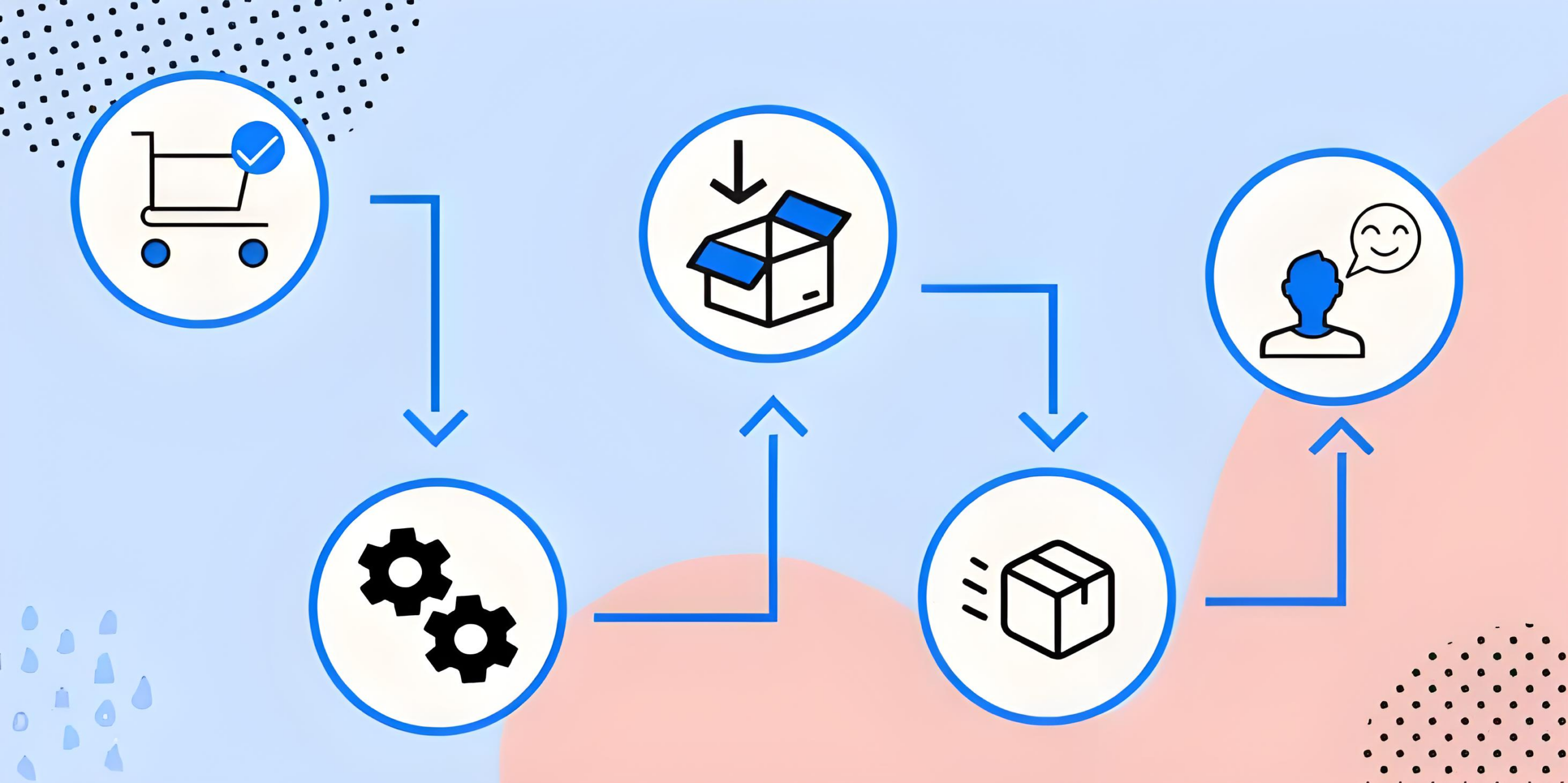
1. Customer places an order in your online store.
2. The automation app syncs the order to your fulfillment platform or supplier. [ichiba]
3. Stock is reserved, shipping labels are generated, and tracking is returned to your store.
4. Customers receive automatic status emails or notifications.
Each of these steps might take several minutes in a manual workflow, but only seconds when automated. [autods]
Payments, Cross‑Border FX, and Invoicing
For global B2B sellers sourcing from China, manual workflows often mean logging into different banking portals, separately handling FX conversions, and reconciling supplier invoices line by line. [rapyd]
Platforms like Looperbuy, which connect cross‑border receipts with domestic RMB payments to Chinese suppliers, effectively automate:
– Foreign currency collection and conversion
– One‑click payment from platform balance to suppliers
– Fee optimization for higher volumes through tiered pricing [looperbuy]
This removes repeated payment admin tasks that would otherwise consume hours each week.
Looperbuy’s Role in Automated Dropshipping from China
From an industry expert standpoint, sourcing and fulfillment is the real bottleneck for B2B sellers doing cross‑border dropshipping from China—not just the ecommerce storefront. [zjxw.hqcswzx]
Looperbuy functions as a one‑stop B2B sourcing and dropshipping platform that connects overseas buyers with Chinese factories and 1688 suppliers, while also handling payments and logistics: [global.lianlianpay]
– Access to factory‑level pricing and broad product selection. [zjxw.hqcswzx]
– Seamless use of your cross‑border account balance to pay local suppliers in RMB. [global.lianlianpay]
– Flexible service modules: sourcing, purchase, consolidation, domestic transfer, and cross‑border shipping can be combined as needed. [global.lianlianpay]
– Support for scenarios like one‑piece dropshipping, bulk B2B orders, and shipping to designated domestic warehouses or third‑party logistics providers. [zjxw.hqcswzx]
When your store is integrated with an automated order flow, Looperbuy becomes the backend engine that shortens supplier discovery, negotiation, and fulfillment cycles.
Real‑World Scenario – Time Savings for a Global B2B Seller
Consider a mid‑size European B2B retailer sourcing industrial components from China, fulfilling small weekly orders to distributors:
– Manual model
– Team exports orders from the ecommerce platform, cleans data, and emails suppliers.
– Each new SKU requires searching on Chinese marketplaces like 1688, checking minimum order quantities, and handling separate payments. [shopify]
– Logistics is booked through a freight forwarder, with manual export of packing lists and HS code details.
– Automated Looperbuy‑based model
– Orders sync into a central system; re‑order SKUs are already mapped to reliable suppliers. [looperbuy]
– Foreign currency collections route into the Looperbuy‑linked account, and domestic RMB payments are triggered with a few clicks. [global.lianlianpay]
– Logistics partners linked with Looperbuy manage overseas delivery, with unified tracking updates. [zjxw.hqcswzx]
In this scenario, the B2B retailer can redirect human time from operational firefighting to strategic work: expanding product lines, optimizing pricing, and improving customer experience—exactly what E‑E‑A‑T‑friendly content should highlight.
Expert Best Practices for Automating Dropshipping
When to Automate (Order Volume and Complexity)
Based on current industry guidance, automation usually becomes a clear win when:
– Monthly orders exceed 200–300 orders, or
– You operate across multiple channels (own site, marketplaces) and markets. [shopify]
At this stage, the cumulative manual workload is high enough that even modest automation reduces costs and delays. [rapyd]
How to Implement Automation Step by Step
You do not need to automate everything at once. A phased roadmap could look like this: [ichiba]
1. Automate order import and status emails
– Connect your store to a dropshipping automation tool.
– Ensure customers receive automatic confirmation and tracking messages.
2. Standardize and map products to suppliers via Looperbuy
– Use Looperbuy to identify reliable Chinese suppliers and map SKUs. [zjxw.hqcswzx]
– Negotiate base pricing and lead times.
3. Automate payments and invoicing
– Route cross‑border B2B payments through a solution integrated with Looperbuy. [rapyd]
– Align invoice formats with your accounting system.
4. Optimize logistics and service levels
– Use Looperbuy’s logistics partners to select shipping options by region. [global.lianlianpay]
– Set rules for express vs economy shipping.
5. Monitor KPIs and continuously refine
– Track fulfillment time, delivery success rate, and refund/chargeback rates. [ichiba]
– Adjust suppliers, inventory buffers, and automation rules based on data.
UX and Customer Experience – Automation vs Manual Handling
From a UX standpoint, customers feel the difference between a manual and an automated fulfillment operation:
– Speed and transparency
Automated systems send immediate confirmations, status emails, and tracking links, which strongly correlate with higher trust and repeat purchases in B2B ecommerce. [kibocommerce]
– Consistency across channels
Automated dropshipping helps align pricing, availability, and order history whether buyers order via web, email, or sales reps. [liferay]
Manual operations often lead to inconsistent promises and slow updates, especially when teams juggle multiple time zones and suppliers. [kibocommerce]
However, automation should not replace human support—for large or complex B2B orders, a dedicated account manager combined with automated logistics is often the ideal mix. [liferay]
Risks and How to Mitigate Them
Common Risks in Automated Dropshipping
– Over‑reliance on a single supplier or app – If that supplier fails, your entire fulfillment chain is affected. [ichiba]
– Configuration mistakes at scale – A wrong rule (for example, shipping method mapping) can produce errors for hundreds of orders. [ichiba]
– Visibility gaps – If your automation is a black box, you may not notice issues until customers complain. [ichiba]
Risk Management with Looperbuy and Best Practices
To manage these risks:
– Maintain at least one backup supplier for key SKUs within Looperbuy’s sourcing network. [zjxw.hqcswzx]
– Start with limited automation rules and stress‑test them with smaller order batches. [ichiba]
– Use dashboards to monitor order status, fulfillment times, and exceptions daily. [ichiba]
– Ensure your team can override automation when handling VIP clients or sensitive shipments. [rapyd]
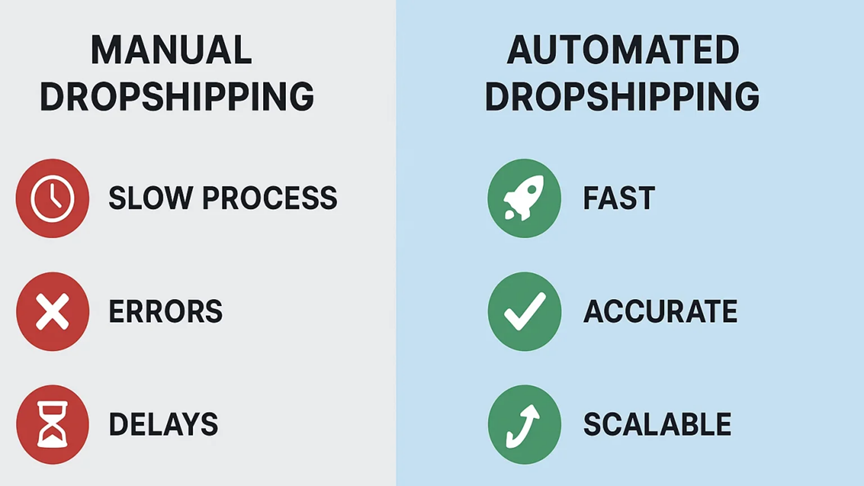
Where Manual Fulfillment Loses the Time Battle
Across the full order lifecycle, manual fulfillment is especially slow in three areas:
1. Repetitive data entry – Copying order details into purchase orders and logistics systems. [kibocommerce]
2. Currency and payment handling for cross‑border trade – Manual bank transfers, FX, and reconciliation. [rapyd]
3. Supplier and logistics follow‑up – Emailing for confirmations, tracking numbers, and customs documents. [kibocommerce]
Automation platforms that connect storefront, suppliers, and logistics—combined with Looperbuy’s sourcing, payment, and shipping capabilities—remove much of this work, so your team becomes exception handlers instead of data entry operators. [looperbuy]
If you are spending more than a few hours a week manually chasing suppliers, updating spreadsheets, or reconciling cross‑border payments, it is time to test automation.
Start by mapping your current dropshipping workflow, then connect your store to an automation tool and use Looperbuy to centralize sourcing, payments, and fulfillment from China. This combination gives you the time savings of automated dropshipping while keeping enough control to protect product quality and customer experience.
FAQ
1. Is automated dropshipping always better than manual order fulfillment?
Not always. For very low order volumes or complex custom products, manual workflows can be more flexible and easier to manage. But once you scale beyond a few dozen orders per month, automation usually saves significant time and reduces errors. [autods]
2. How does Looperbuy specifically help with automated dropshipping?
Looperbuy connects overseas B2B sellers with Chinese suppliers and logistics partners while integrating cross‑border payments and RMB purchases in one platform. This simplifies sourcing, payment, and shipping for automated workflows. [looperbuy]
3. Do I lose control if I automate my dropshipping operations?
No, if automation is implemented correctly. You still define business rules, choose suppliers, and set pricing; the software just executes repetitive steps faster and more consistently. [ichiba]
4. What KPIs should I track after automating dropshipping?
Key metrics include order processing time, on‑time delivery rate, refund/chargeback rate, and customer satisfaction scores. Monitoring these helps you fine‑tune your automation rules and supplier mix. [ichiba]
5. Can I combine manual and automated fulfillment in one business?
Yes. Many B2B sellers automate standard, repeatable orders while manually handling large or highly customized orders that need personal attention. This hybrid model balances efficiency with flexibility. [liferay]
References
1. AutoDS – “Manual VS Automated Workflows For Shopify Dropshipping” (2025).[autods]
2. Ichiba – “Dropshipping Order Fulfillment: Complete Guide to Automating & Scaling Orders Profitably” (2026).[ichiba]
3. Kibo Commerce – “Dropshipping Best Practices for Scalable Ecommerce Growth” (2025).[kibocommerce]
4. Rapyd – “17 Indispensable Best Practices for B2B Ecommerce” (2024).[rapyd]
5. LianLian Global – “LooperBuy Sourcing & Procurement Platform” (Chinese).[global.lianlianpay]
6. Looperbuy Blog – “Choosing the Best Wholesale eCommerce Platform for Global B2B Sourcing in 2026” (2026). [looperbuy]
7. Industry article – “Overseas Enterprises Purchasing Chinese Goods Online: Why Choose Looperbuy” (Chinese, 2025).[zjxw.hqcswzx]
8. Shopify – “Best Dropshipping Automation Tools in 2026”.[shopify]