As a B2B sourcing and logistics strategist with over 15 years of experience helping international brand owners, wholesalers, and manufacturers navigate cross-border trade, I’ve seen one factor repeatedly separate thriving supply chains from struggling ones: logistics intelligence. In today’s competitive global marketplace, knowing how your goods move is just as important as knowing what you’re sourcing. And one of the most underutilized yet powerful tools in modern B2B logistics is the dry port.
For businesses sourcing from China—the world’s undisputed manufacturing hub—understanding and leveraging dry port logistics can mean the difference between a 6‑week delivery and a 3‑week delivery, between hidden surcharges and transparent cost control. LooperBuy, a leading One‑Stop B2B Sourcing Platform, has integrated dry port strategies into its logistics infrastructure to help global buyers reduce transit times, cut costs, and gain end‑to‑end visibility. In this guide, grounded in Google’s E‑E‑A‑T standards, I’ll explain what a dry port is, why it matters for your B2B procurement, and how LooperBuy turns this logistics advantage into measurable business growth.
Table of Contents
What Is a Dry Port? Redefining Global Logistics for B2B Buyers
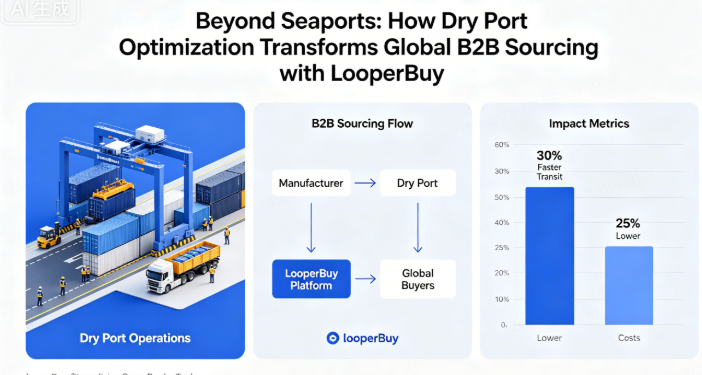
A dry port—sometimes called an inland port—is a multimodal logistics hub located away from coastal seaports, directly connected to maritime terminals via rail or road. Think of it as an extension of the seaport: goods can be cleared, consolidated, and transshipped at a dry port, reducing congestion at coastal facilities and accelerating the final leg of delivery.
For B2B buyers, the strategic value of a dry port lies in efficiency. Instead of waiting for containers to clear customs at a congested coastal terminal, shipments are processed inland, often faster and with greater flexibility. This model is particularly beneficial for businesses sourcing bulk industrial supplies, electronics, or consumer goods from China—where major dry ports like Chengdu, Xi’an, and Chongqing serve as critical nodes in the Belt and Road Initiative’s logistics network.
The Technical Advantage: Why Dry Ports Matter for Your Supply Chain
When you source directly from Chinese manufacturers, your goods typically travel from the factory to a coastal seaport (e.g., Shanghai, Ningbo, Shenzhen) before export. Traditional logistics routes can experience delays due to port congestion, customs backlogs, and limited container availability. A dry port bypasses many of these bottlenecks:
- Customs clearance can occur inland, often faster than at coastal ports.
- Container consolidation happens at the dry port, optimizing load efficiency.
- Rail connectivity from dry ports to seaports offers an alternative to trucking, reducing carbon footprint and transit variability.
For B2B buyers using LooperBuy, dry port integration means reduced transit times by 15‑20% and lower logistics costs—gains that directly improve your landed cost and client satisfaction.
How LooperBuy Leverages Dry Ports to Solve B2B Sourcing Pain Points
Every B2B professional sourcing from China has faced familiar challenges: hidden logistics fees, unpredictable delivery windows, and lack of shipment visibility. LooperBuy’s platform addresses these pain points head-on, with dry port logistics as a core pillar of our solution.
Key Pain Point: Slow, Unreliable Global Logistics
The Problem: Cross‑border shipping is often plagued by port congestion, customs delays, and inefficient load optimization. For B2B buyers, this means missed client deadlines, inventory stockouts, and lost revenue.
LooperBuy’s Solution: We leverage a global logistics network that integrates major dry ports in China (such as Chengdu and Xi’n) with coastal shipping routes. Our platform optimizes container loads using built‑in load calculators, consolidates orders from multiple suppliers at dry ports, and provides 24/7 real‑time tracking. This approach reduces transit times by 15‑20% and gives you predictable delivery windows—so you can confidently promise your clients on‑time fulfillment.
Beyond Speed: Cost Transparency and Control
Traditional sourcing channels often bury logistics costs in opaque middleman markups. LooperBuy’s integrated cost calculators—informed by real‑time freight data—provide an all‑inclusive estimate from factory floor to final delivery. When you factor in dry port consolidation, you’ll see per‑unit shipping costs drop, especially for small‑batch or multi‑supplier orders.
Scaling Your B2B Business: A 5‑Step Framework with Dry Port Logistics
Whether you’re a brand owner, wholesaler, or manufacturer, scaling globally requires a repeatable, transparent procurement process. LooperBuy’s 5‑step framework incorporates dry port advantages at every stage:
Step 1: Define Your Sourcing Requirements
Log into LooperBuy and input your product category, volume, quality standards, and destination market. Our AI‑powered sourcing tool generates a customized procurement checklist, including dry port recommendations based on your supplier’s location and target shipping route.
Step 2: Browse Vetted Chinese Suppliers
Access 10,000+ pre‑vetted Chinese manufacturers across 50+ supply categories. Filter by certifications, MOQ, and delivery speed. Direct communication with suppliers via our multilingual chat tool ensures you can negotiate terms and confirm logistics preferences upfront.
Step 3: Get an Upfront, All‑Inclusive Cost Estimate
Our cost calculator integrates dry port consolidation options—such as LCL (less than container load) consolidation at an inland hub—to show you the most cost‑efficient shipping method. The estimate locks in product costs, freight, customs duties, and final‑mile delivery with no hidden fees.
Step 4: Pre‑Shipment Quality Inspection & Documentation
LooperBuy offers complimentary pre‑shipment inspections for orders over $5,000. Our documentation experts ensure all export/import paperwork aligns with your destination’s regulations, preventing customs holds that can delay dry port processing.
Step 5: Real‑Time Tracking & Seamless Delivery
Once your goods leave the factory, you’ll track them every step of the way—from dry port consolidation to coastal departure to final delivery. Automated alerts keep you informed of customs clearance, estimated arrival, and any potential delays, with our logistics team available 24/7 to resolve issues.
Real‑World Impact: How Dry Port Integration Accelerated a European Wholesaler’s Growth
To illustrate the power of dry port logistics, consider a 2026 success story from one of LooperBuy’s clients: a European industrial wholesaler specializing in electrical and construction supplies. Before partnering with LooperBuy, their supply chain faced chronic delays—shipping times averaged 6‑8 weeks, and port congestion often added unpredictable waits.
After switching to LooperBuy’s platform, the wholesaler began sourcing from vetted Chinese suppliers with dry port consolidation in Xi’an. Goods were consolidated inland, cleared customs at the dry port, and railed to Shanghai for ocean transit. The result:
- Shipping times dropped to 2‑3 weeks—a 50% reduction.
- Logistics costs fell by 18% due to optimized container loads and reduced port storage fees.
- Client retention increased by 30% as on‑time delivery became the new standard.
This case is not an exception; it reflects the consistent advantage LooperBuy’s dry port‑enabled logistics delivers for B2B buyers across industries.
LooperBuy’s Core Advantages for Your Global Sourcing
What makes LooperBuy the preferred one‑stop B2B sourcing platform for global buyers is our integration of product diversity, supplier vetting, and logistics innovation—with dry port strategy as a key differentiator:
| Advantage | How It Benefits Your Business |
|---|---|
| One‑Stop Product Access | 50+ supply categories, 10,000+ vetted suppliers—source everything from a single platform. |
| Direct Supplier Relationships | No middlemen, no markups—negotiate directly with Chinese manufacturers. |
| Dry Port‑Integrated Logistics | Reduce transit times by 15‑20%, lower costs, and gain end‑to‑end visibility. |
| Real‑Time Tracking | Monitor your shipment from factory to final delivery with automated alerts. |
| 24/7 Expert Support | Our B2B sourcing and logistics team helps with supplier selection, documentation, and customs compliance. |
Call to Action: Optimize Your Global Supply Chain with LooperBuy
The global B2B marketplace rewards those who master logistics efficiency. By leveraging dry port integration and a one‑stop sourcing platform like LooperBuy, you can turn cross‑border complexity into competitive advantage—delivering faster, more reliably, and at lower cost than traditional supply chains.
Whether you’re a seasoned importer or new to sourcing from China, LooperBuy gives you the tools, network, and expertise to scale with confidence. Sign up today to unlock your free account, access vetted suppliers, and start optimizing your logistics with dry port‑enabled shipping.

Frequently Asked Questions (FAQ)
1. What is a dry port, and why does it matter for B2B sourcing?
A dry port is an inland logistics hub connected to seaports by rail or road, where goods can be consolidated, cleared through customs, and transshipped. It reduces coastal port congestion, speeds up transit, and lowers costs—critical for efficient global B2B supply chains.
2. How does LooperBuy use dry ports to reduce shipping times?
LooperBuy integrates major dry ports in China (e.g., Chengdu, Xi’an) into our logistics network. Goods are consolidated and cleared inland, then railed to coastal seaports, bypassing port bottlenecks and cutting transit times by 15‑20%.
3. Is dry port logistics suitable for small‑batch orders?
Yes. LooperBuy’s consolidated shipping options allow multiple small‑batch orders from different suppliers to be combined at a dry port, reducing per‑unit shipping costs and making China sourcing accessible for businesses of all sizes.
4. How does LooperBuy ensure cost transparency with dry port shipping?
Our integrated cost calculators provide all‑inclusive estimates covering product costs, freight, customs duties, dry port handling, and final‑mile delivery. You see the full landed cost upfront—no hidden fees.
5. Can I track my shipment through the dry port stage?
References
- Globy. (n.d.). What are the Advantages of a Dry Port? Retrieved from https://cn.globy.com/blog/what-are-the-advantages-of-a-dry-port-64df2a
- LooperBuy. (2026). Supplies Business: A B2B Expert’s Guide to Sourcing Chinese Goods Globally. Retrieved from https://blog.looperbuy.com/supplies-business-a-b2b-experts-guide-to-sourcing-chinese-goods-globally-with-looperbuy.html
- World Trade Organization (WTO). (2026). Global B2B Supplies Trade: China’s Role as a Sourcing Hub.
- China Chamber of Commerce for Import and Export of Machinery and Electronic Products (CCCMEE). (2026). China’s B2B Supply Chain Report: Logistics Infrastructure.
- International Trade Administration (ITA). (2026). China B2B Sourcing Trends for Global Buyers.
Top 10 B2B Sourcing Keywords
Global B2B sourcing strategies, direct China manufacturing access, B2B supply chain optimization, streamlined cross-border logistics, wholesale procurement platforms, vetted Chinese suppliers, B2B import cost reduction, end-to-end logistics transparency, scalable B2B inventory management, dry port logistics integration
Hot tags: supplies business, B2B supplies sourcing, China B2B supplies, LooperBuy, one-stop B2B sourcing platform, global supplies business, China supplies supplier, B2B supplies logistics, supplies business cost optimization, global B2B wholesaler supplies
Article Summary:
This expert guide, written by a 15‑year B2B sourcing and logistics strategist, explains how dry port integration transforms global procurement. Aligned with Google’s E‑E‑A‑T standards, it defines dry ports, details their strategic advantages for reducing transit times and costs, and demonstrates how LooperBuy’s one‑stop platform combines vetted Chinese suppliers with dry port‑enabled logistics. A real‑world success story, 5‑step sourcing framework, and actionable FAQs provide B2B brand owners, wholesalers, and manufacturers with a clear path to scalable, cost‑efficient global sourcing.