
In an era defined by the rapid advancement of digital interfaces and the ubiquitous nature of touchscreens, the humble act of putting pen to paper remains a resilient and profoundly personal ritual. Among the vast array of tools available to the modern writer, the student, and the creative professional, one particular format has quietly ascended to legendary status within the stationery community. B5 notebooks represent a harmonious balance, a “Goldilocks” zone that bridges the gap between the expansive but cumbersome A4 and the portable but often restrictive A5. To understand why this specific size has become a symbol of refined productivity, one must delve into the history, the mathematics, and the psychological impact of the physical page.
Table of Contents
The Evolution of Paper Standards and the Birth of B5
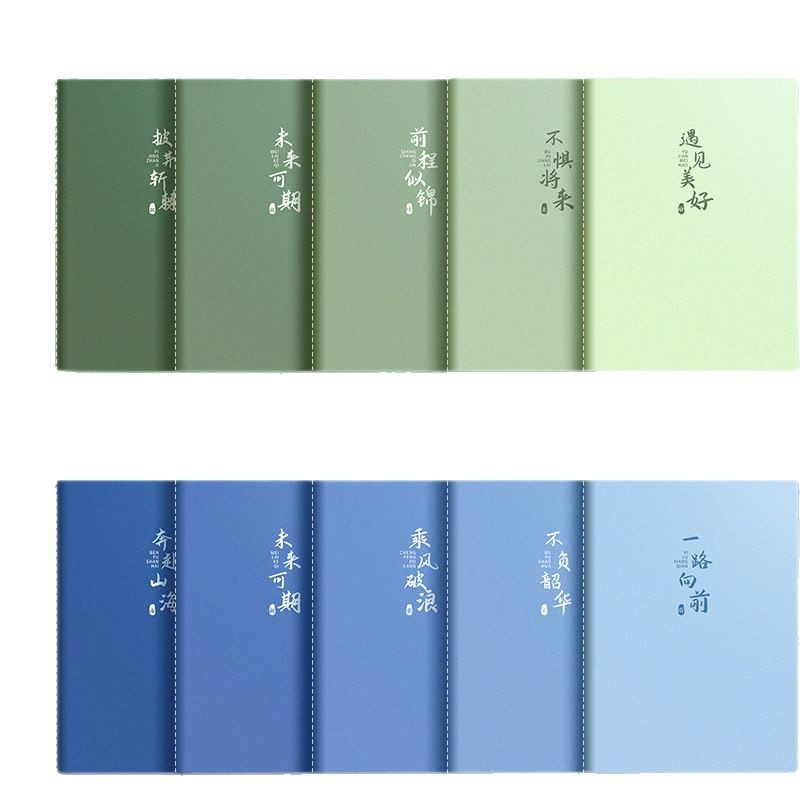
The history of paper sizing is a fascinating journey through industrial standardization and cultural preference. Most of the world is familiar with the ISO 216 standard, which gives us the A-series paper. This system is based on the square root of two, ensuring that each size in the series has the same aspect ratio when folded in half. While A4 serves as the global standard for business letters and A5 for pocket journals, the B-series was designed to provide intermediate sizes that fill the gaps. Interestingly, the B5 format exists in two primary iterations: the International ISO B5 and the Japanese Industrial Standard (JIS) B5.
The JIS B5 is perhaps the most famous version of this format, measuring approximately 182 by 257 millimeters. In Japan, this size is deeply ingrained in the educational system and the corporate world. It is the standard size for school notebooks, meaning that generations of students have grown up associating this specific surface area with learning, discovery, and intellectual labor. The international ISO B5 is slightly smaller, measuring 176 by 250 millimeters, but both versions share the same fundamental philosophy: providing enough room for complex thought without requiring the heavy footprint of a full-sized briefcase.
Bridging the Gap Between Portability and Surface Area
The primary reason enthusiasts gravitate toward B5 notebooks is the resolution of a common frustration found in other sizes. For many, an A5 notebook feels cramped. When attempting to use advanced note-taking techniques like the Cornell method or when trying to sketch a detailed mind map, the A5 page quickly becomes cluttered. Conversely, an A4 notebook often feels like an obligation. Its large size demands a dedicated desk space and can feel intimidating for quick, spontaneous thoughts. The A4 format is also notoriously difficult to carry in smaller messenger bags or to use comfortably on the cramped tray tables of an airplane or a train.
B5 notebooks solve this dilemma with mathematical grace. Offering roughly thirty percent more writing surface than an A5 journal, they allow for wider margins, more elaborate diagrams, and the ability to write in two-column layouts without the text feeling pinched. This extra room is not just a luxury; it is a functional necessity for those who think in systems. Whether you are an engineer sketching a prototype or a novelist mapping out a complex character arc, the B5 canvas provides the breathing room required for the mind to wander and then find its way back to a structured conclusion.
The Psychological Impact of the B5 Canvas
There is a psychological dimension to the size of our tools that is often overlooked. A larger page can sometimes lead to “blank page syndrome,” where the sheer volume of white space creates a barrier to starting. A smaller page can feel like a constraint, subtly encouraging the writer to be brief rather than thorough. The B5 format hits a psychological sweet spot. It feels substantial enough to be taken seriously—as a place for deep work and permanent records—yet it remains approachable enough for daily use.
When a writer opens a B5 notebook, there is a sense of professional invitation. The width of the page accommodates the natural arc of the human hand more comfortably than smaller formats, reducing the frequency with which the hand must move to the next line. This leads to a more fluid writing experience, which has been shown in various cognitive studies to improve memory retention and conceptual understanding. The act of handwriting on a B5 surface allows for a visual hierarchy that digital tools struggle to replicate. You can see your primary heading, your supporting notes, and your marginalia all at once, creating a mental map of the information that is anchored in physical space.
Academic Excellence and the Japanese Influence
The dominance of B5 notebooks in the Japanese stationery market has led to some of the highest-quality paper engineering in the world. Brands that specialize in this format often use paper that is specifically designed to handle fountain pen ink, preventing ghosting and feathering. This attention to detail is a byproduct of the academic culture that prizes neatness, organization, and the physical beauty of one’s notes.
For students, the B5 format is an unparalleled asset. It fits perfectly into standard backpacks and sits comfortably on lecture hall desks alongside a laptop or tablet. Because it is the “standard” in many regions, there is an entire ecosystem of accessories—from plastic covers and index tabs to specialized folders—that are built specifically for the B5 size. This allows a student to create a modular and highly organized system of learning that can span years. The tactile feedback of high-quality paper in a B5 format provides a sensory grounding that helps combat the digital fatigue often associated with modern education.
Professional Versatility and Corporate Workflow
In the corporate world, the B5 notebook is often seen as a mark of a seasoned professional. It is larger than the typical “pocket” notebook used for quick reminders, signaling that the user is engaged in serious planning or meeting documentation. Yet, it does not have the bureaucratic feel of an A4 legal pad. In a board room or a client meeting, a B5 notebook takes up exactly the right amount of space. It leaves room for a coffee cup or a mouse on the table, whereas an A4 notebook often forces the user to clear their entire workspace.
Furthermore, many professionals find that B5 notebooks are the ideal size for “bullet journaling” in a work context. The additional width allows for a dedicated column for task check-boxes alongside detailed notes. This layout is difficult to achieve in an A5 notebook without sacrificing legible handwriting. The professional B5 user benefits from a tool that is as versatile as their workday, transitioning seamlessly from a morning strategy session to an afternoon of creative brainstorming.
Artistic Freedom and Visual Thinking
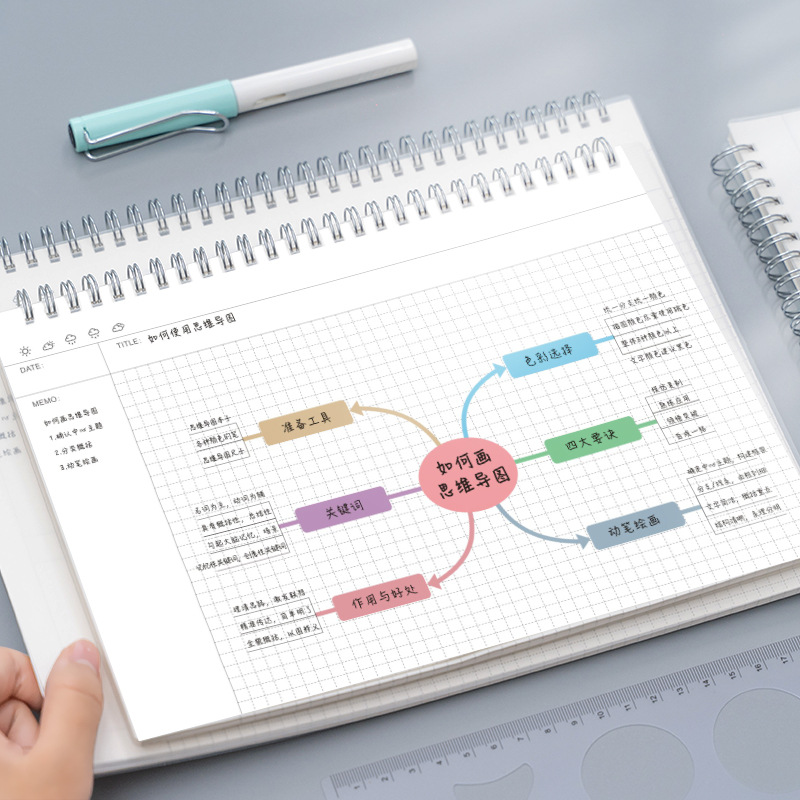
While many associate notebooks solely with text, the B5 format is a favorite among artists and designers who practice visual thinking. The dimensions are nearly identical to many traditional art tablets, making it a familiar landscape for those who sketch, doodle, or use calligraphy. Because B5 notebooks are often available with dot-grid or blank pages, they serve as a portable studio.
For those who use their notebooks for “sketchnoting”—a method of note-taking that combines drawings and text—the B5 size is arguably the best available. It provides the horizontal width necessary for panoramic timelines and the vertical depth for tall, hierarchical structures. The portability of the format means that an artist can carry a high-quality “canvas” with them at all times, capturing inspiration the moment it strikes without the burden of a heavy portfolio.
The Technical Side: Binding, Weight, and Texture
When selecting a B5 notebook, the technical specifications are just as important as the size. The stationery market offers several binding options, each serving a different purpose. Spiral-bound B5 notebooks are excellent for students who need to fold the notebook back on itself to save space on a crowded desk. Thread-bound or “lay-flat” B5 notebooks are the choice of serious writers and journalers, as they provide a seamless surface across the gutter, allowing for expansive two-page spreads.
Paper weight, measured in grams per square meter (GSM), is another critical factor. Because B5 is often used for heavy note-taking, a paper weight of 80 to 100 GSM is standard. This provides a sturdy feel and ensures that most pens will not bleed through to the other side. Texture also plays a role; some prefer a “toothy” paper that provides resistance to the pen, while others seek the ultra-smooth surfaces of premium Japanese brands that allow a nib to glide effortlessly. The B5 format allows these technical qualities to shine, as the larger surface area makes the tactile experience more prominent.
Sustainability and the Future of Analog Tools
As we move toward a more sustainable future, the longevity of our tools becomes a vital consideration. A high-quality B5 notebook is more than just a consumable product; it is an archive. Unlike digital files that can become corrupted or trapped in obsolete software, a physical notebook is a permanent record. The paper used in premium B5 notebooks is often acid-free and archival-grade, meaning it will not yellow or crumble over decades.
Moreover, the intentionality required to write in a notebook encourages a “slow productivity” movement that is gaining traction as an antidote to the burnout caused by constant digital notifications. Using a B5 notebook is a statement of intent—a decision to disconnect from the noise and focus on the signal. It is a commitment to a process that values depth over speed and reflection over reaction.

Conclusion
The enduring popularity of B5 notebooks is not merely a result of tradition or aesthetic trend; it is a testament to the functional perfection of the format. By occupying the space between the small and the large, B5 provides a versatile platform that adapts to the needs of the user. Whether it is used for academic rigor, professional organization, or creative expression, the B5 format offers a sense of balance that is increasingly rare in our polarized digital lives. It is the golden mean of stationery, a tool that respects both the limits of our physical space and the boundlessness of our imagination. To choose a B5 notebook is to choose a partner in productivity that is neither too much nor too little, but exactly what is needed to bring ideas to life.
How to purchase:Online B2B sourcing platform, China purchase, Chinese suppliers – LooperBuy
Frequently Asked Questions
1. What are the exact dimensions of a B5 notebook and how do they differ from A4 and A5?
The dimensions of a B5 notebook depend on whether it follows the ISO or JIS standard. The international ISO B5 is 176 by 250 millimeters, while the more common Japanese JIS B5 is slightly larger at 182 by 257 millimeters. To put this in perspective, an A4 sheet is 210 by 297 millimeters, and an A5 sheet is 148 by 210 millimeters. Effectively, B5 sits almost perfectly in the middle, offering a significant increase in writing area over A5 without the bulk of A4.
2. Why is B5 often referred to as the standard for students?
This reputation largely stems from the Japanese educational system, where B5 has been the standard for decades. Its popularity is due to the fact that it provides enough space for complex mathematical equations, scientific diagrams, and extensive linguistic notes while still being light enough for students to carry multiple subjects in one bag. This cultural standard has influenced stationery manufacturers worldwide to produce high-quality B5 options for academic use.
3. Can I use a fountain pen in a B5 notebook without the ink bleeding through?
Yes, provided you choose a notebook with high-quality, fountain-pen-friendly paper. Many premium B5 notebooks, especially those from Japanese brands like Kokuyo or Maruman, are engineered specifically to prevent “feathering” and “bleeding.” Look for paper with a weight of at least 80 GSM and a smooth finish to ensure a superior writing experience with fountain pens.
4. Is B5 a good size for bullet journaling compared to the standard A5?
Many bullet journalers find that switching to B5 is a game-changer. While A5 is the traditional “standard” for the community, B5 offers the extra width needed to create more complex layouts, such as vertical weekly spreads or detailed monthly trackers, without feeling restricted. If you find yourself running out of room on an A5 page or if your handwriting is naturally large, B5 is an excellent alternative.
5. Are B5 notebooks compatible with standard printer paper or folders?
Because B5 is a recognized international standard, you can find B5-sized folders and covers, though they are less common in US-centric office supply stores than in Europe or Asia. Most modern office printers have a B5 setting, allowing you to print custom templates directly onto B5 paper if your printer tray is adjustable. However, for storage, a B5 notebook will typically not fit into an A5 folder and will have extra room in an A4 folder.
HOT TAG:premium stationery, B5 notebooks, productivity tools, paper standards, Japanese stationery, writing habits, academic success, professional organization, journal sizes, fountain pen paper, analog productivity, creative sketching, ISO 216, JIS standards, stationery enthusiasts, office supplies, bullet journaling, student notebooks, handwriting benefits, paper quality, ergonomic writing, minimalist workflow, archival paper, note-taking techniques, B5 dimensions, stationery culture, high-quality paper, analog tools, time management, creative flow